
|
Asia is the largest and most diverse of the seven contionents. It comprises the central and eastern part of the vast Eurasian land mass. This is four-fifths of the total landmass. The dividing point is basically the Ural mountains in the west. The rest of Asia is bordered by three oceans, the Arctic in the north, the Pacific in the east, and the Indian Ocean in the south. Asia is also the most populous continent. It is dominated by China in the east and India in the south. While these are the two largst and mostb important countries in Asia, the coninent is home to a large number of smaller les dominant countries. Remarkably there has been little conflict and only limited cultural exchannge between China and India, primarily because they are separated by the huge barrier of the Himilaysa. Invasions of the sub-continent came not from China, but from the west. China has been invaded primarily by the Steppe tribes, but also by a former client sate--Japan. Asia is located in the northern hemispheres, only the tip of the Malay Peninsula approaches the Equator. Ethnically the population is divided between Mongoloid types and caucasian types, again by the Himilayan divide. Somewhere in central Asia, agenenetic nutatiin produced the eyelid folds that characterize Asians north of the Himalayans. Asia has both the highest (Himalayas) and the lowest points on the surface of the Earth. It has the longest coastline of any continent. And it experiences the world�s most varied climatic extremes. As a result it has the most varied forms of vegetation and animal life. Civilizatiion developed first on the western perifery of Asia (Mesopotamia and Egypt). Civilizatiion first appeard in Asian in the Indus Valley, perhaps because people there were in contacy with Mesopotamia. China was the last of the great river valley civilizations and by far the most isolated. For a milenium, the only significnt contact between east and west was the Silk Road. While the last palce for civilizatiion to develop, China over time became the great source of technological advance until modern times. China was also a huge factor in Westrn civiloization. A strong China directed the war-like Steppe people west. A weak China meant a relief for Europeans from the depredatiions of rhe Steppe tribes. Given the huge populations of Asia and the fact that China was a technological powerhouse (India was also home to advanced civilizations), it is surprising that it was the Europeans in the Western that made the leap to modernity, largely creating the modern world with science and free narket capitalism. And in an even more bizzare turn of events, as China embraces the clear advantage of merket forces, many in the West embrace the same socialist policies that have proven to be such as dismal failure.
HBC at this time has very little information on Afghani boys' wear. Until very recently, Afghani boys and even more so girls wore lsrgely traditional clohing. Clothing styles have been strongly affected by social trends and rule by a communist government, a rigid Tailaban theocracy, and then the more open society following the removal of the Talibn. We have little information on clothing during the communist era. The Tailban is promoting long closed shirts and baggy trousers. We now see Western clothing, especially in the cities. Traditional clothing, however, is still very common.
Armenia is a small landlocked, mountainous country in the South Caucasuses. located at what might be called the cross-roads of Europe and Asia. It is a difficult country to categorize. As it is located beyond the Caucauses in might be place in Asia, but culturally it is firmly tied to Europe. Armenia is one of the oldest countries in the world with a recorded history streaching back an estimated 3,500 years. Armenians were early coverts to Christianity, but separated from the Orthodox Church when tennants of Monophysttism became widely accepted. We have an Armenian history page. It has existed as an independent country, but has often been a part of larger empires, both ancient and modern(Ottoman and Russian/Soviet). Armenia once included whay is noe eatern Turkey and the area of modern Armenia. Its history is marred by the terrible Turkish Holocaust during World War I. Armenian was thorougly integrated into the Soviet economy. It had an industrual economy including chemicals, electronics, machinery, processed food, synthetic rubber, and textile. rmenian industry relied heavily on raw materials from the rest of the Soviet Union, commonly provided without regards to actual cost.
The modern Armenian economy relies heavily on investment and support from Armenians abroad. The country's industrial sector has hd to adjust to being cut off from the raw materials once provided by Soviet plannets. Tge industrial sector is now on a more market-based footing. They export machine tools, textiles, and other manufactured goods in exchange for imported raw materials and energy. We have a portrait of an unidentified Armenia boy and his mother in the Ottoman Empire during the 1890s, before the Turks carried out the Armenian genocide. After that there was an Armenian population left in Tsarist Russia. That was the core of the new Armnian state that emerged from the Soviet Union (1992).
Azerbaijan is located close to Armenia beyond the Caucauses. This places it in Asia, but unlike Armenia is tied culturallt to Asia. Like Armenia, Azerbaijan, has a long history. The modern history has been associated with Russia, btoh the Tsarist and Soviet empires. The country became independent with the disolution of the Soviet Union (1992). It was one of the Soviet Socialist Republics (SSRs). Like other SSRs, The Soviet central planners in Mocow pursued economic development withoiut any consideration of the enviormental imapct, leaving the country at independence one of the most polluted in the world. We have very limited information on Azerbaijan at this time. The only informatin we have found so far is youth groups. The Azeri people are divided beteen Azerbaijan northeastern Iran. Azerbaijan has a secular goverment attempting to orient itself economically with the West. The Iranian Azeris are often at odds with the Teheran regime, but are much more culturally conservtive that their kinsmen in Azerbaijan.
Bangledash is a modern creation, but Bengal has a long history. The area of modern Bangladesh was included in a succession of Indian empires. During this era there was struggle for religious dominance between Hinduism and Buddhism. Bangladesh was part of the British Raj. It separated from India at the time od independence (1946). Predomionantly Muslim areas in the northeast and northwest became Pakistan. Resent gradually grew in Bangladesh because the government was largely controlled by authorities in West Pakistan. Bangladesh separated from the West Pakistan as a result of a bloody civil war (1971). HBC still has very little information about boys clothing trends in Bangladesh. we suspect that they are similar to India. Bangladesh merchants have inquired about purchasing used American clothing. We also see boys wearing Muslim styles also worn in Pakistan. Bangladesh is a very poor country whichof course affects clothing trends. The tropical climate is another factor.
Bhutan is one of two small Himalayan kingdoms nestled between Tibet, China, and India and as a result has been influenced over time by those countries. There was also a short period of British influence durung the Raj. Bhutan is by China (Tibet) to the north and India to the south and is very clode to Bangladesh. The other Himalayan kingdom is located a few miles to the west. The country is ruled by a hereditary monarch. It is a very traditional societies with an economy based on agriculture. Bhutan is a largely Buddhist country with influences from both India and Tibet. The legal system is based on Buddhist law and English common law. The heart if Bhutan is the Kathmandu Valley which had been the enter if the monarchy for 1,500 years. Few countries have a more majestic setting--surrounded by the towering Himalayas and nine of the planets highest mountain peaks (including Mount Everest and Annapurna I). Nepal began to emerge from its medieval isolation in the 16th century when the House of Gorkha by Dravya Shah (1559). Gorkha monarchs expanded the kingdom into a major state into what is now India (late 18th century). This brought Bhutan into conlict with the British East India Company. The Anglo- Nepalese War (1814-16) was fought in the later stage of the Napoleonic War in Europe. The Treaty of Sagauli ended the War, but left Bhutan with its nuch reduced moddern boundaries.
Burma on the Bay of Bengal is one of the principal Southeatern Asian countries. It was one of the principal powers that competed for dominance in the region. The country is dominated by the Irrawaddy River rising in the eastern Hmilayas in the north. The Irrawaddy and its tributaries created a huge area suitable for rice agriculture. This was the basis of the economy, but the country is also rich in natural resources including oil and minerals. The Burmese moved south into the Irawwaddy Valley from Tibet (about the 8th century AD). Anawratha introduced Hinayana Buddhism (11th century). Buddhism continues to be the principal religion to this day. The population is also composed of several minority ethnic groups, inclluding Nagas, Shans, Chins, and Mons. The country was annexed piecemeal by the British (19th century). Burma was a major battleground of World War II,primarily because of the Burma Road which ws used to supply China. Britain after the War along with India granted independence (1948). It is, however, one of several European colonies which have declined economically since independence. It is currently ruled by a brutal military regime which as a result of coruption and incompetence has left most Burmese in poverty.
Cambodia on the Bay of Bengal is one of the major countries of Southeast Asia. It is bordered by Laos, Vietnam, and Thiland. Cambodia's relatively short shoreline faces the Gulf of Siam, a part of the South China Sea. It is sitiated in a saucer-shaped plain drained by the Mekong River and surrounded by mountains. The actual delta of the Mekong is in southern Vietnam. The principal agricultural crop is rice. The principal religion is Hinayana Buddhism. The fabeled Kymer Empire rose (6th century AD) and dominated the region for centutries. Angior Wat is anarchetectural trasure of the Kymer Empire at its poeak. With the decline of the Kymer Empire, Siam and Annam encroached on former Kymer lands (15th-19th centuries). The Cambodian monarchy appealed for French interventuoin (1854). A French protectorate wa establushed (1863). Cambodia became part of French Indo-China (1884). The French-Siamese Treaty restored the western privinces (1907). FGollowing the French defeat in North Vietnam,Canodia achiec=ved independence (1955). The country became involved in the Vietnam War and the seizure of power by the Communist Kymer Roughe (1975) led to the apauling Cambodian genocide. We have a section on Camodian history. We also have some information on the Cambodian monarchy. We do not yet have much information on Cambodia. We do have a page on Cambodian schools.
China is one of the oldest civilizations on earth. China has unlike the other great river valley civilizations developed independently of the rest of the world. Even so because of the great size and power of China impacte the far distant West. One of the great questions associated with China is why with the great technological advances of China, it was the relatively backward West that used Chinese technology to make the great leap to modernity We know little about historic Chinese clothing at this time, but we eventually hope to add such information to HBC. HBC still has very limited information on Chinese boys' clothing. We would, however, be very interested in any infornmation that Chinese readers can provide us on either tradition or modern clothing in this important country. A Chinese reader is helping us to pull together some basic information.
|
India is a huge country comprising much of the south Asian sub-continent and with one one of the largest and most diverse populations on earth. The country streaches from the cool uplands of the Himilayas to tropical coastal Indian ocean areas. The country is composed of a large number of ethnic, linguistic, and religious groups. Many of these groups have their own destinctive clothing styles and cultural traditions. The British colonial Raj also was very influential and played a key role in kniting modern India together. India id the world's largest democracy and the country's democracy has played a major role in creating a viable state out of such diversity--a monument to the remarkable leaders who have led India sych independence. Muslims insisted on a separate state at independence, although many Muslims chose to remain in India and rely on the democratic traditions planted by Britain to protect their minority rights. And modern western clothing and an increasingly consumer oriented economy have grown in importance. India is a very large country when regions that have different climates which has also affected fashion and clothing. At this time we have very limited information on Indian boys' clothes. Hopefully our Indian readers will provide information to better understand their dascinating country in general and fashion trends in paricular. Many children, especially boys, wear Western dress, but traditional styles are also important.
Iran was formerly called Persia. We have some information on Ancient Persia. We have very little information on modern Iran nd do not yet have an individual country page. We do have a page on Zoriastrianism. It is one of the world's great relgious traditions and was the religion of the Persian Empire. We have very little information about Iranian schoolwear at this time. We have on image of schoolboys in Yzed about 1908. We believe that smocks have commonly been worn, primarily by girls. We have a biography on Vartan Gregorian, an Arminian Christian. Armenian-Georgian photographer Antoin Sevruguin has lkeft us images of 19th century Persia, althoigh sadly much of his body of work has best lost.
At the present time our thoughts are with the brave American and British military personnel that set about to liberate the Iraqi people. Our thoughts are also with the children of Iraq which have long suffered under Saddam's brutal rule. The accounts of creuely, including the killing and torture of children defy belief, but so did the accounts of NAZI cruelty coming out of Europe during World War II. Saddam in his various wars and efforts to build Weapons of Mass Destruction has spent an estimated $500 billion. He ingerited pergaps the most advanced country in the Arab world when he seized absolute power in 1979. Think what Iraq would be like today if he had used that money to benefit the Iraqi people. Iraq is perhaps the most westernized Arab country. Until Saddam seized power it was making considerable progress in building the infrastructure of a modern country. This was reflected somewhat in fashion trends. HBC has not acquired information about Iraqi boys' clothing. This is part because of Saddam's horific regime, few Iraqis have had access to the internet. We note almost note Iraqi visitors to HBC. Hopefully that is about to change. While we have received relatively little information from Arab and other Islamic countries, we have noted a good bit of internet traffic from those countries, including Iran, Pakistan, and Saudi Arabia. Pakistani garment countries in particular are actively seeking business opportunities. From Iraq, however, we note virtually no activity on the internet.
We see Isreali boys wearing a wide range of outfits. The political changes make it complicated to assess clothing styles. They affected the garments worn. The Jewish population was realtively small before the Zionist movement began to promote Jewish emigration during the late-19th century. Palestine at the time was a province of the Ottoman Empire. We do not know how Jewish boys dressed during this period. The Jewish immigrants to Palestine came mostly from Europe and thus their clothing would have reflected the popular styles in the countries from which they came. We see portraits taken in Palestine that are indistinguishable from European portraits. The only way we can tell is these wee taken in Palestine is if they are indentified. We note sailor suits and other popular European styles. Over time as the number of Jews increased and children were born in Palestine, clothing more in keeping with the local condotions developed. The Britis seized Palestine during World war I which added another fashion influence. Short pants were very common reflecting both European styles and the warm climate.
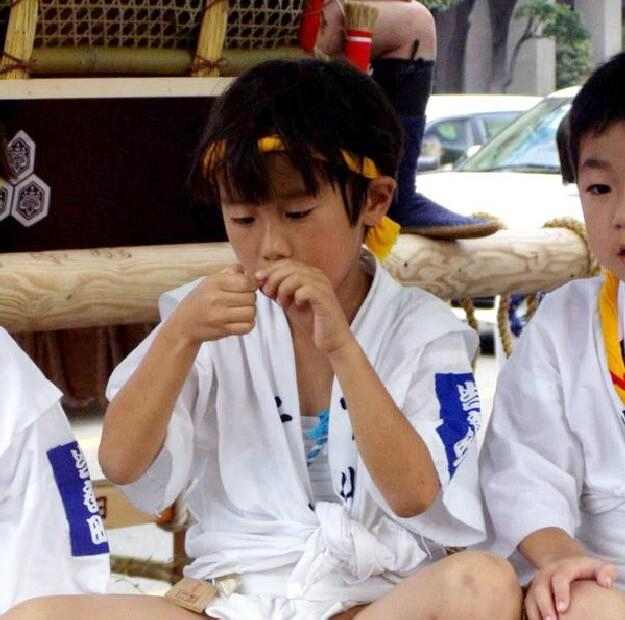
Japanese elementary boys generally wear short pants. Many schools require them as part of a school uniform, but mothers also purchase them for casual and dress wear. The shorts were baggy until the 1950s when very short shorts became standard. Japanese mothers apparently looked to Continental Europe for their fashion inspirations rather than America. Boys stop wearing shorts when they begin junior high school at 12 years of age and begin wearing a military-style uniform. At the same time they also stop wearing shorts for casual and dress wear. Major changes occurred in the 1990s as younger boys began wearing longer, baggier shorts and older boys began wearing shorts for the first time. Many schools, however, continue to require the shorter shorts.
Jordan was a part of the Roman Empire. Its best known arcitectural site is the Nabataean city of Petra, one of the region' most spectacular ancient treasures abd along with Machu Picchu and Angkor Wat a dramatic 'lost city'. Jordan meaning the area beyond or east vof the Jordon River is the location of many notable Biblical events. Modern Jordn includes the Biblica lands of Ammon, Basha, Edom, and Moab. It was from aordanian mountain top that Moses viewed, but was prohibited from entering the Promosed Land. Here John the Baptist baptised Jesus. Herod at a fortress in Jordon beheaded John the Baptist. There is also medieval history related to the Crusades, Crusader castles were built here. The area was seized by the Ottoman Empire (16th century). Jordan as a modern political entity has a much more erecent history. is a Middle-Eastern Arab Monrchy surrounded by Israel, the Palestinian West Bank, Syriua,Iraq, and Saudia Arabia. It has a seaport at Aqaba,the port that featured prominantly in the Arab Revolt. Aquaba is located on the Gulf of Aquaba leading to the Red Sea. It was created by the British in the Firt Partition of Palestine (1923). The country bis largely arid, but there is some agriculture conducted in the Jordan Valley.
We have very limited information on Korea at this time. Korea is not a country HBC has been able to research in any detail. Hopefully Korean readers will provide us some information on clothing trends in their country. Curiously South Korea is a country with very high levels of internet use, but we receive very few contacts from Korea. Korea is also a divided country, separated by the Cold War. Before separation there was little cultural and fashion difference between North and South Korea. Today glitering, prosperous South Korea could not be more different than the desperately poor, pranoid garison state to the north.
The Kurds are a people without a country. Her we have created a page on Kurdistan, even though we have little information on Kurdish clothing. A basic knowledge of the Kurds and their lack of a country is important in understanding both Iraq and the Middle East in general.
Landlocked Laos is one of the most isolated countries on earg. It is located in Southeast Asia, bordered by China, Vietnam, Cambodia, Thiland,and Burma. It is an elongated ciuntry with the southern border following the Mekong River. The terraine is rugged and heavily forested. Much od the level lnd most suitable for agriculture is along the Mekong.The chief croipnis rice, but benzoin, coffee, and opium are aldo impttant. The proimary religion is Hinayana Buddhism which has been discouraged by the Communists. Laos was part of the Kymer Empire. The erhbicity is primarily Lao, one of the Thai tribes which pushed south into the area from Y�nnan, China (13th century). Laos was seized by Siam (Thiland) (early-19th centuyry). France seized contro (1893) and Laos became part of Indo-China. France granted independence (1954), but the Communist effort to seize power resulted in a civil war. The country because of its location was drawn into the Vietnam War and after the American withdrawl, the Communists seized control. We have some information on Laotian history. The country has made little progress in developing its economy. In part because of that and the country's raw beauty, Laos has attracted some adventurous tourists interested in what Southeast Asia was like before modern economic development began. They find lush tropical forests, busy traditional markets, rgreen ice fields, regal wats and occasional French colonial traces. Luang Prabang is UNESCO World Heritage Site. Aging French colonial buildings on quaint lanes can be found with Buddhist temples and beutiful traditional Lao wooden homes. Procession of novice monks accept, but do not ask for alms at dawn. The most impressive temples are located in the capita, Vientiane.
Lebanon is the Middle-Eastern country wedged between larger Syria and the Mediterrean Sea. Since the dawn of civilization, Lebanon has been a battleground for the larger more powerful nations which surround it. This began with the rise of powerful cultures in Mesopotamia and the Nile Valley. Lebanon was after World War I a French protectorate and French culture was of some importance for many years, including boys wear. This however is little in evidence in the chaotic current situation.
Malaysia is a federation of the former British colonies located on the Malsy Peninsula and Borneo. It is thus divided by the South China Sea. Singapore another former British colony on the Malay Peninsula decided to persue an independent future. Malaysia is one of the successful Asian countries referred to as the Asian Tigers. Geography is a major factor in Malysia. The Malsay Peninsula is a giant roadblock impedong East-Erst trade and challeing it into the Straits of Malacca. It is a ethnically diverse country consisting of Malays, Chinese, and Indians. It is allso diverse religiously, with faith communities generally paralleling ethnic communities. It is a country that thanks to the British has important democratic traditions. It is thus a laboratory addressing the question of whether democracy is possible in a Muslim majority country. There is some hope for optimism given both the tradition of Brotish law and the relstive moderate version of Islam practiced in the country.Boys clothing styles differ based on their ethnic backgrond. The Malay community wear what they consider to be modest dress.
The Maldives are an island group in The India Ocean off the southern tip of Asia, southwest of Sri Lanka. There are nearly 1,200 islands, about 900 of ewhich are inhabited. The islands form a double chain of twenty-six atolls oriented in a north-south direction. These low-lying islands will be one of the countries most affected by global warming. The Maldives are situated on the trade toutes between the Arab Middle East/western India and the to the east. Thus many different people settled on the islands over time. Arab domination of the sea routes resulted in the islands becoming Islamicized. The islands were an independent Islamic sultanate for most of its political existance (1153-1968). The British establish a protectorate (1887) although they did not meddle much in domestic affirs. Th British supressed the slave trade, although slavery was not totally eliminated. The British granted independence (1965). The country is notable as the last country to firmally ablolish slvery. We have a page on Maldives history, but not yet a country page. The Maldives today are best known as a tourist delight with azure seas, turquoise reefs, white sandy beaches fringed with palm trees. The economy which depended largely on fishing has been diversified with tourism. The Maldives ranks as the smallest Asian country in both population and land area and the islands have an average ground level of onlky 1.5 metres above sea level. At this time, the only the only Maldives page we have is a page on Scouting. Scout units are active in many schools.
Mongolia is nesetled in the heart of Asia between Russia and China. And in the mid-20th century, Japanese-controlled Manchuria. What mightvbe called a very dangerous neighborhood. Mongolia today is a relatively poor, sparsely populated country. This of course was not always the case. Mongolia in the medieval era under the leadership of Genghis Khan ammassed the largest empire in human history. It is fascinating to look back in history how countries which are today relatively minor countries were once at the very center of history. Mongolia anf Genhis is also an interesting example of how one individual can change history. HBC has a detailed page on Mongolian history. Mongolia from gime immemorial has had an economy based on grazing livestock on the vast Asian steppe. Mongolia's rise to empire was based on the fact that the steppe was crossed by the fabeled Silk Road between China and Europe--a huge source of wealth. Mongolia never adapted a culture that persued knowledge and technology and thus as these cultural elements became increasingly important, Mongolia receeeded to the backwaters of history. In the 20th century, the country's geographic position forced it into the Coomunist system and destructive socialist economics.
Myanmar was formerly called Burma.
Nepal is a small Himalayan country wedged between India and Tibet is one of the most isolated places in the world. The North includes a substantial part of the Himalayas, incluing Everest. The Gurkas sized control of Nepal (18th century), just as the British were taking control of India to the south. Nepal signed treaties with the British (beginning 1792). Nepal was never incorporated into the British Raj. Britain recognized the country's complete independence (1923). Grukas served in the British military, including World War II. The country was ruled by a pemier from the Rana family. Revolts conceyed power to the king who had been a figurehead (1951). The King prclaimed a new Constitution (1959). Much of the population is located in the Nepal Valley. Social life continues to be very traditional. Farmers there grow rice, wheat, and fruit. Almost all of the country's trade is wih India and China (Tibet). The population is primarily Hindu with a small Buddhist minority. Nepalese is a Tibetian-Burman language. We have a Nepal school page.
We have few details about Pakistani boys' clothing at this time. We do note boys in the rural areas, especially in the tribal areas along the Agghan border wearing caps like those worn in Afghanistan. British fashion have been influential in Pakistn, especilly among the more affluent and in the larger cities. American fashion also has had an impact, especilly jeans. The resurgence of fundamentalism has had some impact on fashion. Even in remote areas, gowever, we often note a mixture of traditional and western styles. One tradition garment is the three piece salwar kameez. The kameez and vest are
often beautifully embroidered. They are commonly made in various colors, including pale blue, khaki, chocolate and grey. Styles vary especially the length of the vest.
Almost all countris have a history dating back centuries if not millenia. This is not the case of singapore whichuntil the 19th centyury was a mere fihing village. Today's Republic of Singapore, is a tiny city-state on an island at the tip of the Malay Peninsula in Southeast Asia. It was turned by the British from van undestinuished fishing village into a mjor colonial bulwaerk and part of its Malayan colony. Sir Thomas Stamford Raffles founded Singapore as a trading post of the East India Company with permission from the Johor Sultanate (1819). The British subsequently obtained sovereignty over the island (1824). Singapore became one of the British Straits Settlements (1826). Its strategic location on the Malayn Straits gave it great imprtance. The development of the rubber industry turned Singapore into a financial powehouse. It was occupied by Japan at the onset of the Pacific War (1942). After the War it was part of Malaysia which Britain granted independence (1963). It was expelled by the Malaysian Parliament (1965). Ethnic and religuous differences were involved. Singapore has since developed rapidly into not only a huge port, but major financial center. Its patriarch Lee Kuan Yew adopted free market capitalism at a time when most newly independent countries persued socialism. The result was unlike widespread economic failure in mist newly indeoendent countries wasin Singapore
one of the most successful economies in the world. Singapore became one of the Asian Tigers which achieved rapid economic growth and high percapita incomes. Modern Singapore is highly urbanized. Little of the topical jungle folliage remains. The country's small territory has been expanded with land reclamation. Singapore' children wear practical western-style clothing. The tropical climate makes for casual, comfortable styles that are imported. There is not much of a textile manufacturing industry here due to the fact that the country has moved on into the secondary and tertiary industries. A reader in Singapore tells us that, "The clothes here are not exceptional, just what you would expect to wear in summer in the United States." HBC also has some information on Singapore schools and uniform groups.
Sri Lanka was called Ceylon as a British colony. We are just beginning to acquire basic information on Sri Lanka boys' clothing at this time. Climate and income levels are major factors affecting children clothes in Sri Lanka. The climate is tropica. As a result, usually only very light-weight clothing is needed. Income levels are relatively low. Thus most families can not afford exensive outlays for children's clothing. Many boys wear casual shirts and short pants. We note many Sri Lanka children go barefoot. Flip flops are also common. We do note a group of boy dancers in the 1930s. Most Sri lanka schools require the children to wear school uniforms. here is no national uniform. Each school establish their own uniform and dress code rules. Often the casual clothes boys wear are outgrown school uniforms.
Aiwan is one of the great sucess stories of Asia. It is a country with limited national resources that has constructed not only a successful industrial economy, but a vibrant democracy as well. Taiwan has long been a part of China until seized by Japan (1895). Taiwan under the Japanese was known as Formosa. Taiwan was returned to China after the Japanese surrender in World War II (1945). After defeat on the Mainland, Chang Kai-Shek's Nationalists fled to Taiwan (1948). For many years Taiwan was dominated by the Nationalists, but as democratic governmet took hold the native Taiwanese became the dominant force. Today boys in Taiwan dress much as boys in the West, but Japanese fashions are also an influence.
Tajikistan is one of the new independent countries that emerged from the disolution of the Soviet Unuin in 1992. We have little information about Tajikistan, but we have some information on traditional Tajik clothing. The Tajik boy here wears a long coat-like garment, but I am not sire what it is called. Tajik clothing looks to be heavily embroidered. The Tajik spring celebration is called Navrus today. People often wear traditional costumes as seen here. It is a velvet outfit worn by boys and men. Mother makes it at home. So the designs vary widely and come in different sizes. This student also wears matching trousers and white velvet shirt. There is also ornate head wear.
Thailamd is the Southeast Asian country bordering on all the Southeast Asian countries except Vietnam. The country until the mid-20th century was known as Siam. Thailand's history like that of other coiuntries in the region until modern times was one of continuing wars with rival neighboring states In modern times, Thailand was the only Southeast Asian country not colonized by the Europeans. The Thais avoid Japanese occupation in World War II by becoming a nominal Axis ally. The government is a constiutional monarchy with a democratic parliament. The country's longest border is with Burma because the two countries share the northern streaches of the Malay Peninsula. The climate is tropical with the southern border reaching 6�N along the Malaysia border. The religion is primarily Buddhist. The population is ethnically Thai (about 75 percent), but their is a Malay population in the south. The Malays are mostly Muslim. The official language is standard Thai, but tghere are many local dialects. Thailand is noted for beautiful traditional garments done in Phraewa silk. Thailand has a large modern textile clothing industry. The warm tropical cliamte is a major factor in clothing. One Thai reader reports that girls like to wear all colours, eccept for their school uniform. They like to wear shorts, T-shirts and some wear hats . Boys like to wear jeans, pants, T-shirts and hats. All Thair schools require uniforms.
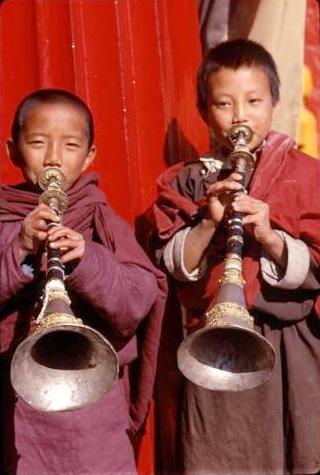
Tibet is a mountaneous and plateau region of central Asia, north-east of the towering Himalayas. It is homeland of the Tibetan people in addition to several other ethnic groups,including the Monpas, Qiang, and Lhobas. Tibetians are Mongolin origin,but speal Tibetian. In modern times substantian numbers of Han Chinese and Hui people, a largely Muslim group from wesrern China. Tibet is the mostr elevated country in the world. The average height above sea level is 4,900, an elevation that is more like the highest peaks in many with hugh mountains.
China first emerged in written history as a unified history (7th century). The Empire declined as into various divided territories. Tibetian monarchies retauned at least nominal control of western and central Tibet. They riled from Lhasa, Shigatse, or other nearby locations. These Tibetian monarchies were over time under various degrees of control by either the Moingols or Chinese. The eastern regions of Tibet (Kham and Amdobe) came separated from the rest of the original Empire. In these eastern regions, a varying number of substantial number of small principalities and tribal groups emerged. Unlike the west, no centeralized power emerged. China gradually achieved more direct control of this area and there was an influx of Han Chinese. Most of these area became the Chinese provinces of Sichuan and Qinghai. Tibet was conquered by China (1720). China has since claimed soverignity, although often only nominally. This changed temporarily with the fall of the Manchu (Qing) Dynasty (1912). Local authoritie disarmed and expelled the Chinese soldiers. Tibet then declared its independence (1913). Tibet was able to maintain its independence until the victiory of the Chinese Communists in the Civil War (1949). Chinese Communists soldiers during the Korean War invadsed and occvupied China (1951). The Chinese abolished the Tibetian Government (1959). China now rules Tibet as the western and central Tibet as the Tibet Autonomous Region. As is thge practice of Communist regimes, the 'Automous' aspect of the name is pure fiction. The eastern areas were largely annexed to the Chinese provinces of Sichuan and Qinghai provinces. The Chinese Government to increase its control over Tibet and promoted the migrantion of Han Chinese into Tibet. The Tibetian pobulation is very traditional and there have been perodic uprisings put down by the Chinese. Exile groups led by the Dali-Llama are active, primarily in India. Little modern technology reached Tibet and the country has an economy based primatily on subsistence agriculture and herding. Agriculture is limited bythe mountaneous terraine. There arev minral resources, but traditional Tibetian goivernment restricted mining. Tourism has considerable potential, but the Chinese Governent severly restricts outside access to occupied Tibet. The traditional religiuon of B�n survives to a limited extent, but has become basically the sanme as Buddhism. The primary religion in Tibet is Lamaism (a form of Buddhism). Mahayana Buddism arrived from India (7th century AD). This evolved into Lamaism (8th century AD). There are also Muslim and Christian minorities, but are promarily ptracticed by non-Tibetian ethnic groups. The Chinese Government has attempted to discourage religion as was particularly brutal after the initial invasion and during the Cultural Revolution.
Staple foods in Tibet are roasted barley, yak meat, and butter tea.
We have a Tibetian school page.
HBC has not yet been able to collect much information on the clothing worn by Turkish boys. We have little historic information on Turkey. We do note that the warm Medditeranean climate of Turkey is an important factors as was centuries of rule by the Ottoman Turks. After the fall of the Ottoman Empire and the rise of the modern secular state after World War I, European fashions began to have greater influence. The Turks do have very distinctive kilt folk costumes. HBC has been unable to find much information on Turkish boys clothes and would bevery interested in anu information that Turkish visitors to our site may be able to offer.
Turkmenistan is one of the new central Asian countries created from the Soviet Union. As a Soviet republic, it was often referred to as Turkmen or Turmenistan. During the Tsarist era it was often called the Transcaspian region or area beyond the Caspian Sea. Modern Turmenistan borders on the Caspian Sea. Iran, Afghanistan and Russia and Uzbeckistan on the north. Most of the country is the Kara Kum Desert. The population is largely composed of Turkmens, a Turkic-speaking Moslerm people. Until the Soviets incorporated the area into the Soviet Union, clothing except for Russian officials was largely traditional.
Much of central Asia was conquered by the expanding Tsarist Empire (mid-19th century). It was likecgoing backn in time. Life throughout Central Asia was little changed for centuries. Much of the areea was inhabited by several ethnic hroups eakling out a living through a nomadic hearding existence. Uzbeck boys have worn traditional clothes, but the Russians who came to Uzbekistan wear modern European-styled clothes. Uzbekistan is one of the central Asian countries created from the Soviet Union in 1992. It is a very new country with an ancient tradition. Boys have worn traditional clothes, but the russians who came to Uzbekistan wear modern European-styled clothes. Although Uzbekistan was not independent until 1992, for organizational simplicity we are archiving Tsarist and Soviet Uzbek images under Uzbekistan.
Vietnam is the coastal areas of the Indo-Chuna Peninsula biordering on the South China Sea. The country is shaped by an an elongated S. It varies in width along the long coast. It is diominated by the Red River Valey in the notyh and Mekong Delta in the south, one of the nmost productive rice growing areas in the world. The country has enormous topographic variety, mountains, fertile deltas, primeval forests. major rivers, and beautiful beaches. Overtime rgional states of varying strength have controlled the noth Red Rivert Delta), central (central highlannds), and south (Mekong Delta). There is also a page on a Vietnamese region, the Mekong Delta. There is also ethnic diversity with minorities of considerable importance in the central highlands. The country's climate is also complex. The country is located within the tropics, but its range of latitude, altitude, and weather patterns rult in considerable climatic variation. Vietnam is bordered by China to the north, Laos and Cambodia to the west, and the South China Sea to the east. Historic amnities exist with the Kymer people (Camnodia) and the Kymer Empire which builtAnglo Wat dominatd Southeast Asuian for centuries. Viet Nam's greatest challenge, however, came from the north--China. Vietnam was integrated within Chinese empires (until the 19th century). Since then the Vietnamese have struggled to maintain their indeoendence. The Vietnamese resisted efforts of the Song, Ming, and Qing dynasties (11th, 15th, and 18th centuries) to conquer Indo-China. We do have a page on Assam/Vietnam royalty. We do not yet have a history page on Viet nam, but there is a page on the Vietnam War. The victory of the Communists in the Viet Nam War meant that Communism was imposed on the country and free markets suppressed. The Vietnamese like the Chinnese have found that communism is an economic dead end which left the potentially rich cyntry one of the poorest in Asia. The Communist Hoverment has begin expeimenting with free market reforms. Spiritual life has been an important part of Vietnamese culture. Here Vietnam has been strongly influenced by China with Confucianism, Taoism, and Buddhism which origninated in India. The French intriduced Christianity. Tam Giao (triple religion), a combination of Taoism, popular Chinese beliefs, and atraditional Vietnamese animism is also practiced. It is not clear how Communist atheism is affctuing the country's traditional spirituallife. We have little information on activitis, another asoect of culture. The most important hjoliday is Tet. We have a page on youth groups.

Navigate the Boys' Historical Clothing Web Site:
[Return to the Main countries page]
[About Us]
[Introduction]
[Activities]
[Biographies]
[Chronology]
[Clothing styles]
[Countries]
[Girls]
[Theatricals]
[Topics]
[Bibliographies]
[Contributions]
[FAQs]
[Glossaries]
[Images]
[Index]
[Links]
[Registration]
[Tools]
[Boys' Historical Clothing Home]