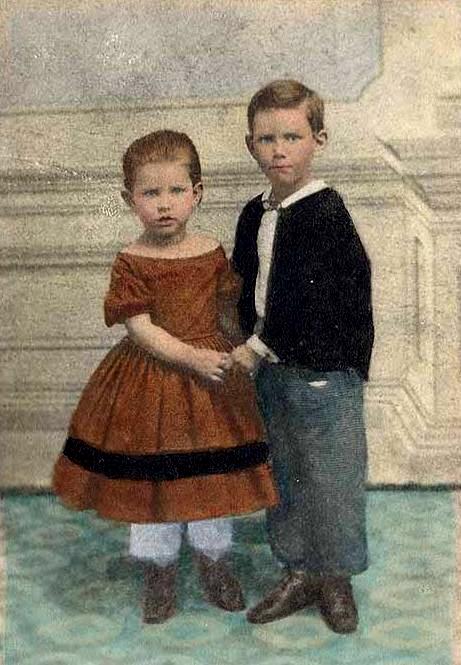
Figure 1.-- This undated Amnerican CDV was probably taken in the 1860s, perhaps the late-1860s or early-70s. Note the use of blue and grey which were popular for boys even in the 1860s. Notice the girl's brown dress and plain white pantalettes, but of course we are not sure this is a girl. This leads us to an interesting question, were boy dresses done in different colors than girl dresses? Unfortunastely this is a difficult subject to address because of the black-and-white photography of the day. This was a hand-colorized (tinted) image which altthough beautifully done means it is not a definative piece of evidence, but strongly suggests these colors were popular.
Our information on color in American boys is incomplete at this time. The popularity of some colors have notably changed over time, but some basic colors includuing brown, blue, and grey seem pronounced over time--at least since the 19th century. Of course, information on 19th century colors are limited by the black and white photography of the day. Fauntleroy suits were often black, but the black and white photography of the day effectively hide deep blue, burgandy, dark brown, and forrest green suits. Blue appears to have been a particularly popular color, both navy blue and other shades. There are a great range of blue shades. We know boys commonly wore dark blues, but we are less sure about light blues. Of course sailor suits were commonly navy blue. Blue suits and especially navy blue blazers beocme standard in the 20th century. We note many other colors in the 19th century. The suits sold in the late 19th and early 20th century included a lot of green and brown shades. We also note black and grey suits in the 20th century. The modern color conventions of blue for boys and pink for boys does not seem to have been firmly established at the turn of the 20th century. We do not see it universally accepted until after World War I (1914-18). Preppy fashions of the 1950s help popularize pastel shirts and khaki pants. And of course by the 1970s we see both color adverising and color photography that provide us detailed information about color and fashion.
There are four methods of introducing color into photographs, ech of which has its own unique features and chrnological appeares: tining, paimting ovrr, color photography, and coloriztion of old black and white photographs. Almost immediately after photography was invented by Louis Daguerre (1839) consumers wanted color. And we see studios adding tints like risy scheeks and gold jewlry. Coloriazing early photographs material (Dags, Ambros, tin-types, etc.) was difficult and could not go much beyond adding patches of tint. Nuch more could be done once the Albumen process created the possibility of paper prunts. The CDV here ia good example. Studios hired colorists or sent prints out to dedicated colorizing studios. These colorists could not get the precise shade right, but we believe they acurately depicted the color. This is because if mother purchse a blue, broen lor red dress because she wanted a dress of that color. Thus she would want it shown in the colorized portrait in the same color purchased. Less commonly, studios used photographs to paint over. This was not nearlynas populat as tinting. Of course the holy grail of color was actual color film. There were mamy attempts atbthis. The first really true color process was created by Tsarist Prokudin-Gorskii in the early 20th century produced beautiful color images. His color phothographs provide vibrant images of the last years of the Tsaeist Empire. His images were magnificent, but the process was compicated and expensive --not a viable commercail prpcess. The French Autochrome was the first practical color film process developed (1902). The German led the workld in chemistry and Agfa led the world in color photography (1930s). World War wrecked agfa's lead andthe American Kodak came to dominate color photography. With the perfectiin of color photography, interest turmed to ways colorizing black and white film. This began with moviesand then turned tio old still photographs. This was possible through digital efforts. Galf-tne values were asigned colors. The problem is that no half-tone valur has unique color characteristics. Thus there is no way of making colorization automatic. Some of the decisions were obvios, blue sky, green grass and foliage, flesh tones, etc. But many other colors have to be assigned. Thus colorized images can look realistic, but thevactual color choices are mostly guesses.
Our information on color in American boys clothing is incomplete at this time. The popularity of some colors have notably changed over time, but some basic colors (includuing brown, blue, and grey) seem pronounced over time--at least since the 19th century. Of course, information on 19th century colors are limited by the blacks and white photography of the day. We do, however, have colorized images. and we think that for the most part that the colorized images reflect a basic representation of the actual shades worn. We note John and Charles Howell in the 1860s wearing navy-blue suits in the 1860s. We also see black and white checked blouses with what may be black pants. Military-styled peaked caps surely are navy blue and not black. As the 19th century progressed, the increasing popularity of catalogs fgives us more color information. Assessing color becomes easier in the 20th century. Color lithography and than color photography gives us more color information. Color photography was developed in the late-19th cenbtury, but was complicated and expemsive. Seceral companies were active before World War Ii, but the film and processing was expensive. Color becomes increasingly popular after World War II (1939-45), but it is not untl the 1970s and falling pries that color photograpj becomes really common. Catalogs provided detailed color information by the late-19th century, but amateur snap shots were bneeded to provide scenes showing how the clothes were being worn and in what circumstances.
Shades
We see American boys wearing a variety of colors. The most common seem to be black, blue, brown, and grey. We note a brown tunic suit in 1837. Girls also wore brown. The girl here with a redish brown dress is a good example. Fauntleroy suits were often black, but the black and white photography of the day effectively hide deep blue, burgandy, dark brown, and forrest green suits. Blue appears to have been a particularly popular color, both navy blue and other shades. There are a great range of blue shades. We notuce a medium blue kilt suit. We know boys commonly wore dark blues, but we are less sure about light blues. Of course sailor suits were commonly navy blue. Blue suits and especially navy blue blazers beocme standard in the 20th century. We note many other colors in the 19th century. The suits sold in the late 19th and early 20th century included a lot of green and brown shades. We also note black and grey suits in the 20th century. Here we see a boy wearing blue and grey (figure 1). The modern color conventions of blue for boys and pink for boys does not seem to have been firmly established at the turn of the 20th century. We do not see it universally accepted until after World War I (1914-18). Preppy fashions of the 1950s help popularize pastel shirts and khaki pants. And of course by the 1970s we see both color adverising and color photography that provide us detailed information about color and fashion.
Gender
Specific Garments
We have some American color pages for specific garments. The dominant colors in the 19th cebtury seem to be blue, black, brown, and grey. We see more colorful clothing in the 20th century, especioally for younger children. This is a topic we have not yet developed in detail, but we have been collecting information. We do have a color page on neckwear, Fauntleroy suits, sailor suits, tunic suit, and regular suits.