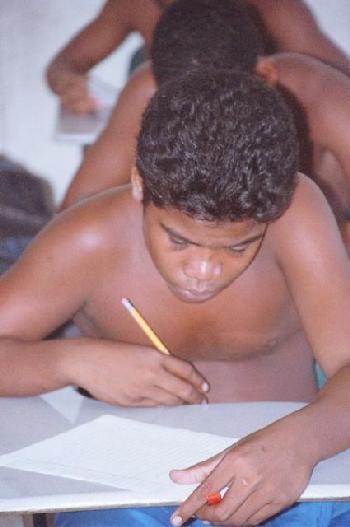

Oceania covers a wide area of the southwestern Pacific. Early immigrants in two countries (Australia and New Zealand) brought Eueopeans and English-styled schoolwear including uniforms with them, but in recent years have adopted styles more in keeping with the regional climate. Even so there is still a clear English influence. New Zealand in particular has many schools with traditional British-styled uniforms. In recent years, schools in both Australia and New Zealand have adopted styles more in keeping with their climate. The rest of Oceania is more varied. Indonesia and the Phillipines are large countries with substantial diverse populations. Schools in both countries have uniforms, but there is no national style. Oceania also includes many small new island states, each with their own individual approaches. We have little information on schools on many of those islands, but we are beginning to build some information.
|
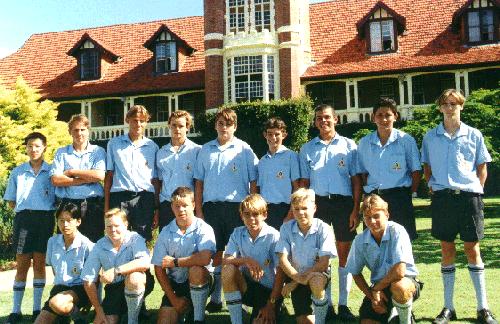
Australia is a huge country with a relatively small, mostly European population. Britain founded it as a penal colony. And a kind of mistrust of authority permeates Australian society even today. As a former English colony, set up an educational system based on the English system. Schoolwear was also basically English, although climate is another impoerant influence. Australian school uniforms through the 1970s were similar to English styles, except shorts were more common. Beginning in the 1980s more casual styles were introduced and are increasingly common at both elementary and secondary schools.
The Cook Island archepelago consists of fifteen small islands located in the South Pacific northeast of New Zealand. The different Cook Islands first was united as the Kingdom of Rarotonga (1858). Britain estanlished a protectorate and created a federal parliament (1888). A New Zealand began to become a more independent Dominion, Britain transfrred authority for the Cook Islands (1901). The Islands were beyond the area conquered by the Japanese in World War II and thus escaped the damage expeienced by other South Pacific islands. The Cook Islands today are a self-governing parliamentary democracy, freely associated with New Zealand. The school system is largely based on the New Zealand education system and the children wear New Zealand style school uniforms.
Fiji is a group of volcanic islands in the South Pacific lying between Vanuatu and Samoa. The principal island is Viti Levu. The first schools in Fiji were established by missionaries. Primary school for the first 8 years in Fiji during the the 1990s is free and compulsory. Amost all Fijian children attend primary school. This is possible because there are many small one room schools located in villages throughout the islands. There are both state public schools and privaste schools. Missions schools function under government supervision. Government spending for education is substantial, about 4.5 percent of GDP (1990). Less than half of the primary students continue on to secondary schools (mid-1990s). This relatively low rate is because children in rural areas have to travel outside their village to reach a secondary school. About 10 percent of the secondary students are in technical or vocational schools. The 2000 coup created security concerns, causing some parents to keep their children home. While there are free state schools, some low income families have difficuklty affording transportation and school supplies. Fiji has colleges/universities. The the University of the South Pacific opened in Suva (1968). Students not only come from Fiji, but other Pacific island states. There are some smaller colleges, including a teacher taining college. Most of the Fiji populsation is literate. Adult illiteracy is only about 7 percent.
French Polynesia is now an Overseas Territory that includes Tahiti and 118 smaller islands in the eastern South Pacific. There are five major islands (archipelagos): Society Islands, which include Tahiti and Moorea; the Marquesas Islands; the Austral Islands; the Tuamotu Archipelago; and the Gambier Islands. The first schools in French Polynesia were the French missionary schools. Several different churches established mission schools, but We have not yet found much information about them. We are not sure when the French administration began opening public schools. France has over time granted French Polynesia, now an Overseas Territory, greater autonomy in most local affairs and regional relations but retained control of law enforcement, defense, the money supply, and education. State public schools are run by the French administration and comply with French standards. The French have established primary, secondary, and vocational schools Formal education on Tahiti is now compulsory for every child up to 14 years of age. Primary education begins at age 5 years and continues until the children are 12 years old at which time they begin secondary school. There are a number of technical and vocation schools in Tahiti, including hotel, restaurant, nursing and teaching programmes. There is also an imprtant adult education program. Education at these facilities is free. French Polynesians are able to attend college in France or pursue a degree at the French University of the Pacific (UFP), which has a campus in French Polynesia. Something like 95 percent of the population is literate, some estimates are even higher. There is now gender differential. The schooling is conducted in the French language using the same syllabus as schools in France for most subjects. This meant that until recently as French has become more common, most children begin school which was taught in a foreign language. A large part of the population spoke Tahitian rather than French, especially on the smaller islands outside Tahiti. Tahitian continues to be important in everyday life. The French were very strict with this, banning Tahitian was in schools for both teachers and students. This included both in the classroom and during recess and other times outside the classroom. Current school policy is more tolerant and a few hours per week of Tahitian language instruction is now provided at primary and secondary school.
Tahitian literacy is maintained in adult life mainly through the writing of personal letters, now the internet, and the reading of religious texts. Tahitian continues to be widely used in radio broadcasting, popular music, and personal contact with Tahitian speakers. French and Tahitian are both official languages. Tahitian is a kind of lingua franca among Polynesian groups and in religious education at Protestant and Catholic schools, although even in these schools, secular subjects are taught in French. The private religious schools, partially supported by the French administration, use the same basic curiculum as the public schools with religious instruction added. Thoughout Oceania, nationalist groups seek to introduce local languages like Tahitian into the schools. This is a complicated topic. As a matter of social justice, people should have the opportunity to learn in their own languages. By not learning French, however, people are cutting themselves off from the wider world and economic opportunity. Only so many books are available in Tahitian or other local languages. This includes both literarure and technical books. Thus not learning French cuts the individual off from modern technology.
On the outer islands such as Tuamotu, there is a high dropout rate with less than 20 percent of the children finishing primary school. Language policy may be a factor here, but there are other economic and cultural factors involved as well.
We have only limited information on Indonesia at this time. Indonesia is one of the most populated countries on earth. Indonesia became independent after a brief war for independence following World War II. We are not sure when school uniforms were first introduced, but ghey are quite cimmon in Indonesia. Indonesian boys tend to wear short pants through junior highschool, often with colorful uniform shorts. Indonesia is one of the few Moslem countries where boys wear short pants as school uniform. The shorts were quite short in the 1960s and 70s. Much longer shorts became standard in the 1990s. We do not know if there are national rules or the uniform is determined by each school.
Kiribati was a British colony know as the Gilbert Islands. British Captain Thomas Gilbert sighted the islands (1788). The Japanese seized the Islands after Pearl Harbor and the Islands were the scene of a savage battle when the United States launched the Central Pacific campaign in the Gilberts. The caranage at Tarawa shocked Americans. The Gilbert and Ellice Islands gained self-rule (1971). They separated and were granted internal self-government (1975). Ellice Islands became the independent nation of Tuvalu (1978) The Gilbert Islands became independent as Kiribati (1979). The indigenous Gilbertese language name for the Gilbert Islands proper is "Tungaru". The new island state chose the name "Kiribati"--the Gilbertese pronunciation of "Gilberts" to acknowledge the inclusion of Banaba, the Line Islands, and the Phoenix Islands, which were never considered part of the Gilberts chain. British settlers began arriving (1830s). The first schools were mission schools. Primary education is free and compulsory for the first 6 years. The Government is extendng this to 9 years. The mission schools are being integrated into the government primary school system. Some students are seeking higher education, especially in technical, teacher or marine training. Many students have gone to Fiji for university-level training. As the small Pacific island states do not have the resources to support separate universities, a South Pacific university has been established in Fiji. Students interested in medical training have gone to Cuba which offers free medical schooling.
|
The Federated States of Micronesia (FSM)is located in the South Pacific just above the Equator northeast of New Guinea. The country consists of four member states: Yap, Chuuk, Pohnpei and Kosrae.
Each of its four States is centered around one or more main high island, There are ovdr 600 islands. The land area is very small (about 270 square miles), but the ocean area amounts to nearly 1 million square miles. The capital is Palikir, the largest city Kolonia, both on Pohnpei. The United States seized the islands from Japan as a result of the Pacific War. As the United Nations Trustee, the United States placed emphasis on educating the islands' children for the first time. The Peace Corps provided a cadre of teachers (1960s). Now Micronesians are filling thge teaching positiuons. The FSM Micronesia as a result as a high literacy rate. School attendance is compulsory through the 8th grade. There are also orivate schools, including the Pohnpei Agricultural and Trade School (PATS) and Xavier High School on Chuuk.
Nauru is located in the South Pacific, north of the Solomon Islands almost aquarely on the Equator. It is an uplifted coral formation. It is one of the smallest nations on earth, with a mostly Micronesian population of around 10,000 people.
The ininitial Western presence was Whalers resupplying there. A deadly tribal war followed which wa only ended when Germany occupied the island (1888). The first schools on Nauru were Roman Catholic mossion schools. Attendance at school is now compulsory from 5 to 16 years old. Two types of schools exist. There are both government schools and Roman Catholic schools. The rates of enrollment has steadily risen over the past few years. The schools provide both primary and intermediate secondary levels. Nauru had six pre-primary, two primary schools, one secondary school, and a technical school. There was also a mission school. There is also a university extension center affiliated with the University of the South Pacific. The first 4 years of secondary education are compulsory and the final 2 years optional. Youths interested in more advanced studies have to leave the island. Most go to Australia. The Government provides assistance to these students in the form of competitive scholarships.
New Caledonia is a South Pacific island group northeast of Australia. We know nothing about traditional schools or education on the islands. Europeans began settling the island in the early 19th century. The first Europeans were whalers and traders. Sandelwood from the island was especially desirable. It is at this time that missionaries begin to arrive. We do not know when the first European school was founded. Almost ceetainly it was a missionary school. The French annexed the island (1853). We have some information on education during the French colonial era. We do not think that French colonial officials took much interest in the education of the indigenous people during the 19th century. We notice some missionry schools in the 20th century. After World War II, France made the island an overseas territory, eventually gtanting domestic self government.
|
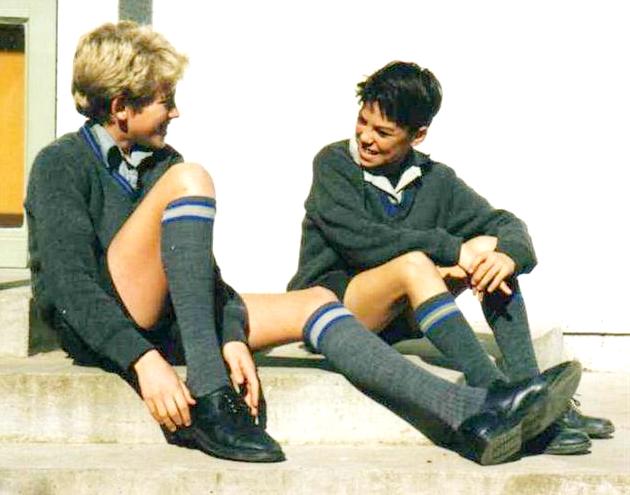
New Zealand asdopted British school uniform styles to an even greater extent than Australia. And those stles have persisted in the country. A factor here is that New Zeland is the most southerly located of the South Pacific Islands which means that British styles make more sence than the more tropical South Pacific islands. Primary children, except for the Catholic and private schools, do not wear uniforms. Secondary schools generally require uniforms. The uniforms were once traditional English styles. Uniforms since the 1960s have become more casual, but most schools continue to require them. Many schools have destinctive summer and winter uniforms. The uniforms vary, but many scools have light-weight shorts and sandals for summer and heavier shorts and knee socks for winter. Most schools now allow the older secondary students to wear long pants. And ome schools allow the girls to wear pants like the boys.
We do not know much about schools in Papua New Guinea. During colonial times, New Guinea was divided. The Dutch coontrolled the west. European planters (mostly British and German) began moving into the east (Papua) (late-19th century). The the German New Guinea Company began administering the northeastern quadrant (1884) and became a German colony (1899). The British declared a protectorate over the southeastern quadrant north of Australia. Australia began administering the southeast as a colony which they called Papua (1906). The Germans gave more attention to developing the economy than the British and Australians, but used forced labor. During World War I, Australian forces seized the German northeast (1914). Australian jurisdiction was formalized (1921). The League of Nations created a mandate system. The League mandate covered only the formerly German sector. The Japanese seized western New Guinea and northern New Guinea (1942). The result was the longest campaign of the Pacific War (1942-45). Through all of these changes as far as we know, no governmental authority established schools. Missionary societies did establish schools. Catholic and Lutheran missionaries were active, especially in the former German northeast sector. The Pacific War brought a much greater outside presence than ever before, but as far as we know, the missions sponsored the only schools in Papua until after the War and Papua began moving toward independence which was achieved (1975). Papua now has a well established puplic school system. The western portion of the island contiunes under Indonesian rule.
We have very limited information on Philipino schools at this time. We have no information on the Spanish colonial era and very little about the American colonial period. School uniforms in the modern Philippines are common in both elementary and high schools. Many elementary and most secondary schools require uniforms. Uniforms are particularly prevalent at private schools. The kind of school uniforms that are worn in the Philippines has different variety of colors and it depends on the school what color combination they use, normally they only use two colors.
Pitcairn Islands is an overseas British territory, famous for Fletcher Christian and the mutiny on the Bounty. It now has a population of about 50-60 inhabitants. The population never large has declined in recent years. Pitcairn's school system follows the New Zealand public school curriculum. Attendance is free and compulsory between the ages of 6 and 16 years. The school is a one room building where all the children are taught. There wwre eight pupils in 2007. There is no uniform and the children like most of the adults go barefoot.
The first Samoan schools were foundedby missionaries. Major improvements were made in the 1990s. As a result, the adult literacy rate today is very high. Government sources report literacy levels of over 97 percent. The Department of Education (DoE) administers the public school system. Five religious missions continue to be active. The missin schools are now fully integrated intgo the public school system with a shared syllabus. The children also take the same qualification examonations. Teachers in the public schools have to hold Samoan teachers' certificates. Most children receive a basic primary education, but secondary education is highly selective. The Samoan school system is somewhat different in rural and urban areas. Most rural childrren attend nearby village schools which offer 4 years of primary schooling. The more academically capable children go on to district schools which provide the upper primary grades. Apia is the capital and most urbanized area of Samoa. Primary schools there offer both lower and upper grades in the same school. A primary goal set by the DoE is to make Somoans proficebnt in English as a second language and English is part of the primary curriculum and in the upper primary schools, instruction is in English. There are sound educational reasons for this. If a child is going to pursue advanced studies, the literature availavle in every field is very limited in the Samoan language.
The government secondary schools are structured largely on the basis of New Zealand schools and instruction is in English. Admission is highly selective based on acadamecic performance on a competive examination.
The Solomon Island east of New Guinea was one of the most isolated places on earth. Australia took responsibility for the islands during World War I. Ironically it was in the Solomons that the United States slugged it out with the Japanese, stopping their expansion during the Pacific War. The Solomons are now an independent country made up of about 1,000 different islands. At the time there were virtually no schools in the Islands. Since the War a public school has been developed. Australia has played a major role in that effort and New Zealand has also assisted. About 65 percent of the country's children attend school The adult literacy rates is about 75 percent. The country is very poor. Most of the population is involved in subsistence agriculture. The endemic poverty limits the funds that can be devoted to education. Many children drop out at an early age. Many schools in the country's developing education system were destroyed by a tsumami (2007). The Government planned to make the schools completely free of charge (2009).
The Kingdom of Tonga is an archipelago of 176 small islands (about 50 of which are inhabited) scattered over a vast area of the South Pacific. The capital is Nuku'alofa which is located on Tongatapu, the lasrgest islasnd. Here the King, the Government, and interesting archaeological sites. Tonga is located to the south of Samoa and east of Fiji. There are three main groups--Vava'u, Ha'apai, and Tongatapu.
The climate is subtropical with a distinct warm period (December-April) and a cooler period (May-November). The annual rainfall increases substantially as one moves from Tongatapu in the south to the more northerly islands closer to the Equator. The Tongans are a Polynesian group with a very small mixture of Melanesian. There are a few European, mixed European, other Pacific Islanders, and Chinese.
As in much of Oceania, the first schools were set up by Western Missianries, in the case of Tonga, American Wesleyan Missionaries (1828).
This was before the conversion of most of the population to Christianity. The Wesleyan Mission provided the only important school for deveral decades. The government took over the responsibility for educational (1882). Other missionary groups were allowed to set up sdchools (1906). Tonga set up a teacher-training college with a 2-year program (1944). A government scholarship program was established to allow Tongan students to pursue higher education overseas. Primary education is now compulsory for all Tongan children.
And as a result, the adult literacy rate exceeds 90 percent. The mission schools use a government syllabus educate about 8 percent of the primary-age children. They play a more importabt role at the secondary level, educating nearly 90 percent of the children. Government primary schools are free, but the children pay a tuitiin fee at the government highschool. The mission schools charge small fees. The country's 115 primary schools anf 750 teachers educated about 17,000 children (1993). About 17,000 children sttended secondary schools. Primary schools are taught in Tongan with lessons in English. Children showing academic promise study for the New Zealand school certificate examination.
Tuvalu is one of the smallest coutries in earth. It is located in the Central Pacific and part of Polynesia. Under British control, it was known as the Ellice Islands. The are found about midway between Hawaii and Australia. As a result, they payed a role in the Pacific War. There are three reef islands and six atolls. Americans will recognize Makin and Tarawa. The populatiion is only about 11,000 people. Tuvaluan children begin primary school at 7 years of age, a year later than most countries. There are 11 primary schools and attenbdance is free and compulsory for 7 years. The schools boast a very low teacher-to-pupil ratio, about a 1:18 ratio. Literacy is very high, although the claimed 99 percent literacy rate may be a little optmistic. Secondary education is not compulsory. Many children do not pass the entrance examinations which does not soeak highkt dor the primary nprogram. There are both academic and vocational schools for children who do not excell academically. The maritime industry is imoortant in Tuvalu. One of the secindary schools is the Tuvalu Maritime Training Institute. Secondary education is complivated by the small island populations. Students who fail secodary school entry exams can attend Community Training Centres, Mby chilkdren, hiwever, do not takje advantage of secondary school opportunities. Officals are concerned that this is adversely affecting the economy.
Vanuatu before independence was a French-British "Condiminium" known as the New Heberdies. We know nothing about the schools during the colonial period. There were both British and French settlers with teFrench predominating. An independence movement gained strength (1970s). The islands became indeopendent as the Republic of Vanuatu (1980). The population is lsargely rural, although Port Vila and Luganville have grown in population. The Vanuatu population (Ni-Vanuatu) are mostly Melanesian with a few Europeans, Asians and other Pacific islanders. Schools in Vanuatu vary. Some require uniforms while others do not.

Related Chronolgy Pages in the Boys' Historical Web Site
[The 1880s]
[The 1930s]
[The 1940s]
[The 1930s]
[The 1940s]
[The 1950s]
[The 1960s]
[The 1970s]
[The 1980s]
Related Style Pages in the Boys' Historical Web Site
[Long pants suits]
[Short pants suits]
[Socks]
[Eton suits]
[Jacket and trousers]
[Blazer]
[School sandals]
Navigate the HBC School Section
[Activities]
[Chronology]
[Clothing styles]
[Countries]
[Debate]
[Economics]
[Garment]
[Gender]
[Hair]
[History]
[Home trends]
[Literary characters]
[School types]
[Significance]
[Transport and travel
[Uniform regulations]
[Year level]
[Other topics]
[Images]
[Links]
[Registration]
[Tools]
[Return to the Historic Boys' School Home]