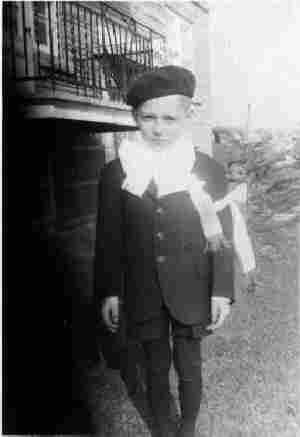
Figure 1.This French Canadian boy wears a short pants suit for his First Communion in 1956. Note the beret and long stockings that were still considered proper for formal occasions. |

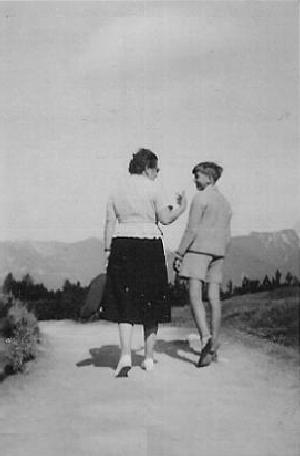
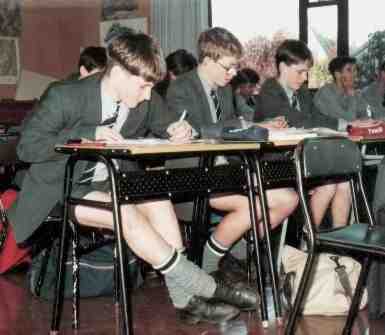
The styles and conventions for wearing short pants have varied greatly from country to country. In some countries quite old boys might wear short pants suits, although often boys began to commonly wear long pants suits by 12-14 years of age. Short pants suits were widely worn in Europe by the 1920s and continued to be popular through the 1950s. They were often worn with kneesocks. Short pants suits began to decline in popularity during the 1960s. Difference have been particularly sharp between Europe and America and latter between Japan and the West. By the 1990s boys around the world were increasingly wear similar styles.
Much of Africa is located in the tropics. The Equarir cuts across cebtral Africa. This and the undeveloped nature of the ecionomies meanyt thast suits
were not common. In fsct even after the Europeans arrived, msny boys diod not wear any clthes ar all. This began to chjange especially after World War II, but even then suits were not common among the African population. Sone Ruropean colonial boys did wear suits on special occassions, modtly djort psnbts suits. South Adrica is a little different, in part because of the milder climate and the larger European population.
We see younger boys wearing sailor suits. British and European styles seem more important than American styles. Knee pants and short pants were very common for boys. Until about 1930, long stockings were common, especially for older boys. Gradually knee socks became more popular. Knickers were much less common. We see some boys wearing knickers, but they do not seem very common. less common. Long pants suits became more common after mid-century, although suits were becoming less common by the 1970s.
|
Boys clothing in Canada until the 1970s varied considerably in the French and English communities. Boys in Quebec often wore French influenced fashions. Boys in English Canada generally wore English styles until after World War II when American styles became more common. Canada's more severe weather has also affected fashions with short pants worn less than in France and England. Even so, short pants suits were more commonly worn in Canada than in the United States until the 1960s when Canadian fashions began to become almost indestinguishable from American fashions.
The fashion spread to the United States, especially for boys from
affluent families. Well to do Americans had always looked to
England, at least for men and boys'
fashions much to the chagrin of American boys. Despite the English
trends, however,
knicker suits were more common in America--especially for older boys.
American boys after the First World war did not wear short pants suits as commonly as European boys. For some reason, many American mothers did not ssem to think it was healthy to dress boys in short pants leaving their knees bare during the winter. This did not seem
to phase British and European mothers. Boys there, especially in Britain, through the 1960s commonly wore shorts even during the cold winter months. Generally well to do American families, often with English conections, however, did often opt for short pants suits. This English influence continued into the 1960s. Knicker suits were more common in America.
Western clothing was not common in Asia before World War II. Not only were traditional garmenys standard, but the general poor economic situation meant that only a handful of families in tghe city could afford suits. We see this in European colonies, especially India. As a result, suits were not commonly worn. Climate was also a factor. Suits are not appropriare for tropical climate. We see suits most commomly in Japam, but mostly after World War II with the advent of the Japanese Economic Miracle. Suits of any are still noe very common even with economic progress whivh finally began after the imoact of the adian Tiger economies began to become established.
Japanese boys seldom wear suits. This is not just a modern development. American and European boys now wear suits much less in the past, although most have a suit or at least a blazer and dress pants for church or formal occassions. This is less common in Japan. The suits worn by Japanese elementary-age boys, however, are generally short pants suits.
|
European boys wore long pants suit into the mid-19th cenntury. Greadualy shortened pants styles, including knickers and knee pants, usually worn with long stockings. At first short pants suits were only worn by younger boys, but gradually older boys began wearing them as well. After the turn of the 20th century we see boys in some countriues wearing knee pants suits with socks rather than long stockings. Only after World War I (1914-18) do we begin to see short pants suits to any extent. There was a gradual shift from knee pants to short pants. Initially the short pants worn were very long. We still see suits with knee pants that had leg buttons. Gtradually the short pants began to be done at shorter lengths. Short pants became standard in the inter-war era throughout Europe and yhis continued through the 1950s, decking in the 1960s. This all varied country bu country, but was a generl pattern throughout Europe. A factor here was class patterns. Working-class vbits geberally did nit attend secondary schools. Thus after finnining promary school (abiuyt age 13) began to wortk. These boys often negab wearing long pants suits. Boys continuing on the secondary school often continued wearing sohrt pants suits longer. Only afrter WorldWar II did secondary education become standard. This pattern was the case in all the more industrailized countries (Belgium, Britain, France, Germany, Italy, and the Netherlands). It was also the case in other less developed countries, but suits in general were less common in these countries. Here the imprtant element was that industrialization meant that incomes were higher meaning that families had more vmoney dor clothing and fashion. It also meant that children were abke to stay in school longer. Climate was a factor, but actually a minor factor.
|
Australian boys until the 1970s generally wore short pants suits when they dressed up. The styles were primarily based on British styles. Not all boys had suits. Many boys might wear their school uniforms (also mostly short pants) when dressingbup. Boys that did have suits, generally had short pants suits. Boys would normally move on to long pants suits at about age 13-15.
Suit styles in New Zealand generally follow styles and conventions in England. Beginnining in the 1960s when English boys began to wear shorts less, fashions begin to differ. New Zealand school boys continued wearing shorts, but clothing styles in New Zealand began to be much more casual. Suits were worn less than before World War II. Some boys still had short pants suits, but they were not commonly worn after the 1970s. Many secondary school boys continue to wear short pants school uniforms. Elementary boys, except at Catholic and private schools, do not generlly wear uniforms.
There is of course an extensive photographic record for the 20th century. We have archieved a huge number of images of boys wearing suits which was nuch more common in the 20th century than is the case today. Many of those image are identified as to country. Where they are found islso a clue, but certaiinly not definitive as people move around. We can often identify the country based on the style of the suit or other garmehts. The backgrojnd of the imafes also orovide clues. Crs for exampl are usually a give away. There are some images in our archive, however, that we have not been able to identify defintivly. Hopefully our readerscan assist with this process. We welcome any insights that readees can offer.
Traveling in Europe: The 1960s
British debate: The 1960s
American boy: Eastern and western fashions

N avigate the Boys' Historical Clothing Web Site:
[Return to the Main short pants suit page]
[Introduction]
[Activities]
[Biographies]
[Chronology]
[Cloth and textiles]
[Clothing styles]
[Countries]
[Topics]
[Bibliographies]
[Contributions]
[FAQs]
[Glossaries]
[Images]
[Links]
[Registration]
[Tools]
[Boys' Clothing Home]