Chronology of Boys' Uniforms


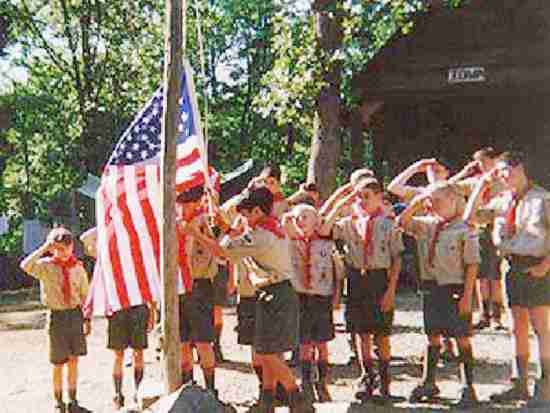
Figure 1.--While the wearing of uniforms have declined in many Scout and other youth groups around the world during the 1990s, some groups continue to insist on the uniforms.

Overview

The uniforms adopted by boys' youth groups have caried greatly over time. In the early period of the 20th century, the popularity of the Scout movement helped to set the fashion for short pants in Britain, Continental Europe, and America. A different youth movement, the Wandervogel emerged in Germany with less militarized uniforms. Since then the uniforms have more commonly followed prevailing boys' fashions. Uniforms were initially popular among boys who would sometimes wear them to school. As late as the 1950s in America, many schools would have Scout day once a week when Cubs and Scouts would commonly and volutarily wear their uniforms to school. Since the 1960s uniforms have become less fashionable among boys. Many Scout and other groups currently have a hard time convincing boys to weear their uniforms. Individual Scout troops and units of other groups, however, continue to maintain high standards for uniform.

Chronology

HBC has developed information on overall uniform trends in all boys' uniform organizations worldwide.

1840s

The Young Men's Christian Association (YMCA) was founded during 1844 in London. The first association was founded by George Williams, an apprentice at a drapery store, who organized 12 associates into a group to promote Christian standards of conduct among their fellow apprectices. The concept rapidly spread throughot Europe and in only a few years had crossed the Atlantic. While not a uniformed group, The YMCA was the first association directed at youth activities. For the first time adults conceived of an organized group to direct youth activities into positive chnanels.

1850s

The Young Men's Christian Association (YMCA) which had been organized in England during the 1840s reached America in the 1850s. The first YMCA was organized in Boston and Montreal in 1851. This came about largely from entusiastic letters home from young Americans and Candanias living in London. American and Cannadian YMCAs held their first conference in 1854 and the convention agreed to a loose confederation, annual convention, and the creation of a central committee. The first world conference was held in Paris during 1855 and formed a World Alliance. The YMCA was initially conceived as an association for young men, but work with boys, not forseen by the founders, was to become a key activity for the new organization. Two giants in the foundation of boys' uniformed youth groups were born in the 1850s. Daniel Carter Beard was born during 1850 in America. Robert Baden Powell was born in England during 1857.

1860s

Two important guiding lights in the foundation of uniformed boys' groups were founded in the 1860s. Ernest Thompson Seton was born in America during the 1860s. Author and proponent of British colonialism, Rudyard Kipling, was born in England during 1865. A major development in 1860 was the opening of the first American Boys Club in Harford, Connecticut. The organization was not a uniformed group, but was one of the earliest attempts to provide recreational opportunities and a safe environment for the city poor.

1870s

The idea of organized boys groups began to receice increasing attention in the 1870s. The founders of the clubs at the onset focused on the problem of street boys and addressed the increasngly serious problem of preventing juvenile delinquency. The growing YMCA movement, originally untended for young men had by the 1870s begun to give some attention to the need to work with boys. The first U.S. Boy's Club was established in America (Harford, Connecticut) in 1860. The idea spread to many other U.S. cities. A Boys Clun was established in New York during 1876. A good assessment of the ealy clubs is avaiable in the chapter on boys' clubs in David Macleod, Building Character in the American Boy: The Boy Scouts, YMCA, and Their Forerunners, 1870-1920 (1983).

1880s

Rising concern registered in the late 19th Century with the number of boys behaving roudily in public places. Growing numbers of boys were entered the monied economy. Poverty was rife. But there were more and better paying jobs than ever before. Boys could get jobs and as a result had more buying power than ever before. European populations were becoming increasinly urbanized. This meant that in the anonamous city, a boys behavior was no longer constantly monitored by family. After work they wanted to kick up their heels a bit. And in the anonamous city boys felt fewer constraints than they would have in a small village. Groups of rowdy boys raised eyebrows and adults discussed how to deal with the growing problems. One of the answers, prooted primarily by churc groups, was to sponser youth groups to channel boys' energies. Boys' youth groups began to appear to channel their energies. Most of these groups were uniformed groups.

1890s

The first uniformed boys' youth group, the Boys' Brigade, appears in Scotland and spreads to England, adopting paramilitary uniforms and military drill. The Wandervogel movement appears informally in Germany and adoptes short pants--but less militarized uniforms.

1900s

A British war hero, Baden Powell, founds the Boys Scouts and adopts a para-military style uniform incorporating short pants. Secular Scouting rapidly displaces the more religious orinented Boys' Brigade as the dominate English group. Scouting spreads to other European countries--but never proves as popular in Germany as the Wandervogel.

1910s

Scouting spreads to America and Europe. The Boy Scout Association in America was were founded in 1910 an chartered by Congress in 1916. European Scouts like British Scouts wear shorts, but American Scouts generally wear knickers. Scouting becomes the dominate youth group in most countries excet for Germany where Wandervogel is dominate. World War War I interupts the spread of Scouting and escimates an entire generation throughout Europe.

1920s

Scouting after the First World War spreads around the world. Boys generally wear British style uniforms with long short pants. The Itlalian Fascists ban Scouting. Cub units were fornmed with destinctive uniforms. The idealism of the Wandervogel was shattered by World War I, The German youth movement splinters into numerous sctarian and politically active groups. The Hitler Youth were formally established in 1926.


Figure 2.--The classic American Scout illustrations were done by Norman Rockwell. This image was probably done in the 1930s.

1930s

Scouting continues to spreadin most countries. The NAZIs upon seizing power in Germany ban Scouting and most other youth groups, making the Hitler Youth the country's single youth group. Almost all youth groups, except American Scouts have short pants uniforms. Uniforms with shorter pants began to be seen.

1940s

The World War II disrupted the growth of Scouting. The NAZIs supressed Scouting and organized acceptable youth groups in Nordic countries and France. Many Scouts in occupied countries played heroic roles in the war effort. Scouts in America mostly wore long pants as knickers went out of style.

1950s

After the war Scoting was abolished in the Eastern European and Asian countries taken over by the communists and Young Pioneer groups were formed. Scouts in western Europe wore uniforms with more national differences and increasingly shorter shorts.

1960s

American Boy Scouts generally wore long pants, despite the common image. American boys did wear shorts at camp and other outings. Beginning in the 1960s, however, shorts became increasingky common. british Scouts in 1969 decide to change the official uniform to long pants.

1970s

The spread of the Scouting movement to virtually every non-communist country and increasing national inovation had created by the 1970s a great diversity of uniform styles. American boys increasingly object to wearing Scout uniforms.

1980s

American Scouts make a major change in their uniforms.

1990s

The implosion of the Soviet Union clear the way for the reimergence of Scouting in Easten Europe and the former Soviet republics, meaning more new uniform styles are added.

Organinaztion Chronologies

HBC is developing chronologies for each youth organization. We ghave just begun this effort. Currentky we have information on Scouting, but are just beginning to develop information on other groups.

Scouting

The world Scouting movement began in 1906 with Baden Powell's English Scouts. The movement quickly not only crossed the Channel onto the Continent, but by 1910 had reached America where Scout-like groups had already begun forming. The early uniforms were mostly quite similar to the original English uniforms, but differences soon began to appear. The Americans opted for knickers rather than short pants. The Europeans folloed the English lead with short pants, but began adopting destictive national uniforms. This was in part facilitated by the tendency in many European countries to establish various Scout associations rather than one single national comprehensive national association. Images collected over time show how the Scout uniform has evolved around the world over time. One major development was in 1969 when the British Scout Assoociation decided to adopt a long pants uniform.

Other groups

No information developed yet.

Information Needed

We are just beginning to compile information. Please let us know a little about Scout or other experiences so we can flesh out information about the different decades.



Christopher Wagner


Navigate the Historic Boys' Uniform Web Site:
[Introduction] [Bibliographies] [Countries] [FAQs] [Garments] [Chronologies] [Organizations] [Contributions]
[Boys' Uniform Home]


Created: January 1, 1999
Last updated: September 15, 2001