|
The chronological assessment of Ukrainian schools is somewhat complicated by changing political situations. Poland and Russia fought over Ukraine (17th century). This was before many children attended any schools. For most of the modern era, Ukraine has been under Russian control, either the Russian Tsarist Empire ( -1917) or the Soviet Union (1917-91). This is complicated by changing boundaries, German occupation during the two world wars and a brief period of disorganized independence during the Civil War following World War I. The education system was dominated by either Tsarist and then Soviet control. In both instances there was an effort to suppress Ukrainian nationalism and culture and education was used in this process. Ukraine itself was culturally divided between an orthodox east and Catholic west. The Catholic west had a stronger degree of contact with the West than most other Tsarist provinces except the Baltics and Poland -- countries which briefly obtained their independence after World War I (1914-17). An independent Ukraine came into existence after centuries of subjugation (1992). At first, Ukraine contained to be controlled by former Soviet Apparatchiks. This did not change until the Orange Revolution which defeated President Putin's effort to retain control (2004). This finally afforded affording the opportunity to establish a Ukrainian educational system free to promote Ukrainian nationalism and culture and turn to the West. President Putin ordered an invasion of Ukraine to prevent the desire of Ukrainians to be a free and independent nation (2022).
Education in Ukraine began under the rule of Prince Volodymyr the Great, who promoted literacy among the children of the nobility and clergy. Orthodox priests could marry and have families. This was more complicated in Ukraine because of the influence of the Catholic Church. Studies emphasized 'book learning' and religious instruction in Church Slavonic, influenced by Byzantine traditions. Schools were often attached to episcopal cathedrals, and princes were educated at home by private tutors. During the reign of Yaroslav the Wise, stipends were provided for priests to teach reading and writing, and literacy spread among urban populations, including women. The first schools for girls opened in Kiev (1086).
The Mongol invasion disrupted educational centers like Kiev and Chernigov, leading to a decline in formal schooling .
Recovery from the Mongol invasion was slow. Powers vied for control of Eastern Europe including Muslim Khanates, the Ottoman Empire, Poland-Lithuania, Sweden, and Muscovy. There was even a Cossack state. In the southwestern regions under Lithuanian and Polish-Lithuanian rule, Jesuit collegiums and schools were established for Catholics and Uniates, while Eastern Orthodox education remained limited. Ukrainians seeking higher education often studied abroad at universities in Krakow, Prague, and Western European institutions. The Kyiv Epiphany Brotherhood School (1615) and its reorganization into Kyivan Mohyla College (1632) marked the first Ukrainian higher education institutions, introducing Latin and Polish into the curriculum, though Ukrainian language instruction was minimal. The Tsarist Empire gained control of most of Poland as pat of the Polish partitions (18h century).
Protestant Germany and America invented public schools (18th century). And by the early-19th century Catholic Europe followed. Only slowly did such progressive education policies reach Tsarist Russia. Ukraine during the 19th century was primarily controlled by Tsarist Russia. There were, however, Ukrainians living in the northeaster sector of the Austro-Hungarian Empire, especially Galacia. There was at first only limited access to education for the general population. To stifle Ukrainian nationalism, in the Austro-Hungarian Empire, Ukrainians were called Ruthemians. Ethnic Ukrainians struggled for its right to speak Ukrainian, but governments of both states adopted policies to limit use of the Ukrainian language and eradicate any Ukrainian spirit. Ukrainian language ans songs were forbidden in schools. Private educational establishments were closed and teachers were harassed by the authorities for providing education in Ukrainian and using elements of Ukrainian history and culture educational process. 【Nahrybelniy】 This was at a time that free public schools were just beginning to appear in Europe. The process was a little more advanced in the Austrian Empire than the Tsarist Empire, although many Ruthenians lived in the Hungarian sector of the Austro-Hungarian Empire. Literacy and schooling gradually expanded, especially after mid-century. Ukrainian cultural and language education began to appear in local schools and private institutions.
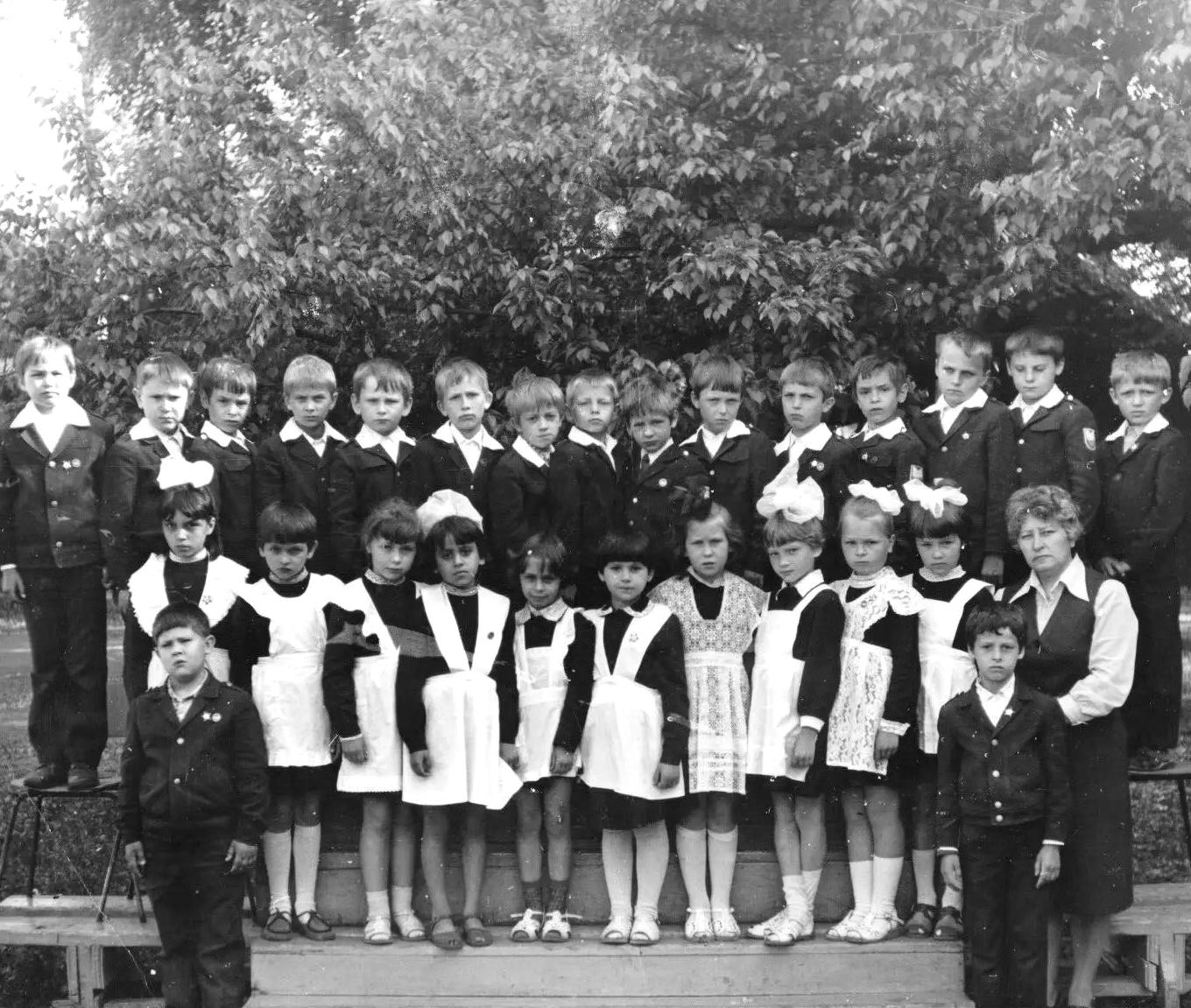
The development of Ukrainian education in complicated by changing boundaries (20th century). After World War I, There was a brief period of disorganized independence during the Civil War. Ukraine failed, however, to achieve independence during the Russian Civil War (1919-21). Ukraine was absorbed into the Bolshevik Empire. Poland did achieve its independence after World War I (1918). And there were Ukrainians in eastern Poland, especially southeastern Poland. With Communist control, the educational system was significantly expanded. This increased educational opportunity to workers and peasants. Early Soviet Era (1920s): During the 'korenizatsiya' (nativization) policy, the Soviet government actively promoted Ukrainian language and culture. Ukrainian was widely used as the primary language of instruction in Ukrainian schools. Resistance to he Communists, especially the collectivization of land led Stalin to adopt brutal measures to enforce compliance. He engineering a genocidal famine to destroy the Ukrainian peasantry (1931-32). Germany during the World Wars briefly occupied Ukraine (1917-18) and (1941-43) occupation. Many Ukrainians at first welcomed the Germans, but the NAZI Operation Barbarossa became a war od annialation. Hitler was not about to allow any form of a Ukrainian state and brutally suppressed Ukrainian nationalists. Educatiion ceased under NZI occupation. Basically the Ukrainian education system was dominated by Tsarist and then Soviet control. In both instances there was an effort to suppress Ukrainian nationalism and culture and education was used in this process. Ukraine itself was culturally divided between an Orthodox east and Catholic west. The Catholic west had a stronger degree of contact with the West than most other Tsarist provinces except the Baltics and Poland -- countries which briefly obtained their independence after World War I (1914-17). The Soviets reexerted control after World War II. The Soviet state shifted its focus toward the integration of a unified Soviet identity, which led to a Tsarist-like policy of Russification. While Ukrainian remained a required subject (Ukrainian Language and Literature) in many schools, Russian became the dominant language of instruction. he availability of Ukrainian-language schooling declined sharply. By the 1980s, the vast majority of urban and industrial schools taught in Russian, while Ukrainian instruction was increasingly marginalized or relegated to rural areas. Although Ukrainian subjects were taught, parents in some regions had the option to request an exemption from Ukrainian classes, whereas Russian was universally mandatory. Ukrainian emigrants and exiles preserved educational and cultural records abroad, as reflected in archives like the Ukrainian History and Education Center, which holds extensive 20th-century collections. The Ukrainian immigrant community in the United States was especially important. An independent Ukraine only came into existence after centuries of subjugation with the dissolution of the Soviet Union (1992).
At first, Ukraine continued to be controlled by former Russian-oriented Soviet Apparatchiks. This did not change until the Orange Revolution which defeated President Putin's effort to retain control (2004). This finally afforded affording the opportunity to establish a Ukrainian educational system free to promote Ukrainian nationalism and culture and turn to the West. President Putin ordered an invasion of Ukraine to prevent the desire of Ukrainians to be a free and independent nation (2022). Education in Ukraine has been disrupted by the War in which the Russians have committed terrible atrocities. The Russians have kidnapped Ukrainian children in occupied areas. And the Russians have targeted civilians in waves of devastating missile and drone attacks. This has included barbarically targeting hospitals and schools.
Nahrybelniy, Ya. "Formation an Development in Ukrainian Lands in 19th-20th centuries in he context of modern historical and pedagogical researches," Innovative Solution in Modern Science (2020) Vol. 2, No. 38.

Related Chronolgy Pages in the Boys' Historical Web Site
[The 1880s]
[The 1930s]
[The 1940s]
[The 1930s]
[The 1940s]
[The 1950s]
[The 1960s]
[The 1970s]
[The 1980s]
Related Style Pages in the Boys' Historical Web Site
[Long pants suits]
[Short pants suits]
[Socks]
[Eton suits]
[Jacket and trousers]
[Blazer]
[School sandals]
Navigate the HBC School Section:
[Return to Main Ukranian School page]
[Return to Main European school uniform page]
[Return to Main school uniform page]
[About Us]
[Activities]
[Chronology]
[Classrooms and buildings]
[Clothing styles]
[Countries]
[Debate]
[Economics]
[Garment]
[Gender]
[Hair]
[History]
[Home trends]
[Literary characters]
[School types]
[Significance]
[Transport and travel
[Uniform regulations]
[Year level]
[Other topics]
[Images]
[Links]
[Registration]
[Search]
[Tools]
[Return to the Historic Boys' School Home]