|
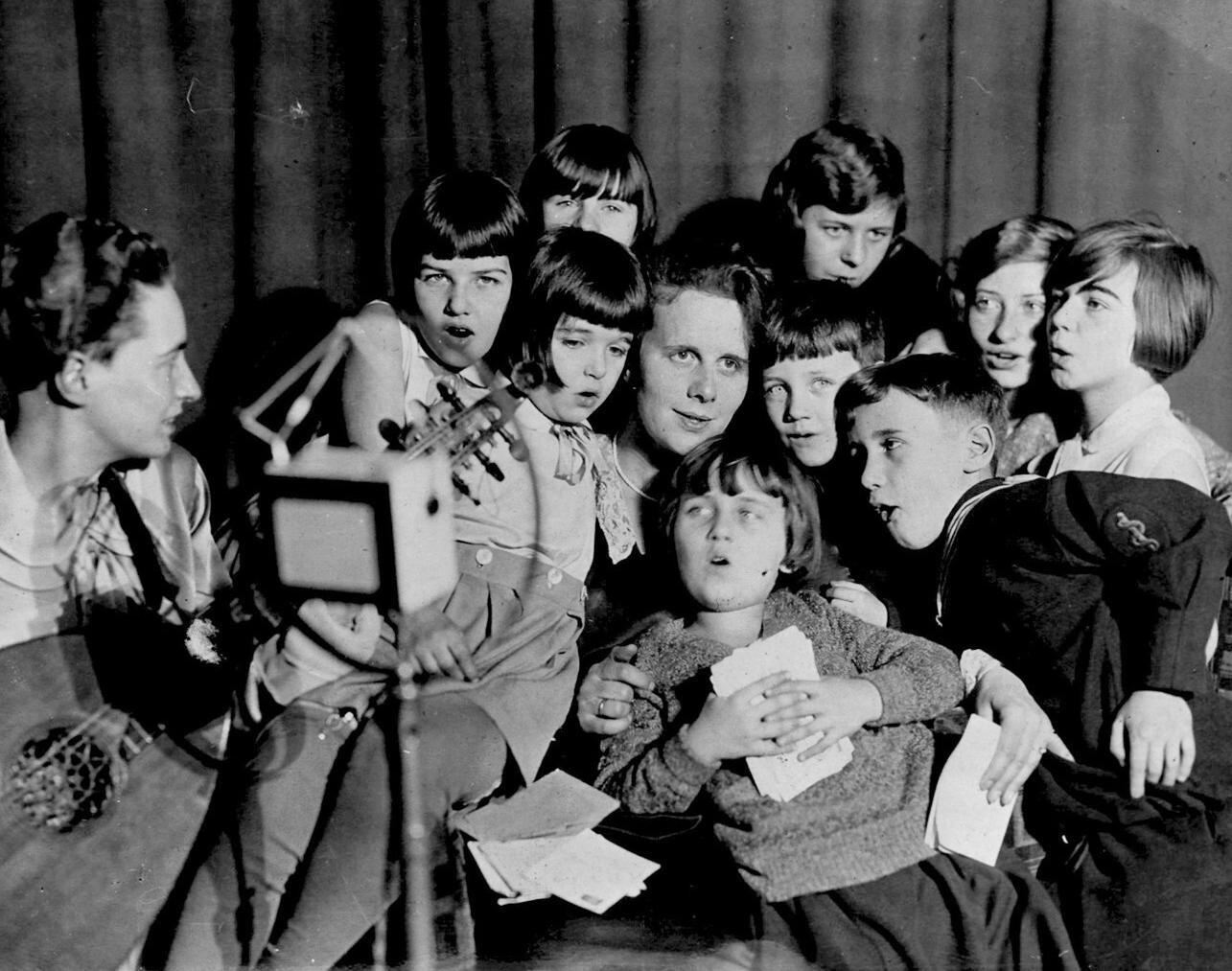
As in the rest of Europe, radio rapidly developed in Germany after World War I in the 1920s. This was the result of advances in radio technology which occurred during the War. Radio was introduced to Germany after the War and the industry grew rapidly. The first official German radio broadcasts occured a year after the War (December 22, 1920). This began with the Königs Wusterhausen transmitter. Radio very rapidly became an important part of German cultural life. A factor here was music, a vital component of German culture, Radio was perfectly suited to transmit music. The visual aspect of music is smaller than all he other arts. Radio stations were established ll over Germany. The first entertainment program was broadcasted (October 29, 1923). The German Reichspost (Post Office) meaning the Government played a central role in the new industry. The Reich Broadcasting Corporation (RBC) controlled programming. The restrictions imposed on Germany by the Allies, the first German radio station was commissioned (1920). The medium wave radio station 'Deutsche Welle' began broadcasting as the country's first national radio program (1924). The decade also saw the introduction of shortwave broadcasting and the inauguration of the Berlin radio tower (1926). The first radio stations had low-powered transmitters meaning that they only broadcasted locally. Germany's first high-power medium wave transmitter began broadcasting in Mühlacker (1930). We do not yet have much information on the nature of early German broadcasting, both the commercial development and the government role. The radio industry by this time in only a decade had become a major employer in German cultural activities. There were 1,500 production, with nearly 1,500 RBC employees and around 40,000 freelancers. We do know that several companies began making home radios. The Germans made very good radios, but they tended to be rather expensive. The number of licensed radio sets in Germany totaled 4.2 million (1932). The population at gthe time was about 65 million people. This means that while many families had radios, many German families did not--primly working-class families. As in many other industrial areas, German companies did not develop the mass production of inexpensive sets as began to occur in America. Thus many German workers could not afford a radio. This was not a uniquely German phenomenon, but a general pattern throughout Europe.

Navigate the Boys' Historical Clothing Web Site:
[Return to the Main German radio broadcasting trends page]
[Return to the Main European radio broadcasting trends page]
[Return to the Main NAZI page]
[About Us]
[Biographies]
[Campaigns]
[Children]
[Countries]
[Deciding factors]
[Diplomacy]
[Geo-political crisis]
[Economics]
[Home front]
[Intelligence]
[POWs]
[Resistance]
[Race]
[Refugees]
[Technology]
[Totalitarian powers]
[Bibliographies]
[Contributions]
[FAQs]
[Images]
[Links]
[Registration]
[Tools]
[Return to Main World War II page]
[Return to Main war essay page]
[Return to CIH Home page]