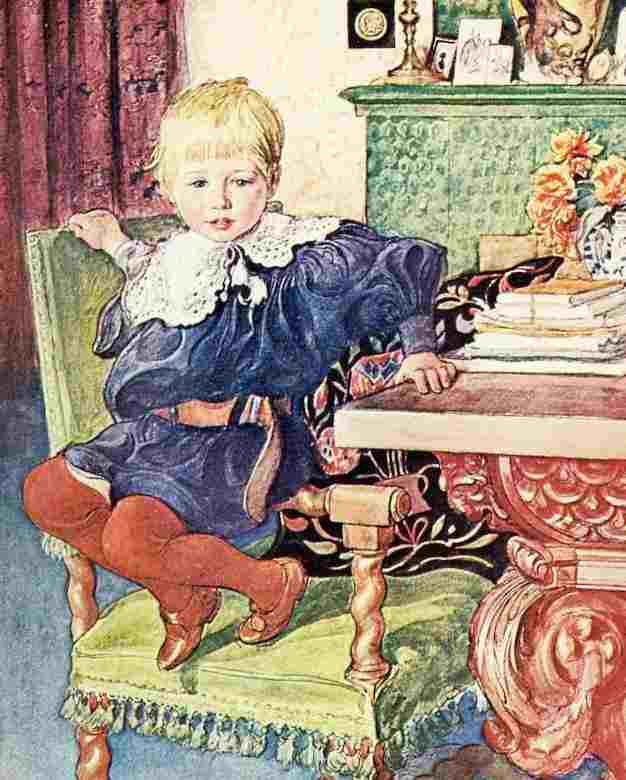
Figure 1.--We do not have any detailed infomation on this Larsson portrait, but believe it was painted in 1895. |

|
Carl Larsson, although not as sell known as many other important artists, may be one of the greatest artists who have painted children. There is an especially appealing intimacy in his work. Many artists realisticallypainted clothing, but few artists have been able to capture the essential qualities of children as effectively as Larsson. Bergman films seem to capture the magical ambience that Larsson painted. We know little about his artistic career at this time, but we do note several beautiful portraits of children along with detailed illustrations of period clothing. His paintings provide wondeful glimpses as to how children were dressed in Sweden in the 19th and early 20th centuries, a superb record of how Swedish children were dressed at the time.
Karl's father prived unable or unwilling to support the family. It was Karl's mother ho worked as a laundress that provided for he family as best she could.
Karl was born is Stockholm during 1853. He grew up in a poor section of Stockholm and and a very difficult childhood because of poverty. Curiously the usually happy images of childhood that he painted are very differe
Larsson studied art for some time in Paris. It was there that he began to develop his mnow reconizeable style.
Larsson had little self confidence as a young man as a result of the poverty in which he was raised. He married Karin Bergoo, also a painter, in 1883. She is credited for helping to create a calm, stable home environment in which Larsson and his art florished.
Larsson was one of the most importnt of a generation of Swedish artists that were influenced by the French Impressionists and rejected the traditional forms on which the Stockholm Academy insisted. Although influenced by the Impressionists was not an impressionist himself. His style actually is hard to classify. Art historians point to many styles that have influenced Larsson: Impressionism, Neo-Rococo, Japanese prints, art noveau, and other influences. One of the most noticeable influences in Larsson's paintings is Sweedish folk art. Here the usually happy domestic scenes or humble peasant genre images mirror popular Swedish folk art subjects. He also liked to use bright colors, another aspect of folk art. Larsson skills, however, are much more refined than folk art.
Carl Larsson is Although not as sell known as many other imprtant artists, is one of the greatest artists who have painted children. Few artists have been able to capture the essential qualities of children as effectively as Carl Larsson.
Larsson's paintings provide wondeful glimpses of Sweden in the 19th and early20th century and how children were dressed in Sweeden. Very often children are ignored by artists except for a few portraits. Larsson focused on the lives of children. Presumably there were many simularities with Norway, Finland, and Denmark.
While we can admire Larsson's work, we in fact know little about the individual portraits that we have collected by him. He presents us with a wide range of children in many different outfits. We do not know who these children were. Hopefully our Swedish readers can tell us more about Larsson and his paintings. While we do not know anything about the children, Larsson provides us a wonderful record of children's lives and how they were dressed. And unlike the black-and-white photography of the day, Larsson provides us colorful images which tell us a great deal about the color of the garments the children wore.
Burkhard Riemschneider, 1993.

Navigate the Boys' Historical Clothing artistic pages:
[Return to the Main Swedish art page]
[Return to the Main artistic page]
[Chronologies]
[Individuals]
[National]
[Styles]
Navigate the Boys' Historical Clothing Web Site:
[Return to the Main Swedish page]
[Introduction]
[Activities]
[Biographies]
[Chronology]
[Clothing styles]
[Countries]
[Bibliographies]
[Contributions]
[FAQs]
[Glossaries]
[Images]
[Links]
[Registration]
[Tools]
[Boys' Clothing Home]