|
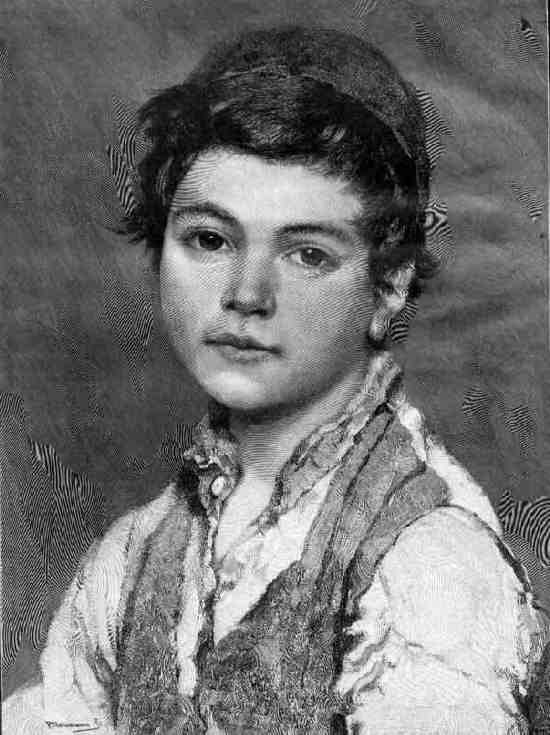
HBC has collected information on a variety of activities in which Italian boys have participated in over time. Many of these activiities involve a wide range of specialized costumes. Or we see boys dressing up in their best clothes for holiday events and special occassion. Other images show trends in Italian boys' clothing over time. Some of the activities include choir, choir, dance, games, holidays, religious observation, school, sport, and many other activities. Since the Fascust era, summer camp has been a popular activuty. Italy until after World War II, was the poorest of the major European countries, but this is no longer the case. Given the historic poverty, especially in southern Italy, many Italian boys had to work often invoved in agricultural labor, nbut this has changed since the disaster of Workd War II ad the ensuing Italian conomic miracle.
We have some limited historical information about summer camps in Italy. The Scouts before World War I began organizing summer camps, but camp became an activity organized by the Balial after the Scouts were banned in the 1920s. Italian Fascism was not as absolute as the NAZIs. Thus although Scouting was banned, groups such as companies were allowed to organize summer camps for the children of their workers. An Italian reader writes, "Summer camps in mountain or countrysides were and are organized by Boy Scout groups. These camps usually are with tents, but for younger children, the "lupetti" (little wolves), they use organized camps. During the Fascist era were the party organizations that organized summer camps: the "Balilla" (younger) and the "Avanguardisti" (older) for the boys and the "Figlie della Lupa" (younger) and the "Giovani Italiane" (older) for the girls. The Italian term for summer camp is "campo estivo". Since the 1970s there are many summer camps organized from parishes and religious movements called "campo scuola" (school camp), because they have also an educational goal. There is an other traditional summer camp in seaside resorts, called "colonia estiva". This sort of summer camp is the more common in Italy. Italy is of course virtually surrounded by the sea. There are numerous organizations that organize "colonie estive": for example the big companies organize these summer camps for their laborers' children. I attended my father's company sea summer camp between the late 60s and early 70s. We had a simple uniform: blue shorts, white t-shirt and cap, open-toe sandals without socks; for the seaside: blue trunks." One interesting note is that even though Italy after World War II had a very large and active Communist Party, the Young Pioneers were never organized in Italy. There were thus no Young Pioneer camps, the Party did, however, sponsor some summer camps.
HBC has little information on Italy. Curiosly in a country with a rich musical tradition, including choral music, there appear to be no well known boy choirs. HBC has attempted to reserch the subject of Italian choirs. Apparently in Italy the notion of boys' choirs is now unknown. There are, however, children's choirs made up of both boys and girls. HBC would be very interested for any insights that Italian readers can offer.
The Siclian Mafia or Cosa Nostra (Our Thing) is well known to Americans thanks to the movies, especilly the Godfather Triology. The importance in America reflects the large number of Sicilians who emigrated to the United States. Less well known is that the Cosa Nostra is not Italy's only Mafia or criminal fratrnal organization. There are two other such organizations, both located in the south. Sicily nd the south are the poorest areas of Italy. The Camorra is bsed in Naples. The 'ndrangheta is found in rural Calabria, similar in many ways to Sicily. The 'ndrangheta, virtually unknown in merica, has become Italy's most important crime syndicate. [Dickie]
Every Italian town and village has their own destinctive festivals. A range of cultural elements are involved, including often destinctive clothing. Many are religious in character and are commonly associated with the patron saint of the village. One example is the Festival of Saint Salvatore at Cabras on Sardinia. An Italian reader tells us about the festival of Saint Paul�s in Palazzolo Acreide, a large village in Sicily. It is in the south-western part of the island. The most important aspect of the festival is the procession. At 1:00 p.m. of June 29, the statue of the saint (made by a local sculptor in 1507) is brought out of the church through the main door. The statue is carried on the shoulder by many people along the village streets. Some barefoot women follow the statue. During the procession many mothers undress their little children. The children are then brought as near as possible to the saint�s statue. It is a sign of instance of protection by the saint that probably has a pre-Christian origin. We find this rite in some other Sicilian festivities."
We do not know a great deal about Italian holidays yet. We have not found many family snashots of holiday celebrations. The standard European holidays such as New Years are observed (January 1). Epiphany is based on the story of the three wise men (or kings) offering Jesus gifts of gold, frankincense and myrrh (January 6).
Liberation Day is a national holiday )april 25) It marks the fall of Mussolini's Fasist regime (April 25).
It also mrks the end of the NAZI occupation in Italy towards the end of World War II. As a mostly Catholic country, the religious holidays Easter is obseeved as Food Friday nd Easter Sunday, but Easter Monday is national holiday. The date varies from year to year, but is in April and May. Many Italians commemorate the labor movement�s social and economic achievements on Labor Day, often rferred to as May Day (May 1).
The national holiday is the Anniversaty of the Republic (June 2). Known as Festa della Repubblica it celebrates the day when Italians voted to abolish the monarchy in 1946. After King Umberto II lost a plebecite following World War II, a Republic was declared. Many Italians observe Assumption Day meaning the Assumption of Mry. It is known as Ferragosto in Italy (August 15). This national holiday celebrates the Catholic belief that God took the body of Jesus� mother Mary into heaven at her death.
All Saints� Day, known as Festa di Tutti i Santi, is both a religious and public holiday in Italy (November 1). As the name implies, it collectively celebrates all of the Catholic saints. Manby of the saints are honored individully as local celebrations. The feast of the Immaculate Conception (L'Immacolata Concezione) is another Catholic celebration that is a nationl holiday (December 8). The day commemorates when Mary, the mother of Jesus, was graced by God to lead a life 'free of sin' according to Catholic belief. As is the case throughout Europe, Christmas called Natale is of great importance (December 25). Italians also celebrate St Stephen�s feast Day, Il giorno di Santo Stefano. Iy is celebrated as a public holiday the day after Christmas Day (Decemnber 26). In addition to these nationl hoidays, there are many local holidays which are celbrated, many are associated ith individual saints. .
We do not know very much about children's parties in Italy. Here our major source of information is the family snapshot. And we have not been very sucessful at acquiring Italian family snap shots. Italy is one of Europe's more populace countries. And you would think that there would be a very substantial photographic record. We have found quite a few perinent snapshots from the other major European countries, but very few Italian prty snaopshots. The most important chilkdren's party is the birthday party. This is the case around the world. There are also sasonal parties that are popular. Religious events are also important. In Italy this would primarily be a party after a child's First Communion.
Play is of course an important topic on any assessment of children's activities in the various countries. Our Italian photographic archive is not as large as that of several other of the larger European countrues. Much of our HBC assessments come from assessing the photographic record. We have relatively few images of Italian children at play. Thus we know less about children's play in Italy than many other countries. A factor with Italy is economics. Italy was a very poor country, especially souther Italy. This affected play as many children had to begin working at a fairly early age. We know very little about toys and games in Italy. Surely the toymost associated with Italy is the puppet, of cource because of the charming Pinochio story. The topic of play is one we hope to expand on as HBC grows. As far as we can tell, these seem similar to games and toy is other European countries. We see boys playing cards, but are not sure what games they played. The principal sport is of course football, but these seems to be apassion that developed primarily during the post-World War II era.
We have only limited information on outings at this time. With children this often means family outfings, but older children can go on limited outings on their own or with groups of friends. We suspect that there were many similarities to other European countries. City families had parks to visit, although we have little information on Italian city parks at this time. A major difference with America is that few Italians families had cars. This restructed family mobility. This of course was a factor throughout Europe. Thus ecursions into the country were limited. This made picnics into the country difficult. Bicycles provided some mobility for older boys. But here again, poverty was a factor. Many Italian fanilies could not even afford bicycles. Italy is a large peminsiula extending into the Meditteranean. Thus most Italiand live close to beaches. Thus seaside outings became an important part of Italian life. We see Italian families at the seaside in the early 20th century, but have only limited information at this time.
Religion is a very important part of Italian life. Most Italians describe themselves as Catholic, although many are non practicing. Religion has played an important role in Italian history. Christianity was a creature of the Toman Empire. It developed within the Empire although it was at times severely repressed. It became the stsate religion of the Empire. Christianity not only survived the fall of the Empire, but was adopted by the Germanic Tribes who conquered the Empire. Italy became the center of Catholcism in Europe because of the growing primacy of the Papacy. The Papacy also controlled a secular state in central Italy around Rome and was influential even in the other Italian states outside its secular control. Both Byzabtium and the Arabs at times controlled parts of Italy and Sicily, but the Catholic Church emerged as the sole religion of Italy with the exception of small Jewish communities. The Papacy achieved such strength by the the turn of the second millenium that they vied with the secular power of the Holy Roman (German) emperors. It was at this time that the Papacy conceived of the Crusades to liberate the Holy Land, inspiring an outpouring of religious devotion throughout Europe. The Renaissance first appeared in Italy, profoundly affecting intelectual thought. Italy never, however, experienced the Reformation. Rather the Inquisition and Counter Reformation kept Italy thoroughly Catholic. The Napoleonic Wars introduced liberal ideas to Italy, but the Napoleon's defeat and the Congress of Vienna reimposed conservative regimes the and Catholic Church. The liberal movement for religious freedom was less intense in Italy than the rest of Europe. Conflict developed between the Papacy and the new kingdom of Italy, but the Catholic Church remained influential as it did even during Mussolini's Fascist regime. The Church signed a Concordont with Mussolini's Government. The position of the Church changed after World War II with a new Consitution. The Church remained a central part of the life of most Italians. The Communist Party after the War became a major force in Italy. Even so, most Italians even Communists had their children do their First Communion and were married in churches.
We have manged to find very little information on Italian school uniforms. Hopefully some of the Italian visiors to this web site will provide some information. I believe the pattern in Italy has been similar to that of France. Most schools did not require a formal school uniform like that common in England. Rather Italian elementary children have worn smocks over their regular clothes. Often a single style of smock was required. Many schools had a dark blue smock worn with a wide Peter Pan collar. At one time this appears to have been a national requitement. We do not at this time have any chronmolgical information on Italian school smocks. Gradually different colors of smocks appeared. Also schools eventually made the smock optional.
Sport is very popular in Italy. It is not as centered on the schools as in the case of America. This tends to be true through much of Europe. Football dominates Italian sport as is the case throughout most of Europe. Sport is not nearly as seasonal as in America. Boys want to play footbll year round. We do not have an Italian sports page yet. We do have a page on rugby. It is a minor sport, but growing in popularity. We also have a page on Italian swimwear.
The pervasive idea currently is that the industrial revolution and capitalism were responsible fior child labor Actually the opposite is trye. Only with the industrial revolution and the generation of wealth it brought were Western societies able to reduce and finlly end child labor. Italy is a ase in point. Italy until after World War II, was the poorest of the major European countries. Children commonly worked in Italy until after World War I.
The poverty and child labor was especially severe in southern Italy which well into the 20th century was almost feudal with large agricultural estates. It was less common in the industrialized north. Given the poverty, especially in southern Italy, many Italian boys had to leave school at an early age and work. Italy was not as heavily industrialized as many countries to the north. Thus boys were often involved in low paying agricultural labor. The poverty in Italy was the major reason that large numbers of Italians emmigrated to America in the late-19th and early-20th century. We note Italian boys involved in agricultural work well into the 20th century, even after World War II.
Italian boys were earger particupants in the spreading Boy Scout movement during the 1910s. We have only limited information on early Italian Scout uniforms. After World War I, however, the Fascists seized control of Italy in the 1920s and Scouting was abolished. Most Italian boys participated in the Fascist youth organization the Baliall, which like the Scouts was a uniformed group. We have collectecd some information on the Baliall. Scouting did not reappear in Italy until the 1940s and the defeat of Italian Fascism.
Dickie, John. Blood Brotherhoods: History of Iraly's Three Mafias (2014), 800p.

Navigate the Boys' Historical Clothing Italian pages:
[Return to the Main Itlalian page]
[Return to the Main ethnic page]
[Italian school uniforms]
[Italian youth groups]
[Italian choirs]
[Italian movies]
[Italian royalty]
Navigate the Boys' Historical Clothing Web Site:
[Introduction]
[Activities]
[Biographies]
[Chronology]
[Clothing styles]
[Countries]
[Bibliographies]
[Contributions]
[FAQs]
[Glossaries]
[Images]
[Links]
[Registration]
[Tools]
[Boys' Clothing Home]