|
Clothing and hair style are strongly associated with gender. There are also strong gender conventions associated with colors and names. These gender conventions vary over time. At times they have been so rigid that those individuals who dared stepped over the line separating the genders might forfeit their lives. It was after all for wearing men's clothing that Joan of Arc was burned at the stake. The great horror historically was women dressing as men. This was the reason the graet icon of French patriotism, St. Joan, was buened at the stake by the dastardly English. In the 19th century the great obsession was women daring to dress as men. Thus while little boys commonly wore dresses, it was unheard of for women to wear pants. Even the valliant frontiers women in America wore dresses. This changed in the 20th century when girls and women began wearing male clothing and the great concern became that boys should never wear effeminate clothing.
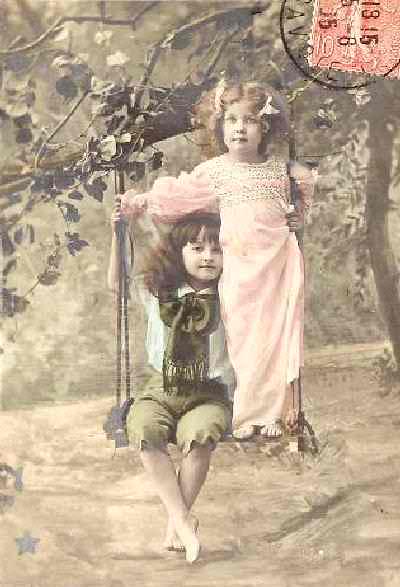
There are very strong gender conventions involved with children's clothing. Girls wear dresses and long hair and boys wear pants and short hair. These differences are useful in interpreting old photographs when the persons are not idntified or the dates and countries unknown. The problem is that the conventions change over time. Today for example girls commonly wears pants like boys. Many girls in fact dislike dresses. Some conventions are stronger than others. The fasshion trends tend to be one way, girls adopting boys' styles, rarely boys adopting girls styles. Many of the major fashions with gender conotations that have changed over time. While HBC has focused primarily on boys' fashions, we have created many gender convention pages for major styles. In addition we are also working on a girls section to provide information specifically on girls clothing. Here we will need reader support to fulkly develop the subject.
|
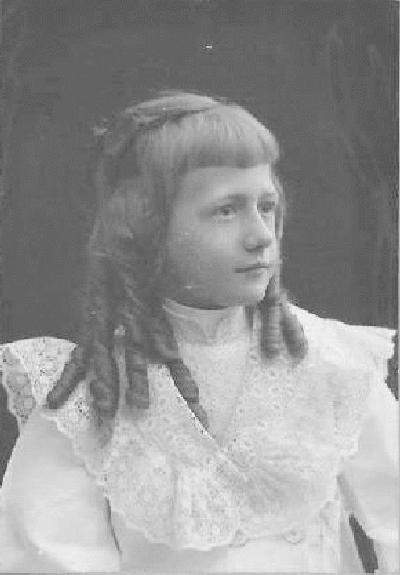
Hair fashions have varied even more commonly than clothing fashions. Different styles of long and short hair have been worn by both boys and girls. These fashions have varied greatly and although gender associations with hair styles have at times been very strongly heald. Even as in some instances, the strongly held genger conventions have changed in only a short period of time. Boys have in fact worn virtually any hair style once worn by girls, including hair bows and ringlet curls.
Color conventions are in the late 20th century very strongly held, blue for boys and pink for girls. These conventions are, however, a realatively recent development. And previously less strongly held conventions held that pink wasmore suitable for boys and blue for girls.
There are well accepted buttoning conventions in modern clothes. There do not, however, appear to have been any standard conventions concerning the placement of buttons even as late as the early 19th Century. Two conventions have developed in modern times concerning the palcement of buttons. The first is a differing button placement for man and women. The widely accepted convention in clothing is that womens clothes button on the left and often at the front. The second is the palcement of buttons on the back of blouses and dresses for women and children. HBC has noted a varieety of explanations concening these conventions. We are not yet sure about the actual development, but we are collecting information and hope to eventually have a more definitive explanation.
A child's first name generally connotes the child's gender. Boys are usually given masculine first names and girls feminine first names. There are important exceptions, however, which may complicate attempts to determine the gender of Victorian children shown in old photographs. As these pictures often reveal, dresses and long hair were popular for both boys and girls in that era, but without names attached to the photographs, it can be hard distinguish boys from girls.
When HBC was launched the focus was on historical fasion. Wev have since expanded our area od study, especially with opening of CIH. In recent years an entirell=ly different issue concerning gender-trans gender issues. Now wedo not bekieve that this is not an imprtant issue. And those people facing transgender issues deserve respectful treatment and cincern fior the difficukltuies they face. But this has somehow morphed into an insistrance that induvuiduals with male bidies and ohysics be given the fright to compete in athletic competioons with teenage girls abd young men. Thuis makes no sence. And is niot only miorally wringb because it is unfair to the biologically female teenagers and young women. Because the competition is unequal, female atheletes are being denied the right to comoete fairly and obtain the benefits that success acrue to the people that actually earned success. It is also dangerous in that somevof the sports involved inclue contact sports.

Navigate the Boys' Historical Clothing Web Site:
[Return to Main essay page]
[Introduction]
[Activities]
[Biographies]
[Chronology]
[Clothing styles]
[Countries]
[Girls]
[Bibliographies]
[Contributions]
[FAQs]
[Glossaries]
[Images]
[Links]
[Registration]
[Tools]
[Boys' Clothing Home]