|
A sandal is a type of shoe fastened to the foot with thongs or straps. Sandals have been worn since ancient times. There are two basic types of sandals, closed toe and open toe sandals. There are, however, many different styles of these two basic types of sandals. The popularity of sandals has varied greatly over time as well as the populrity of the different types and styles. There has alsdo been important differences from country to country. A similar style to closed-toe sandals were the single bar strap or Mary Jane shoes. This style, however, has more varied uses. It could be used as a formal dress shoe in either black or white patent leather. As a dress shoe it was commonly worn with white socks or stockings. On the other hand, colored versions, especially red, were used as little boys play shoes. The popularity of sandals, strap shoes, and low cut shoes have varied over time. Some parents simply liked the look of sandals, bit others felt them healthier as they were more open to air. Other parents thought they did provide adequate support for younger children. Orthapedic advise also varied.
The two basic types of sandals are closed and open-toe styles. The classic sandal is an open toe sandal. This is the style of sandal worn by ancient peoples--Greeks, Romans, and others. Biblical peoples, of course, also wore sandals--hence the modern term "Jesus boots". Monks often wore sandals in the middle ages and some orders still do. In recent times, open toe sandals were not commonly worn in America and Western Europe. They were worn in Mexico and other Latin American countries, but generally viewed as symbolizing poverty or low income. Open toe sandals have experienced a revival in recent years. Open toe sandals began to appear in California, Closed toe sandals appear to have appeared in England, America, and other countries during the 1910s. I am not sure in which country they first appeared or just who was responsible. They appear to have been a refinement of strap shoes. The sandals were different than earlier strap shoes in that that had a center strap. I am not sure who developed this style, but it may have been the Clark Shoe Company as the style is often referred to as school sandals. They were commonly worn by boys and girls for school and play.
The popularity and style of sandals has varied over time from country to country. Sandals have been particularly popular in Europe, but there are substantial variations between countries. English boys commonly wore closed toe sandals, but American boys did not like sandals of any kind. French boys wore them, especially in the summer as did Italian boys. Sandals were always popular in Italy, with some differences in the time and in the regions. German boys wore sandals in the early 20th century, but the NAZIs discouraged them in the 1930s as unmanly. After World War II, however, open-toe sandals became popular in Germany. American boys finally began wearing them, first in Califiornia and then throughout the country when sports sandals appeared in the 1990s.
We have not yet have a detailed general sandal chronology, but we have begun to collect some limited information.
We can assume that sandals were the earliest form of footwear, but probably not leather sandals. There is little information because sandals were made out of plant material like bark and plants that did not survive. and they were worn before the develoment of written languages or pictorial representatio. Thus there are no records of the earliest sandals. There is every reason, however to beleve that they were worn in pre-history by stone age peoples, especially the lare stone age. Just when in the stoe age no one knows. It seems very likely that sandals appeared well before the develoment of civiliantion, probably millenia before. Man well before civilization had spread across the globe and it is difficult to believe that durng that process that someone did not attempt to protect their feet. The oldest sandals (meaning the oldest known footwear) that have been discovered today were made by Native Amercans. They were found in Fort Rock Cave in the United States (Oregon). They were woven from sagebrush bark. Tis suggests there were earlier examples. Radiocarbon tests fond that these sandals were 10,000 years old or older (8000 BC). [Robbins] This meant about the time that agriculture waad begun to develop in Mesopotamia. There is every reason to believe that sandals were common in many other areas around the world at this time and in all the great civilizations. All the early civilizations arose in the warmer areas of the world so footwear was not needed for warmth. The earliestEuropean sandalswe know of are Esparto sandals fuond in Spain (7000-6000 BC). Spain was hardly the most sophisticated center of the Meditearanean worls so surely sandals must have been widespread at the time. The ancient Egyptians wore sandals made of palm-leaves and papyrus. Wilkinson, p. 336.] And by this time they can be oberved in Egyptian statues and in reliefs, bith being worn and being carried for the powerful by sandal-bearers. Herodotus tells us that papyrus sandals were a part of the required and characteristic dress of the Egyptian priests. Sandals were commonly worn in the classical world. The modern English word sandal is based on the Greek word 'sandalon'. There were two different types of Greek sandals. Baxeae were woven from willow leaves, twigs, or fibres. They were a kind of poor man's sandals and worn by comic actors and philosophers. The more expensive version was a boot sandal--the 'cothurnus'. Straps rose above the middle of the leg. They were a male garment worn by tragic actors, horsemen, hunters, and well-to-do men of rank and authority. They were also the first known elevator shoe. The sole could be made thicker by inserting cork slices into the sole thus increasing the wearer's height. We have information on Roman footwear. Sandals were widely worn by Romans. The Greek name became 'sandalia' in Latin and is orgin of the word in English and romance languages. We have no information on sandals during the long medieval era. Nor do we notice them in the early modern when we begin to find increadsing information on fashion and footwear. We so not note sandals in the 19th century. Wenotice strap shoes which seem a dressy shoe style. Sandals repaapeared after the turn-of-the20th century. They were called 'barefoot sandas' in America. We see children wearing them throufhout the 20th century, but there were wide varitions from country to country as well as gender conventions. A good example is a French family during the 1930s. Sandals seem more popular fr girls than boys in America, but were worn by both genders in Eutrope. American boys began wearing sandals more commonly at the end of the century.
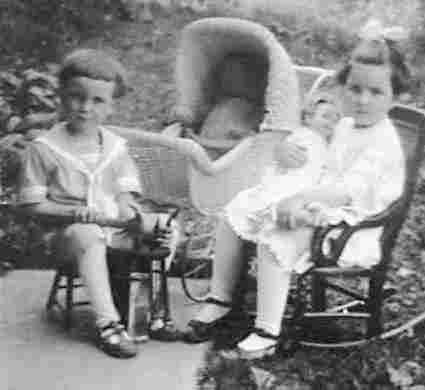
Sandals were conceived primarily as a summer play or casual wear. And his has persisted to this day. the sandal, however proved so popular that many other images were found for them. here there were gender differences. Younger boys and girls of all ages wore them as both a casual and dressy shoe. In fct it is often dificult to dufferentiate them from sreap shoes, a dressy shoe type. Usage by younger boys as for strap shoes was the fact that tieing shoe laces is beyond the ability of younger children, especially boys. Sandals had clasps that younger children could master. While girls could wear sandals with dressy ouutits, this was he case only for yunger American boy. This varied substantially from country to country. Sandals were most common in Europe, expecilly England and France. They were much less common in America, espially for boys. We see see pre-school boys wearing them, but very few after they begin primary school. They were very common for girls, but not boys. They were worn to school by European children, including boys. Sandals were especially important in England. Both boys abd girls commonly vore them. The standard school sandal was essentily a single band 't'-strap closed-roe shoe. They were very common in state primaries and prep schools. they wereusually brown done in different shades.
Sandals were made in a range of different colors. This varies over time and from country to country. There were also differences between open and closed-toe sandals.
A similar style to closed-toe sandals were the single bar strap or Mary Jane
shoes. This style, however, has more varied uses. It could be used as a formal
dress shoe in either black or white patent leather. As a dress shoe it was commonly worn with white socks or stockings. On the other hand, colored versions, especially red, were used as little boys play shoes.
We note a wide range of hodsiery worn with sandals, both long stockings and different kinds of socks. And in some cases children wore no hosiery at all. This is a very complicated topic because there are so many different types of sandals worn with a range of conventions, bityh play and dressy outfits and today sports as well. This us further complicated by the many different types of sandals. The conventions concerning hosiery have also varied over time and among countries. Basically we mostly see boys wearing sandals with hosiery. This began to change somewhat in some countries after World war I when we see children wearing sandals for play. During the summer children might go without hosiery for play and also to school. We see this more in Europe than America.
The popularity of sandals, strap shoes, and low cut shoes have varied over time. Some parents simply liked the look of sandals, bit others felt them healthier as they were more open to air. Other parents thought they did provide adequate support for younger children. Orthapedic advise also varied. As a result you sometimes see younger children wearing strap shoes and in other occasions somewhat older children. Attitudes also varied from country to country. The school sandal (a kind of "t"-strap shoe) was very popular in England. Across the channel in France boys wore both sandals and high-top shoes to school. In Germany the hgh-top shoes were more common than sandals.
French boy: Summer wear
American boy: Trip to France during the 1960s
Robbins, William G. Oregon: This Storied Land (Oregon Historical Society Press: 2005).
Navigate the Boys' Historical Clothing Web Site:
HBC

[Return to Main shoe page]
[Introduction]
[Activities]
[Biographies]
[Chronology]
[Clothing styles]
[Countries]
[Bibliographies]
[Contributions]
[FAQs]
[Glossaries]
[Images]
[Links]
[Registration]
[Tools]
[Boys' Clothing Home]
Created: May 10, 1999
Last updated: 11:51 PM 9/2/2022