|
Theatrical productions are as old as recorded history and surely must infact predate it. Modern drama dates from the 16th century, but there were dramatic productions throughout the middle ages. The revival of drama in the West was influenced by the discoveries of classical drama. Some very useful information is available from the various media. Of course information on the 19th century is only available from plays. The theatrical forms available to the public changed dramatically in the 20th cerntury. At about the turn of the century large numbers of films began to appear. Radio appeared in the 1920s, but costuming was apparent only if discribed in the dialog. Still radio should not be ignored. Today of course television is a dominant media format. Curiously unlike movies, television often does not cross national borders. Television began to emerge in the 1950s. Some movies are set with real contemporary settings. Often films are set in historical periods and thus the costunibg must be assessed for historical accuracy.
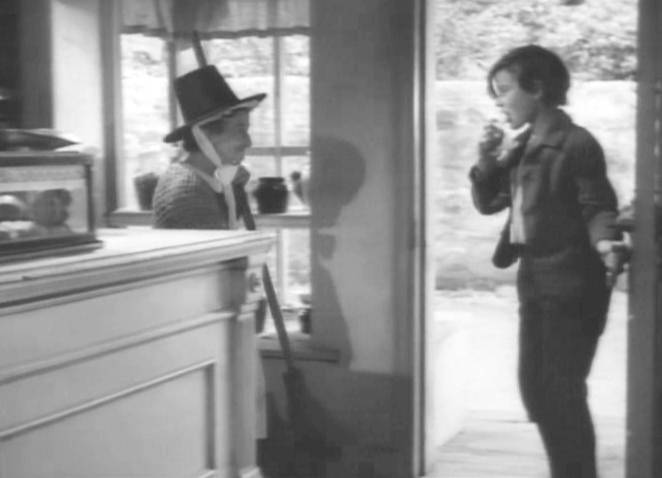
The movies beginnibg at about the turn of the 20th century began to emerge as a major cultural fource and is a valauable source of information on fashions. We are compiling a alphabetized list of movies which accurately
depict period costuming for boys. I've been so involved with constructing this site that I haven't been able to upload information on large numbers of movies, but it is one of the items on my to do list. Please let me know of any movies and television shows that
are good depictions of period dress. Movies set in contmporary petiods are a particularly useful source of information. This is especially true of European films. Unlike Hollywood productions, boys in ,many of these films often appear to have worn their own clothes rather than special costumes. In addition, movies from various European countries help to fill in the limited information and information on boys clothes in many countries. You will eventually be able to search the films by both countries and titles as well as chronologically and by clothing styles.
As is often the case, war is often a catalyst for technological advance. And radio was one of the technolgies accelerated by World War I. Radio beginning in the 1920s became a major media forum. There were many radio shows with child parts. Of couse as there was no video component, the actors were not costumed. Juvenile parts were not always even performed by children. Some visdual images appeared in the media. hWile radio itself is of only minor importance in theatrical performances, it needes to be mentioned, both to complete the theatrical survey and as a precursor to television. It was, however, of huge economic and historical importance importance. Virtually every American in the 1930s had aadio in the home. The same was not true in Europe, even in Germany one of the most prosperous countries. Hitler made a major effort to increase radio ownership, but faced low wages (which he kept low to furher his rearmament program) and the lack of mass production. This difference was to have huge consequences in World War II.
Television appeared in the late 1930s, but its commercial growth was delayed by World War II. By the 1950s, television began to emerge as a major force in bith America and Europe. Television programs are generally not as elaborate productions as movies. Budgets often do not pemit elaborate sets and cotumes for shows with period settings. Television shows set in historical eras, however, often do often accurately show case contemporary fashion. This has proven true in European and Japanese television, and generally in American television. There are some exceptions. For some reason, after the early 1950s, Ameican television programs almost never showed boys in short pants. Television in the third world is rarely reflects popular clothing trends, but usually the fashions and life style of the elite and middle class--in many countries a small part of the population. HBC currently has mostly information on American and to a lesser extent British television, but hopes to eventually acquire information on foreign television programs as well.
Theatrical productions are as old as recorded history and surely must infact predate it. Modern drama dates from the 16th century, but there were dramatic productions throughout the middle ages. The revival of drama in the Werst was influenced by the discoveries of classical drama. Some very useful information is available from the various media. Of course information on the 19th century is only available from plays. Many stage productions include period costuming. Many big movie productions such as Sound of Music and Auntie Mame were originally stage productions. Little Lord Fauntleroy had a long theatrical run in the late 1890s. Many of these productions
were in established Broadway theaters or major theaters in other countries. Many major works are now done in local theaters, although the costuming in such productions is usually not authentic.
There were a range of other theatricals besides actual theatrical plays. There were arange of presentations that communities used to put on for special occasions. Some of the most popular inn America were July 4 (Independence Day) and Christmas. We believe that such theatricals were also common in Europe. These were often put on by ciommunity groups. Our understanding of these events is still limited, but we hope to gradally collect information.
Opera is not one of the more popular teatricals in America, but it is a major attraction throughout much of Europe where it has been performed for four centuries, beginning as might be expected in Italy. The first production that might be called an opera dates is generally seen as Jacopo Peri�s 'Dafne' (1590s). Unfortunately only bits of his score have survived. As a result, Claudio Monteverdi�s 'Orfeo' (1607) is the earliest production that can be actually heard. Both these early composers were Italians and from that early beginning, Italians have been a major force in the world of opera. The Italians dominated the Baroque Period 17th-mid-18th century). Baroque opera originated in royal courts where kings and queens became important patrons. This form of opera came to the fore in wealthy courts across Europe (16th century, but soon became popular art form that won favor with the middle class and even many in the working classs. And it spread to much of Western Europe. German-born George Friedrich Handel became a sensation in England. The major Baroque composrs were Antonio Vivaldi, Handel and Jean-Baptiste Lully. Baroque operas fell out of favor (after the mid-18th century) as what now styled the Clasical Period set in. Willibald Christoph Gluck led the way with Classical Operas. He expanding the structure, harmony and narratives toward a less formalized stle. He have a greater role to the orchestra by developing 'recitativo accompagnato'. This was recitative supported by full orchestra rather than just continuo. Opera continued to expnd beyond Italy and other counties influenced and mixed with other operetic formats. Italian opera seria began to mix with French opera comique and German singspiel as well with other national developments. Important composers included: Gluck, Franz Joseph Haydn and Wolfgang Amadeus Mozart. Gluck and Haydn are not often produced today, but Mozart's operas certainly are: for example 'Don Giovanni', 'The Magic Flute', and 'Cosi Fan Tutte'.
The Romntic Period was the next stage of opera and is the most imprtant period of opera (19th-early-20th century).
Romanticism dominated the operatic stage was the predominant artistic and literary movement until the World War 9 (1910s). Opera historians define it as a movement formed by the vilence and passion of the French Revolution and Napoleonic Wars along with Germany�s Sturm und Drang. Emotion and rebellion became the key notes as Europe moved from the scientific conformity of the Enlightenment and the social change set in motion by the Industrial Revolution. Opera productions larger and lrger and more intensly dramatic. Productions included vast choruses and a magnificent orchestras. Ppera companies might include 100 players. This all climaxed with the gigantic works of Richard Wagner. Italy, Germany, and Russia stood out during this period. German opera was dominated by Wagner; Ita,ia opera by Giuseppe Verdi and Giacomo Puccini. Russian composers made a major contribution Mikhail Glinka, Modest Mussorgsky, and Pyotr Tchaikovsky. Modern opera has primarily been the production ofearlier rather than new ooera. There were dfifferences in scoring and the size of prodyctions, muting the bombast od the great composers, but few contemprary composrs have had major succes.
Children have not played major roles in peratic music. A problen here is the vocal power needed by operetic singers. In addution children seen more suitable for the more intimate Broadway musicals. Several have children's parts and many more have children on the stage without notable parts. One German opera is "Hansel and Gretel". A reader tells us, "Opera is a great venue for kids as all opera companies have children choruses. Many operas have children in crowd scenes. Some even have solo parts although generally small parts."

Navigate the Boys' Historical Clothing Web Site:
[See also the Main theatrical page]
[Introduction]
[Activities]
[Biographies]
[Chronology]
[Cloth and textiles]
[Clothing styles]
[Countries]
[Topics]
[Bibliographies]
[Contributions]
[FAQs]
[Glossaries]
[Images]
[Links]
[Registration]
[Tools]
[Boys' Clothing Home]