
Boys' Ballet Costumes--Parodies
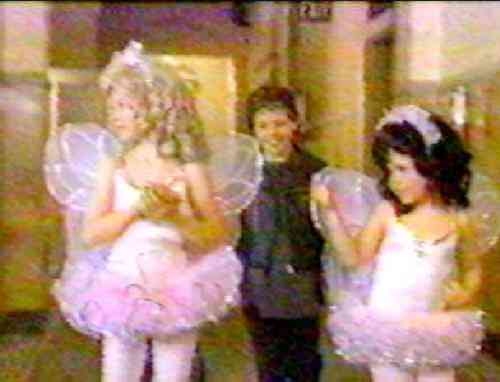
Figure 1.--Movies and televisions show often use boys in ballet costumes, often girls' costumes, for comedic parodies. This is especially common in America and Britain. This is a scene from the remake of the "Little Rascals" movie shorts into a 1999 feature film.
|
Ballet costumes are commonly used in commedy parodies. The costumes are used to accentuate comedic situations by American an British writers. In these countries the popular culture strongly relates ballet and dance in general to girls. Thus boys dressed in ballet costumes are often perceived as humerous. The public reactiin to these parodies appears to vary widely from country to country. HBC has less information on other countries such as Russia and France where ballet is more acceptble. Presumably boys in ballet costumes would be preceived as less humerous in these countries as ballet is more accepted in the popular culture. Interestingly, the comic device used is generally to outfit boys in girls ballet costumes like tutus, a garment a boy taking ballet would never wear. It is unclear to HBC why ballet is used as such a subject as parody. And why the parody often takes the step of outfitting boys in girls' costumes, something that would never occur in relaity.
Comedic Parodies
Ballet costumes are commonly used in commedy parodies. The costumes are used to accentuate comedic situations by American an British writers. In these countries the popular culture strongly relates ballet and dance in general to girls. Thus boys dressed in ballet costumes are often perceived as humerous.
Chronology
HBC has little information at this time on when these parodies first begun. HBC remembers parodies of boys in ballet costumes and other inappriate clothes such as dresses in the Little Rascal movie shorts of the 1920s and 30s
Country Differences
The public reactiin to these parodies appears to vary widely from country to country. HBC has less information on other countries such as Russia and France where ballet is more acceptble. Presumably boys in ballet costumes would be preceived as less humerous in these countries as ballet is more accepted in the popular culture.
Reason
It is unclear to HBC why ballet is used as such a subject as parody. As a HBC contributor expains, "I think having a boy dress as a girl in ballet is so ridiculous that it seems funny to the producers and
their audience. How else could it be explained. Also, ballet has a connotation of being a sissy sport, so the girl outfits accentuates that aspect." Of course this is culturally based. Such parody does not occur in countries where ballet is more respected as an art form. It is not clear to HBC why ballet in America and Britain is subjected to such redicule.
Garments
Interestingly, the comic device used is generally to outfit boys in girls ballet costumes like tutus, a garment a boy taking ballet would never wear. Also unknown is why the parody often takes the step of outfitting boys in girls' costumes, something that would never occur in relaity.
Leotards
Boys wearing tights are often part of the parody used for comedic affect. In America, boys doing ballet more commonly wear "t" shirts and tights and less commonly leotards. Most of the parodies, however, show boys in leotards and tights.
tights
Tu-tus
Perhaps more commonly used than just tights is also having the boy wear a tu-tu. What is difficult to understand is why the parody would be of something boys doing ballet would never do. Boys do war tights and keotards for ballet, but they of course never wear tu-tus.
Toe-shoes
Programs
A variety of movies and television programs have used ballet costumes as a comedic device.
Little Rascals
This creation of the Hal Roach studio had several episodes touching upon clothjing and Alfalfa, Spanky, and the other boys' embasrassment about clothing. It has been some time since I saw these movie shorts and don't recall specific episodes at this time, but I think there were some. The 1999 remake did include such an episode. Alfalfa and I think Spanky appear in ballet costumes, I believe in an effort to disguise themselves. Actually the boy playing Alfalfa had taken ballet and liked it. He had to be coached to act awkward in his costume. As is common for such comedic episodes, the boys wear girls' tu-tus rather than boys' ballet outfits. They were even accentuated by hair bows and fairy wigs.
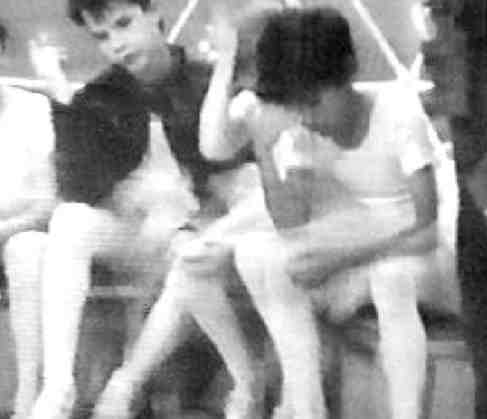
Figure 2.--The Canadian television program, "You can't do that on television," often had the boys dress in ballet outfits, dresses, diappers, sailor sits, and other outfits for comedic affect.
|
This Canadian TV program produced in the 1980s was picked up by American cable networks, especially Nickolonian. Many episodes included clothing. Often skits were built around the boys being dresses in dresses, kiklts, sailor suits, Fauntleroy suits, diappers, and other outfits boys might find enbarassing. I think some of the skits were thought up by the boys themselves. Interestingly the skits involving the girls rarely touched upon clothing. Sometimes the boys appeared in tights and tu-tus. I'm not sure just why other than for comic relief.
Christopher Wagner

Navigate the Historic Boys' Clothing Web Site:
[Introduction]
[Activities]
[Bibliographies]
[Biographies]
[Chronologies]
[Contributions]
[Countries]
[Frequently Asked Questions]
[Style Index]
[Boys' Clothing Home]
Navigate the Historic Boys' Clothing Web dance pages:
[Return to the Main ballet dance page]
[Ballet]
[Irish step]
[Kilts]
[Highland]
[Ballroom]
[Native American]
[Tap]
Created: Juky 27, 2000
Last updated: July 28, 2000