
Irish Step Dancing Costumes
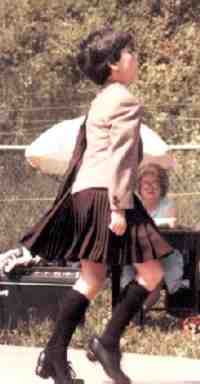
Figure 1.--Judges carefully watch this dancer's foot work. The normal boy's
costume for Irish dancing is a short jacket, white shirt, tie, shoulder
sash, kilt, and kneesocks. The kneesocks usually match either the jacket or the
kilt. Some American dancing schools let the boys wear long black pants, but this
is not common in Ireland.
|
Irish dance has developed quietly in Ireland for centuries. Irish immigrants
brought their traditional dances to America beginning in the 1840s, driven from
their homeland by the Great Famine. Their dances had a profound influence on
traditional American folk dances like square dancing and their music was a
powerful ingredient in country music. Modern Irish dance, however did not
begin to become popular until after World War II. The independence of Ireland
in 1921, rising income levels after the War, and the increasing interest in Irish
heritage by Irish Americans all contributed to the expanding interest in Irish
dance. This interest was almost entirely within the Irish community until River
Dance introduced
Irish dancing to the public at large in the 1990s.
History of Irish Dance
Irish step dances are relatively modern, creations of the dancing masters
prevalent in Ireland in the 18th and 19th centuries. "... almost all references to
Irish dances in literature, down to the beginning of the eighteenth century, deal
only with Round and Long dances, and ... there is a marked absence of any
indication of the existence of the dancing-master until about the same time." The
intricate steps
were invented by the dancing masters, who elaborated on the simple steps of
Round and Long dances.
Irish dancing until the Republic obtained independence in 1921 was rather
informal. The new Republican Government as a matter of national policy
sought to promote Irish culture which they felt, with some validity, had been
suppressed by the English. This included even attempts to revive the Irish
language
which was then only spoken in remote rural areas. Thus all areas of traditional
culture, including
dance and music benefited from Government support. Irish dance developed
during the inter-war years (1919-39), but began to become increasingly popular
after World War II. The rising income levels provided more leisure time for a
widening sector of the population. The increasingly economically successful Irish
in America began to take more interest in their heritage and one expression of this
was Irish dance and music. This was a particularly important development as 30
million Americans identify themselves as Irish-American, ten times the population
of the
the Republic. One Irish contributor to HBC reports that his dance teacher began
dancing in the 1940s. She says she has been dancing since she was a young girl.
Her house is filled with medals and prizes. Apparently Irish dance became very
popular in the 1960s and 70s. Our Irish contributor remembers seeing pictures
of his older cousins (boys and girls) dancing. It was the "done thing" back then to
learn Irish dancing and a musical instrument. The costumes were simpler and less
frequent costume changes.
Benefits of Irish Dance
Irish dance teachers points to many benefits of Irish dance for the children
participating. They learn increased physical skills. They develop body
control and coordination. Dance is great exercise. There is also the opportunity
to increased mental skills: listening, following directions,
increasing attention span, and memorizing steps. Dancing also fosters a healthy
competitive spirit. It increases the child's desire to do well and to the
best of his/her ability. It helps build self-esteem and increase the child's
confidence as he/she develops "stage presence". Dancers build lasting
friendships,
not only with classmates, but through performing and competing, meeting children
from all parts of the city, state, and country. Irish dancing also helps to
promote Irish culture. A revival of Irish identity and tradition began in the 1960s.
While a young dancer may not comprehend this particular benefit while training,
this revival continues!

Figure 2.--The boys are lined up in the standard position ready to compete in
a competition. Unlike Scottish dancers, the Irish dancers almost always wear
solid color kilts. Note the traditional pin worn
with the kilt. These boys will be doing a hard shoe routine.
|
Parents often ask when children should begin Irish dancing lessons. Many
instructors suggest beginning at the age of 6 or 7, sometimes younger if the
dancer has an older brother or sister in the school. But there are many children
who first began lessons as early as age 4 and as late as their mid-teens. Before
enrolling a very young child into Irish dance, it is a good idea to ask the teacher
to spend a few moments with your youngster and give you an honest appraisal of
what to expect in the first year (before committing to lessons). Teachers are
qualified to evaluate your child and usually welcome the opportunity to do so.
Dancers in different countries have different names for the various levels of
dancing. They are, however, basically the same despite the different names. The
beginning dancer moves from Novice, to Primary, to Intermediate to Open. To
progress from one grade to another, the dancer must fulfill certain specified
requirements, such as taking first second or third place at the Feis in Novice, or
first in Primary or Intermediate. The dancer can move up the rankings, but if you
go from Intermediate to Open, and find the standard is too high, you can move
back down to Intermediate after the following January 1, but not before. It may
sound quite easy to progress, but with so many dancers in each category, the
dancer may have to be patient and practice hard. It usually is much easier for the
boys as there are far fewer boys competing than there are girls.
Beginners
While watching in awe at a dance school performance, a parent may wonder
"How long would it take for my child to learn to do those amazing steps?" All I
can say
is that the individual dancing skills exhibited is a progression and that there is no
"normal" progression. This all depends on the dancer's age, talents, commitment,
home practice, etc. But I'll try to outline where your child might be while
describing the following dance program:
Reels and Light Jigs
Immediately, you'll see your beginner dancer learn the "threes and sevens".
This is the foundation of all Irish steps. You'll watch the child develop poise and
grace, always improving body alignment. As your dancer advances (perhaps into
the
third or fourth year), you'll see the dancer able to execute more and more
complex
steps, able to lift him/herself across the stage with the grace of a deer. By this
time you'll become aware that there are features to dancing that are exclusively
Irish and not found among the ethnic dances of any other people.
Figures
As the "threes and sevens" are being learned, almost immediately, your own
child will dance with other dancers, performing the same steps at the same time.
This helps the child develop the all-important sense of timing. By the end of the
first year, these beginner figures will include hand holding and other arm
movements as well as the execution of steps. The teacher will match age and
appearance with the
talents of other dancers in two-, three-, four-, six-, and eight-hand figures with
your dancer's classmates. Your more advanced dancer (second or third year)
may
become part of a four- or eight-hand ceili team. A ceili dance is a figure not
designed by the teacher, but done only one way "by the book" as allowed in the
manual Ar Rince Foirne. Also, the teacher may gather his/her most
accomplished
dancers and put together a teacher's choreography. A choreography team is
made up
of nine to sixteen dancers and indeed brings the best out of the teacher's
creativity when it comes to figure movements. After long and hard work from all
concerned, it is the teacher's hope to enter this choreography in regional, national,
and even world competition.
Hornpipes and Treble Jigs
As he/she develops coordination and timing (perhaps in the second or third
year), your child will need a second kind of shoe; "hard shoes" fitted with
fiberglass heels and tips. You'll now watch your dancer learn to make rhythmic
sounds using the toe, heel, and ball of the foot. From there you'll see the
complexity of the steps grow and grow. Maybe in the second or third year of
hard shoe (fourth or fifth year as a dancer), the teacher will put together a Set
Piece
for your dancer. Choreographed by the teacher, the set is named after the tune
itself and is performed at the dancer's chosen speed.
Slipjigs
A ladies-only and unique-to-the-Irish dance, you'll find your daughter
learning the graceful slipjig in her first or second year of lessons.

Figure 3.--Irish dancers perform in both hard and soft (ballet) shoes,
depending on the event.
|
Formal lessons of an Irish dance school generally follows an academic
calendar, beginning in September and ending in May/June. Teachers, however
may accept new students at any time during the year. You can expect your beginner's lesson to run approximately one hour, one afternoon or evening each week. Additionally, the
teacher may call for extra lessons, especially before an important performance or
competition. These lessons may or may not require additional lesson fees
depending on the circumstances. Also, private or semi-private (two or three dancers)
lessons can be arranged with the teacher throughout the year at an agreed fee schedule. Parents shouldn't expect to remain in the same room while lessons are in
progress. Like an academic setting, the teacher needs to be in control of the class
and have the full attention of the students. However, a teacher may open certain
lessons for parents to observe and question. These nights may be beneficial to the
parent keeping abreast of the child's development thus being able to more
closely monitor his/her practice at home.
Irish dance includes a wide variety of types for solo, pair, and group dances. Most people think of step dancing when thinking about Irish dancing. There are many types of step dancing, including reels and jigs. There are four basic Irish step dances (solos): reel, (light) jig, slip jig, and hornpipe. There are, of course, many many variations of reel, light jig, slip jig, and hornpipe steps. Each dancing school has its own versions of
the steps. There is, of course, much more than just step dancing. Irish dance also includes set dancing, ceili, waltzes, and other group dances.
Dance styles have of course changed over time. In modern Irish step dancing, arms and hands are held rigid during solo dances. This was not always the case. Previously they were sometimes more relaxed and were even placed on hips. The lack of arm movement in modern step dancing may have been the influence of parish priests. Some dance historians believe that stiff arms were considered less provocative. Others argue that the Church was trying to increase dancers' self control. The hands held stifly at the side are today one of the most distinctive charateristics of Irish step dancing. Hand movements, however, still occur in figure (group) dances, in part required by the interactions between the dancers. One growing debate in Irish dance is the "battering" or the noise made by hard shoes on wooden stages. This is another of the impacts of the popularity of Michael O'Flarery and "River Dance".
The kingdoms and provinces of early Ireland set aside times and places
for the general assembly of the people. Chief of these, the one to which each
territorial assembly sent representatives, was the Aonach of Great Fair at Tara,
seat of the Ard Rhi, or High King of Ireland. The modern feis, or festivals,
traces its origins to these events. The modern feis began before the turn of the
20th Century as
part of the revival of Irish culture. They became a celebration of Irish culture.
As a result, they were discouraged by the English. The feises of today are
primarily
dancing competitions, but music, language, cooking and other competitions are
often
also held.
Irish dance has evolved in other ways during the 20th Century.
Instruction is beginning at a younger age. Who is instructed has also changed
from
mostly males to mostly females (the turning point was before 1930). Girls
dancing
solos in competition were rare before the 1920s. Both boys and girls
participate,
but the great majority of the dancers are now girls. Often less than 10 percent of
the dancers are boys at modern feises. Many mothers would like to encourage
their sons to dance, but are unsure as to just how to do it.

Figure 4.--Irish and British dancers often have blazers with piping at the
edges. This is rarely seen in America.
|
A costume is required of each dancer entering a competition or performing
with the school. Individual school's policies vary as to obtaining a school
costume. Sometimes the costume is purchased outright and owned by the
dancer. Other times costumes are owned by the school (or parent organization)
and rented to the student
requiring a security deposit. In the third or fourth year, your dancer may earn the
right to wear his/her own "solo" costume. Modern costumes are quite different
from those worn historically
at feises. The dance costume has changed greatly from traditional garb. Boys
doing Irish dance wear either long black pants or kilts.
The girls doing Irish step dancing wear dresses, never kilts for
performances. The dresses are heavy "A"-line dresses, often in bright colors.
Many are heavily embroidered in Celtic symbols. Some schools do allow the
girls to even wear kilts for practice. Reserving the kilts for boys is done in part
because the kilt was the ancient Celtic male garment and in part so the boys
aren't dressed like the girls. This would probably discourage many younger boys
from participating in Irish dancing.
Many teachers are passionate about their commitment to Irish dancing. They
are not only deeply committed to Irish dance and culture, but they also see the
benefits to the dancers. Many find great personal award in teaching and helping
the dancers develop their dancing skills and in the process learning the benefits of
hard work and discipline.
There are interesting similarities and differences between Irish dancing and other dance forms. The most obvious similarities are with Highland dancing, but there are relations with other forms as well. Dance is a constantly evolving art form. The relationships between different dances add important historical insights as to historical trends and cross cultural influences. Irish dance has been significantly influence by ballet and in turn was one of the major influences in the development of American dance forms, especially tap dancing and Western square dancing.
Countries
Irish step dancing is of course most associated with Ireland. Boys in many
other countries, of couese do Irish dancing. As a consequence of the Famine,
however, large numbers of Irish had to emmigrate and settle in other countries.
The largest number of course is in America where 10 times more people call
them selves Irish than there are in Ireland. There are Irish in many other countries
as well, such as Austrlia and New Zealand. In addition, Irish dancing and festivals
alsio tale place in countries not normally associated with Ireland. The 2nd
Gaelfest Frankfurt was held in May 2001 in the heart of Germany. Two dance
workshops along with other workshops for instruments, singing,
accompaniment and Gaelic are held. Gaelfest Frankfurt is the biggest Irish
summer school
in Germany.
The subject of globelization of Irish and other dance forms is an important
topic to consider. The 2001 Congress on Research in Dance Conference is
being held in New York City. One of the papers to be presented is one on Irish
dance, "Inventing Tradition: Global Development of Irish Dance". The
conference will explore the ways in which dance forms circulate across
communities, regions and nations, acquiring new meanings as they travel. While
the term "globalization" has gained currency in scholarly debatesof recent years,
the dispersion of performance practices is hardly a new phenomenon. Thus, the
conference will include both historical and contemporary analyses of dances'
migrations. The commercialization of folk styles in shows such as "River Dance"
is one aspect of this.
HBC readers report that there have been major developments in Irish dancing in recent years, especially since River Dance. One impact is that many more boys are interested in participating now. River Dance has also affected dance styles and costuming. These developments have been noted in Ireland, America, and other countries where Irish dance has proven popular, primarily countries like America with large numbers of people tracing their ancestry to Irish immigrants.
Some HBC readers have provided us information on their personal experiences concerning Irish step dancing. For many the kilt costume was an importantpart of the experience. So far the comments have come from Ireland, but large numbers of children did Irish dancing in America and other countries. There are probably more Irish dancers in America than Ireland. We hope to eventuallly hear from them as well to add their own experiences about dancing.
Christopher Wagner

Navigate the Historic Boys' Clothing Web Site:
[Introduction]
[Activities]
[Biographies]
[Chronologies]
[Countries]
[Style Index]
[Bibliographies]
[Contributions]
[Frequently Asked Questions]
[Bibliographies]
[Satellite sites]
[Tools]
[Boys' Clothing Home]
Navigate the Historic Boys' Clothing Web chronological pages:
[The 1880s]
[The 1890s]
[The 1900s]
[The 1910s]
[The 1920s]
[The 1930s]
[The 1940s]
[The 1950s]
[The 1960s]
[The 1970s]
[The 1980s]
[The 1990s]
Navigate the Historic Boys' Clothing Web dance pages:
[Main dance page]
[Ballet]
[]
[Highland]
[Ballroom]
[Native American]
[Tap]
Navigate the Boys' Historical Clothing kilt pages:
[Main kilt page]
[Kilt suits]
[Scottish kilts]
[Scottish boys clothing]
[Scottish school uniform]
[Highland dance]
[Irish kilts]
[Irish boys clothing]
[Greek kilts]
Created: May 10, 1998
Spell checked: July 28, 2001
Last updated: January 30, 2003