|
Jacques Amans was born in Maastricht, at the time under the control of France (1801). His father, Paul Serge Amans, was born in Narbonne (1765). He became an officer (Capitaine-Adjudant de place de 1ère classe à Maastricht) in Napoleon's army. His son trained in the rigid tradition of French neoclassicm. He exhibited at the Paris Salon from (1831-37). There was considerable compeition for commissions in France because of the number of talented artists. A friend, Jean Vaudechamp told Amans about possiible opportunity in America which was beginning to report economic success. This wss especially the case in the South where coton plners were chieving huge profit exporting to European textgile mills (mostly Bitain and France). Unlike Europe, thee were very few trained artists and phtography was just beginning to be established (1840s). Amans decided to visit Louisiana. The two artists traveled on the same ship from France to New Orleans (about 1837).
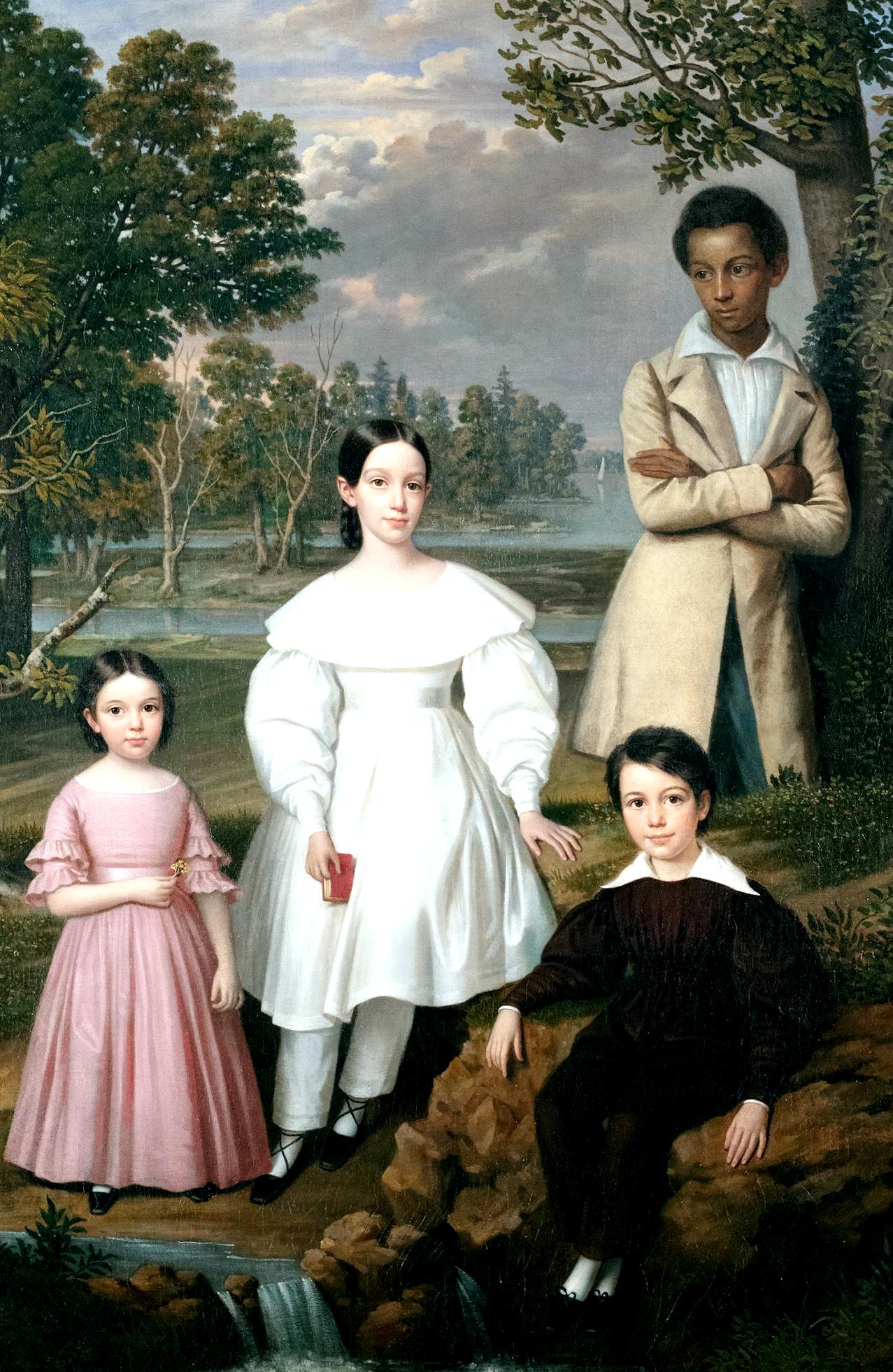
Here is a portrait that Amans painted when he first arrived in New Orleans. The portrait is remarkable because a slave boy was included in the portrait of a family portrait--in thi case the Frey family. We have seen a few photographs with slaves included, but this wa rarely the case of a painted portrait. Racial atttdes were a little different i New Orleans, but even so thee are almost no ther examples of slaves included in pportraiot. Vaudechamp returned to France (1839). Amans acquired the reputation as the most sought after portraitist in Louisiana. Amans married Azoline Landreaux (mid-1840s). She was the daughter of Pierre Honoré Landreaux, a St. Charles Parish sugar planter. Her mother was Joéphine Armant. They operated Trinity Plantation on Bayou Lafourche. Amans work provides an important insights in the Ante-bellum South. He painted many important American including an aging Andrew Jackson. Amans is a French artist, but made an important contributimn to the American artistic record. Amans was prepain to return to France having earned a considerable sum (mid-1850s). Planter Robert Ruffin Barrow Sr. persuaded Amans to remain in Louisiana a bt longer to paint an almost life-sized portrait of his wife, Washington Hunley Barrow and their daughter, Volumnia Roberta. Volumnia was the sister of Confederate submarine captain Horace Hunley. Armans and his wide returned to France where he continued his artistic career (1856). He never returned to America. We have no information about his work in France.

Navigate the Boys' Historical Clothing Web Site:
[Return to the Main French art page]
[Return to the Main individual A-F artist alphabetical page]
[Return to the Main French page]
[Return to the Main 1830s American family oage]
[About Us]
[Introduction]
[Activities]
[Biographies]
[Chronology]
[Clothing styles]
[Countries]
[Girls]
[Theatricals]
[Topics]
[Bibliographies]
[Contributions]
[FAQs]
[Glossaries]
[Images]
[Links]
[Registration]
[Tools]
[Boys' Clothing Home]