|
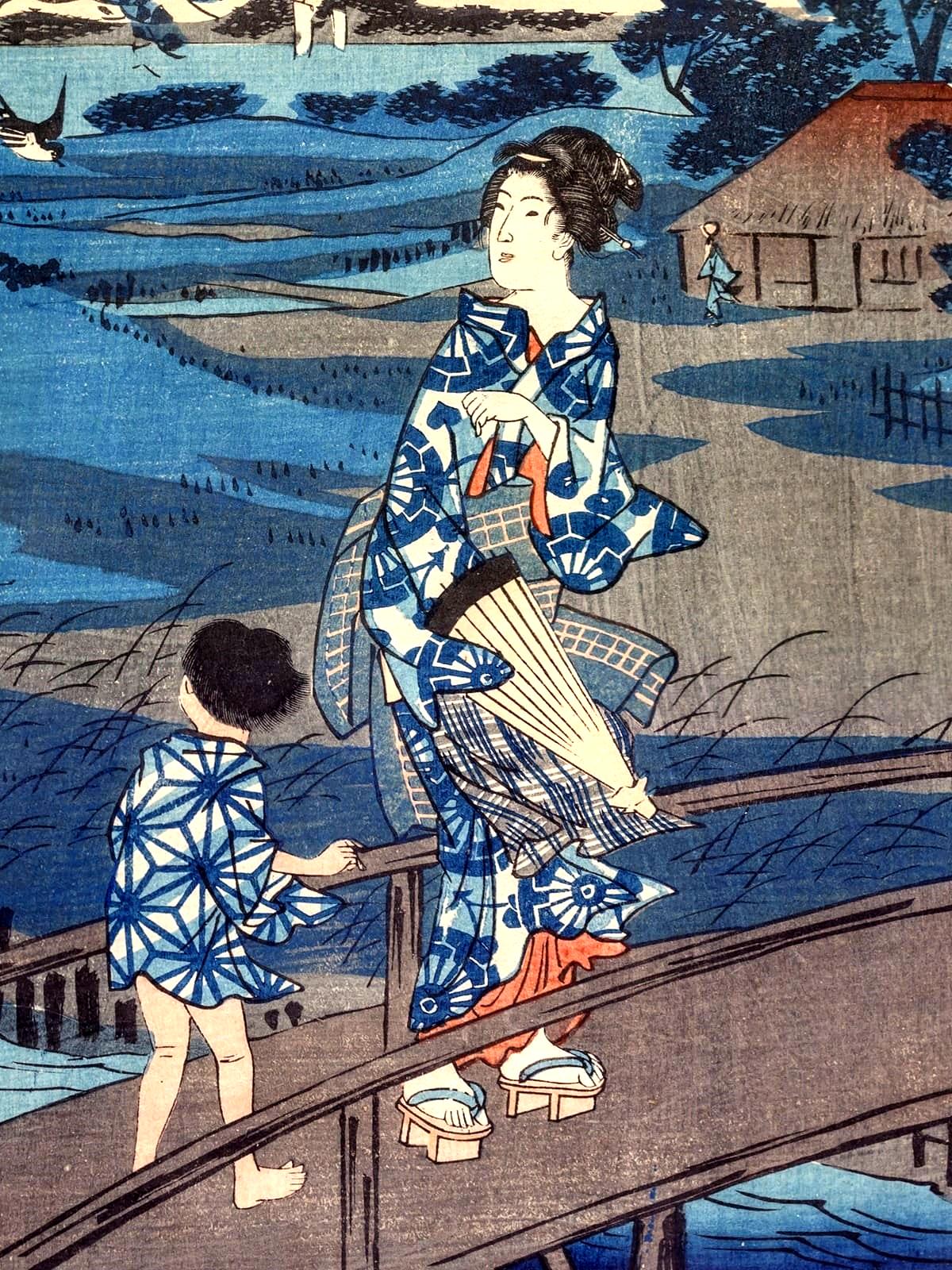
This is a woodcut by the Japanese artist Utagawa Hiroshige III (1842–1894). It can be dated from the late Edo period or the early Meiji period. The clothing depicted is still the traditional style of the Edo period. The scene is set along the Sumida River, which flows through Tokyo. The city did not become the capital until the beginning of the Meiji period, and its development occurred later. Japanese art less commonly focuses on people than Western art and rarely depicts children in any bdetail. This is an exceotion. The woodcut depicts a middle-class woman, likely with her son, in the spring or summer. The woman is wearing a kimono and geta (wooden clogs similar to zori) and is carrying an umbrella. The child is wearing a short kimono and is barefoot.

Navigate the Boys' Historical Clothing artistic pages:
[Return to the Main artistic page]
[Chronologies]
[Individuals]
[National]
[Styles]
Navigate the Boys' Historical Clothing Web Site:
[Return to the Main Japoanese art page]
[Return to the Main national art page]
[Return to the Main Japanese page]
[About Us]
[Introduction]
[Activities]
[Biographies]
[Chronology]
[Clothing styles]
[Countries]
[Girls]
[Theatricals]
[Topics]
[Bibliographies]
[Contributions]
[FAQs]
[Glossaries]
[Images]
[Links]
[Registration]
[Tools]
[Boys' Clothing Home]