|
One interesting aspect of the garments chosen for boys clothing is the selection of the garments. There were a variety of approaches that mother could select. Thuis is a relatively recent development because before there were purpose made children's clothing such destinctions were not invisioned. One approach was to select the garment with the relationship to the age of the child. This is called age grading. Here the children in the family have their clothes determined by their ages. As they grow older major changes are made in their clothing such as braeching. Hair styles were also agre graded. The age grading approach conflicted with another popular fashion, dressng all the children alike, espcially the like gender appraoch. Her some mothers adopted both appraoches. The children were dressed alike, but minor changes such as with bows and collars were made or an older boy might be allowed to wear long trousers or a watch fob with his suit.
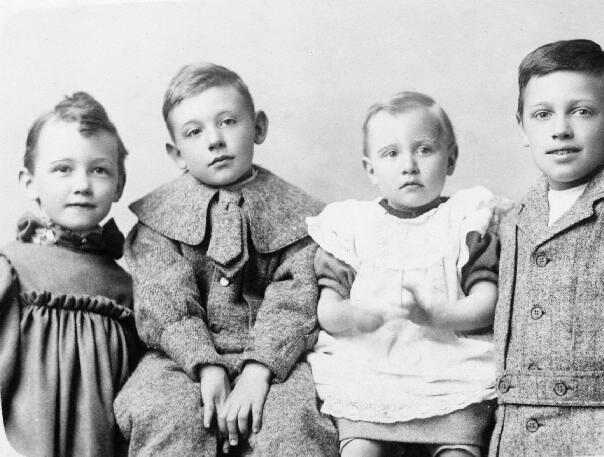
One approach was to select the garment in relationship to the age of the child. This is called age grading. Here the children in the family have their clothes determined by their ages. The boiys here ae a good example (figure 1). As they grow older major changes are made in their clothing such as braeching. Hair styles were also age graded. Other steps might be more modest suh as changing the accessories worn rather than the garment. A younger boy might wear a large bow, but after a year or two the size of the bow or the type of collar might be changed while the boy continued to wear the same suit. The pratice of age greading apopears to have begun in the early Victorian era or just before it and continued through the Edwardian era and World War I. Age grading is most obvious for boys' clothing, but therewas also age grading fr girls. It was, however, more more subtle for the girls. Of course this all change over time as different styles came and went. Tracking all of this can be somewaht complicated as so few of these old portraits specify the age of the children. For the most part we have to estimate the ages of the children. While not ideal, we can estimate the ages well enough to get a good idea of the age grading process involved.
The age grading approach conflicted with another popular fashion, dressng all the children alike, especially the like gender appraoch. SDothe boys were dressed aloke and the giels weredressedalike. The populasrity of sailors suits allowed all he chilkdren o be dressed mearly balike. Her some mothers adopted both appraoches. The children were dressed alike, but minor changes such as with bows and collars were made or an older boy might be allowed to wear long trousers or a watch fob with his suit. While age grading declined after World War I, the paractice of dressing children alike, especially twins, is still popular today.

Navigate the Boys' Historical Clothing Web Site:
[Return to the Main English garment page]
[Return to the Main English Victorian era page]
[Return to the Main English Edwardian era page]
[About Us]
[Introduction]
[Activities]
[Biographies]
[Chronology]
[Cloth and textiles]
[Countries]
[Garments]
[Girls]
[Photography]
[Topics]
[Bibliographies]
[Contributions]
[FAQs]
[Glossaries]
[Images]
[Links]
[Registration]
[Search]
[Tools]
[Boys' Clothing Home]