|
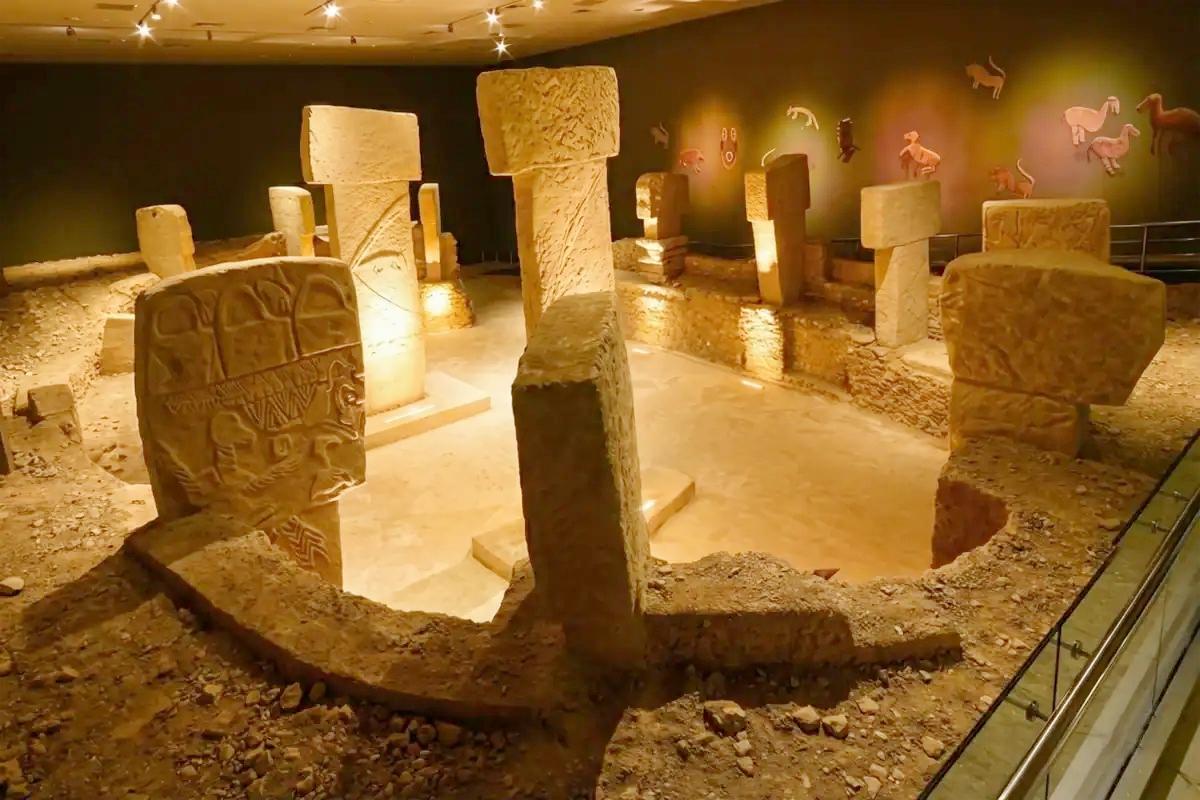
Göbekli Tepe was a hunter-gather community located in the Germuş mountains of south-eastern Anatolia (modern Turkey). We know this because there are many skeletal remains of non-domesticated wild animals. While not on the same scale as the river valley civilizations, there was monumental architecture. This included round-oval and rectangular megalithic structures and this was in the Pre-Pottery Neolithic age (9,600 and 8,200 BC). This was a critical period of history. It was just at the time that people in Mesopotamia and the Nile Valley was taking tghe first primitive steps toward agriculture. These monuments were probably used in connection with rituals, probably of a funerary nature. It is a kind of early Stonehenge. The site is best known for distinctive T-shaped pillars carved with images of wild animals. In the period before writing, these are the only clues available as to life style and beliefs of people living in Upper Mesopotamia at the time. Göbekli Tepe is interesting because 1) hunter gathers usually did not leave behind monumental architecture and 2) it is located on he fringe of Mesopotamia at the time and place where humans were in the process of inventing agriculture. There are other aspects of Göbekli Tepe that make it a fascinating site. 3) The people in Göbekli Tepe had invented religion beyond the animist phase. Many anthropologists insisted that advanced religion came only with the invention of agriculture, not before. Groundbreaking discoveries at Göbekli Tepe made by German archaeologist Klaus Schmidt threw a spanner into this long-standing theory. 4) Monumental architecture meant a degree of organization not normally associated with hunter-gathers. And of course agriculture necessitated a degree of organization needed for such developments like irrigation. This is many anthropologists believed that agriculture led to advanced civilization. Again Göbekli Tepe caused extensive debate in the anthropological community. It is why some enthusiasic authors claim that Göbekli Tepe is where civilization began, not where agricukture began. 5) While the people of Göbekli Tepe were clearly hunter-gathers, there was a detectable interest in cereals--the crops that would define agriculture. We know that because there is evidence of beer drinking. And beer is made from fermented cereal crops. Notably, beer rations were part of the wages that wold be paid paid to workers on monumental projects like the pyramids. Some anthropologists go so far as to theorize that the production of beer was one of the drivers that led to agriculture, producing the cereal crops needed to brew beer. 7) The people of Göbekli Tepe seem to be the same people who over ime became the Anatolian farmers that would replace the existing European hunter-gathers, until replaced in turn by the Indo-Europeans Steppe people (c3000 BC). Only a small part of Göbekli Tepe has been escalated. And researchers widely disagree on the meaning of what has been unearthed so far.

Navigate the Childrem in History Website:
[Return to the Neolithic Revolution]
[Return to the Main Economics page]
[About Us]
[Introduction]
[Biographies]
[Chronology]
[Climatology]
[Clothing]
[Disease and Health]
[Economics]
[Freedom]
[Geography]
[History]
[Human Nature]
[Ideology]
[Law]
[Nationalism]
[Presidents]
[Religion]
[Royalty]
[Science]
[Social Class]
[Bibliographies]
[Contributions]
[FAQs]
[Glossaries]
[Images]
[Links]
[Registration]
[Tools]
[Children in History Home]