|
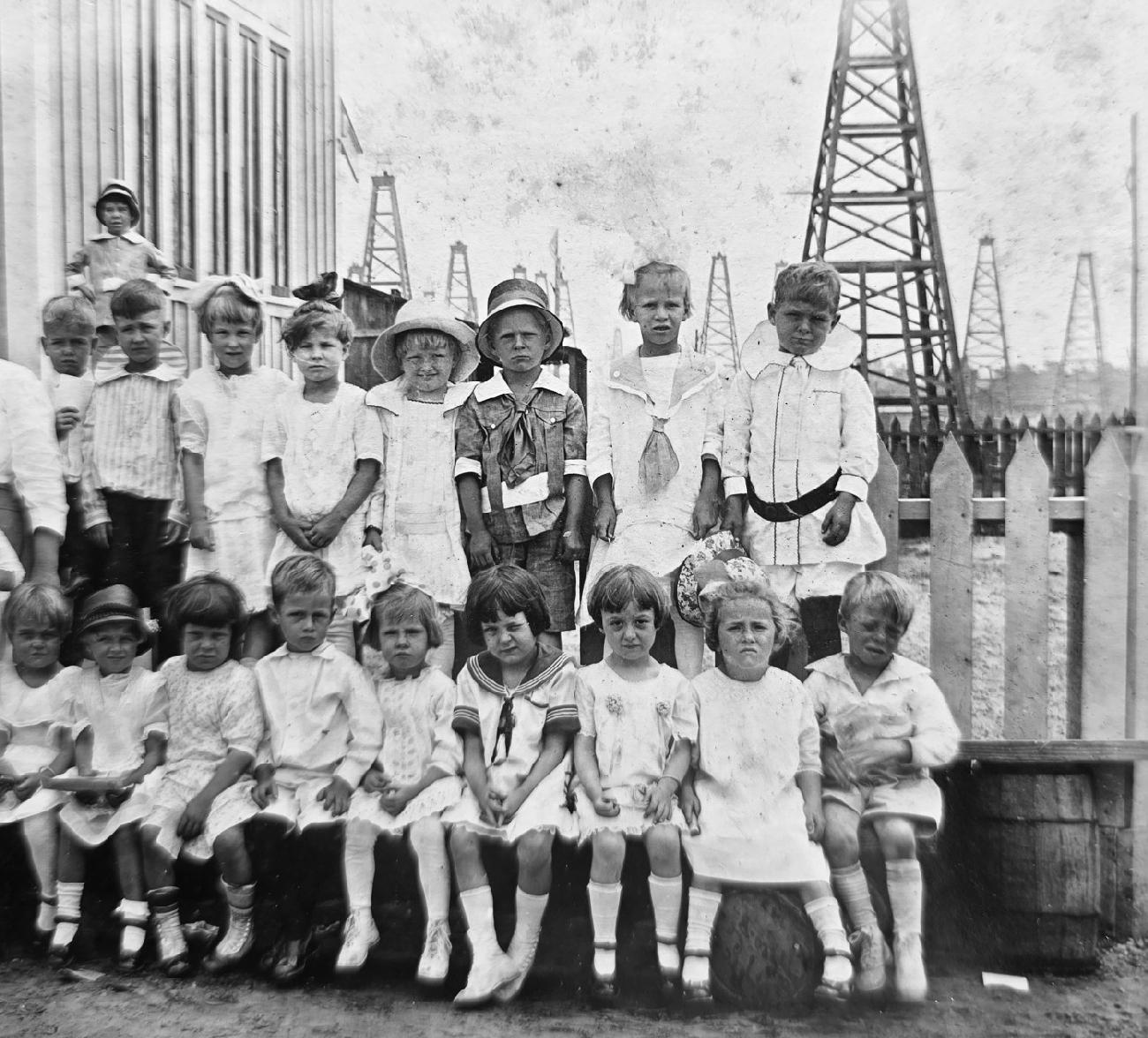
Coal dominasted the 19th cenury. This began to change with the turn of the 20th century. Henry Ford created the Model-T Tin Lizzie (1907). It was a car the working man could afford. America was the largest industrial country in the world, but the automobile turned America into a county that approached the industrial output of all of Europe. This development would determine the outcome of the 20th century. The automobile created a a huge demand for gasoline to fuel the internal combustion engine -- and America until after World War II had the oil. Another major impetus for oil was the military competition in Europe leading to World War I. Navies began shifting to oil and airplanes and submarines could hardly be run on coal. The development of the internal combustion engine also drove the demand of oil. Environmental concerns, especially air quality, also drove the shift. This created a problem for Europe. The great powers (Britain, France, and Germany) had coal, but no oil. Russia had oil in the Caucuses, but was not yet industrialized, albeit rapidly growing. The one industrial power that had oil was the United States. And this made a major difference in World War I. The Allies had all the oil they needed. Germany had very little. Tanks and trucks which the Allies had in large numbers had a huge impact on the battlefield. After World War I which had Americans began buying in large numbers even before the War began to reshape America and the industrial economy. This did mot occur in Europe. Workers there could mot afford cars and manufacturers made mo attempt to produce a car like Ford's Model-T that workers could afford. And this demand fueled the Roaring Twenties and the massive industrail expansion of the United States. America continued to dominate the oil industry. And American oil again played a major role in the Allied World War II victory. Actually a much larger role. The Germans invented modern warfare with Blitzkrieg gaining many early victories . The problem for the Germans is that Blitzkrieg required huge quantities of oil--oil the Reich did not have. It took the Allies time to learn Blitzkrieg, but once they did they had th oil and the ability to manufacture the vehicles, ships, and planes to wage modern war. With the development of Middle Eastern oil fields and the depletion of American fields, a major shift in world trade occurred, The oil producers formed the Organization of Petroleum Exporting Countries (OPEC) to increase oil prices. The Oil Shock and Arab Oil Embargo severely damaged both the American and European economies. It also caused a massive transfer of wealth from developed countries to oil exporters, especially in the Middle East. The industrialized countries were harmed, but little important benefits were achieved in the oil countries, except greater purchases of consumer products. The major oil producers continue to be major consumers of, but have not developed the capability of producing goods and services other than oil and oil related or financed good and services.

Navigate the Boys' Historical Clothing Web Site:
[Return to the Main hydrocarbon page]
[Return to the Main Economic Sector page]
[Return to the Main Economics page]
[About Us]
[Introduction]
[Biographies]
[Chronology]
[Climatology]
[Clothing]
[Disease and Health]
[Economics]
[Freedom]
[Geography]
[History]
[Human Nature]
[Ideology]
[Law]
[Nationalism]
[Presidents]
[Religion]
[Royalty]
[Science]
[Social Class]
[Bibliographies]
[Contributions]
[FAQs]
[Glossaries]
[Images]
[Links]
[Registration]
[Tools]
[Children in History Home]