|
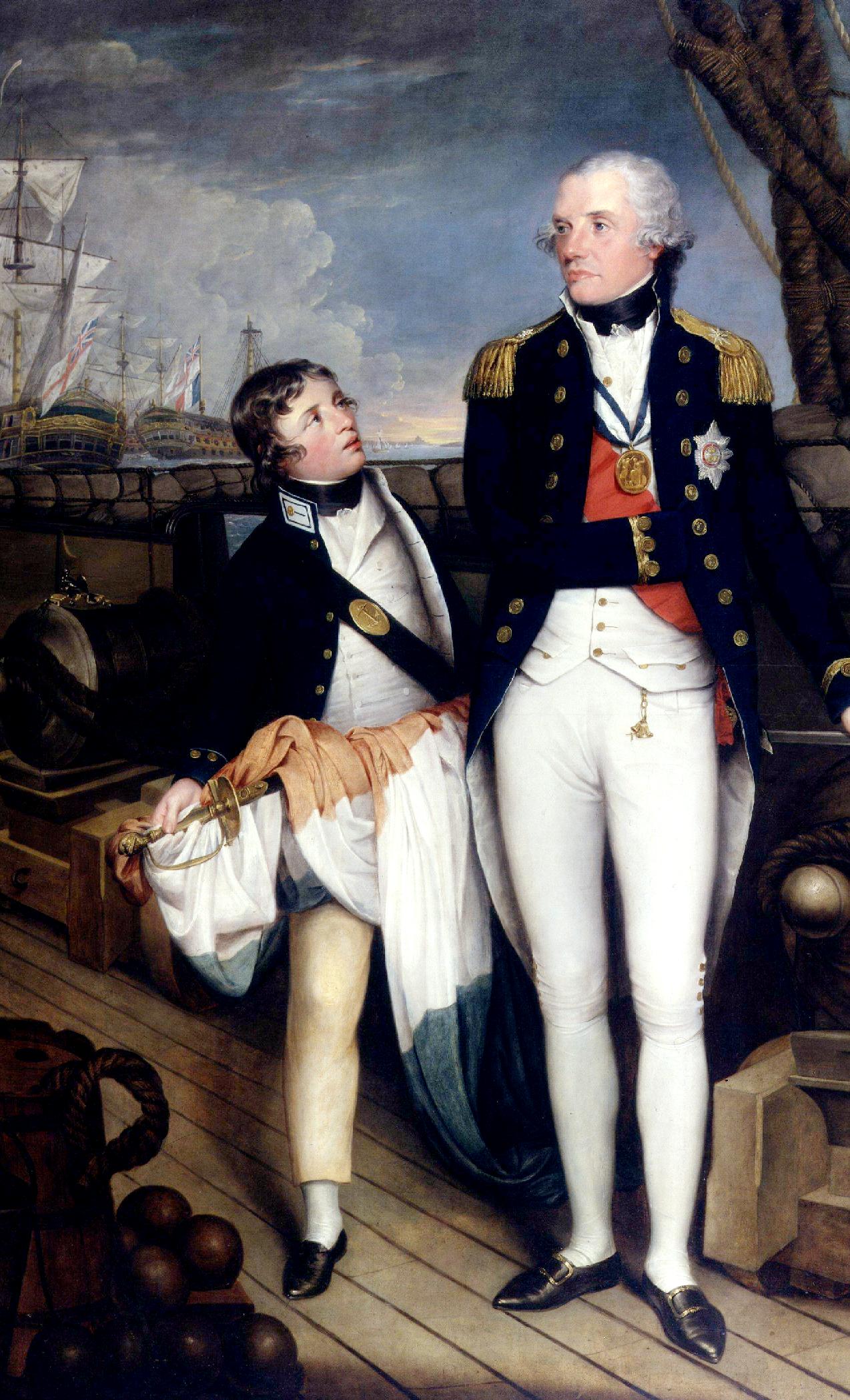
Horatio Nelson, 1st Viscount Nelson is widely seen as the greatest naval commander of all time. We might think that American Chester Nimitz is in contention here. But bin terms fighting admirals actually commanding fleets at sea in battle, Nelson is without peer. Nelson received his first command (1778). He became widely respected for inspirational leadership, an unsurpassed grasp of strategy, and most notably unconventional battle tactics. These led to a series of decisive naval victories over the French and Spanish during the Napoleonic Wars. He led front the front and paid a price for it. He was wounded several times in his many combats. He lost an arm in the failed attempt to conquer Santa Cruz de Tenerife in the Canary Islands. He lost the sight in one eye in Corsica. He was finally shot and killed during the critical Battle of Trafalgar (1805). Nelson was first British commander to engage Napoleon in important ways. While Napoleon was fighting the Mamalukes in successful, but pointless battles, Nelson was engaged in the critical effort to find and destroy the French fleet. He defeated the French fleet at the Battle of the Nile fought in Aboukir Bay (1799). 【Meyerson】 This isolated Napoleon and the French army. Napoleon had to abandon his army and somehow eluded the British fleet to get back to France where he proceeded to seize control of the Government. When Napoleon slipped back into France, he found the government about to collapse. Napoleon seized control of the government. Some historians look on this as the end of the French Revolution. Meanwhile in Egypt the French forces were forced to surrender (1801). As part of the surrender they were forced to hand over the Egyptian treasures and antiquities many of which can now be found in London museums today. One of those
was the Rosetta Stone. Nelson had gained two great victories over the French earlier. But not since the Great Armada had the Royal Navy faced such a massive naval force. The British First Sea Lord appointed Admiral Lord Nelson as Commander in Chief of the British Fleet which was being assembled to engage the French and Spanish ships. Napoleon' military genius carried French armies all over Europe. Britain's small Army could not have defeated him if Napoleon managed to get his Army to Britain. But first to do that he had to cross the Channel. And to do so the French in cooperation with the Spanish were building a massive fleet to make the crossing. Napoleon positioned a large Army along the Channel coast to make the crossing. Nelson selected His Majesty's Ship Victory as his flagship. He sailed south towards the bastion at Gibraltar to organize the Fleet. Nelson's stunning victory at Trafalgar against a larger French and Spanish fleet is a masterpiece of naval tactics that saved Britain, and often ignored, America as well. (Napoleon still had designs on North America.) All of this is memorialized today in London's Trafalgar Square.
Horatio Nelson, 1st Viscount Nelson is widely seen as the greatest naval commander of all time. We might think that American Chester Nimitz is in contention here. But bin terms fighting admirals actually commanding fleets at sea in battle, Nelson is without peer. Nelson received his first command (1778). He became widely respected for inspirational leadership, an unsurpassed grasp of strategy, and most notably unconventional battle tactics. These led to a series of decisive naval victories over the French and Spanish during the Napoleonic Wars. He led front the front and paid a price for it. He was wounded several times in his many combats. He lost an arm in the failed attempt to conquer Santa Cruz de Tenerife in the Canary Islands. He lost the sight in one eye in Corsica. He was finally shot and killed during the critical Battle of Trafalgar (1805).
The peace that followed the American Revolution (1776-83)might have made for a quite life for Nelson. Enforcing the Navigtion Acts in the Caribbean did not make for a great naval career. For that you need for a great eneny. And this came with the French Revolution (1789). The American Revolution had injured Britain's pride, but was not a threat to Briotin. No American army was going to march down White Hall. The French Revolution was very different. France was Britain';s hitoicl enmy for centuries. And it was a poweful country with the actual capability of invading Britain. And moreso, the Frenchg Revolution inleasshed republicanism and theterroir. Europe sonce fall of Rome had been been ruled by kings and emperors. It was fiundamanetal shift in govranace. Reobklicamism at the toime is how Communism is feared in modern times. And the French began lopping off royal and aristiocratic heads. And to make mnatters worse, French Republican armies began winning battles. And the sitation worsened wityh the advent of Napoleon because he defaeated Duropean momnarcial marmies inm dsome of the great battles in history, brining most of Europe under his sway-- a nightmare for Britain. For more than a decade only Britain held out. Thus Britain has its great enemy and in great need of a naval hero. There seems no doubt that if Napoleon got an army across the Channel--Britain was doomed. This was prevented by Nelson's three great victories.
Nelson was the first British commander to engage Napoleon in important ways. While Napoleon was fighting the Mamalukes in successful, but pointless battles, Nelson was engaged in the critical effort to find and destroy the French fleet. He defeated the French fleet at the Battle of the Nile fought in Aboukir Bay (1798). 【Meyerson】 Itwas a nonumental victory. The French fleet was not jyst defeated. It wa destroyed. Nelson had been chasing the French fleet around the Mediterrann for months. The Frenchg avoided battle. At Aboukir Bay, Nelson finlly hot his battle. This isolated Napoleon and the French army. Napoleon abandoned his army and somehow eluded the British fleet to get back to France where he proceeded to seize control of the Government. When Napoleon slipped back into France, he found the government about to collapse. Napoleon seized control of the government. Some historians look on this as the end of the French Revolution. Meanwhile in Egypt the French forces were forced to surrender (1801). As part of the surrender they were forced to hand over the Egyptian treasures and antiquities many of which can now be found in London museums today. One of those was the Rosetta Stone.
As the Revolutionary Wars merged into the Naoppoleponmic Wars, Britain's principal protection from France was the Royal Navy. As French armies began to sweep over Europe, only Britain waw able to ward off the French. And Britain enacted a naval embargo on France. Royal Navy ships searched neutral ships believed to be trading with the Fremncj. They seized cargoes if they were found to be of French origin. 【Pocock, p. 229.】 Russian Tsar Paul was a British ally, but to avoid a French invassion negotiated a League of Armed Neutrality wityh northern European countries (Denmark, Sweden, Prussia, and Russia) and engaged in trade with France. This was in French and a real threat to the Frenvch economy. The League opposed the British blockade threatened the supply of timber and naval stores from Scandinavia. Britain had lrgely depeted its forests nd building ships reqyured enonmormous quntities of timber. The Battle of Copenhagen Harbour (First Battle of Copengagen) occurred (April 2, 1801). This is Roskildefjord and the entrance to the fjord is very narrow. Nelon defeated a smaller force of the Royal Dano-Norwegian Navy anchored near Copenhagen. The British struk because they were concerned Danish fleet might join the French. As Nelson entered the home harbor of the Danish Navy, several Dasnish ships defended the harbor's roadstead. These ship and shore bastions defended the capital. It was the second British attempt to dstroy the Danish fleet. They were determined to prevent a Franco-Danish alliance. The British had priviouly entered Øresund with a fleet (August 1800). The battle was largely settled by the superior gunnery of the British ships. With most of he Danish fleet captured and ubrned by the British, the Danes agreed to the British terms. A factor here was the assassination of Emperor Paul I of Russia. This meant the the end of the Russian-led League of Armed Neutrality.
Nelson had gained two great victories over the French earlier. But not since the Great Armada had the Royal Navy faced such a massive naval force. The British First Sea Lord appointed Admiral Lord Nelson as Commander in Chief of the British Fleet which was being assembled to engage the French and Spanish ships. Napoleon' military genius carried French armies all over Europe. Britain's small Army could not have defeated him if Napoleon managed to get his Army to Britain. But first to do that he had to cross the Channel. And to do so the French in cooperation with the Spanish were building a massive fleet to make the crossing. Napoleon positioned a large Army along the Channel coast to make the crossing. Nelson selected His Majesty's Ship Victory as his flagship. He sailed south towards the bastion at Gibraltar to organize the Fleet. Nelson's stunning victory at Trafalgar against a larger French and Spanish fleet is a masterpiece of naval tactics that saved Britain, and often ignored, America as well. (Napoleon still had designs on North America.) All of this is memorialized today in London's Trafalgar Square.
Meyerson, Daniel. The Linguist and the Emperor: Napoleon and Champollion's Quest to Decipher the Rosetta Stone (Ballantine, 2004), 271p.
Pocock, Tom. Horatio Nelson (Pimlico: 1987).

Navigate the Children in History Website:
[Return to Main Napoleonic War biography page]
[Return to Main Napoleonic War page]
[Return to Main Napoleonic War naval page]
[Return to Main decisive battle page]
[Return to Main Royal Navy page]
[Return to Main George William Joy artist page]
[About Us]
[Introduction]
[Biographies]
[Chronology]
[Climatology]
[Clothing]
[Disease and Health]
[Economics]
[Freedom]
[Geography]
[History]
[Human Nature]
[Ideology]
[Law]
[Nationalism]
[Presidents]
[Religion]
[Royalty]
[Science]
[Social Class]
[Bibliographies]
[Contributions]
[FAQs]
[Glossaries]
[Images]
[Links]
[Registration]
[Tools]
[Children in History Home]