
Non-Fiction Series Books: Ladybird Books--Illustration Updates
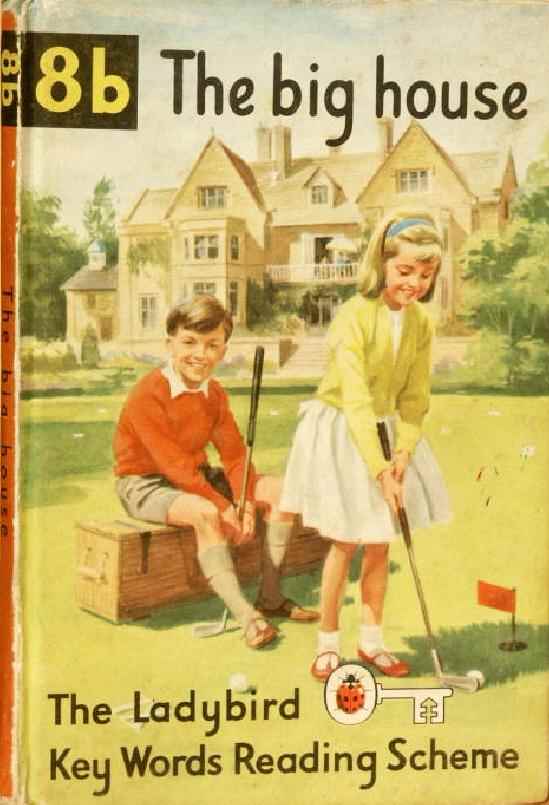
Figure 1.--This is an illustration from the 1960s Ladybug book, "The Big House". It was one of the Reading Scheme books. Notice the rther traitional clothes, including school sandals. Th illustration probably was looking a little dated to boys even in the 1960s. Click on the image to see the 1970s fashion update.
|
One interesting aspect of the Ladybug books is that because they were published over several decades, that the editors decided to update the illustrations over time. This was especially true of the various reading scheme books which sought to depict the every day life of the children actually learning to read. Ladybirds 'Key
Words Reading Scheme' aimed at students to teach them the basics of English grammar started in the early 1960s and this series (of many) was still in press in the
70s. In order to keep the artwork contemporary, the same illustrator would have to update his illustrations to keep the books in line with the current generation of
children so that they could relate to the English tutorial given in the book As a result, some of the updated illustrations provide interesting examples of changing
fashion trends.
Chronology
One interesting aspect of the Ladybug books is that because they were published over several decades, that the editors decided to update the illustrations over time. Actually some of the 1960s books had illustrations that were looking a little dated. The first Reading Scheme books were published in the 1960s. There were major fashion changes in the 60s and 70s.
Ladybird Books also produced a reading scheme. It was highly praised in the 1950’s because the books were available from many outlets. Parents who wanted to
help in the teaching of reading to their children had easy access to an excellent reading resource. It was written by an headmaster called W. Murry. He said, ‘The full colour illustrations have been designed to create a desirable attitude towards learning… this attractive reading scheme embraces …the natural interests and activities of happy children.” It was one of the first reading schemes which was about the everyday life of primary school children. The characters were a boy and girl called Peter and Jane. They were about 9 and 10 years old. The family had a pet dog called Pat. They were happy children, leading a care free life. Peter was Cub Scout but the only reference to this was his cup scout cap featured in one of the early books. They lived in a detached house which had a large garden. The children were dressed in a variety of contemporary clothing. These were casual clothes such as jeans and t- shirt worn by both Peter and Jane. Sometimes Jane wore a dress. At
the seaside Peter wore shorts and Jane wore a colourful casual dress. Winter clothing was never worn because the story took place in the spring and summer
months. There is hardly a rainy day. The climate is always dry, warm sunny. They did ordinary every day activities such as going shopping for their mum. They
travelled on public transport. Often they travelled alone but they went further a field with their parents. Their dad had a car and he some times took them to their
state primary school. In some books the children went to the seaside but mostly the happenings were around their home town somewhere in England. I always
suspected that the town was near a famous seaside town called Brighton. Some of the seaside stories appear to have a pier similar to the one at Brighton. The books
often contained pictures showing a display of Ladybird books.
Reading Scheme Illustrations
The editors of the Ladybug editors sought to depict the every day life of the children actually learning to read.
Illustration Updating
The illustration updating was especially true of the various reading scheme books. Ladybirds 'Key Words Reading Scheme' aimed at students to teach them the basics of English grammar started in the early 1960s and this series (of many) was still in press in the 70s. In order to keep the artwork contemporary, the same illustrator would have to update his illustrations to keep the books in line with the current generation of children so that they could relate to the English tutorial given in the book.
Fashion Insights
As a result, some of the updated illustrations provide interesting examples of changing fashion trends. It is interesting to see how boys (and girls) fashion changed in a mere decade. The first publication of 'The Big House' is in
1966 and the second print with the same English tutorial is in 1976. In Martin Aitchison's illustration for the book cover in 1966, the boys apparel is very much the same since the 1940s. The brown shorts and socks seemed to have changed very little and seems to be still much from the 50s. Note the knee high ribbed stockings and brown strap shoes--a popular fashion feature from the 50s. Such footwear and hosiery would be undreamed of for boyswear today.
The 1970s edition of the same book shows a quite a profound change in the evolution of boyswear in such a short space of time. Whilst boys fashion has changed dramatically since the 70s, such wear was very stylish and contemporary, indicating the upsurge and sophistication of boyswear fashion demands that grew from the 60s. Note the flared jeans ( the 'bellbottoms' which started from the late 60s) and design features of the boys sweater. The boys hair style is the typical moptop which was so popular with teen boy movie stars of the day such as Donny Osmond and David Cassidy.
Illustrators
Many of the Ladybug Reading Scheme books were illustrated by Martin Aitchison. Interestingly, he also did many of the updated illustrations. Often the basic pose was similar but the props like bicycles also updated. The use of the same illustrator and the atte,mpt to repicate the scene, a the text was rarely changed, make the fashion shifts particularly striking. The illustration showing the boy collecting post perhaps shows that the artist had more allowance to experiment with his style of illustration. His attention to detail in the jeans stitching ( a close fitting cut it seems, from the book cover) and t-shirt design shows the
artists fine skill of workmanship. Note the trackshoes the boy is wearing--a forerunner of the designer sportswear branding of today?
HBC

Navigate the HBC literary pages' Historical Clothing Web Site:
[Return to the main Main Ladybird Books illustration page]
[Return to the main Main children's literary page]
[Return to the main Main literary page]
Navigate the Boys' Historical Clothing Web Site:
[Introduction]
[Activities]
[Biographies]
[Chronology]
[Clothing styles]
[Countries]
[Bibliographies]
[Contributions]
[FAQs]
[Glossaries]
[Satellite sites]
[Tools]
[Boys' Clothing Home]
Created: April 18, 2003
Last updated: April 18, 2003
