
Store Catalogs for Boys' Clothing
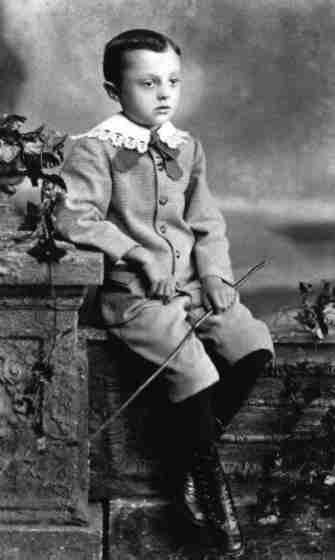
Figure 1.--Store catalogs can be very helful in dating old photographs. All we know for sure about this photograoph is that it was taken in Reading, Pennsylvania. The lace collar suggests the late 1880s as it is much smaller than the collars commonly worn in the 1890s.
|
There are many different sources of information on historical boys' fashions. Two of the major sources of information in the 19th Century are store catalogs and photographs. Each have advantages and drawbacks,
but used together along withother available sources, such as paintings and other artwork, published and unpublished articles and letters, and intact old garments allow one to create a reasonably good assessment of 19th Century fashions, especially in the second half of the Century. Earlier periods are more complicated because of the more limited store
catalogs and fashion publications and the absence of photography. The store catalogs give an excellent idea of what boys were wearing at
different ages as they had to appeal to popular tastes. They also provide details on materials used. The photographs are useful to confirm that these fashions were actually worn as well as to indicate what hair styles and accessories such as hats, bows, collars, sashes, stocking and shoes were worn with the suits and other garments advertised.
Store catalogs have to be carefully evaluated as they were aimed at specific sectors of the population, often affluent families. Also chain stores were not common yet, so the fashions could be regional. Even so an
assessment of individual catalogs provides fascinating insights into boys fashions and trends.
1885 Spring: Stern Brothers
Christopher Wagner
histclo@lycosmail.com
Navigate the Boys' Historical Clothing catalog/magazine pages:
[Return to:Fashion magazines and store catalogs]
[Main photo/publishing page]
[Store catalogs]
[Fashion magazines]
Navigate the Boys' Historical Clothing Web Site:
[Introduction]
[Chronology]
[Clothing styles]
[Biographies]
[Bibliographies]
[Activities]
[Countries
[Contributions]
[Boys' Clothing Home]
Navigate the Boys' Historical Clothing Web Site:
[Sailor suits]
[Sailor hats]
[Buster Brown suits]
[Eton suits]
[Rompers]
[Tunics]
[Smocks]
[Pinafores]
Created: March 23, 1999
Last updated: March 23, 1999
