|
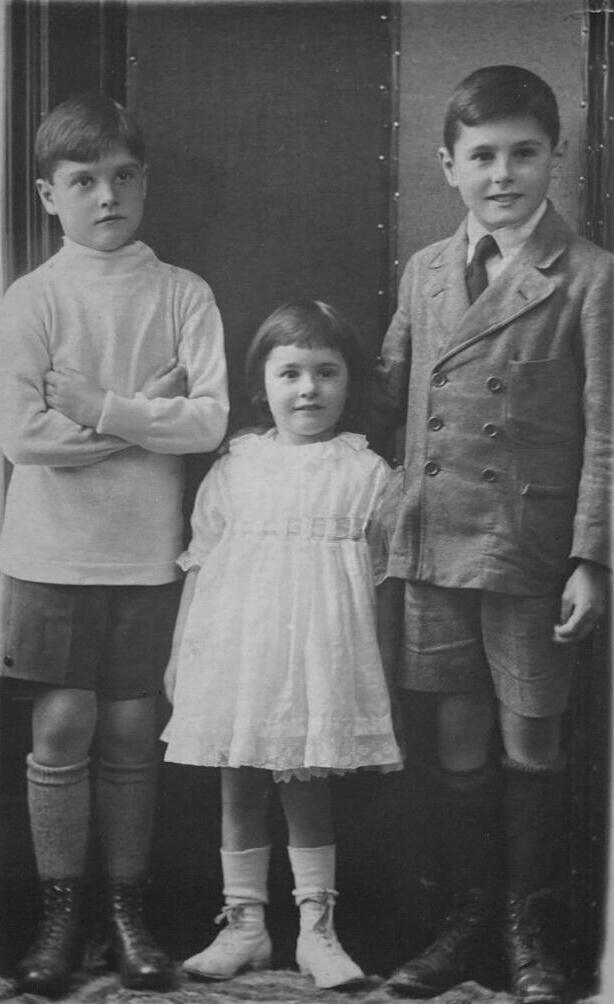
A sweater is a knitted garment typically with long sleeves, worn over the upper body and garments like blouses and shirts. Sweater is the generic American term. It is understood in Britain, but more often terms likepullover, jumper, or jersey are used. The terms have different meanings in American English. In America 'jumper' refers to a style of girl's sleeveless dress, worn over a blouse or shirt, and 'jersey' refers to a knit shirt, especially if part of an sports uniform. The most common English knitted outer-wear garment as in most countries were sweaters, especially the countries with cold weather. England does not have especially cold winters, but the variable weather even during the day makes the sweater a very useful garment. We are not sure, however, how common sweaters were in the 19th century. They are not prominent in the photographic record, but that may be because mothers used to dress boys up in their best outfits for formal portraits. We do indeed see more images of boys wearing sweaters with the advent of amateur family photography and the snapshot after the turn-of-the 20th century. We note, for example, one unidentified boy photographed about 1905. Sweaters for young boys might have buttons at the shoulders to make it easier to help them dress and undress. After World War I (1914-18) their are countless images of English boys wearing sweaters. Some English boys during the 1920s began wearing sweaters, which tended to to be made longer than now, over their pants--usually short pants. Later the sweaters became shorter and were cut at the waist and even tucked inside the pants. The sweater was an important school garment, often dome in grey. Sweaters were usually solid colors until after World War II.
A sweater is a knitted garment typically with long sleeves, worn over the upper body and garments like blouses and shirts.
Sweater is the generic American term. It is understood in Britain, but more often terms likepullover, jumper, or jersey are used. The terms have different meanings in American English. In America 'jumper' refers to a style of girl's sleeveless dress, worn over a blouse or shirt, and 'jersey' refers to a knit shirt, especially if part of an sports uniform.
The most common English knitted outer-wear garment as in most countries were sweaters, especially the countries with cold weather. England does not have especially cold winters, but the variable weather even during the day makes the sweater a very useful garment.
We are not sure, however, how common sweaters were in the 19th century. As best ww can tell they did not exist as a consumer product. There were precursors. Knitted shirts/tunics appeared in Guernsey and Jersey (15th century). They were not They are not prominent in the photographic record, but that could be may be because mothers would chioldren boys up in their best outfits for formal portraits. The modern sweater as we know it today was first adopted by athletes in Amerricsa (1890s). These were youhs and young men, not boys. As best we can tell the sweater became a major garment for childerenm especially boys, until the 20th century. Schools nay have plated a role hee because of the imprtnce of athletics in British schools. And by the 1910s we begin to see boys wearing sweaters which were called jumers for some reason. And the popularity quickly crossed the Atlantic--a still rare direction at the time. We do indeed see more images of boys wearing sweaters with the advent of amateur family photography and the snapshot after the turn-of-the 20th century. We note, for example, one unidentified boy photographed about 1905. Sweaters for young boys might have buttons at the shoulders to make it easier to help them dress and undress. After World War I (1914-18) their are countless images of English boys wearing sweaters. By the 1920s sweters entered mainstream fashions. Some English boys during the 1920s began wearing sweaters, which tended to to be made longer than now, over their pants--usually short pants. Later the sweaters became shorter and were cut at the waist and even tucked inside the pants. The sweater was an important school garment, often dome in grey, perhaos with btrim in the school colors. V-neck sweaters were populasr to show the ties woen at dchools.
Common sweater types include crewneck, V‑neck, turtleneck, cardigans, cable knits, Fair Isle, oversized, crop sweaters, and various necklines such as mock neck, cowl neck, and shawl collar. These categories are defined by neckline, silhouette, and fabric, which together determine warmth, style, and formality.
Sweaters were usually solid colors until after World War II.

Navigate related Boys' Historical Clothing Web Site cold weather pages pages:
[Return to the Main English knit garment page]
[Return to the Main English knit page]
[Return to the Main English garment page]
[Coats][Knits][Leggings][Sweaters][Underwear][Other cold-weather wear]
Navigate the Boys' Historical Clothing Web Site:
[About Us]
[Introduction][Activities][Biographies][Chronology][Clothing styles][Countries][Topics]
[Bibliographies][Contributions][FAQs][Glossaries][Images][Links][Registration][Tools]
[Boys' Clothing Home]