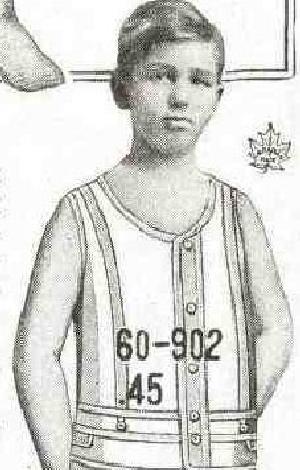
Figure 1.-- The Canadian Eaton's Department Store advertised a boy's underwaist in 1918-19 that featured tabs with two eyelets to hold the safety pins of the supporters. The use of eyelets became fairly prevalent during the 1910s and 1920s. |

|
The use of eyelets was another method of attaching the garters. Some waists and waist union suits were made with eyeleted garter tabs to hold the safety pin of the hose supporter. A little tape tab was sewn onto the gartment and made of flexible but sturdy material. The tab had two spaced holes or eyelets piercing the tab through which the garter safety pin passed to hold the hose supporter firmly in place. Usually the holes were made with metal surrounds or lining so that the safety pin would not tear the fabric of the tab. These eyelets were made like the eyelets in lace-up shoes through which the shoe strings of modern shoes are passed. Similar eyelets were used in the lacing up of women's corsets. If the two eyelet holes were spaced properly on each of the two tabs, the garter pin could not twist and turn or pull the waist out of shape. We are not sure when they first appeared. They became fairly prevalent during the 1910s and 1920s. Eaton's in Canada advertised a boy's waist in 1918-19 that featured tabs with two eyelets to hold the safety pins of the supporters. Eyelet garter tabs continued to be used on many waists even after pin tunses became prevalent. One of the models in the illustration on the main underwaist page shows a waist with eyelet tubes in 1929.
The use of eyelets was another method of attaching the garters. Some waists and waist union suits were made with eyeleted garter tabs to hold the safety pin of the hose supporter. A little tape tab was sewn onto the gartment and made of flexible but sturdy material. The tab had two spaced holes or eyelets piercing the tab through which the garter safety pin passed to hold the hose supporter firmly in place. Usually the holes were made with metal surrounds or lining so that the safety pin would not tear the fabric of the tab. These eyelets were made like the eyelets in lace-up shoes through which the shoe strings of modern shoes are passed. Similar eyelets were used in the lacing up of women's corsets.
If the two eyelet holes were spaced properly on each of the two tabs, the garter pin could not twist and turn or pull the waist out of shape. We are not sure when they first appeared.
Eyelet attachments became fairly prevalent during the 1910s and 1920s. We first see them in 1904. The advertisement for Ideal waists actually mentions the eyelet feature prominently. Many other examples are archived on HBC.
Eaton's in Canada advertised a boy's waist in 1918-19 that featured tabs with two eyelets to hold the safety pins of the supporters.
A Sexton Summer Waists as in 1921
shows a detail inset of the ad with a close-up of the garter tab with
two eyelets for attachment of supporters.
Another Sexton ad shows the placement of the tabs on the summer waist union suits (also with
eyelets).
Notice the second waist (middle of top row) in this Sears ad for
underwaists (1929). This waist features "eyeleted pin tubes" for
holding supporters.
Eyelet garter tabs continued to be used on many waists even after pin tunses became prevalent. One of the models in the illustration on the main underwaist page shows a waist with eyelet tubes in 1929.
We notice
Wards garter waists in 1941 with eyelets. The boy at the extreme left wears a waist with
"metal eyelets" for attaching supporters

Navigate the Boys' Historical Clothing Web Site:
[Return to the Main garter attachment device page]
[Return to the Main garter attachment page]
[Return to the Main garter page]
[Introduction]
[Activities]
[Biographies]
[Chronology]
[Clothing styles]
[Countries]
[Bibliographies]
[Contributions]
[FAQs]
[Glossaries]
[Images]
[Links]
[Registration]
[Tools]
[Boys' Clothing Home]