|
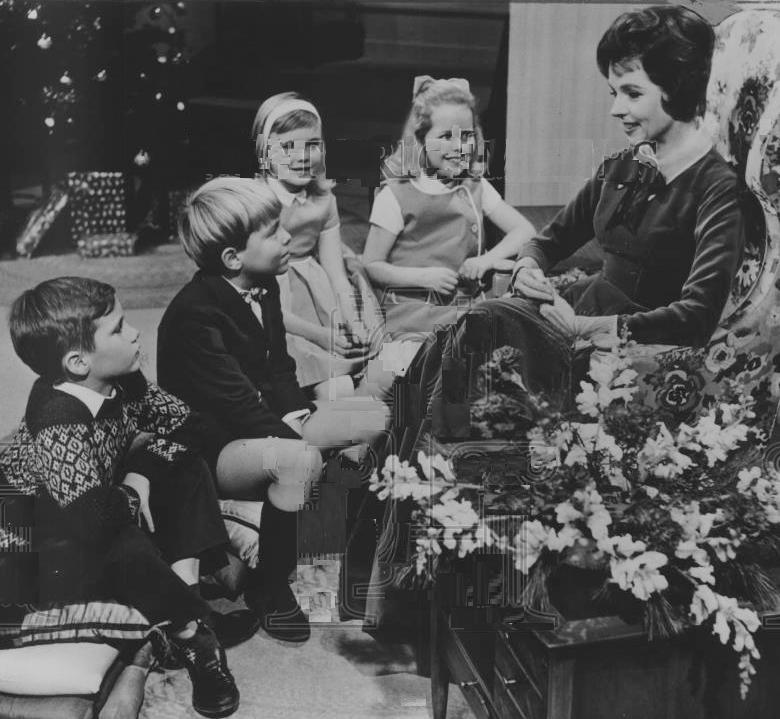
We note a range of seasonal holiday programming on American Television. The most common by far was Christmas. But we also see New Year, Easter, Fourth of July, Halloween, and Thanksgiving fitting in to the programing. There were different types of seasonal programming. This was true primarily with serial programming like sitcoms and other serial programming. There might be a program with a holiday setting. There were seasonal specials, especially Christmas specials. We also see variety shows that were popular through the 1980s having specials especially Christmas. Programs like Perry Como, Bing Crosby, the King Family, Dianna Shore, Andy Williams, and others commonly included children as Christmas is at its heart a family-oriented holiday. And there were many non-religious aspects of Christmas. This was especially the case for Christmas And the children were very commonly dressed in their best clothes for the program. Looking at the programs over time we see an interesting view of fashion changes over time. Of course the children we see dressed more fashionably than the children in the average family, but we see some of the fashion trends. At the time of course it was much more common to dress up for special events, especially for Christmas. This has declined over time as the media moves away from programing with religious, especially Christmas connotations. A factor here is that America has become more diverse with other religious communities growing, especially Islam, but also Hinduism. Also to be considered, however, is that beyond theology is the impact that Christianity has had on the paralleled success of the United States. Of course this sis something the modern Legacy Media does not want to publicize just as they suppress the success of capitalism and promote socialism--despite the fact that it has failed wherever imposed on a population. While we see less religious (Christmas and Easter) programming, other holiday, especially Halloween has become more prominent. Other holidays that have declined in recent years are holidays with patriotic orientations--especially Fourth of July. The media has taken the woke attitude that there is something wrong with patriotism.
There were different types of seasonal programming. This was true primarily with serial programming like sitcoms and other serial programming. There might be a program with a holiday setting. There were seasonal specials, especially Christmas specials. Stations show Christmas movies are -countless Christmas-themed productions.
We note a range of seasonal holiday programming on American Television. The most common by far was Christmas. But we also see Easter, Fourth of July, Halloween, and Thanksgiving fitting in to the programing. There have been major changes in the line up over time, with religious and patriotic celebrations declining and secular celebration increasing.
We also see variety shows that were popular through the 1980s having specials especially Christmas. Programs like Perry Como, Bing Crosby, the King Family, Dianna Shore, Andy Williams, and others commonly included children as Christmas is at its heart a family-oriented holiday. And there were many non-religious aspects of Christmas. In fact, This was especially the case for Christmas which has roots in ancient Roman Saturnalia -- the Roman midwinter celebration of the Solstice and the greatest of all the Roman annual holidays. And for most of history, Christmas was not nearly as important as Easter, and in some instances actually banned by religious authorities. For the Christmas specials, the children were very commonly dressed in their best clothes for the program. Looking at the programs over time we see an interesting view of fashion changes over time. Of course the children we see dressed more fashionably than the children in the average family, but we see some of the fashion trends. At the time of course it was much more common to dress up for special events, especially for Christmas. This has declined over time as the media moves away from programing with religious, especially Christmas connotations. A factor here is that America has become more diverse with other religious communities growing, especially Islam, but also Hinduism. Also to be considered, however, is that beyond theology is the impact that Christianity has had on the paralleled success of the United States. Of course this sis something the modern Legacy Media does not want to publicize just as they suppress the success of capitalism and promote socialism--despite the fact that it has failed wherever imposed on a population. While we see less religious (Christmas and Easter) programming, other holiday, especially Halloween has become more prominent. And the media also tends to even say 'Christmas'--rather he more common term is 'Holidays'
Unlike Christmas, Easter is a purely religious holiday. There were Easter specials, but not nearly as many as for Christmas.
The celebration of Christmas has declined in recent years, but also holidays with patriotic orientations--especially Fourth of July. The media has not only taken the woke attitude that there is something wrong with religion, but also with patriotism. Despite its overall anti-American orientation, PBS does do one patriotic holiday celebration-- 'A Capitol Fourth'. This is an annual Independence Day special, held on the West Lawn of the U.S. Capitol in Washington, D.C., celebrating America’s birthday with music, fireworks, and tributes to the nation and its defenders. The 2026 edition continues this tradition, featuring well-known musical artists, the National Symphony Orchestra under conductor Jack Everly, and a spectacular fireworks display. The program is broadcast live to millions at home and to U.S. troops worldwide via the American Forces Network. But notably this is more of a Memorial Day celebration, honoring service members and veterans because much of the PBS staff has reservations about the historic honor of the American nation. .
While we see less religious (Christmas and Easter) programming, other holiday, especially Halloween has become muh more prominent. In fact the celebration of Halloween has grown exponentially in recent years. Halloween was largely ignored on American television until the 1990s. The 'Rosanne' show (1988-97)-is the first program we recall which actually made anything of Halloween. Even major programs focusing on kids avoided it like 'Leave it to Beaver' (1958-63). Halloween at the time wold have been a big thing to any child Beaver's age. But it was totally ignored. The same is true of 'The Brady Bunch' (1969-74). Today it is quite common. We see the same pattern in outdoor decoration. Christmas continued to be the king of outdoor decorations. But as a kid in he 1940s-50s, I do mot recall much in the way of Halloween decorations besides a big carved pumpkin. We now see very elaborate Halloween decorations in place for the Trick or Treaters. They are somewhat different than Christmas decoration in that bright colorful lighting is not very important. Of course Halloween began as a religious celebration--All Saints Day. That still exists, but it is Halloween that is mostly celebrated. The appeal was once primarily for kids -- dressing up and getting free candy. But today many adults have joined the festivities.

Navigate the Boys' Historical Clothing Web Site:
[Return to the Main American TV page]
[Return to the Main TV page]
[Introduction]
[Activities]
[Biographies]
[Chronology]
[Clothing styles]
[Countries]
[Photography]
[Bibliographies]
[Contributions]
[FAQs]
[Glossaries]
[Images]
[Links]
[Registration]
[Tools]
[Boys' Clothing Home]