|
Wales was conquered by the Normans in the 12-13th century before the developmnt of the British education system. Thus education developed in Wales along the same pattern as in England. Schooling was a luxury in the Middle Ages reserved for a privlidged few. What schooling was to be had, was conducted by the Church and until Henry VIII and the Reformation would have been conducted in Latin as was the case throughout the Christain world. After the Reformation schools began to be established in England that were secular in nature. Many of the great English public schools were established at this time and the language of instruction was English. Only a small part of the population, however, actually went to any form of school. We are unsure about the language of instruction in Welsh schools established in the 16th-18th centuries. As they would have been established in the cities where English influence was greatest, they may have been conducted in English, but we have no actual information at this time. During the 18th century, John Griffiths set up many Sunday schools in Wales to teach the Welsh how to read and write in Welsh, bringing mass literacy to Wales, something not seen in England until the late 19th century. A Welsh reader writes, "The Welsh Sunday schools in the 18th century came about after noncomformity and the chapels began to dominate Welsh life (the chapels did dominate Welsh life right up until the middle of the 20th century) with their firebrand preaching. The literacy (in Welsh, not English) in Wales led to many Welsh books being printed and many households owning their own Bibles." [Morgan] With the advent of state-financed public education, the inroads of the English language into Wales increased. As far as we know, all of the state financed schools like National Schools conducted classes in English and insisted that only English be spoken. We note in the 20th century little difference between English and Welsh schools and school uniform. We do have details on one Welsh school, Cowbridge Grammar School which dates back to 1607. A Welsh reader writes, "Since the 1950s Welsh language education (and that is education through the medium of Welsh, not just teaching the Welsh language to pupils) has become evermore popular." [Morgan]
We do noy hve a loy of information on Welsh education. Notman King Edward I conquered Wales during the lat-medieval era (13th century) before schools outside the church exited. As a result, the history of education in Wales is virtually identical to that of England. Thus the differences like those beteem Scotland, which more sucessfully resisted, and England did not develop in Wales. The principal difference that we can see are is the Welsh language and the economic diffrences between Wales and England. There also seems to have been a somewhat different church role. Perhaps our Welsh reders will be able to tell us more. But by the mid-20th century s far as we can see, the differnces Wales and England were virtually indistinuishable, except for some limuted welsh lnguage instruction in the schools. Since devolution, education policy in the four constituent countries of Britain have begun to diverge to some extent, but differences between England and Wales are still minimal.
A HBC reader has provided us a glossary of important terms concerning the modern British education ststem. These terms relate primarily to the modern British education system in England and Wales, and to a large part Ulster. Scotand is somewhat different.
As far as we can tell, Welsh school garments are essentially the same as those worn in England. This was the case at least by the time that school photography began to appear after the mid-19th century and we think probanly earlier. We do not yet have many Welsh school garment pages but the web section is costantly growing. We see the see the same headwear, blzers, ties, shirts, Jumpers (sweaters), panys, hosiery, and footwear. As in England, short pants were very common un the 20th century. We do have a page on mortarboard caps. They were worn at private preparatory and public schools, but not at state schools which did not have uniforms. These were the same as those worn in English schools during the late-19th and early-20th centuries. We also see the same modern styles. Unless the photograph is identified, it is impossible to tell the difference between the garments worn in Wales and England. This of course makes itdifficult to rchive Welsh images.
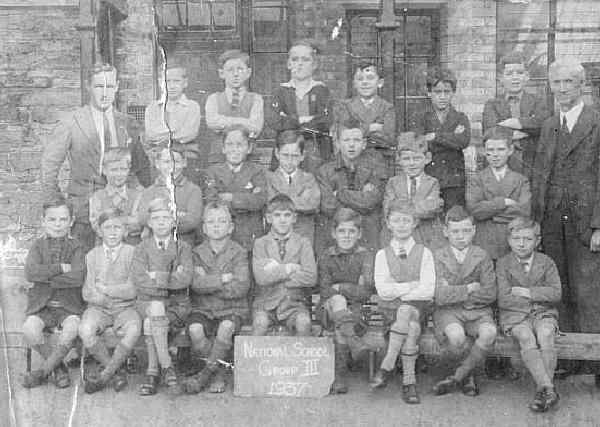
We note descriptionsof different types of schools in Wales. For the most part they are similar to Englisg schools. We are not, however, altogetgher certain just what all the different school types mean. We note, for example, references to board, infants, and national schools. Hopefully our Welsh reader will provide some insights here. Other types of schools like grammar and comprehensives, grammar, preparatory, and public schools are more obvious. We also notice a few Catholic schools in Wales.
We do have details on a few individual Welsh schools. Cowbridge Grammar School dates back to 1607. Aberdare Grammar School was founded more recently, in 1896. We note that when it opened in 1896 it was a coeducational school, novel at the time for secondary schools, and that the curriculum included the Welsh language as an eldective subject. Aberdare is now a comprehensive school.
A Welsh reader writes, ""Since the 1950s Welsh language education (and that is education through the medium of Welsh, not just teaching the Welsh language to pupils) has become evermore popular." [Morgan] Another reader writes, "A growing number of schools are educated through the medium of Welsh. This increase is especially great in English dominated areas in the South. The West of Wales is nearly all Welsh and in some towns (like my home town of Caernarfon) English is very rarely needed or used." [Aaron]
We do not know if there was any difference in how English and Welsh children dressed in earlier historical eras, either in general or in schools. We note in the 20th century little or no difference between English and Welsh schools and school uniforms.
Aaron, Guto. E-mail message, July 17, 2003.
Morgan, Jason. E-mail message, July 17, 2003.

Related Chronolgy Pages in the Boys' Historical Web Site
[The 1880s]
[The 1890s]
[The 1900s]
[The 1910s]
[The 1920s]
[The 1930s]
[The 1940s]
[The 1930s]
[The 1940s]
[The 1950s]
[The 1960s]
[The 1970s]
[The 1980s]
Related Style Pages in the Boys' Historical Web Site
[Long pants suits]
[Knicker suits]
[Kneepants]
[Short pants suits]
[Socks]
[Eton suits]
[Jacket and trousers]
[Blazer]
[School sandals]
[Flat caps]
[Sailor suits]
[Pinafores]
[Long stockings]
Navigate the HBC School Section
[Return to the Main Welsh page]
[Return to the Main U.K. page]
[Return to the Main school country page]
[About Us]
[Activities]
[Chronology]
[Clothing styles]
[Countries]
[Debate]
[Economics]
[Garment]
[Gender]
[Hair]
[History]
[Home trends]
[Literary characters]
[School types]
[Significance]
[Transport and travel
[Uniform regulations]
[Year level]
[Other topics]
[Images]
[Links]
[Registration]
[Tools]
[Return to the Historic Boys' School Home]