|
Please have a look at available information on Scouting in the following geographical areas and the development of the various national uniforms in each different area. Scouting is the most international of all youth groups. It began in Europe and spread worldwide. There are Scout associations in virtually ll countries where the government does not ban the movement. The movemrent is strongest in Europe and America, but there are assoiations in almost all countries where the government does not ban them. The movement is weakest in Africa.
Scouting is probably the weakest in Africa of all the different geographic regions, although Asia was affected by the Communist regimes dominating much of the continent. Scouting was founded in African countries by the various colonial powers. With de-colonization, the popularity of Scoutung declined in most of the former colonies. A major factor is economics. Scouting from the beginning was a largely middle-class, urban movement. The middle class in most African countries is weak. And ihe corruption and socialist policies adopted in most of the newly independent countries caused the economies to decline, further weakening the middle class. Most African boys just can't aford to be Scouts. The strongest movement appears to be in South Africa where the movement played a positive role through the difficult Apartheid era. Most of the strongest Scout movements are in the former British colonies. Please have a look at available information on Scouting in the following geographical areas and the development of the various national uniforms in each different area.
The North American Scout Movement is of coirse dominated by America. By the 1940s, it was rare for an American boy not to join the Cubs and most boys followed on into the Scouts. There was, however, a strong Scout movement in Canada. Smaller movements exist in Mexico, Central America and the Caribbean. The Scout movements are especially strong in the former British colonies in the Caribbean.
The Scouting movement is relatively weak in South America. Unlike countries like America and Britain, relatively few boys have particioated in the Scouting movement. This is in part because Scouting is predominately a middle-class mpvement and the middle class is only a small part of the population in most countries in the region which are predominately low-income countries. Most boys can simply not afford to be Scouts. Even so there are enthusiastic Scouters in each country. Please have a look at available information on Scouting in the following countries and the development of the various national uniforms in each different country.
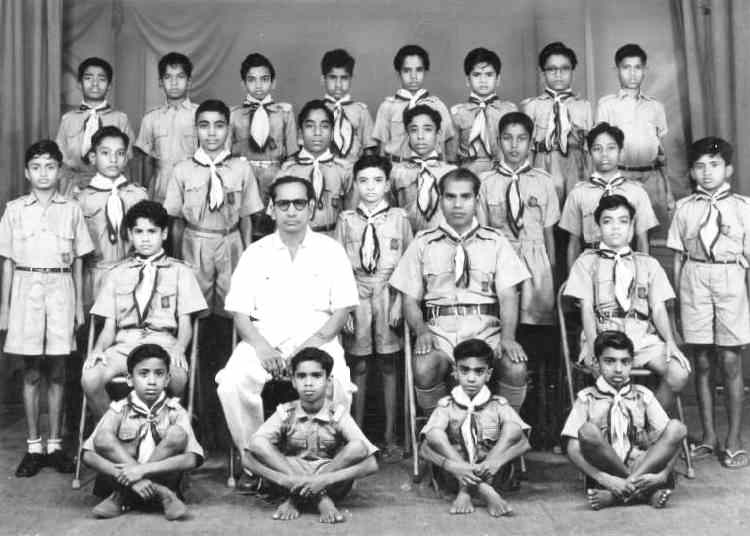
Asia is another region where the Scouting movement has not been particularly strong. The movement exists pfrinmarily in former British colonies like India. There is also a strong movement in areas where America has neen present like Japan and Korea, There are limits on youth groups in Japan, however, because of the enormous demands that the schools place on children by the time they reach junior high school. Of course Communist China, the world's most populce country--does not permit Scouting. Children are virtually required to join the Young Pioneers.
The world Scouting movement was of course founded in Europe by Lord Baden Powell and all the most important associations were in Europe, except for the United States, until recent times. The growth of the Scouting movement in Europe was interupted with the rise of totalitarian governments, many of which banned Scouting and founded there own youth groups to insure that youths were only expsed to the ideological dogma of the ruling party. Since the fall of the NAZIs and Fascists (1945) and communist regimes (1989-91), boys throughout Europe can now freely participate in Scouting.
We have relatively limited information on Scouts in the Middle East and North Africa. For much of the 20th century the principal group was Scouting. And the Scouting groups were largely middle-class organizations and commited to a program generally in keeping with the principles of Baden-Powell's Scouting movement which included both avoiding political commitments and a world wide international fellowship. Provisions of the Holy Koran incouraging Muslims to associate promarily with other Muslims were generally ignored. Since World War II and the independence of the Arab countries, this has begun to change. Some countries have prohibited Scouting, viewing it with suspision as too Western. Other counrries have founded national youth groups aimed at supporting the regime in power. And political movemnts within countries have founded their own youth groups, sometimes using the term Scouting. These groups tend to have highly political agendas oncluding training children for terrorist activitive and even suicide bombing--hardly in keeping with the spirit of Scouting..
The Scouting movement has traditionally been the stronest in Europe, but it is now growing in Asia and Oceania as well. Much of the growth of the Scout movement in recent years has in fact been in developing countries. It is the strongest in the Oceania countries that were European countries such as Australia and New Zealand. There is also a sizeable movement in the Philippines because of its American connections. The British also promoted Scout movements on several Pacific island colonies. Please have a look at available information on Scouting in the following countries and the development of the various national uniforms in each different country. Many of the island countries of Oceania are very small with limited populations. The Scouting movements are thus very small.

Navigate the Historic Boys' Uniform Chronology Pages:
[Return to the Main chronologies page]
[The 1900s]
[The 1910s]
[The 1920s]
[The 1930s]
[The 1940s]
[The 1950s]
[The 1960s]
[The 1970s]
[The 1980s]
[The 1990s]
[The 2000s]
Navigate the Historic Boys' Uniform Web Site:
[Return to the Main geographic region scouting page]
[Activities]
[Biographies]
[Chronologies]
[Countries]
[Essays]
[Garments]
[Organizations]
[Religion]
[Other]
[Introduction]
[Bibliographies]
[Contributions]
[FAQs]
[Questions]
[Unknown images]
[Boys' Uniform Home]
Navigate the Historic Boys' Uniform Web organization pages:
[Return to the Main Scout page]
[Boys' Brigade]
[Camp Fire]
[Hitler Youth]
[National]
[Pioneers]
[Royal Rangers]
[Scout]