|
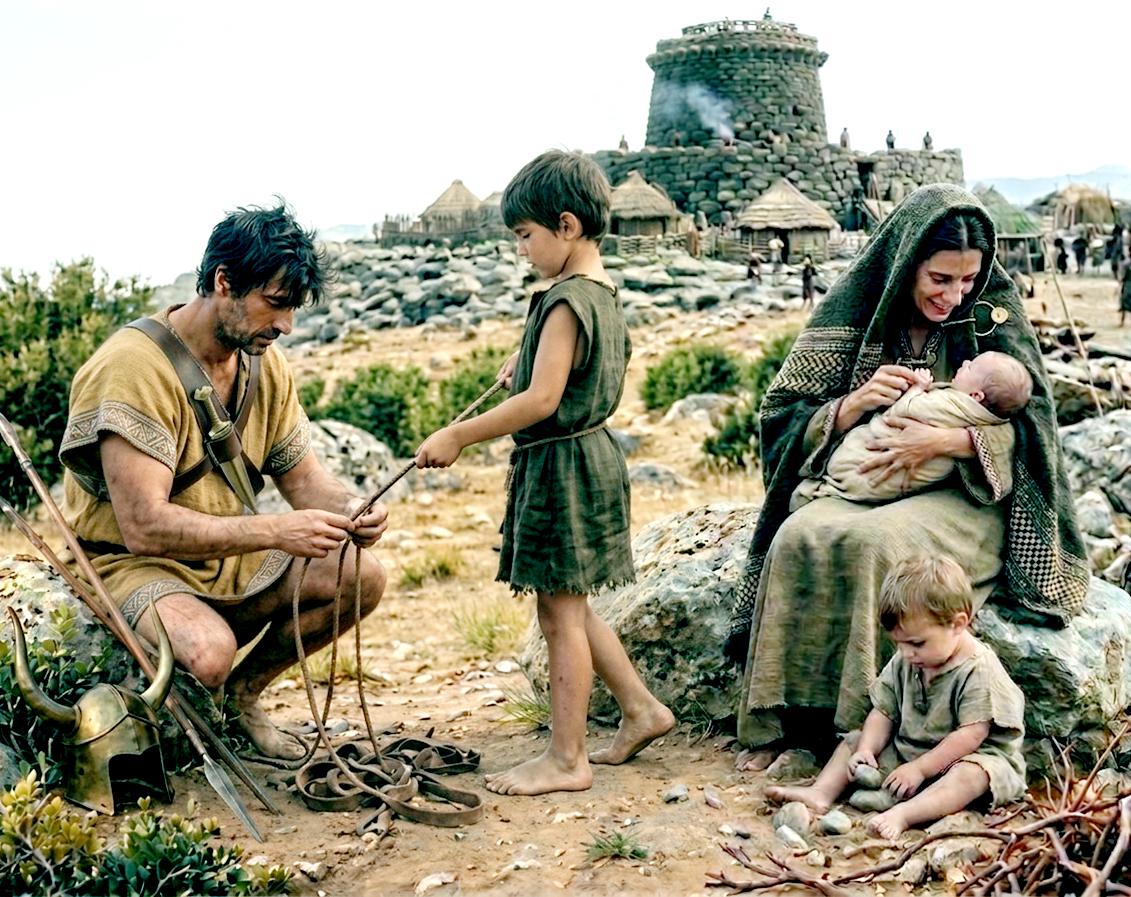
The Nuraghi people are the best know of the pre-history cultures of Sardinia. Some of the Sea People came from Sardinia, but that was a millennium before the Nuraghi. Strangely enough, over time, the inhabitants of Sardinia became shepherds, farmers, and also fishermen along the coast, but they rarely ventured out into the open sea. The Nuraghi have left architectural treasures on the island. The rugged terrain includes thousands of nuraghi, poorly understood Bronze Age stone ruins looking like beehives. No one knows what caused the Sardinians to begin making these structures. Archaeological evidence gives the impression of a strongly organized tribal organization. There is metal work from local mines which my have been the primary source of wealth. There are 7,000 Nuraghi and hundreds of archaeological monuments that are located all over the island. One of the largest and oldest of these Nuraghi is Su Nuraxi in Barumini (16th century BC). Which makes it one of the earliest such structures Also notable is the Domus de Janas, holy wells, temples and the mystic giant tombs, which are huge stones set into the ground called ‘betili’ or ‘menhir’ which stem from the megalithic architecture. While this was a new architectural era. The people did not change. We know that because the ethnicity remained that of the same Anatolian farmers that arrived millennia earlier. Some left as the Sea People, but many remained. Phoenician trading outposts appeared along the coast (9th-8th century). This probably made valuable contribution to the economy. The culture takes its name from the nuraghe, the megalithic buildings that are very common on the island. Whether the Nuragic peoples possessed a form of writing is a subject of much debate among scholars. It is certainly not possible to decipher some of the symbols that have been found, nor can we determine whether they constitute a form of writing. What we do know is derived from archaeological finds, particularly the bronze figurines. From these, we can determine what weapons they used, as various figurines depict warriors. The horned helmet, which is a legend about the Vikings, was a reality for the Sardinians of the Nuragic era, though the horns were made of metal. From the figurines, we also know that their clothing consisted of short tunics for men and long ones for women. The figurines also indicate that they went barefoot. The figurines, however, offer no clues regarding children’s clothing. As was the case elsewhere, it is believed that older children may have worn clothing similar to that of adults, smaller and simpler in style. It is possible that younger children went without clothes at all depending on the season..

Navigate the Boys' Historical Clothing Italian pages:
[Return to the Main Sardinian history page]
[Return to the Main Sardinian page]
[Return to the Main Italian island page]
[Return to the Main Italian regional page]
[Return to the Main Italian activity page]
[Return to the Main Itlalian page]
[Italian school uniforms]
[Italian youth groups]
[Italian choirs]
[Italian movies]
[Italian royalty]
Navigate the Children in History Web Site:
[About Us]
[Introduction]
[Biographies]
[Chronology]
[Clothing]
[Disease and Health]
[Economics]
[Environmental issues]
[Feminism]
[Geography]
[History]
[Human Nature]
[Law]
[Nationalism]
[Presidents]
[Religion]
[Royalty]
[Science]
[Social Class]
[Bibliographies]
[Contributions]
[FAQs]
[Glossaries]
[Images]
[Index]
[Links]
[Registration]
[Search]
[Tools]
[Children in History Home]