|
The NAZIs seeing Mussolini's and the Fascist regime collapsing invaded and seized control of Italy before the Allies invaded (1943). Thus the Allied invasion of Italy was more of a liberation. There was a fight for Italy from the Toe north up to the Po Valley (1943-45). Tremendous destruction ensued. The Germans surrendered (May 1945). Italians were left with a badly damaged country to rebuild. The Allies allowed Italians to settle their future demonically. There was the a serious threat of a Communist future. The Communists had been important in the resistance to Fascism and the NAZIs. Democratic parties narrowly prevailed, in post-War elections. In a referendum, Italians decided on a republic (1946). The situation on Sardinia was largely determined by these developments. Sardinia was not heavily damaged by the war, but living standards on the island were more like Third World countries than Europe, With democracy restored, Sardinians revived the idea of autonomy. The Italian Government approved Sardinia's status as a self-governing region of Italy (1948). Sardinia has a special constitutional status that confers more important legislative and administrative powers than other most Italian regions, but not independence. Sardinia's indigenous language and the Algherese dialect of Catalan are recognized by both regional and national law as two of Italy's twelve official linguistic minorities. Sardinia has benefit ted greatly from the Italian Economic Miracle. The result was a phenomenal rise in Italian living standards. This is most notable in southern Italy, but also in Sardinia and Sicily, bringing living standards up to a more European level. We think much of this is due to growth of the Italian economy rather than major economic developments on Sardinia. Autonomy may have been a factor, but we believe that the massive impact of the Italian Economic Miracle was the primary factor, The major growth engine in Sardinia has been tourism which primarily comes from Italy. While Sardinian living standards are no longer more similar to the Third World than Europe. There are still differences in education, health care, infrastructure, and other important areas, but the huge gap in living standards no longer existed by the 1990s. . An Italian reader tells us that "In terms of GDP, the capital, Cagliari, is in line with the national average. The island as a whole, however, is below the national average, but it ranks among the best in the south. In terms of life expectancy, the island is the best region in Italy." We suspect this is mot a recent development and the high life expectancy are the result of diet.
Fascist Italy was a member of the Axis alliance, but declined to join NAZI Germany in the War Hitler and Stalin lunched when they invaded Poland (1939). As a result the Mediterranean was not at first a theater of the War. This changed Then when the NAZIs smashed through France and it looked like Britain would soon suffer the same fate. Mussolini declared war (1940). Italy had a modern fleet and was threat to the badly over-stretched British Royal Navy. There were air and naval bases on the island. Major naval battles ensued (1941-42), but most of this was to the south and east. The NAZIs seeing Mussolini's and the Fascist regime collapsing invaded and seized control of Italy before the Allies invaded (1943). Thus the Allied invasion of Italy was more of a liberation. There was a fight for Italy from the Toe north up to the Po Valley (1943-45). On Sardinia, the Germans evacuated the island to Corsica (Septenber 1943). Tremendous destruction had occurred on the mainland. There was some damage on Sardinia from Allied bombing raids, but this was limited compared to what took place on the mainland. The Germans surrendered (May 1945).
Italians were left with a badly damaged country to rebuild. Not only was there immense war damage, but the Germans blew up infrastructure as they were driven north. This was not the case on Sardinia and the damage was much more limited. And the German garrison escaped to Corsica without doing much damage. But the country was much poorer than much of the Mainland.
The Allies allowed Italians to settle their future demonically. There was the a serious threat of a Communist future. The Communists had been important in the resistance to Fascism and the NAZIs. Democratic parties narrowly prevailed, in post-War elections. A a referendum was held to determine the future of the monarchy (June 1946). This was the first free election since the Fascist seized Power (1922). Italians decided on a republic (1946). While northern and central Italy voted heavily in favor of establishing a republic (which ultimately won nationally with 54.3 percent of the vote). 【"Italy to ..."】 Sardinia aligned with southern regions and Sicily in supporting the House of Savoy. The southern regions generally experienced less direct impact from the anti-fascist Resistance movement and retained stronger traditional ties to the crown, resulting in a distinct north-south political split in the referendum. The same was true in the parliamentary elections. The left wing parties, Italian Communist Party (PCI) and Socialist Party (PSI), did very well overall, especially in the industrial north. There was genuine concern that the Communists might seize power through democratic elections. This is what Stalin thought would occur in Eastern Europe, but did not and the intervention of the occupying Red Army and NKVD was needed o create compliant Communist rule. The Communists had been an important political party in Italy before the Fascists seized power. Industrial workers firmly believed that Communism rule and state control of industry would mean higher wages. As it turned out, during the Cold War, wages in Communist East Bloc countries became some of the lowest in Europe. (In fact wages declined to such low levels that it led to the unraveling of Communist rule in the East Bloc countries, beginning in Poland. In sharp contrast, workers in Western Europe, including Italy, employed by private companies saw their wages improve to levels imagined before the War. This dawned on workers only slowly so industrial workers continued voting for the Communists for some time. Another factor adding to the Communist vote was the fact that they were important in the struggle against the NAZI and Fascists forces (1943-45). Sardinia and southern Italy voted very differently, basically preventing he Communists from seizing power. 【Gates, p.531.】 Sardinia was liberated relatively early without any real fighting by the Partisans. The Germans withdrew without any prolonged NAZI occupation. Asa result, there was none of the heavy that fueled left-wing support on the Mainland. In addition, the Catholic Church was still widely respected and held strong social and cultural influence. This helped align Sardinian voters closer to the Christian Democrats. Sardinia also had historic ties to the House of Savoy, meaning that there were deeply embedded royalist sympathies.
Sardinia was not heavily damaged by the war, but living standards on the island were more like Third World countries than Europe, With democracy restored, Sardinians revived the idea of autonomy. The Italian Government approved Sardinia's status as a self-governing region of Italy (1948). Sardinia has a special constitutional status that confers more important legislative and administrative powers than other most Italian regions, but not independence. Sardinia's indigenous language and the Algherese dialect of Catalan are recognized by both regional and national law as two of Italy's twelve official linguistic minorities. It is unclear to us that the autonomy finally achieved had any major impact on Sardinia.
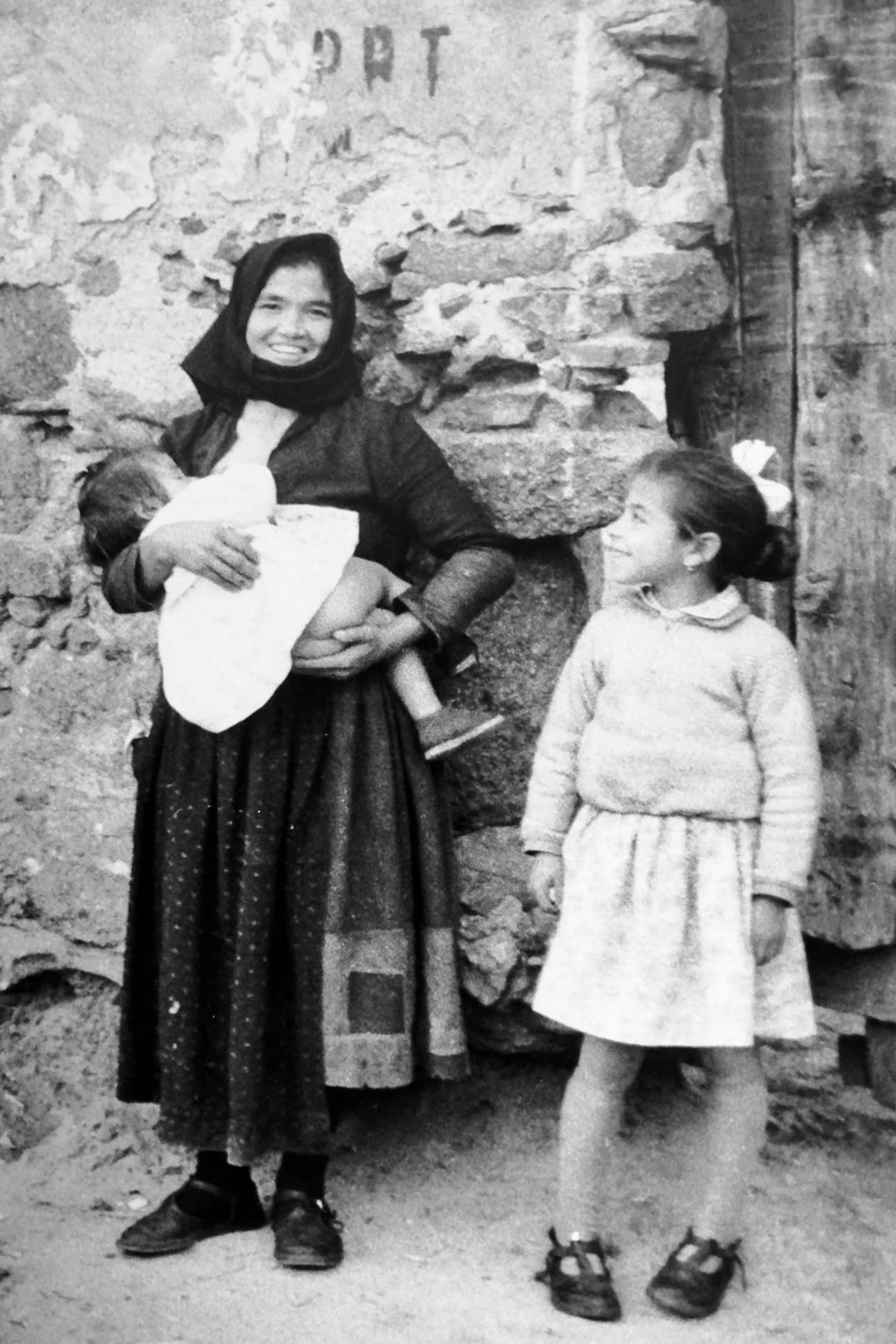
Sardinia was impacted by war damage, although less so than the Mainland. Much of the damage was in Cagliari which was bombed by he Allies (1943). 【Pireddu】 Important efforts immediately after the War were the anti‑malaria campaigns and work on living conditions. The 'Piano di Rinascit' (Rebirth Plan) was the principal recovery effort (1962). It adopted a 'growth pole' strategy to attract industrial factories, petrochemicals and heavy industry. There was a hyue challenge. "A large portion of the population (one of five people) was still illiterate, poverty was widespread, and basic infrastructure was either missing or very modest." 【Biagi, et. al.】 Sardinia experienced substantial economic changes (1950s-70s). Sardinia benefited greatly from the Italian Economic Miracle. This began with job opportunities opening up in a recovering Germany. Then industry began expanding in Italy. The result was a phenomenal rise in Italian living standards. While industry mostly expanded in the north, improvement in living standards were most notable in the south ans Sicily and Sardinia, because they were beginning at such a low base. While the factories were mostly in the north, workers from the south cold move north to seek goo paying jobs. This is most notable in southern Italy, but also in Sardinia and Sicily, bringing living standards up to a more European level. We think much of this is due to growth of the Italian economy rather than major economic developments on Sardinia. The island attracted petrochemical companies and new infrastructure, designed to modernize the economy. The planners had to contend with mass emigration and unsettling changes in the social fabric. Many rural villages were emptied while the cities expanded as well coastal areas. The economy was hard hit by the Oil Crisis (1973). major issues were insularity, limited diversification, and reliance on extractive industries, especially mining, all of which made it vulnerable to the global price shifts. The 'insularity gap' is a major issue. A poorly educated population and weak local institutions were additional problems. 【Biagi, et. al.】 Autonomy may have been a factor, but we believe that the massive impact of the Italian Economic Miracle was the primary factor, The major growth engine in Sardinia has been tourism which primarily comes from Italy. While Sardinian living standards are no longer more similar to the Third World than Europe, there was only limited actual development of an industrial base on the island.
Post‑World War II, migration to mainland Italy and abroad was common, but tourism began to grow in the 1960s–70s, especially in coastal areas. This boosted incomes in tourist zones but interior areas benefited less. Housing, utilities, and services improved gradually, but regional disparities persisted. Post‑World War II, migration to mainland Italy and abroad was common, but tourism began to grow (1960s–70s) creating good paying jobs on the island. Tourism was mostly in coastal areas Interior areas benefited less. Housing, utilities, and services improved gradually, but regional disparities persisted. There are still differences in education, health care, infrastructure, and other important areas, but the huge gap in living standards no longer existed by the 1990s. School facilities were upgraded, but academic achievement continued below national standards. We suspect this was primarily a family matter. Sardinian parent were less well educated than mainland parents, And this affects student achievement. An Italian reader tells us that "In terms of GDP, the capital, Cagliari, is in line with the national average. The island as a whole, however, is below the national average, but it ranks among the best in the south. In terms of life expectancy, the island is the best region in Italy." We suspect this is mot a recent development and the high life expectancy are the result of diet.
Gates, John. "The Italian elections," Political Affairs Vol 27, Issue 6 (Jine 1948), pp. 529-37).
Biagi, Bianca, Barbara Dettori, Raffaele Paci and Stefano Usai. "Economic Development in Sardinia: Overcoming the Insularity Gap," Rivista Internazionale di Scienze Sociali Anno 129, No. 2, A Special Issue on Italian Regions (Aprile-Giugno 2021), pp. 165-186.)
Pireddu, Andrea. "Sardinia in the Second World War and postwar period: history," www.unicaradio.it (April 15 2026).
"Italy to become a republic: royal family going into exile," Manchester Guardian (June 6, 1946).
Navigate the Boys' Historical Clothing Italian pages: Navigate the Children in History Web Site:Autonomy
Economic Trends
Living Standards
Sources
HBC

[Return to the Main Sardinian history page]
[Return to the Main Sardinian page]
[Return to the Main Italian island page]
[Return to the Main Italian regional page]
[Return to the Main Italian activity page]
[Return to the Main Italian page]
[Italian school uniforms]
[Italian youth groups]
[Italian choirs]
[Italian movies]
[Italian royalty]
[About Us]
[Introduction]
[Biographies]
[Chronology]
[Clothing]
[Disease and Health]
[Economics]
[Environmental issues]
[Feminism]
[Geography]
[History]
[Human Nature]
[Law]
[Nationalism]
[Presidents]
[Religion]
[Royalty]
[Science]
[Social Class]
[Bibliographies]
[Contributions]
[FAQs]
[Glossaries]
[Images]
[Index]
[Links]
[Registration]
[Search]
[Tools]
[Children in History Home]
Created: 12:27 PM 9/21/2026
Last updated: 7:41 AM 9/27/2026