|
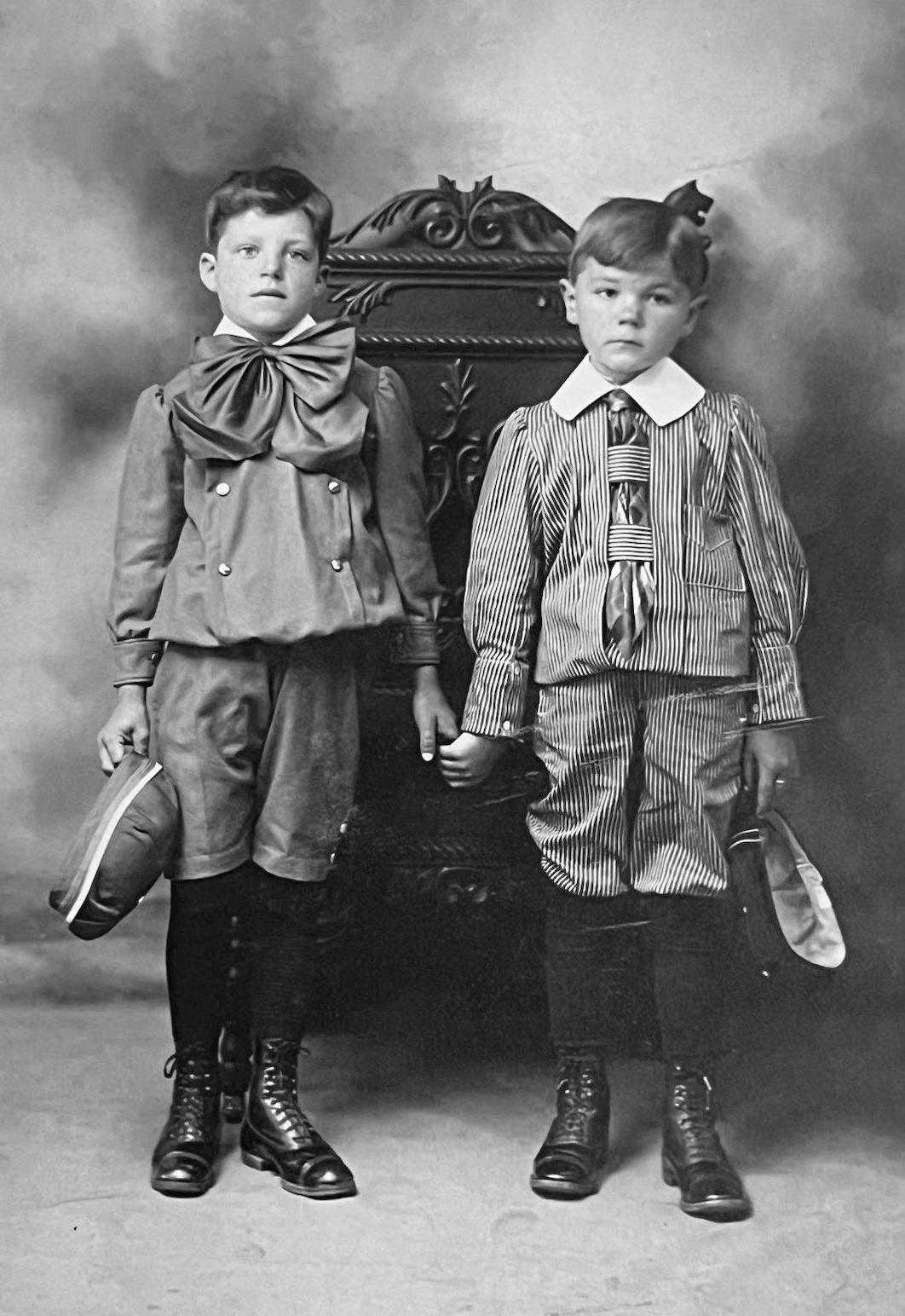
Bows in America and other countries for boys are generally seen as neckwear. This does seem to be the most common use of bows, especially in connection with boys' wear. And neckwear is clearly the most visible use of bows. Neckwear was, however, not the only use of bows for boys. We note hair bows, dress bows, shoulder bows, and shoe bows. They were not nearly as common or as prominent as the use of collar bows, but we see many examples in the photographic record. Less prominent were shoe bows. Hair bows were certainly visible, but they were not nearly as common as collar bows. This was particularly notable during the Fauntleroy Craze. There were both gender and age conventions, but boys did wear the various types of decorative bows. This all began declining after the early 20th century. Neckwear in particular shifted to neckties.
Bows in America and other countries for boys are generally seen as neckwear. This does seem to be the most common use of bows, especially in connection with boys' wear. And neckwear is clearly the most visible use of bows. One of the most distinctive styles of neckwear worn by American boys was the floppy bow. This was a style worn by adults at the turn of the 19th century. It was popular during the Regency in Britain, where it was worn by Beau Brummell. We think it was less common in America. When the floppy bow reappeared beginning in the late 1870s, it seems to have been a style particularly popular in America. Large numbers of images show boys wearing large floppy bows in the late-19th century. This may be because our American archive is so substantial, but our European archives are growing, and it does seem that floppy bows, especially large floppy bows, were especially popular in America. This makes sense because it was strongly associated with the Fauntleroy style. And the Fauntleroy craze was especially pronounced in America. They were also worn in Europe, but we seem to see many more examples in America, especially the large floppy bows. And floppy bow at this time were a distinctly juvenile style. They were worn with equally large collars of various descriptions. Wearing floppy bows with fancy blouses was an optional matter. Some mothers insisted on the bows while others did not. They could be worn with more plainly styled collars like Eton collars, but this was less common.
Less prominent were shoe bows. For some reason, we begin to see bows on shoes around the turn of the century. We only note them on low-cut shoes for dress occasions. Most boys wore high-top shoes until the turn of the 20th century. We do not yet have an American shoe bow page, but do have a general shoe bow page. We see a lot of boys in French commercial postcards with shoe bows, but of course that is not a very reliable indicator of actual usage. Most of the actual portraits we have found are of American boys.
Hair bows were certainly visible, but they were not nearly as common as collar bows. And they were only worn by younger boys. They were common in the 19th century, but not much seen in the 20th century. Hair bows appear to have been most common in Europe. We had noted relatively few photographs in Britain and the United States of boys wearing hairbows. The practice on the continent, especially in France, seems to have been more widespread. As HBC has developed, we have noted more images of American boys wearing hairbows than we had anticipated. We note that in the wealth of photographs of American and British boys in Fauntleroy suits and Fauntleroy dresses, even the ones still in curls, I had noted only a few with boys having the added indignity of wearing girlish hair ribbons, but are now coming to the conclusion that they were more common than we had initially anticipated. What we have not yet determined is what the conventions for these hairbows were. Were they just for portraits and special occasions, or would a boy wear one around the house from day to day?
We note decorative sleeve bows. This was a 20th-century innovation. They appeared as the collar bow had declined in popularity. They were mostly used as part of First Communion outfits in the early-20th century. We do not yet have a separate page on these bows, but notice many American boys wearing them for First Communion.

Navigate the Boys' Historical Clothing Web Site:
[Return to the Main U.S. decorative garment bow page]
[Return to the Main U.S. decorative garment page]
[Return to the Main U.S. garment page]
[Introduction]
[Activities]
[Biographies]
[Chronology]
[Clothing styles]
[Countries]
[Bibliographies]
[Contributions]
[FAQs]
[Glossary]
[Images]
[Links]
[Registration]
[Tools]
[Boys' Clothing Home]