|
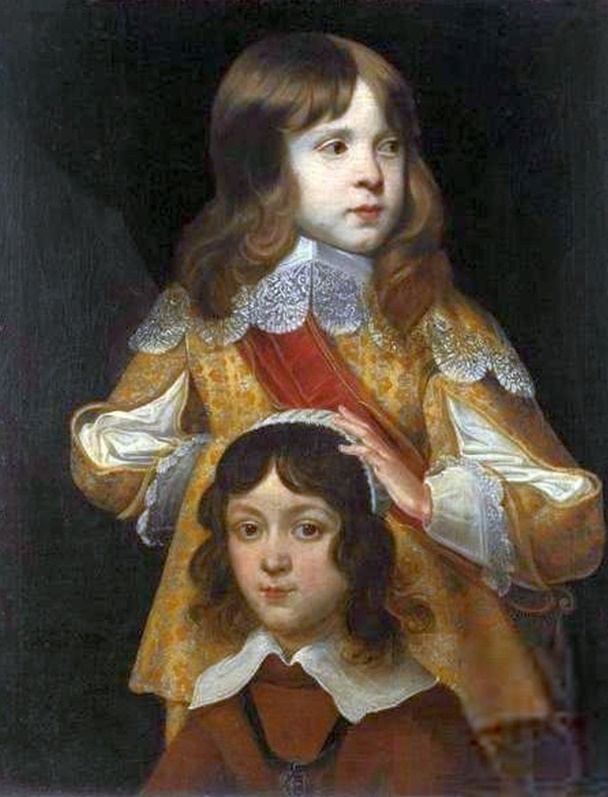
Poland was in the early Medieval period a land without central control, racked by warring tribes. Prince Mieszko I was baptised in 966. Mieszko and Roman Catholic Christianity provided stability and cohesion for the first time. Polish kings in the 16th and 17th centuries played a major role in Polish fashion developments. Poland had by the 17th century had become the largest state in Europe. Sigismund III (r1587-1632) of the Swedish House of Vasa and his first wife, Anna of Austria was a major Polish king. Their eldest son King Wladislaus IV/Ladislaus IV (1632-48) born into the House of Vasa as a prince of Poland and of Sweden Wladislaus IV was King of Poland, Grand Duke of Lithuania, and claimant of the thrones of Sweden and Russia. Wladislaus IV was actually elected as the tsar of Russia by the Seven Boyars (1610), when the Polish army captured Moscow, but did not assume the throne because of his father's position and a popular uprising. An elected kingship and the power of the nobility significantly impaired the development of a strong national state. Despite important reforms in the late 18th century, Poland was partioned between Austria, Prussia, and Russia and the Polish monarchy ended. Napoleon was aided by Polish nationalists in his campaigns against Austria and Prussia, but his devestating defeat in Russia, ended any hope of a restored Polish monarchy as the peace was dictated by the very powers that had partioned Poland.

Navigate the Boys' Historical Clothing Web Site royal pages:
[Return to the Min European royalty page]
[Return to the Main royalty page]
[Austria]
[Belgium]
[Denmark]
[France]
[Germany]
[Italy]
[Italy]
[Luxemburg]
[Monaco]
[Netherlands]
[Norway]
[]
[Portugal]
[Romania]
[Russia]
[Spain]
[Sweden]
[United Kingdom]
[Yugoslavia]