|
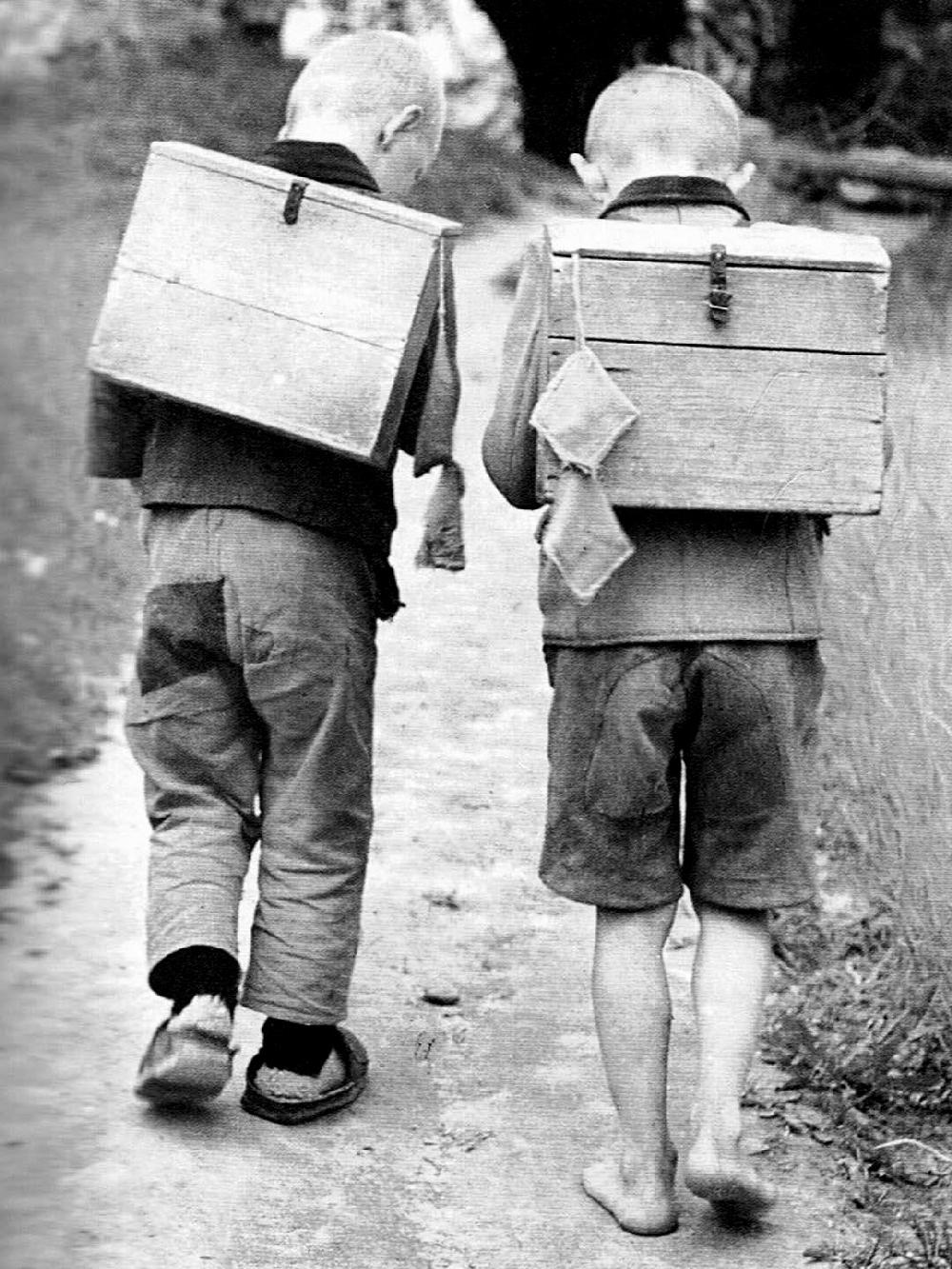
The photographic record suggests that the book satchels were done in leather. The satchels here are good examples (figure 1). Some of the satchels are very voluminous, box-like contructions. We think ythat some of these may be wooden contruction, with leather covering. We know that some of these book satchels were done in wood. This was not very common in the 20h century, we think it may have been more common in the 19th century. Economics was a factor here. Leather was expensive--why shoes were a relatively expensivec part of wardrobes. Leather was also a strategic material. his wa in large part because of yhe imprtance of horses and leather tackle as needeed for the horses. The Germaman Army was even dependent on horses during World War II. Thus leather book satchel begn to disappear in both World War I and II. We akso see Lederhosen disappear from ghe stores. Leather is highly durable and children who had book satchels contuinued to use them or the hand-me-down satchels of older siblings, but getting new ones became difficult. But even during peace time we see wooden book sachels. We believe this was mostly children from pooreer families, especially in rural areas.

Related Chronolgy Pages in the Boys' Historical Web Site
[Main Chronology Page]
[The 1900s]
[The 1910s]
[The 1920s]
[The 1930s]
[The 1940s]
[The 1950s]
[The 1960s]
[The 1970s]
[The 1980s]
[The 1990s]
[The 2000s]
Navigate the Boys' Historical Clothing School Country Pages
[Main School Page]
[Main National School Uniform Page]
[Australia]
[England]
[France]
[Germany]
[Ireland]
[Italy]
[Japan]
[New Zealand]
[Poland]
[Singapore]
[Scotland]
[Singapore]
[United States]
Navigate the HBC Shool Section Page
[About Us]
[Activities]
[Chronology]
[Classrooms and buildings]
[Clothing styles]
[Countries]
[Debate]
[Economics]
[Garment]
[Gender]
[Hair]
[History]
[Home trends]
[Literary characters]
[School types]
[Significance]
[Transport and travel
[Uniform regulations]
[Year level]
[Other topics]
[Images]
[Links]
[Registration]
[Search]
[Tools]
[Return to the Historic Boys' School Home]