
|
Skirted garments for boys almost totally disappeared including kilt suits by the 1910s. Skirted garments fr younger boys were a centuries-long convention. The sole exception continued to be tunic suits, They were also a step toward comfortable, informal outfits for boy, at leads younger boys. Even the more formal ones were more comfortable to wear than suits. TYhe classic Fauntleroy suits disappeared, although we see some Fauntleroy outfits. We also see Fauntleroy
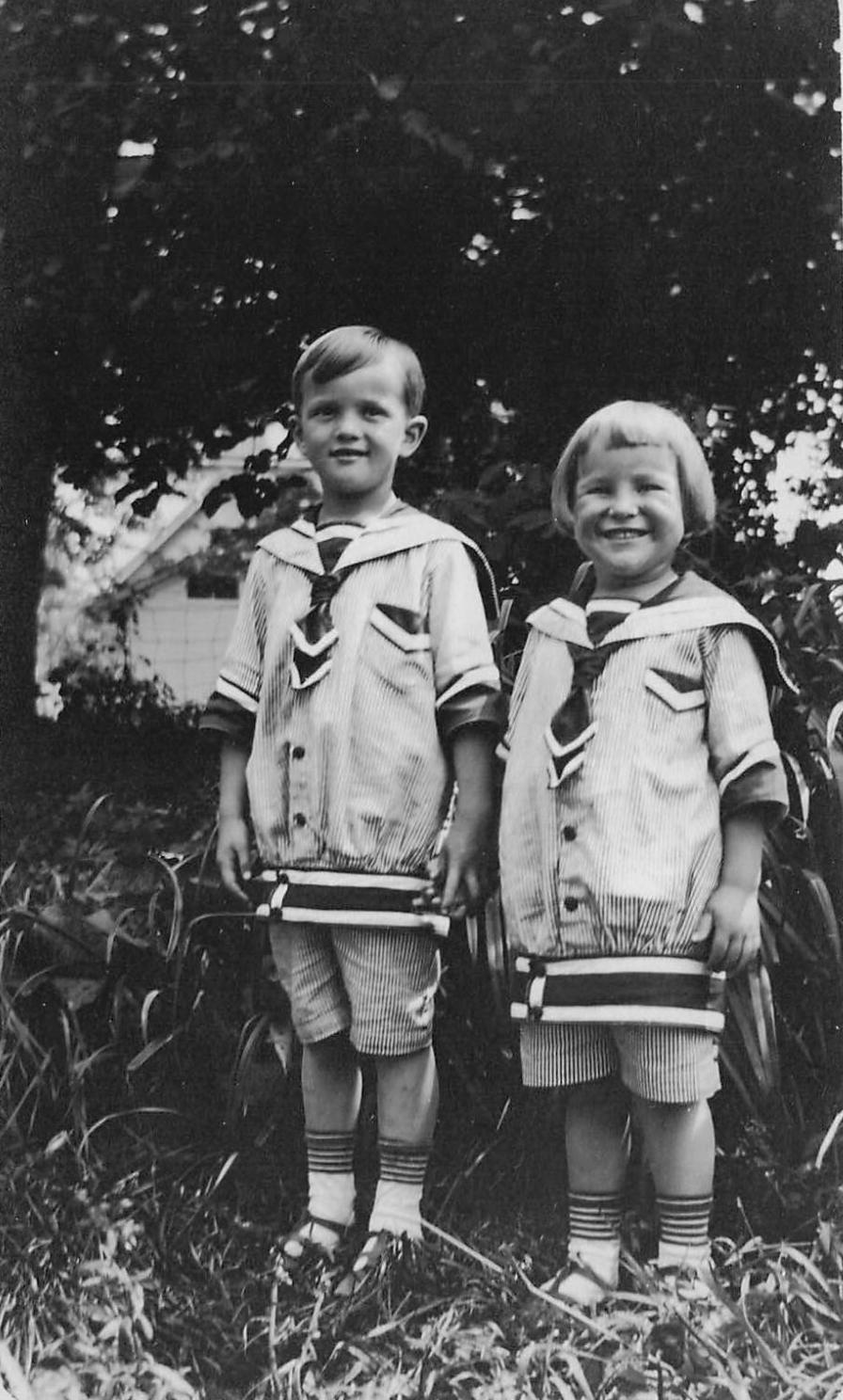
blouse outfits for younger boys. Sailor suits continued to be popular, another relatively informal style. We also see new styles, including Oliver Twist suits and button-on suits for younger boys. They were done in a range of very different styles. We see the first junior Eton suits in the 1910s. These were commonly done with longish short pants and worn with three-quarter socks. Going barefoot was still common, but we rarely see these stylish outfits work without shoes, although we do begin io see sandals. And we see fancy blouses that school age boys might wear without jackets during the summer. Considerable formality was still associated with fashion in the early-1910s before World War I (1914/17). Collar buttoning suits had almost totally disappeared, bt wee see a few for younger boys like the oneshere (figure 1). We see motly lapel jackets. Boys wore both single and double-breasted suit jackets during the 1910s. MSack suits with lapels became dominant in the 20th century. Double-breasted jackets suits were still common, but we see more single-breasted jackets. Norfolk styling seems very popular. We see quite a number of these Norfolk jackets in the 1910s. The 1910s seems the peak pf populasrity for Norfolk styling. We still see patterned material, but we see more and more suits being done in flat solid colors.
Knickers became increasingly popular in America, becoming standard, largely replacing knee pants. Some boys wore knickers with knee pants, but mostly we see long stockings. The knickers in the 1910s tended to be worn above the knee. We still see younger boys wearing knee pants, but most older boys wore kickers, primarily with long stockings. Knee pants continued to be worn in Europe and they began to shift towards short pants--although they were still quite long. Baden Powell's short pants seems to have been a factor here. Scouting was created in Britain, but quickly adopted in America and quickly became very popular. British Scouts introduced short pants and knee socks. This was another factor promotional informality, especially the knee socks, eliminating the need for stocking supporters. American Scouts adopted breeches rather than shorts, but worn with knee socks. Although at camp the boys wore shorts like Scouts in Europe. We are not sure why this difference developed. Climate seems to have been a factor, but we think more was involved. Throughout the 19th century there was considerable similarity between America and Europe, in part because Europe, especially England, largely was the origin of fashion trends which Americans followed. World War I (1914) engulfed almost all of Europe and eventually America. Even those countries that remained neutral were affected Europe except for Spain and the Scandinavians. Dress standards had to decline as even fabric became a scarce national resource. The result was a utilitarian trend which had been largely ignored in Europe for decades. It was a factor in the trend toward casual wear that had already begun before the War. As a result we begin to see shorts becoming a common style after the War, especially in Europe. Another factor is that we begin to see far fewer boys wearing suits to school in rural areas. Instead we see overalls becoming very common. We have no idea why this change occurred.

Navigate the Historic Boys' Clothing Web Site:
[Return to the Main 20th century suit chronology page]
[Introduction]
[Activities]
[Biographies]
[Chronology]
[Clothing styles]
[Countries]
[Bibliographies]
[Contributions]
[FAQs]
[Glossaries]
[Images]
[Links]
[Registration]
[Tools]
[Boys' Clothing Home]
Navigate the Historic Boys' Clothing Web chronological pages:
[The 1900s]
[The 1910s]
[The 1920s]
[The 1930s]
[The 1940s]
[The 1950s]
[The 1960s]
[The 1970s]
[The 1980s]
[The 1980s]
Navigate the Historic Boys' Clothing Web style pages:
[Skeleton suits]
[Eton suits]
[Norfolk jackets]
[Kilts]
[Knicker suits]
[Blazers]
[Short pants suits]
[Long pants suits]
 alt="boys suits 1910s">