|
The battle for Berlin fought in April 1945 was one of the most horific engagements of World War II. Stalin ordered the Red Army to take Berlin. After the Americans seized the Remagen Bridge and crossed the Rhine, Stalin ordered the time tble speeded up and at the same time lied to Eisenhowser that he was preparing to take the German capital. Losses on both the German and Russian side were enormous. Russian losses were in part due to the fact that Stalin had ordered that Berlin be seized bfore the Americans could reach it. Stalin's ordered resulted in a race to Berlin by Marshall Zukov and Koniev, both wanting the victor's laurels. It has always been wonderd why Stalin was so obsessed with Berlin and was willining to sacrifice so many Red Army soldiers to get to Berlin before the Americans. It has always been felt that it was primarily for the political value, to demonstrate the role of the Red Army in defeating the NAZIs. A British histoian argues that there was another important reason. Beria had learned of the American Manhattan Project to build an atomic bomb. Stalin as a rsult ordered a top secret Soviet atomic bomb project--Project Boradino. Located at Berlin was the Kaiser Wilhelm Institute, the center of the German atomic project. While the Germans were fa behind the Americans, the Russins obrained agreat deal of valuable information an 3 tons of uranium oxide. [Beevor] The Soviet conquest of Berlin proved to be a nightmare for the surviving women, almost all of whom were raped. It is estimated that 2 million German women were raped by Russians at the end of the War. Perhaps 0.2 million of those rapes took place in Berlin. The rapes included children, nuns, old ladies, and even Russian women brought to Germany to work as slave laborers. The Soviets denied the German civilian reports, but Soviet archieves leave no doubt as to what occurred. [Beevor]
The battle for Berlin fought in April 1945 was one of the most horific engagements of World War II. Stalin ordered the Red Army to take Berlin. After the Americans seized the Remagen Bridge and crossed the Rhine, Stalin ordered the time table speeded up and at the same time lied to Eisenhowser that he was preparing to take the German capital.
Hitler as the Red Army pressed west designated fortress cities in which the Wehrmacht was ordered to defend to the death rather than retreat. The result was a series of horific battles and a continuing disiption of of Wehrmacht units.
Now with the Soviets closing in on Berlin, Hitler ordered a fight to the death and designated Berlin as the final fortress city. Major General Hellmuth Reymann, commnding the city's defenses calculated that it would take at least 0.2 million experienced and well-armed troops to defend the capital. Hitler ordered Wehrmacht units to the north and west to come to Berlin's defense. The German commanders involved were by this point in the war more interested in moving west so they could surrender to the Western Allies. Berlin was alread in ruins, but not a sea of rubbe. Many building survived, at least in oart. There had been no fire storm as in Hamburg and Dresden. The civilion population that had not fled the city survived in air raid shelters. Berlin by mid April 1945 "had endured approximately 378 air raids reducing large portions to rubble, killing about 30,000 of its citizens, ad redring perhaps as many as a million homeles. Yet the strengh of its construction and broad streetsprevented the sort of total conflagration tht guttefd Hamburg, and while many structures were nomlonger inhabitable the vast majority stillmoffered cover in street fighting., The raids had also encouraged thecevacuation of part ofthe population, as well as building substantial new shelkers .... Clearly, despite Allied air superiority the battle for Berlin woulkd need to be won on the ground--street by street." [Bull]
After crossing the Rhine andc reducing the Ruhr pocket, the highly mobile American Army could have moved for Berlin. Eisenhower decided not to do so. Historians bebate why. Some maintain he wanted to avoid the casualties. Others say that he was duped by Stalin who assured him that the Red Army was not pressing for Berlin. It should be noted, however, that the occupation zones had already been determined at Yalta. If Eisebhower had pressed toward Berlin, it would not have changed the post-War occupaionn zones.
Joseph Goebbels is best known as Hitler's Propganda Minister. He had another important post, Hitler appointed him to the Berlin Gauliter (1926). He began by making Jewish police chief Bernhard Weiss a target. Essentially after the NAZI seizure of power, he becme the mayor of Berlin. Berlin with the outbreak of World War II became seen as the black heart of the NAZI beast. Actually Berlin was before the Hitler seized power, theleast NAZI ofall German cities. The large working-class populated supported the Socialists and Communist and were hostile to the NAZIs. It was Goebbel's assignment to Nazify Berlin. And he took to its with the same energy that he gave to the Propaganda Ministry. This led to what Goebbels called the Battle for Berlin, it would prove to be the first battle. Goebbels has left us a detailed account of that first battle, t least the beginning of it. He paints a sanitized acount of courageous young idealists fighting for a rightious cause--the future of Germany. And he describes how they took on the Communists, including violent clashes. [Goebbels] Among his many undertakings was to deport Berlin's substabtial Jewish population to the Ghettoes and death camps established in Poland. By an accident of history, Gobbels as Gauleiter would also play a role in the climatic second battle for Berlin. Goebbels in the final year of the War played an important part in the war effort beyond just propaganda. Hitler awarded Goebbels the title of Reich Plenipotentiary for Total War (July 1944). This was essentially the same time when the war reached the coundaries of the Reich. And inexorably the fighting moved on all sides towaed Berlin. One might have expected Goebbels to to use his position to build up Berlin's defenses. He did not. We are not entirely sure why, but probbly relates to Hitler's assessment that Berlin as not the major target. Dissmissing the advise of his generals, Hitler sent SS Panzer forces to defend Budapest rather than Berlin. Gobbels did not want to dispute Hitler's military assessment. As it became clear that Hitler as usual was dead wrong, Goebbels made no effort to save tne civilian population of Berlin. He did not want to give the impressiin of defeatism. Incredably, serious preparations for the defense of he city did not begin until the Soviets reached the Oder (March 1945). [Ryan, p. 380.] To the end, Goebbels primary goal was to maintain his reltionship with Hitler. And at the end, he was a rare voice among Hitler's adviers who opposed to the idea of abandoning Berlin to establish an Alpine redoubt. Goebells insisted that the final battle should be fought in Berlin. It is unclear how important this was on Hitler's decision to remain in Berlin. We suspect that at the end, Hitler's primary concern was that he not be captured alive.
There were substantial German forces that because of Hitler's refusal to withdraw were not available to fight the final battle--the defense of Berlin. Large numbers of German soldiers were left in Norway and unable to play a role in the defense of the Reich. He also refused o evacuiate the Courland Pocket in Latvia. His final act which ensured that string formations woukld not be available to defend Berlin was ordering two SS Panzer divisions to Hungary in a futile effort to defend Budapest from the advancing Red Army. Thus Hitler not only failed to husband available resorces, but he actually stripped Berlin of its strongest defending units. Such actions in the past had affected the Wehrmacht soldiers and the German people. This time Hitler himself wold bear the consequences of his mismanagement of the War. This mean that the defense of Berlin was left in large measure to the Volkssturm--a force of Hitler Youth boys and old men. One such boy, Armin Lehmann describes his experiences. The Volksstrum set about preparing to meet the Soviets. They built set up barricades and dug trenches to trap tanks. General Reymann had no illusions about the preparations. He is reported to have said, "I only hope that some miracle happens to change our fortunes, or that the War ends before Berlin comes under siege. Otherwise, God help the Berliners!" The Wehrmacht units that Hitler ordered to relieve Berlin either never existed or were not about to march to their death. The defenders had few tanks and little heavy artillery. The Volksstrum did have small arms and Panzer-Shrecks and Panzer-Fausts. Army Group Vistula was formed to defend Berlin. SS Chief Heinrich Himmler was put in charge and prived so incompetent that even Hitler and to turn back to a Whermacht commander, chosing Col. Gen. Gotthard Heinrici. He met with Hitler in the bunker and was asonished at his physicaland mental state. Refusing to acknowledge the military sitution, Hitler told Heinrici that the Soviets were making a feint toward Berlin and were actually planning to assault Prague. Other top NAZIs were there including G�ring, Himmler, and Dönitz each still curring Hitler's favor rather than seriously addressing the crisis. [Ryan, p. 270-72.]
The Soiviets forces greatly outnumbered the Germans for the climatic battle for Berlin. At the onset of the Wr, the Soviet Union had the world's largest army. As a result of Brbrossa (June-Decembr 1941), the Germans hs so devestatd the Red Army that the Soviet and Axis forces were approaching parity. This changed dramaticlly with the Red Army offensiove before Moscow (December 1941). The Whermcht would nevr recover from the losses in men and material. The Soviets also suffered heavy losses, but the Soviet Union could replace both men and equipment. Abwehr estimtes badly estimate the ability of the Soviet Union to form and bring forward new divisions. And after the German losses in Stlingrad, not only were the war plants moved east coming on line, but American Lend Lease shiopments were reaching really meaningful levels. More losses were sustained in 1943. There would have been minimal losses in North Africa, however, Hitler rushed reinforcemnents to Tunisia, delaying the Allied victory, but turning minor losses into impotant losses (May 1943). Further losses were sustained at Kursk (July 1943). A series of Red Army offensives in 1944 not only revovered lost territiy, but devestaed the Wehrmcht. The greatest was Opperation Bagration that destroyed Army Group Center the most important German formation. And there wee also losses from the West with the Allied landings in Normandy and liberation of France. Hitler's intrangency meant that importat forces were kept in Norway and allowed to be cut off in Latvia (the Courland Pocket) where they could play no roll in the defense of the Reich. Other forces were left behind to form fiortress Cities. The last German reserves of men and material were thriwn into the Bulge Offensive (December 1944). Thus for the climatic battle of Berlin, the Soviets outnumbered the Germans in men (5:1), artillery (15:1), tanks (5:1), and aircraft (3:1).
The Red Army deployed 1.3 million experienced and well-armed troops to take Berlin. Marshal Zhukov called the battle for Berlin the 'final hour of vengenance'. Stalin set up a competition between Zukov and Koniev. The German commander was
Gotthard Heinrici, a competent officer given and imposible task, especially after Hitler stripped his Army Group Vistula of the well equipped panzer divisions that might have slowed the Soviets. They were inexplicably sent to defend Prague. The German forces were both numerically small, but include poorly trained and equipped men and boys. There a relatively small regular Whermacht force bolstere with poorly armed fanatical NAZIs, old men, and Hitler Youth boys fought it out with the well-equipped Red army troops. [Bahm] Stalin ordered the Soviet soldiers to swear an oath on the Soviet flag to fight with 'special zeal for the motherland, the Communist Party and final victory'. The Soviets after Stalin told Eisenhower that Berlin was of no interest launched their offensive (April 16). [Ryan, p. 251-52.] The major German defenses were the Zeelow Heights. The Germans did not have suffient firces to hild the heights, but exacted substantial casulaties on the Red army. After achiebing the Heights, the Grmans pushd forward to Berlin itself. The battle became a building to bulding struggle. There were already piles of rubble from the Allied strategic bombing campaign. The building to building fighting reduced the structiures still standing to rubble. Soon bodies were dangling from lamposts, hung by SS squads executing men seen as desertersor avoiding combat. The civilian population was more ndangered by these SS squads than the Red army soldiers, although mass rape would soon begin. One author wrote that there has never been a city so desperately contested. We are not sure this was the case. Stalingrad might be a a more desperate battle and lasted longer. Lenningrad even longer. The Soviets both drove ito the city, but also encircled it. The encirclement was complete (April 25). Thean tge Sovits relentlessly pressed forward, driving toward central Berlin wgere the Reichstag and the Chancellery were located. There were Whrmacht forces to the north and west of Berlin. After assuring Hein rici that Berlin was not theRed Army's target, Hitler begn isuing desperate orders for these forces to come to Berlin;s rescue. The commanders had bettee sence than to comply. Red Army soldiers seized the Reichstag raised the Soviet flag (April 30). Hitler committed suiside in his bunker the same day. The Whermact commander, defying Hitler's orders to fight to the death, finally surrendered (May 2).
Hitler's bomb-proff bunker was built under the Chancellry. Hitler's advisers pleaded with him to leave the Berlin and continue the War from an Alpine redoubt. He refused and decided to stay where he was still in control of the situation. He fantasized over a map table about armies long since destroyed. The ones that still existed were ignoring his orders. When President Roosevelt died (April 12), Goebbels fueled the fantasy that the British and Americans wold make a separate peace. The last photographs of Hitler (newsreel footage) was taken on the occasion of hif his 56th birthday (April 20). Thatmorning he played with Bolndie (his German Shapard). He took his cocaine eyedrops. Then he climbed the steps into the Reich Chancellery courtyard. There he received the NAZI salute from representatives of the cutoff Courland Army, the SS-Division "Berlin", and 20 HJ boys who had erarned the Iron Cross. Hitler muttered a few words to them and patted a few of the younger boys on the cheek. He then disappeared back into the nunker leaving the boys to face Russian tanks. There in the bunker Martina Goebels played solitare after killing her children. He ordered Eva Braun's brother shot for trying to escape. When picked up by the SS, he had a pocket full of jewells. Italian partisans shot Mussolini and his mistress Clara Petacci and string up their bodies (April 28). Hitler was determined that he not be caught on the run like Mussolini. Hitler finally married his long-time mistress Eva Braun (April 29). On the same day he dictated his last will and testimony to his private secretary, Martin Bormann. He expelled G�ring and Himmler from the Party for disloyalty. And he designated Admiral Karl Doenitz as his replacement. (Doenutz was not informed until the next day after Hitler was dead.) The next day with the Soviet sildiers in the nearby Reichstag, Hitler set about commiting suiside (April 30). After testing the cyninide pills on his dog Blondie, he and Braun took cyninide and he shot himself. Martin Borman and the remaining NAZIs gave a farewell salute as the bodies were burned. [Fest] That pitiful scene was a far cry from what Hitler wanted. He had told his associates, "We may go down, but we will take the world down with us."
It has always been wonderd why Stalin was so obsessed with Berlin and was willining to sacrifice so many Red Army soldiers to get to Berlin before the Americans. It had none of the importnce that Miscow held in 1941. The Allies had bombed Berlin unto impotence before the Red army arrived. It was, however, a potent symbol--the capitl of the Reich. And Hitkler decided to make his stand there in a bunket under the Rich Chancellery. The generally accepted answer is that it was primarily for the political value, to demonstrate the role of the Red Army in defeating the NAZIs. We think that this was more than likely the central reason. A British historian argues that there was another important reason. Stalin knew about the the American Manhattan Project to build an atomic bomb because of the extent to which Soviet intelligence had penetrated the Manhattan Project. Stalin as a result ordered a top secret Soviet atomic bomb project--Project Boradino. And he put NKVD chief Lavrentiy Beria in charge. Located at Berlin was the prestigious Kaiser Wilhelm Institute whre Einstein had worked. It became the the center of the German atomic project. While the Germans were far behind the Americans, the Germans were far ahead of the Soviets. The Russians obtained a great deal of valuable information and 3 tons of uranium oxide. [Beevor] another factor that is important to note is that the one desire that was on the mind of virtually every Red Army soldier was to get to Berlin and to dsestroy the NAZI tyranny it its liar. Important or not in reality, it was hugely important in the hearts of Red Army soldiers. And here for some reason the Reichstag was seen as the enter of NAZI power. It actually was abandined nd not restired after the Reichstag Fire (1931). (The center of NAZI power had been the Reich Chancellory.) After the battle fir Berlin was over. Sussian lodiers wanted to be photographed in front of the Reichstag.
The Soviet conquest of Berlin proved to be a nightmare for the surviving women. The Red Army with Stalin's permission was let loose on the women of Germany. In an orgy of brutality the Germans got a taste of the barbarity they had unleased upon the Soviet Union. [Anonymous] Almost all of the women of Berlin were raped. This begun even before the Red Army reached the Reich. It did not just occur in Berlin. It is estimated that 2 million German women were raped by Russians at the end of the War. Perhaps 0.2 million of those rapes took place in Berlin. The rapes included children, nuns, old ladies, and even Russian women brought to Germany to work as slave laborers. The Soviets denied the German civilian reports, but Soviet archieves leave no doubt as to what occurred. [Beevor] This is still very contoversial in Russia, as the Great Patriotic War is still considered in an almost religious way by Russians. While Soviet authors were not allowed to mention it, famed war correspondent Vasily Grossman did detail it in his notebooks. Grossman admired and empthized with the Red Army soldiers who defeated the NAZIs. He was apauled, however, by the riotous behavior he observed, especially the raping of girls and women. He wrote of the "horror in the eyes of women and girls". He reports that liberated Soviet slave workers reported being raped to him and even liberated contration camp imates were raped. [Beevor and Vinogravoda]
Hitler as Red Army soldiers neared the committed suiside (April 30). Eva Braun took poison. Hitlershot himself. The next day, Goebbels and his wife killed their children and commited suiside (May 1). That night, much of the Berlin garrison attempted to break out. Few survived to reach Allied lines. Early in the morning, the Soviets captured the battered Reich Chancellery (May 2). Most Red Army soldiers saw it as the seat of the NAZI Government. Actually it had been abandoned since the fire a decade earlier (1933). General Weidling surrendered with his staff in the morning (6:00 am). He was taken to General Vasily Chuikov (8:23 am). From Chikov's command post, he ordered the the Germans still fighting to surrender. [Beevor] Thestromgest positions in Berlin were the massive flak towes which withtoo thebbombng. The 350-soldiers in the Zoo flak tower laid down their guns and surrendered. Waffen-SS trops often refused to surrender. The Red Army soldiers reduced such positions in the center of the city to rubble. The weight of the Red Army advance came from the east. Some die-hard Germans continued to resist in western areas of the city for a few more day until the formal German surrender (May 8).
Losses on both the German and Russian side were enormous. Some estimates run as high as 0.5 million men. [Fest] Other estimates are substantially lower, but still very high. One respected historian estimates 78,000 men. [Beevor] German researchers estimate about 0.1 milliin military deaths. [M�ller, p. 673.] There were probably over 0.1 million civilian deaths. [Clodfelter, p. 515.] This was substantially more than the number killed by Allied bombing, reflecting the eficency of the Herman civil efense effort. The huge Soviet losses were in part due to the fact that Stalin had ordered that Berlin be seized before the Americans could reach it. Stalin's ordered resulted in a race to Berlin by Marshal Zukov and Koniev, both wanting the victor'
laurels.
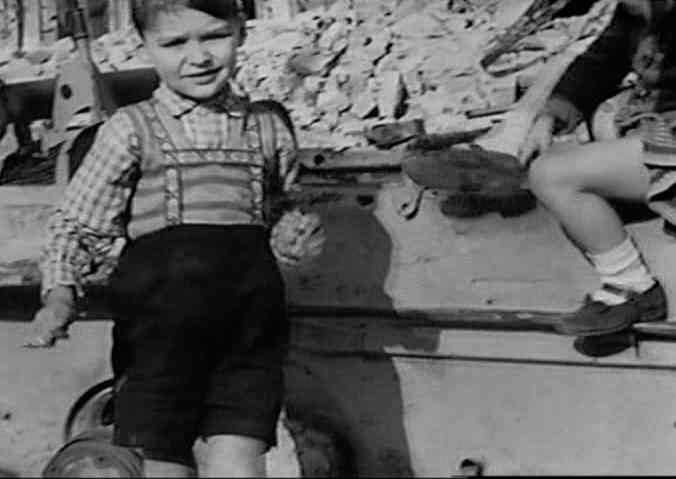
Allied bombers had pulveried Berlin even before the Red Army arrived. The bombers had concentrated on the city center with the Government buildings. The subsequent fighting futher damaged the city, including areas that had not been bombed. German civilians were caught up in the maelstrom of war as neve before. Hitler refused to allow an evacuation of the city as the Red Army approached. Some escaped, but they had to do it on their own. Thre were bomb shelters like the flak towers for safety during the Allied bombing, there was no safety from the Red Army which moved methodically from block to block toward the city center. Soviet oficials who had enormous experience in seizing German ccupied cities moved quickly with available resource to bring the city back to life. The first job when the firing stopped was to begin restoring essential services. [Bellamy, p. 670.] Most of the Allied bombing damage to Germany was done in the final year of the War. A high priority goal was the destruction of the German transpot system, meaning primarily the German rail sustem--the Deutsche Reichsbahn. At first it was the bombers which focued on the on the rail yards in the cities. After the descrution of the Luftwaffe, the P-51 Mustang escorts came down on the dck and shot up anything that moved, trains, barges, and trucks. As the Red Army moved to surround the city, virtually all transport that had survived the bombing ceased to opetate. But that was the least of the problems facing Berliners. There was not just food shortages, bombed-out sewers contaminated the city's water supplies. [White, p. 126.] The Soviets selected local Germans to head block committes and organised the cleang-up. [Bellamy, p. 670.] Berlin was vast landscape covered with mounds of rubble created by bombed our brick buildings. Most observers looking at the mounds of rubble at the time thought that it would take more than a generation to rebuild. There was no construction materials available so the bricks were recovered by the
Tr�mmerfrau (rubble women). Water was a major problem with the river the primary source. The other major problem was food. Soviet authorities did what they could to feed Beriners. Food supplies were inadequate, but there was nothing like the NAZI Hunger Plan. The Germans occupying Soviet cities did not feed the population, except those who got jobs working for them. The desperate Berliners had no other food source with the transport system destoyed. The Red Army set up field kitches to feed the city. Colonel-General Nikolai Berzarin's oversaw the emergency feeding effort. [Beevor] Durng the battle, captured Germans soldiers were sumarrily shot or imternged. After the surrender, Red Army soldiers went apartment by apartment, arresting and anyone in a uniform and not just soldiers. Policemen, firemen, and railwaymen were arrested. [Beevor] Interning policemen and railwaymen did not help with the recovery.
Despite Soviet efforts there were serious food shortages. There was just not enough food to feed the population. Germany had survived during the War by seizing foof from occupied countries and shipping it to the Reich. This was no longer possible. One source reports that Berliners one month into the occuation was getting about 65 percent of a daily ration of 1,240 caloriesbelieved to be necessary [Ziemke, p. 303.] Even so, that was substabtially above what many people in Europe had to survive on under NAZI occupation. And the destruction mean that more than a million Berliners had no where to live. [Beevor] Berlin was inside the Soviet occuoation Zone. The American and British arrived in Berlin to cccupy their own zones (July 1945). The French arrived a little later. Collectively the three zones became known as West Berlin. Feeding West Berliners became the rsposibility of the Western Allies. Food was bought in from the Western Allied occupation zones in Germany by train and truck. Large quantities of coal also had to be transported for home heating and electrical generation. They also did not have the food needed.
Berlin would prove to be ground zero in the Cold War. The Red Army had stormed Berlin in one of the most costly battles in history (April 1945). The city had already been leveled by the Allied strategic bombing campaign. And the battle for the city destroyed much of the rest that was still standing. General Eisenhower directed advancing Allied armies away from Berlin knowing that it would be in the Soviet zone. The Allied occupation zones had already been determined at Yalta. The Yalta Agreement provided, however, for a four power administration of Berlin, despite the fact that it was deep in the Soviet occupation zone of Germany. Such an arrangement would only work among Allies. And it soon became clear that the United States and the Soviet Union were not Allies. The Soviet Behavior in the Komandatura made it impossible to administer the city as whole. The Americans, British, and French coordinated their efforts and the Soviets began running their section separately. Berlin was the one place in the wortld that American and Soviet tanks were muzzel to muzzel. There was, however, no way that the small Allied garrison in Berlin could withstand a Soviet attack. Only the American commitment to Berlin protected the city. That committed was finally tested by the Stalin (1948). The result was the Berlin Air Lift. Although that was only the beginning of the Cold war, it essentially determined the outcome of the struggle. Not only Berlines, but Germans as a whole stopped thinking of the Americans as a conquering enemy who had blasted their cities to bits , but as a steadfast ally in the fight against totalitarian Communism. And somehow Stalin managed to transform Berlin from the symbol of NAZI tyranny to a flickeung symbol of freedom in the middle of the Soviet Empire. Another major step in the Cold War was the Berlin Wall. This was the admission by the East Germans and Soviets that Communism could not compete with free market capitalism. It was also a \massive symbol of Soviet tyranny in steel, concrete, and barbed wire which no amount of propaganda could erase from the European conciousness. Just as the Cold War began in Berlin, the fall of the Berlin Wall was the symbolic conclusion of the struggle.
Anonymous. A Woman in Berlin (2005). The authoress refused to identify herself. She thus was unable to attract much interest in her war-time diary. Now that there is more interest in German suffering as well as women's issues it was republished in 2005 and attracted considrable interest.
Bahm, Karl. Belin: The Final Reckoning (2014).
Beevor, Antony and Luba Vinogravoda. A Writer at War: Vassily Grossman with the Red Army, 1941-1945 (Pantheon, 2006), 378p. This is an important document. There are passages from Grossman's notebooks (without the distortions of the Red Star editors along with interperative material written by Beevor.
Beevor, Anthony. The Fall of Berlin 1945 (2003).
Bellamy, Chris. Absolute War: Soviet Russia in the Second World War (Alfred A. Knopf: 2007).
Bull, Stephen. D-Day to Victory: With the Men and Machines that Won the War (2012), 272p.
Clodfelter, Michael. Warfare and Armed Conflicts: A Statistical Reference to Casualty and Other Figures, 1500-2000 2nd ed (McFarland & Company: 2002).
Fest, Joachim. Inside Hitler's Bunker: The Last Day of the Third Reich (Farrar Straus Giroux, 2004).
Goebbels, Joseph. Kampf um Berlin (Munich: Verlag Franz Eher, 1934).
Müller, Rolf-Dieter (2008), Das Deutsche Reich und der Zweite Weltkrieg Band 10/1: Der Zusammenbruch des Deutschen Reiches 1945 und die Folgen des Zweiten Weltkrieges � Teilbd 1: Die militärische Niederwerfung der Wehrmacht. (Deutsche Verlags-Anstalt: 2008).
Ryan, Cornelius. The Last Battle (Simon and Schuster: New York, 1966), 571p.
White, Osmar. Conquerors' Road: An Eyewitness Report of Germany 1945 (Cambridge University Press: 2003).
Ziemke, Earl F. "Chapter 17 Zone and Sector", The U.S. Army in the Occupation of Germany 1944-1946 (Washington, D. C.: Center of Military History, United States Army: 1990).

Navigate the CIH World war II Pages
[Return to Main World War II Second Phase]
[Return to Main World War II campaign page]
[Return to Main Great Patriotic War page]
[Biographies]
[Campaigns]
[Children]
[Countries]
[Deciding factors]
[Diplomacy]
[Geo-political crisis]
[Economics]
[Home front]
[Intelligence]
[Resistance]
[Race]
[Refugees]
[Technology]
[Bibliographies]
[Contributions]
[FAQs]
[Images]
[Links]
[Registration]
[Tools]
[Return to Main World War II page]
[Return to Main war essay page]