|
World War II was not just another war, it decided the future direction of world history--totalitarianism or
democracy. The War was thus the defining moment of not only the 20th century, but the sweep of history since
the fall of the Roman Empire. The totalitarian powers which had joined together had amassed military power
beyond that of the democracies. Thus for a time it looked like the slow, erratic movement toward democracy and freedom would be arrested by the victory of totalitarian powers willing to murder and enslave millions of
individuals, including whole populations. The War enveloped virtually every part of the world during the years 1939-45. The principal belligerents were the Axis powers (Germany, Italy, and Japan) and the Allies (France, Great Britain, the United States, and, China). The Soviet Union, while not a member of the
Axis, was until the German invasion in June 1941, a virtual ally of the Germans--seizing territory from
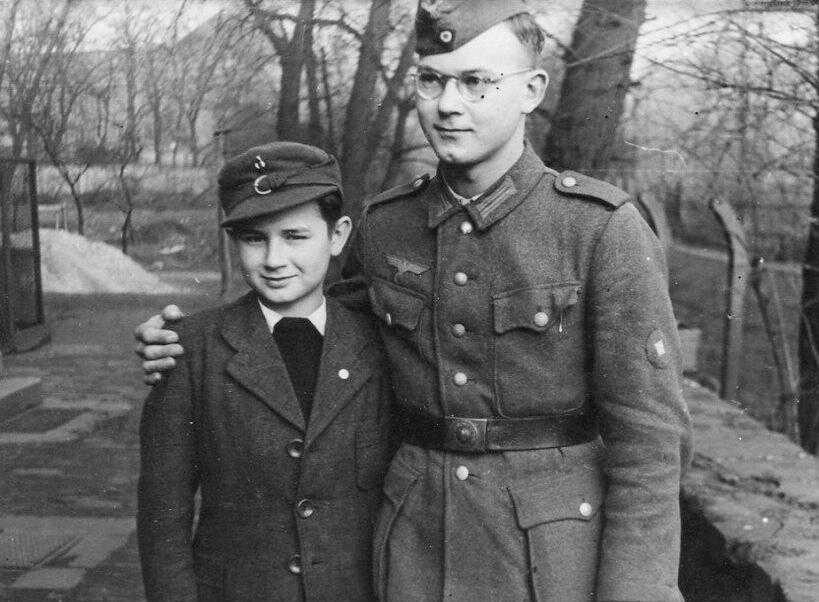
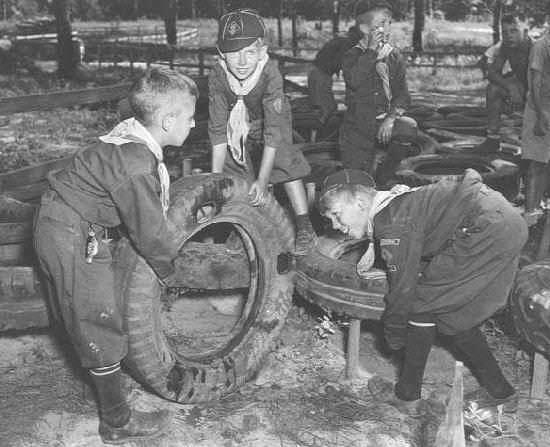
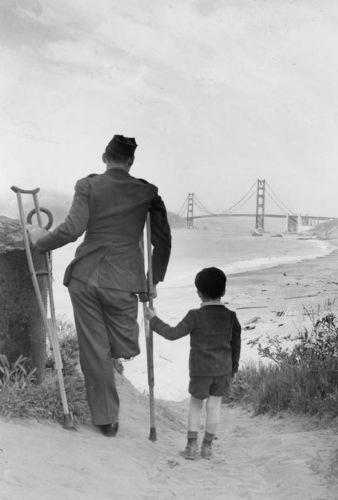
neighboring states and occupying the Baltic states. To most observers it looked like German had essentially won the War in 1940 and 41, seizing most of Western Europe and North Africa. Then in 6-months the direction of the War was fundamentally altered when in Hitler attacked the Soviet Union bringing that enormous country into the War on the Allied side (in effect switching sides) and Japan attacked the United States at Pearl Harbor bringing America into the War. World War II was the central event of the 20th century. It not only was the largest most destructive war in human history, but it also fundamentally changed social, economic and political trends in Europe, North America and Asia. While the focus of most studies of the War are primarily on the titanic military campaigns, weapons, and leaders, children also played a role in the War. They in many ways the people most affected by the War. Millions were killed as a result of military action and the genocidal policies of Germany and Japan. The Germans in particular targeted Jewish children in the Holocaust. Children denied food and housing and in many cases orphaned died in large numbers in occupied countries. Germans kidnapped large numbers of blond children which they regarded as stolen genetic property. Many children were involved in the fighting. The Germans at the end of the War were using young teenagers, but all sides used large numbers of older teenagers. Some of the many impacts of World War II was on fashion. Quite a range of fashion shifts occurred during and after World War II. Some of the major changes included: an increasing shift to casual dress, less elaborate fashions, the disappearance of knickers, short pants began to be worn as summer attire, American boys stop wearing knee socks and long stockings, American Scouts and Cubs begin wearing long pants, "T" shirts, and jeans became a mainstay of American boyhood, short hair styles become popular for boys in America after the War.
It is important to understand the contemprary world view in the countries that fought World War II in the inter-war era (1920s-30s). The overwhealming view in the Western democracies is that World War I had been a grotesque mistake. --a pountless loss of life descimating a whole generation. The mindset prevakent in the Western democracies and even in Germany until the NAZIs seized power was that another War had to be avoioded at all cost. This idea was powerfully expressed in Erich Maria Remarque's poweful anti-war novel, All Quiet in the Western Front. Unlike World War II when popular culture lauded the achievements of Allies soldiers, authors, poets, and artists after World War I attacked the the World War I effort as huge mistaked that resulted in a sea of blood for no reason. While there are countless films, novels, and paintings attacking the war effort, I can not think of a single author who asked the question, of what would have occurred had the Germans won the War. This is the environment in which the policy of appeasement occurred. Public opinion incrasingly even after Hitler and the NAZIs seized ppwer coalesed with the idea that Germnany was misunderstood and mistrerated after World War I. Thus major changes weevneeded in the Workd watr I settlement and that appeasement was justified. At the same time, there was widespread resistance in the face of the Depression crisis to military spending. The great enenmy of mankind was seen as war, not growing totalitarian military power. Hitler was distasteful, but many thought his demands were mostly legitimate. Mussolini in Italy was seen in an even more positive light. Often mentioned at the time was that the trains were now running on time. And his idea of a Corprate State had comnsiderable currency among New Dealers in America. Japan was seen as the most progressive state in Asia. The Japanese were known as a quaint, polite, and industrious people with sedate tea parties and elegant gardens. They made made beautiful porcelin, luxurious silk fabric, and cheap tin toys. Unlike Germany, they were not seen as a potential threat. There was concern about the atrocities in China, but China like Czechoslovakia was far away. Sovier military power was also noy understood. The NKVD was effective in sealking off the country. Stalin's genocide in the Ukraine was not widely reported. Mnay thought that the Soviets had dome a more effective vjiob of dealing with the Depressiion than theiur own giverbnment and that the Sivirt Union was a workerrs paradise--a land of happy, dancing peasants and factory workers. The idea that these totalirat=rian powers were on the verge of destroying Western Civilization, simply did not exist.
World War II enveloped virtually every part of the world during the years 1939-45. The principal
belligerents were the Axis powers (Germany, Italy, and Japan) and the Allies (France, Great Britain, the United States, the Soviet Union, and, China). The Soviet Union, while not a member of the Axis, was until the German invasion in June 1941, a virtual ally of the Germans, seizing territory from neigboring states and occupying the Baltic states. The war was in many respects a continuation, after an uneasy 20-year hiatus, of the disputes left unsettled by World War I. No precise accounting exists, but up to 50 million people died in the conflict--making it the bloodiest conflict as well as the largest war in human history. Whole cities were destroyed and nations devastated. Entire populations were slated for murder or enslavement. People who had lived in communities for centuries were exterminated or uprooted. The devastation of the War resulted in unprecedented social upheavals. Soldiers and sailors who had never been farm from home found themselves fighting in places they had never heard of before half way across the world. Some countries mobilized women (America, Britain, and the Soviet Union) to expand the civilian workforce--expanding experiences and opportunities that would change the domestic societies profoundly. America drafted blacks, opening expectations which created a demand for change when they returned home. The demands of the War created opportunities for working class Britons and Americans. America provided a GI bill which allowed virtually any motivated servicemen the opportunity to seek a university education. Briton's Labour Policy after the War pursued policies designed to provide greater opportunity, although its economic policies may have have in fact limited economic growth.
World War II is unique in the long bloody annals of warfare. The very first historians, both Greeks, began reprting on wars (3rd century BC) and we know of ancient battles dating back over 5,000 years. But in all that extensive history, there has been nothing like World War II. It boils down to the fact that never before in history has there been such an existential conflict between good and evil. That of course is a value judgenent, but one easily made if you look at German atrocities and Japananese atrocities. But lets just look at numbers.
First, World War II was the greatest human disaster in history, either natural or man made. The death toll of World War II exceeded that of the Black Plague or any other pandemics. (Some diseases like smallpox have larger dearh tolls, but not specific outbeaks.) It exceed Stalin's brutal killing programs. And far more than the 17 million killed in World War I. It was comparable only to Mao's death toll, but much of his killing was inadvertant and ovr a much longer period. here is not precise total, but 60-65 million deaths is a rough estimate. There are dufferent estimates, but rarely do the estimate go below 50 million deaths.
Second, it was mostly civilians who were killed in World War I. This is a little difficult for Americans to understand as we had a mere 6 civilian war casualties in the Continental United States (Sunday school picnicers.). The Axis powers actually targeted civilians as a war goal. It was the only war in modern history in which more non-combatants were killed than combatants. In World War I, some 65 percent of deaths were military personnel. In World War II, 80 percemt of the fatalities were civillians.
Third, World War II is the only war we know of in which the victorious powers (the Allies and Soviets) suffered far more casualties than the defeated powers (the Axis). And most of the Allied casualties were civiians--much less the case for the Axis. Of the civilian and military deaths, some 80 percent were killed by the Axis. As one historian puts it, "What ever we can say about the losers, obe thing is that they were savage killers." And their vicrims were mostly civilians. And if you look close amlonst two thirds of those victims were Soviets or Chinese. [Hanson]
World War I was a traumatic experience in Europe, both for the victors and the defeated. The people of Europe were determined to prevent another war. Losses were enormous, both in blood and material wealth. An entire generation had been decimated in many countries. Most thought that the War had been a huge mistake. The huge cost of the War made even the victors sharply cut back military expenses. Most people thought that the War had not only been costly, but pointless as well. Few stopped to consider what a German dominated Europe would have meant. Pacifist movements grew throughout Europe and had considerable impact on major political parties, especially the socialists. This affected support for military spending. In America the Isolationist movement grew in importance. While anti-war and pacifist movements were of great influence, there were other currents at play in Europe. Socialist parties wanted welfare, not miltary spending. The Soviet Union gave lip service to anti-war sentiment, primarily to weaken potential adversaries while at the same time lavish enormous sums into military spending. The rise of Fascism also fueled opposition to the World War I settlement and glorified war. This began with Mussolini in Italy (1924), but did not become a real threat until Hitler seized power in Germany (1933). He quickly suppressed the pacifist movement in Germany and launched a massive rearmament program. The democracies were slow to respond to this threat because of the strength of the anti-war and pacifist movements. The primary impact of the pacifist movement was thus to lay the foundation for the most costly war in human history.
World War II was the culmination of the greatest geo-political crisis in Western civilization--the rise of
the totalitarians. Following World War I, three totalitarians groups seized controlled of some of the post
important countries in the world. First the Communists seized control of Russia (1917). Then the Fascists
seized control of Italy and subsequently German Fascists seized control of that country (1933). Japanese
militarists a kind of Shinto Fascism seized control of Japan (1930s). The countries as a whole had enormous
scientific, industrial, human, and natural resources. With the NAZI victories in Europe, especially the defeat
of France (1940), the balance of world power swing to the totalitarian powers. The totalitarian powers in
1940 controlled almost all of Europe, wedding the industrial potential of Europe with the natural resources of
the Soviet Union. The threat to the Western democracies was that the totalitarian powers, especially the
NAZIS, had superior military weapons and tactical doctrines. The threat to the West was that the totalitarian
powers rejected much of the basic tenants of Western civilization--the value and dignity of the individual and
the rule of law. The NAZIs added a virulent racism that targeted whole peoples for genocide and other peoples
for slavery. The tragedy of World War II is that by the time that the public had been awakened to the mortal
danger, the only way to prevent defeat was an alliance with one of the totalitarian powers. Here Hitler made
the secession for the Democracies when he launched Operation Barbarossa and invaded the Soviet Union (1941).
World War II in the West is generally seen as a noble crusade for democracy, freedom, and justice against
the evils of Japanese militarism and European totalitarian Fascism. The problem with this construct is the
Soviet Union and totalitarian Communism. The failures of the Allies and the democratic states of Europe to
confront the NAZIs resulted in the fall of France (1940) and NAZI domination of virtually all of Europe. This fundamentally changed the world balance of power. The combined forces of totalitarianism, the Soviet Union and the Axis (Germany, Italy, and Japan) were greater than those of the democracies (America, Britain, and the Dominions). This meant that to win the War, the Allies would have to enlist the support of one of the totalitarian powers. Here Hitler made the decision for the Allies by invading the Soviet Union. This forced people in Europe to make terrible choices between Communism and Fascism. It also mean that fighting the War with an ally equally heinous as the NAZIs compromised the moral authority of the Allied cause. This was especially true because for 3 years most of the war against Germany was conducted by the Soviet Red Army. As a result, the post-War settlement required political compromises with the Soviet Union. After the War, authors have criticized Allied leaders for the post-War settlement leaving the Soviets in control of Eastern Europe. Of course this was not the result of failed post-War diplomacy, but rather the failure of the democraticnations to meet the challenge of the totalitarian states in the 1930s.
World War II was the defining moment of the 20th century if not of Western civilization. The stakes of the War were enormous. And because of feckless policies adopted by socialist and pacifist voters in the democracies, it was possible that the totalitarian powers might win the war. Had the totalitarians won, their virulent nationalistic policies and brutal treatment of conquered populations--including genocide and enslavement--would have brought about a new dark age in human history. We find that this is a future that most people in the Third World do not appreciate. NAZI policies in the occupied East showed what Hitler had in mind for the future. And Japanese and Soviet attrocities were also grim. European colonial administrations have a dark history of their own. By the 1930s, however, the worst abuses of the Europeans had past. Colonial spokesmen seeking independence were hounded, but for the most part within limits allowed to speak and promote their goal of independence. Many were allowed to pursue educations in the west. Varying degrees of a free press were allowed. The democracies in short a scociety which were begiinnung to allow home rule and would not accept mass murder to hpld their cilonies. The totalitarian powers What the totalitarian powers had in mind was very different--mass murder and the creation of Helot-like slave populations. Along with World War I, World War II was the great watershed of 20th-century geopolitical history. Germany was devastated. France was reduced to an occupied country. Britain was bankrupted and unable to retain control of its colonies. The War marked the shift of world power from the states of Western Europe to the Soviet Union and America. TheSoviet Union was, howver, one of the totlitarian powers that launced the War as a NAZI ally. Thus World war II murged into the Cold War. The Soviet Union seized Eastern Europe. America rose as the dominate world power. It was the American industrial powerhouse and the massive Russian ground force on the Eastern front that crushed the Germans. After the German surrender (1945), it was American power that prevented the Russians from seizing Western Europe.
Several efforts followed World War I to ensure that there would never be another great war. The major
effort was The League of Nations that Wilson thought would guarantee
collective security. The League of Nations was the first international organization established on the basis
of collective security to preserve world peace. It was created by the Versailles Peace Treaty ending World War
I. The unbridled nationalism that had inflamed Europe in the early 20th century was widely seen as a major
cause of World War I. The horrendous losses in the War convinced many Europeans that there must never be
another war. A League of Nations as proposed by President Wilson was seen as a way of preventing war in the
future through a system of collective security. It proved totaly incapable of dealing with the challenges to
peace as a result of the rise of militarism in Asia and Communism and Fascism in Europe. A major problem was
that the United States did not join. Other diplomatic efforts were notable, such as the Washington Naval Conference (1921-22) and the Kellogg-Briand Pact.
World War II histories generally describe two alliance systems: the Allies and the Axis. In actuality it was much more complicated than that. The composition of the Allies changed over time and the Allied alliance that emerged victorious was very different at the end of the war than the beginning of the War. In addition the Soviets fought on both sides, first as a Axis (German) ally and than as a cobeligerant with the Allies. The Axis and Allies were very different. Although the Axis alliance was a formalized treaty relationship, there was virtually no coordination and cooperation betweem the main players. And their ultimate goals varied significantly. In fact, the NAZIs wouund up invading most of their Axis allies. The Allies began as a formal treaty relationship between Britain and France, primarily as a continuation of the World War I Entente. Unlike the Axis, there was considerable cooperation and coordination, alough it ended in disaster with the fall of France. The Allies than morphed with the the core becoming the Anglo-American alliance. Here there was no formal treaty relationship, but the Anglo-American alliance became the closest and most formnidable military alliance in all of history. While we say Anglo-Amrrican Alliance, this is shorthand for the Anglo-American-Dominion Alliance. The Dominions (Australia, Canada, New Zealand along with India) played a critical role in the Allied war effort. Not only did the Allies cooperate and coordinate, but there was also a shared set of values as expressed in the Atlantic Charter. The contrast with the Axis could not be more stark. The Soviets changed sides over time. They began the War by signing the NAZI-Soviet Non-Agression Pact as a NAZI ally. They then attemoted to join the Axis. Then after the NAZI invasion they became co-beligerants with the Allies. While they fought on both sides, in terms of ideology and values, the Soviets had much more in common with the NAZIs than the Western Allies. Both were brutal totalitarian socities. They only joined forces with the Allies after the NAZI invasion.
One poorly explored subject is that large areas of the globe at the time of World War II were still part of colonial empires. And these colonies including dominions in the case of Britain that played some very important roles in the War. Several colonies contributed important fighting forces and the colobies had imprtant resources needed to fight the war. In factr, Japn would launch the war to obtasin the resources of the Southern Resource Zone. Most of the major combatants were either colonial powers are like the Axis countries aspiring to be so. Germany had lost it colonies in World War I, but was interbntb on building an new empire in Europe, especially Easten Europe. The Axis countries (Germany, Italy, and Japan) were countries aspiring the carve out and enlarge colonial empires. This was in fact the major reason why they launched World War II. Now because of the substnatial left-wing slant of many academics, especially history professors, it is mostly European colonies thst come to mind. And of course Britain had by far the largest colonial empire totaling ovr 400 million people (mostly India). At the time the Dominions were self giovdrning and India had achieved a degree of home rule. But often not considered are the huge Japanese and Soviet empires--the second and third lrgest empires. Japan had a relastively small colonia empire, until the world began the spiral tyoward World War II. The Japbese poplation was less than 75 million with colonies (primarily Taiwan and Korea) totaling about 20 million. With the invasion of Manchuria (1931) and then China proper (1937), Japan amassed a colonial empire of some 200 million. The Soviet population at the time of World War II was 195 million people, but only 55 percent of that was Russia. Of course the Soviets and Russia will deny that they had an an empire, but unlike the British Diominions and India, there was no semblasnce of home ruile asny wghere in the Soviet empire. Even ethnic Russians for thast matter had no home rule. And notice how once given a choice in 1991 that the non-Russian republics chose to part company with Russia. It is difficult to call populations held by militasry force anything, but an empire. And the nearly 90 million subject people in the Soviet empire was slighhtly larger than the overr 85 million subject people in the French empire. After the fall of France, the Free French abnd Vichy vied for control of the empire. Several other European countries had empires, but played minor roes in the War. The United Ststes had a small empire. The only substantial colony of any size was ghe Philippine Island. but this was more like a British dominiion as it had achieved home rule and the United States had agreed to grant the Phiippines independence (1935). The issue of colonialism was one of the few issues dividing America and Britain during the War. Ironically, given the fact that America had agreed to exiting the Philippines, it was because of the Philipines that America was thrust into World War II by the Jaspanese (1941). The colonial people reacted differently to the War. India was Britain's major colony and played an important role, although complicated by Congress' refusal to support the British. The Arabs reacted to the War in large measure according to who the colonial power was which in most cases was Britain and France. NAZI Germany's anti-Semitism was another factor.
Each of the major beligerants hadsubstantial military forces. As in precious wars there were armies and navies. World War II had third fore, air forces. Air warfare had begun in World War I, but no where near the importance and scope or the power of World War II. There was considerable simillarity in the organization of the military forces built up by the important elgerants. There were also important differences The U.S. Marne Cors (naval infantry) played a key role in the Pacific War. And the Waffen-SS, a highy politically motivated force , became an imprtant part of the German armed fores and German military action in the final 2 years of the War. Several of the beligerants set up commando forces with different names. In the Axis countries, the police/security forces assumed important military or para-military roles. The same was the case in the Soviet Union, often commiting unimginable war crimes. Only in Japan, hoever, did the military take control of the government.
World War I began as a war of movement, but after the Miracle on the Marne became a war of attrition as the
Allies and Germans built a parallel system of trenches from the Swiss border to the English Channel. New
weapons such as the machine gun, poison gas, tanks, and airplanes appeared, but the war was largely an infantry
war, decided by the superior resources of the Allies and the arrival of the American infantry. The horrors of
trench warfare caused military planners to focus on new weapons to restore mobility and to avoid a future war
resulting in mass losses of foot soldiers. It was the Allies that developed tanks and won the World War I air
war. It was the Germans, however, that after the War gave the greatest attention to developing new weapons,
especially the tanks and air planes that would dominate the World War II battlefield. German commanders also
conceived of an innovative method of effectively employing the new weapons, a combined arms tactic which has
come to be known as Blitzkrieg. Naval commanders in a tradition firmly implanted by Nelson at Trafalgar were
wed to the idea of a major decisive fleet action. The Germans in World war I called it Der Tag--the Day. The
German Navy was no longer capable of a major fleet action when World war II broke out. The British did not think the German U-boats were a threat. The ASDAC (SONAR) developed in World War had helped defeat the U-boat threat and British commanders were convinced that it made the submarine obsolete. The major navies had each planned their war winning fleet action, all based on the big-gun battleships. The Japanese termed the action Kantai Kessen--Decisive Battle. The American plan to respond to a Japanese attack on the Philippine Islands was War Plan Orange. The Germans began World war II with the word's most modern air force. It was, however, a tactical air force designed to support the Wehrmacht's land offensive as part of Blitzkrieg. Germany did not
have the industrial capacity to build a strategic air force and had no plans to wage an air war. America and
Britain did have the industrial capacity to build a strategic air force. World War was the first real air war.
Both the British and Germans were preparing a strategic bombing campaign in World War I, but the War ended before it had begun. Thus air commanders when World War II had no real idea how to wage an air campaign.
Since the dawn of civilzation, logistics and transport have played key roes in warfare. Perhaps the first major battle in which logistics is known to have played a major role and which Ramses implement novel logistical practices to fight a battle far from tjhe Nile. Logistics was often the key factor in battlefield success, but is often neglected in military history. And logitians do not get the same acolades as brilliant battlefield commanders. As new military forces came into bing, logitical trains had to be developed to accomodate. The horse, chariot, and iron weapons all required major revisions in logistical systems. For centuries the donkey, mule, and ox cart were the primary logistical elements. As empire grew in size, ships began to be vital. Here the first major ship born logistical systems were introduced by the Persians and Greeks. From ancient times to modern times there were few important innovations in land logistics. Sea logistocs chanhed with the perfection of the sail. It was not until the 19th century that major changed in logigistical system began. The most important was the steam engine with led to the railroad and stea,p-poweed ships. Rge railroad became a major factor in modern wars, in part because roadsystems were still primitive even in indusrial countries. The next major innovation was the internal combustion engine which made modern mechanized war possible. The railroad and the internal combustion engine first came together in World War II. As did modern shipping. The British began the War with the only fully mechanized army, but without the effective Blitzkrieg tactical doctrine developed by the Germans. The Germans had a notoriously poor logistical system. It did not make a great differemce ion the short, realtively small battlefields of the Wedt, it did, however, in the East. The Germans were dependent on the railroads. The Soviets had a different gage, in part as adefensive measure. The Red Army was also not fully mechanized and after Stalingrad it would have taken years to drive west had the oviets not obtained large numbers of trucks through Lend Lease, especially the standard duce-and-a-half. Seabord logisics were important for Britain, America, and Japan. The British and Americans mastered the logistical issues, in part through the Liberty Ship. The Japanese did not and by the end of the War Japanese factories were without raw materials, the popultion hungry, and garisons throughout the Pacific starving.
World War II began with the NAZI invasion of Poland (1939). Historians often note the earlier Japanese seizure of Manchuria (1931) and invasion of China (1937). The NAZI invasion was followed by a British and French declaration of war, but failure to come to Poland's assistance. Within only a few days, the Soviets joined the NAZIs in invading Poland, followed by a series of other invasions of their own. The NAZI success in Poland was followed by a string of startling military successes, especially the invasion and defeat of France (1940). The NAZI successes were punctuated by the victory of the RAF in the Battle of Britain (1940). The Italians joined their Axis partner after the defeat of France was already largely achieved. Almost from the beginning, however, the Italians proved more of a drag on the NAZI war effort than an asset. The War was transformed when Hitler ordered the invasion of the Soviet Union and then without any effort to coordinate operations, the Japanese bombed Pear Harbor. Historians argue about the turning point of the War. After a series of almost uninterupted victories, the War turned against the Axis in second half of 1942. The Red Army bled the Wehrmacht on the Eastern Font while the Western allies ponded German cities. Finally the German losses in the East combined with growing Allied air power enabled the Western Allies to renter the Continent with the D-Day landings. What followed was a string of Allied victories, although achieved at great cost. Finally after Hitler's suicide and the fall of Berlin the NAZIs surrendered (1945). The Japanese surrendered after America dropped the A-Bomb and the Soviets invaded Manchuria (1945). The War included land, air, and sea campaigns conducted on different continents. It was, however, in Europe that the outcome of the War was determined.
Any history of World War II is of course dominated by the major military campaigns of the War. Diplomacy is a secondary but not unimportant aspect of the War. German Governments even before Hitler seized power worked to undo the Versailles Peace Treaty ending World war I. The German and Soviet Governments signed the Rapollo Treaty which provided for trade and military cooperation (1922). Hitler used diplomacy to lull world opinion while he consolidated power and began to rearm Germany. Hitler also began developing the Axis alliance system, first with Italy and then with Japan. The British used diplomacy to try to appease Hitler once German had begun its rearmament program. Prime minister Chamberlain could not conceive that Hitler actually wanted war and believed he had the skills to prevent the War. The War was only made possible by Hitler's diplomatic coup, the Non-Aggression Pact with the Soviet Union (1939). American diplomacy was aimed at assisting the German Government financially until Hitler seized power. After Hitler seized power (1933), American diplomacy was hostile to the NAZI regime, but unwilling to take any real action because of the isolationist beliefs of the great majority of the American people which insisted on the passage of neutrality laws. The United States
withdrew its ambassador, but did not break relations until Kristallnacht (1938). France generally deferred to Britain before the War, unwilling to confront Germany alone. After the German victory in the West (1940), Marshall Petain adopted a policy of appeasement, believing that Vichy could could carve out a space for France between the Germany and Anglo-Americans. The Roosevelt Administration gradually moved America away from isolationism, especially after the fall of France. After Churchill became prime minister (May 1940), America and Britain gradually forged the greatest military alliance in history which envisioned in the Atlantic Charter a few months before Pearl Harbor (1941). Soviet diplomacy changed dramatically when the country was rocked by the German invasion (June 1941). Japanese diplomacy fluctuated with the fortunes of the Strike North and Strike South factions. Japanese entry in the War was inevitable and was a matter of the military determining how the country could best take advantage of the war in Europe. The Japanese feigned peace, but American code breakers cracked the diplomatic Purple Code, giving the United States a true view of the country's intentions. Unfortunately for the Japanese, American diplomacy opposing their aggression in China distracted them from the obvious action, joining the NAZI assault on the Soviet Union. This proved to be the most decisive diplomatic effort of the War. Of course Pear Harbor changed everything, plunging the United states into the War.
American diplomacy focused on the war time alliance with Britain and the Soviets. And as the Allies and
Soviets reversed the Axis tide, the diplomacy of the War shifted to the post-War settlement.
Intelligence was a matter of substantial importance in World War II. It was of greater importance than of virtually any other major war in history. The primary reason for this was that vast amounts of intelligence were available to any country which was willing to string up radio antenna and invest in training staff to receive and decide messages. World War II was the first war in which electronic (radio/wireless) messages were a major factor. The telegram became important in the 19th century, but telegram messages sent over wire lines were difficult to intercept. They were not impossible (as the British showed with the Zimmerman telegram), but they were difficult to intercept. And mobile warfare as initiated first by the Germans and subsequently the Allies required vast numbers of easily intercepted (but less easily decoded) messages. The issue of code breaking is one of the most important aspects of World War II intelligence. Here the British and Americans excelled and reaped very substantial benefits. The Germans were particularly vulnerable because they had such confidence in their Enigma machine. Very little is known about Soviet code breaking. The Germans had some successes, but generally failed at breaking Allied codes. Neither
did the Japanese manage to break Allied codes. Electronic intelligence was not the only methods. The Soviets operated the most successful spy networks, in both Allied ans=d Axis countries. The existence of Communist Party organizations proved a great asset. The major German spy achievement may have been before the War in encouraging Stalin's purge of the Red Amy. German intelligence during the War was nothing short of a disaster. The Soviets manage to surprise the Germans with a series of offensives beginning with offensive before Moscow. Of course the German intelligence operation was the fact that the head of the Abwehr, Admiral Canaris, was actively working against the NAZIS. The greatest Allied achievement may have been in fooling the Germans about the location of the D-Day landings. Allied operatives also provided valuable information about the German rocket program. The major surprise German operation of the War was the Ardennes offensive which Allied intelligence failed to pick up on (December 1944).
A variety of different specialized units appeared during World War II. Probably the most innovative were airborne assault units (paratroops and gliders). They were introduced by the Germans in their Western Offensive (1940). They proved successful, the greatest achievement was taking the Belgian fort at Ebon-Emal. While the performance of the Luftwaffe and Panzers was the key factors in the German success, the world was startled by the new airborn soldiers. The German paratroops were used in the conquest of Crete (1941), although at great cost. This prevented Hitler from using them again. America and Britain after the appearance of the German paratroops, decided to create their own airborne troops. They played a major role in both the invasion of Sicily and D-Day and used as infantry played a key role in blunting the German Bulge offensive. Another important specialized unit was the commandos. Commandos were used in both the European and Pacific theater. American Army Rangers took Pont-du-Hoc on D-Day (1944). American and British commandos played an important role in Burma. Mountain (ski) units were organized by the Americans and Germans. Finnish ski soldiers played an important role in the Winter war (1939-41). An American Mountain Division played an important role in Italy (1944). Red Army units of course led two massive winter offensives against the Germans. Ski troops were involved, but I do not know if they had actual mountain divisions. Another specialized group was air attack squadrons. The best know were the Japanese Kamikazes organized to attack U.S. Navy ships after the destruction of the Imperial Fleet at the the Battle of Leyte Gulf (1944). There were also submarine commandos. The Japanese deployed midget submarines at Pearl Harbor (1941). The Italians achieved some success with manned torpedoes. Several countries organized marine units. The best known is the U.S. Marine Corps which played a central role in the Central Pacific campaign. The British nd Japanese also had marine units.
The Munich Conference was an attempt to prevent a European war. That war was made possible when the Soviets signed the NAZI-Soviet Non-Aggression Pact. The Soviets were the only country to participate in war time conferences both with and against the Axis. Both the Allies and the Axis held a series of conferences to plan strategy and work out cooperative actions. The Allied conferences are better known in part because the Allies cooperative effort was much more involved than the Axis effort. In addition, Allied control of the seas made conferences with the Japanese and European Axis impossible after the NAZIs invaded the Soviet Union and the Japanese attacked Pearl Harbor. The Allied conferences also were important in developing war strategy and
cooperative efforts, but also helped shape the future of Europe after the War. As a result the last two
conferences, especially Yalta have proved to be very controversial.
HBC has prepared several biographies of some of the main political and military figures involved in World
War II. Many of these biographies, however, are just at the beginning phase. As the focus of HBC is on
childhood, many of these biographies concentrate on their childhood, but we provide information on their adult
lives as well for the historical background.
The quick German victories in the early years of the War were so unexpected and so overwhelming, there was in most countries initially no though of resistance to their occupiers. Gradually in the West as the nature of the NAZI war effort became apparent did resistance begin to grow. In the East the Germans initiated a campaign of untold barbarity from the beginning. Churchill was a strong proponent from the onset of supporting the formation and supply of resistance groups. The British formed the Special Operations Executive (SOE). The United States formed the Office of Strategic Services (OSS). As the war began to turn against he Germans, the resistance grew in strength. The Resistance made major contributions on both the easter and western front.
They occupied important numbers of German troops, disrupted supplies routes and communications, and provide
critical intelligence on German operations.
Economics played a central role in World War II. Hitler's rearmament program was bankrupting NAZI Germany. It is questionable how long Hitler could have continued his rearmament program if he had not taken Germany to war in September 1939. Germany proceeded to loot the national banks of the conquered nations. The persecution of the Jews and the Holocaust was also used in part to finance the War. The NAZIs very effectively integrated the economy of Czechoslovakia into the German arms industry. Germany did not go to a full war footing until late in the War. Not did Germany effectively cooperate in war production with its Axis allies. Germany also did not effectively used the economies and industries of the captive nations, especially the countries occupied in Western Europe. The Germans did use the conquered countries as a source of slave labor. German inefficiency in coordinating with Allies stands in sharp contrast to the close cooperation between Britain and America. President Roosevelt began mobilizing the Arsenal of democracy, the vast American economy well before America went to war. Very extensive cooperation in weapons development and production also began between Britain and American before American entered the War. Hitler avoided putting Germany on a full war footing, because he thought the War had been won and he did not want shortages and rationing to diminish domestic support for the War. Only after the setbacks in Russia, especially Stalingrad, did Hitler turn to
Speer and give him the authority to fully convert the German economy for war. Fortunately for the world, by then it was to late to stop the expanding force of the Soviet Union in the East and the Western allies in the West.
One component of military and economic power is population. People are need to fight wars and to produce wapons and equipment. Of course numbers sre not the only significant aspect of assessing population. Eduction and the induistril nd agricultural base in which yhey operte are vital in comverting populationm into power. But numbers are imoprtant and te most powerful countries are those countruies with large populations. Of course China alone shows that other factrors are vital besides the numbers. We have noticed in countless written assessments and internet blogs the claim that the Axis had no chance of winning World War II because Germany and Japan in particular had such small populations. Often not considered is that the Soviet Union wanted to join the Axis and was a NAZI ally for nearly 2 years. That of course would have changed the the ballance of power and population assessments substantially. But even after NAZI Gerrmany invaded the Soviet Union, the population assessments are often poorly stated. While the German population was only 85 million people before Hitler and Stalin launched the War, by 1941 Germany controlled virtually the entire European Continent and its population. And this included a third of the Soviet population. Not to mention the fact that a substantial part of the Soviet population had been alienated by Stalin and hus brutal policies--especially in the Ukraine. And the Germans had important allies. In Asia, at the same time, Japan had occupied most of populace and prodyctive provinces of China. Also important in assessing population, is that while the Allies controlled vast areas of Africa and Asia these were colonies or protectirates. And the colonial people were often not loyal and in dome cases hosile to their colonial masters. The Egyptians and other Arabs were preoared to welcome Rommel's Afrika Korps if he broke through at El Alemein. Turkey has aspirations to edstablish relations to the Tukic peoples of Central Asia controllerd by the Soviet Union. Memories of the disaster of World War I kept them neutral, but many were impressed by the Germn victories. Many colonial people in Southeast Asia were not displesed with the Japanese driving out the Brutish. In India, the Coingress party launched the anti-British 'Quit India' campaign. The KLatin American countries mostly sidd with the Allies, but this was not because of any idological afinity. There were few real democracies in the region. There were many military regimes and politiucal leaders with racist ideas. They favored the Allies primarily because the British Royal Navy meant that they could only trade with Britain and America. If Britain had caved into Germany as it almost dud in 1940, most of the Latin Americans would have been more than happy to have traded with a victorious Reich. So the idea that the Axis had no change of winning the War because of population is in no way a clear cut matter. And the population split in 1941 looked very different than the population picture at the end of the War. The point at which the assessment as to say the Axis had no chance to win has to be 1941 and not 1945.
Although not as dramatic as the major military campaigns, in large measure, it was on the home front that the War was decided. Combatant countries took different approaches to the home front and the need for increased production to supply the fighting men. The Germans believing the War had been won, actually scaled back war production in 1940-41 and delayed critical work on weapons development (such at jet aircraft). Hitler was very concerned with maintaining German civilian consumption levels and that mothers not be taken out of the home to work in factories. German women were not mobilized for War work, rather slave labor was brought in from occupied countries to work in factories and on farms. The hard-pressed British in 1939-40 completely reorganized the economy for war production which included the use of large numbers of women and youths. America after the Japanese attack on Pearl Harbor in December 1941 also reorganized the economy producing staggering quantities of weapons and other war materials that the Axis could not begin to match even with the large occupied areas. The Russians managed to move many war-plants beyond the Urals Mountains out of reach of the Germans and as a result, were able after ayer begin to recover and eventually surpass pre-War production levels. During the Battle of Stalingrad, the Russians were actually continued building T-34 tanks in a vast factory even after the Germans had entered part of it. Youth groups also played important roles in the War, although this varied among countries.
Several countries occupied other countries during World War II, including both Axis and Allied countries. This involved the various militaries in non-military functions called civil affairs by the Allies. It was another term for military government. Military government and occupation policies varied widely. Allied policies were more consistent. As the Allies moved into German occupation areas of Western Europe, the policy was essentially one of liberation and relief because the Germans had devastated local economies. At first Alied civil affairs involved assisting liberated countries. This in some cases meant populations in desperate states, although the liberation of France occurred so rapidly that battle damage was largely localized to the Normandy are. Italy whch swiched sides was in a desperated conditions. The Dutch north of the Rhine in particular were starving. The Allies did adopt occupation policies for the Axis countries (Austria, Germany, and Japan). Italy was a little different because as part of the Italian surrender, Italy joined the war against the Germans. Axis occupation policies varied widely, especially German policies. One consistent theme with the Axis was economic exploitation and/or efforts to annex occupied areas and suppress the population. Here German racial policies had a major impact. In line with Holocaust planning, Generalplan Ost, and the Hunger Plan , the goal was to substantially reduce the Slavic population and convert the survivors to slave labor. Soviet occupation policies were also very consistent. The goal was to annex some areas, deport selected groups, suppress democratic elements, and install compliant puppet regimes. The policy when they reach Germany was to exact substantial reparations and a generous dose of revenge.
The age of the soldiers who fought the War is a topic that we have not yet addressed in detail. It is, however, an important topic that we hope to pursue as HBC develops. All of the major combatant countries introduced drafts to create the massive military forces needed to fight the War. The age of men drafted varied from country to country. The widest age range was in Germany who began conscripting youths and older men when after the War turned against them and tge Soviet and Allied armies reached the borders of the Reich. The Japnese sinmply began traininfg civilians to repelk the expected American invasion. Youths in all belligerant countries could and did volunteer for military service. Normally one could volunteer at a younger age than one was drafted.
Once America entered the War, FDR insisted on demanding unconditional surrender. The term came from a term U.S. Grant used during the American Civil War when treating with a Confederate West Point classmate. FDR told aides in private, "This time the Germans are going to know that they were defeated," referring to the decision not to occupy Germany after World War I. [Beschloss] The insistence on unconditional surrender may have prolonged the War. Some historians believe that this war policy was unwise. [Fleming] Here historians disagree as to what extent it prolonged the War. [Davidson, p. 442.] Given the NAZI hold and the complicity of the Government and Wehrmacht in such enormous crimes, it may not have been a major factor in stiffening German resistance. While the military impact is disputed, what it not disputed is the fact that unconditional surrender allowed the Western Allies a freehand in ensuring that Germany would become a democratic nation--a success that was the most important factor in the making of modern Europe.
World War II resulted in more extensive territorial changes in Europe, both during and after the German surrender in May 1945. The great mass population movement in European history followed. There were more than 35 million displaced people. Many were slave laborers brought to Germany for slave labor. Few survived the NAZI death camps. Many other millions were POWs. Many more millions moved with the changes of borders. The Germans expelled non-Germans from ares annexed to the Reich and planned Beman colonies in the eastern territories. Many German satellite countries, especially in the Balkans seized territory or took actions against minorities. There was terrible atrocities in the states set up in Yugoslavia. After the War, German civilians paid the price for NAZI atrocities. Many fled with the retreating Wehrmacht back to the Reich. Most of those who stayed were deported by the new post-War governments. It was the children of course who suffered in these mass population movements--many did not survive.
World War II also had an enormous impact on boys' fashions. Quite a range of fashion shifts occurred during and after World War II. Some of the major changes included: an increasing shift to casual dress, less elaborate fashions, the disappearance of knickers, short pants began to be worn as summer attire, American boys stop wearing knee socks and long stockings, American Scouts and Cubs begin wearing long pants, "T" shirts and jeans became a mainstay of American boyhood, short hair styles become popular for boys in America after the War. Some of these fashions changes are clearly traceable to the War. HBC can not, however, always connect changes changes that occurred during the War as an impact of the War. That may be, however, as the full ramifications of the War are yet to be assessed. Many of the changes were most pronounced in America, and only began appearing in Europe during the 1950s.HBC has noted several changes in boys' fashions during and after World War II. The following is not meant to be a comprehensive list, but only what HBC has noted to date. The following is the list with some preliminary musings that require much more thought and assessment. While many changes took place during and immediately after the War, it is not altogether clear how the war brought them about. Some of the changes were the continuation of long time trends such as the shift toward casual fashions and life styles.
|
The War required such a gargantuan national effort on the part of the principal combatants that it was necessary that everybody did what was in their power to support the war effort. The most prominent way most countries accomplished this was by rationing. Rationing was a method used by the government to ensure that everybody was able to receive equal amounts of raw materials. This way, enough material was used for the war effort, but the public could still have access to these items. To circumvent rationing and price controls, World War II black marketeers traded in clothing and liquor in Britain and meat, sugar, and gasoline in the United States.
World War II indeed brought more horrors to children than any other modern war. The horrors inflicted on children virtually defy description. Children were affected not only by the staggerings dimensions of the War, but by the tactics and strategies adopted by the combatants. The Germans and Japanese used terror bombing of civilian populations as an offensive tactic in the early phases of the War. The Americans and British eventually adopted the same tactic as part of their strategic doctrine. Children as part of the civilian population were this affected. The Germans did even more than bomb civilians. First they targeted handicapped children for sterilization or death. Once the War began they targeted non Aryan populations for death or slavery in a new Europe. Children here were a special target as they had no value as workers and thus Jewish children were among the first to be killed. Some were even used in diabolical medical experiments. Thousands of other non-Jewish children were kidnapped and assessed racially by SS and other doctors. Most that failed the racial testing or were uncooperative eventually died in concentration camps. Those that passed were brought to the Reich for Germanization by SS and other approved families.
The treatment of prisoners of war (POWs) varied widely from country to country. The Germans were the first country to acquire large numbers of POWs. German policy varied as to the nationality of the POWs. The Germans treated French, British, and later American POWs relatively correctly. They did try to separate Jewish POWs from the general POW population. POWs were also used to some extent as forced labor. The German treatment of Polish and Soviet POWs, however, was barbaric and many died from starvation, exposure, and mistreatment. The German policy was in part a planned method of elimination and in part their inability to deal with the massive numbers involved. German treatment improved somewhat as they began to use Soviet POWs for forced labor, but it was still brutal. British and American treatment of POWs was correct, although there were difficulty handling the large numbers in 1945. German POWs in camps located in America were amazed at their treatment and diet. Strangely German and Italian POWs were often treated more courteously than Black U.S. servicemen. I'm unsure
about Italian policies. Soviet treatment of German POWs was also brutal, but not as genocidal as German
polices. In fact German POWs fared better than domestic prisoners in the Soviet Gulag. It is unclear why. Some believe that Stalin wanted to influence POWs that were to be repatriated. The Japanese treatment of POWs was barbaric. POWs were starved, brutalized, and used for forced labor. Some were even used for medical experiments, including live vivisections and assessments of biological weapons. American combat soldiers were often brutal with Japanese soldiers, but once in camps the treatment was correct.
Our approach to World War I is both a chronological and topical survey. Approached this way the individual country experiences often are obscured. Thus we have created a series of national pages designed to focus on the experience of each country in the War. Some counties were central to the War. Others played more marginal roles, but the national experience of the War was still profound in those countries. Germany, Japan, and the Soviet Union were the key players in launching the War and making it a struggle of unbelieveable cruelty and leathality. Poland was the first country to stand up to the NAZIs and paid a terrible price. Britain and France were reluctantly dragged into the War. While France fell in the first year of the War, dogged British resistance made victory possible. America in the end rescued Europe not only from Fascism, but after the War from Communism as well. Almost all of the independent countries of the world were involved in the War and even those who were not belligerents (Spain, Sweden, Switzerland, and Turkey) were affected by it or played not inconsequential roles.
Racism was a key aspect of World War II. It was a primary factor within in the Axis military alliance. World War as conceived by Adolf Hitler was a racist war. Hitler clearly conceptualizes a great conflict against Jews and the only slightly more preferable Slavs. The Jews Hitler believed had to be purged from German life. This process evolved into the Holocaust. At least some of the Slavs would be allowed to survive because slave labor was needed for the new Reich. And Hitler saw the war as not a German war, but an Aryan racial war. Hitler was frustrated at the beginning of the War because he found himself fighting the British and allied with the Soviets. What he wanted of course was to be allied with the British and fighting the Soviets which he saw the worst possible combination of Jewish Bolsheviks overseeing the Slavic masses. Not all the people in Germany and racially acceptable countries were acceptable to Hitler. Gynecology became big business in Germany. The Japanese also had highly racist attitudes which showed in their treatment of Koreans, Chinese, and other subject peoples. Japanese atrocities are less publicized, but resulted in the deaths of even more people than fell victim to NAZI racist policies. Italy was less affected by racist notions. Racism was not, however, limited to the Axis. America entered the War as a still largely racist country. The South was still strictly segregated with black Americans denied civil rights and prevented from voting. America fought the War with a segregated military. The anti-Japanese prejudice of the time was often intense and was reflected in the disgraceful internment of Pacific-coast Japanese-Americans simply on grounds of their ethnicity. One interesting aspect is that with all this anti-Japanese feeling, it virtually disappered after the War. And all kinds of restrictions on Asians as to citizenship, employment, university admission also disappeared. Such overt discrimination did not exist in Britain, but Britain at the time did not have a substantial minority population. The situation in the colonies was different. The situation in the Soviet Union is more difficult to assess. Communist doctrine was race neutral which was one reason that it appealed to many Jews. Of course Communist neutrality on race does not mean that racist beliefs were no prevalent among Soviet officials.
The Axis Powers (Germany, Italy, and Japan) committed the most horrendous and systematic war crimes in history, not only modern history, but all of history. They commited atrocities that most people assumed had long been outlawed by civilized states. Here the worse perpetrators wre Germany and Japan. Itlalian conduct could bde brutal, but never approached the extremes of either NAZI Germany or Imperial Japan for which slavery and mass murder was a primary war goal. There were a range of contributing factors. They included NAZI and Japanese race theory, a desire for 'living space' and resources that justified the murder of the people living on the desired land. There was also the militaristic indoctrination that promoted the terrorizationand murder of conquered peoples and prisoners of war. As a result, unlike previous modrn wars, it was civilians not soldiers who perished in the largest numbers. And much of the killing was planned, not the result of accidental deaths as a result of military operations. The NAZIs created actual killing plans: the Holocaust, the Hunger Plan, Generalplan Ost among others. The Japanese were less organized, but killing oprations and famines still led to some 20 million deaths. Even before the details and full extent of Axis war crimes were known, Axis brutality was well understood. The Soviet Union for nearly 2 years was a NAZI ally and helped launch the War by invading Poland. The Soviets committed the same kind of rimes most commomly asociated with the NAZIs, but without the Jewish mania. And like the NAZis these actions were commited at the direction of its government. The major difference was that the greatest killing programs and slave labor brutalities were committed against the Soviet people, not conquered people--although there was a great deal of this as well. The crimes committed included launching wars of aggression, mass murder, genocide of civilians, murder of prisoners of war, and brutal repression of comquered people.
World War II created the greatest refugee problem in human history. The problem was concentrated in Europe, but not entirely confined there. There were refugee problems after and during and after World War I. The numbers of refugees were significant, but the refugees and displacements help to create bitterness that led to much more extensive and brutal operations during World War II. The problem began with with the NAZI take over in Germany (1933). Political opponents fled Germany as did many Jews. The NAZI regime's focus on biological racism was to play a major role in the World War II refugee problem. Refugees from the fighting were a small part of the overall refugee problem. There were forced deportation, mass evacuation and displacement, persecution based on ethnicity, mass killing, conscription for forced labor, anti-partisan operations, intra-ethnic violence, strategic bombing and evacuation from the cities. The NAZI approach to many refugee groups shifted toward genocide as the War progressed. There were refugee problems in most of the countries involved in World War II. And the border changes at the end of the War caused additional refugees. The refugee crisis in Europe, especially Germany, resulted after the War in the creation of an international refugee and human rights infrastructure which is the basis of how refugee problems are handled today.
While race was a major factor in World War II, religion played a more limited role. There were, however, some religious aspects of the War. Religion had played a major role in Western life since the Christianization of the Roman Empire. For many in the 19th and 20th century the separation of church and state was a major aspect of modernizing and creating a more just society. It thus came a shock that totalitarianism (Fascism and Communism), the most secular of political movements, were a rejection of Western civilization and a reversion to barbarity. Both sought to destroy religion and replace with a kind of state worship with religious trappings. Christianity in the West helped to develop and save democracy by carving out a space that was beyond the control of the modern secular state. [Burleigh] This is why both the the Communists and NAZIs targeted religion. There were religious leaders who cooperated with the NAZIs (most notably in Croatia, Romania, and Slovakia). German church leaders were often obsequious to the NAZIs who planed to replace Christianity with a state religion. Japan's state religion, Shintoism, was part of the cultural complex which led to Japanese militarism. The most vicious religious conflict was in Yugoslavia where the Catholic Croat Ustache waged war against the the Orthodox Serbs. Hitler made the destruction of the Jews a main German war objective, but the Holocaust was more of a racial than a religious onslaught. While church leaders were often willing to accommodate the NAZIs, there were individual churchmen who heroically resisted. The role of the papacy is a still debated aspect of the War. And the the devotion of individuals was a force to be reconvened with. Stalin after the NAZI invasion paused the atheism campaign to draw on support from the Church. Mussolini unlike Hitler did not attempt to destroy the Church. And in some occupied countries, especially Poland, the Church was a focal point of resistance. Islam was a minor factor in the War, and generally used to support the NAZIs in the Middle East, Balkans, and Soviet Union, an affinity that survived the War.
|
World War II was the largest and most destructive war in human history. The human toll was also the largest of any war. Estimates average about 60 million deaths. Even World War I was only a fraction of this. The enormous death toll. This was not only because of advances in weapon technology. In fact with the exception of the atom bombs, World War II weapons were refinements of World War I weapons, not quantum leaps in weapon technology. What made World War I so deadly was not only the substantial expansion in the theaters of war, but the fact that the Axis powers changed several centuries of war conventions that were aimed at honorably treating prioners of War and avoiding civilian casualties. Here the Geneva Conventions and developing internatial law protected both POWs and civilians in World War I. The Axis powers actually targetted civilians as part of not only their war stratgy, but of their war goals. Thus unlike World War I, there were enormous civilian casualties, far exceeding battlefied casualties. World War II because of its length, global coverage, and unbelievable destruction makes it impossible to calculate the casualties with any accuracy. This is especially the case with lesser developed countries like China without Governmental statistical systems. As a result, the numbers of deaths and and wounded can not be calculated with any percesssion, especially the civilian casualties. There are estimates and the accuracy varies widely. American, British, and French etimates are fairly accurate. There is not real way of knowing Soviet casualties and even more so, Chinese casualties, except that they were enormous. Several attempts have been mase to quantify casualties and there are major diffrences between many of these effort. The major unknown is China. Deaths are oftn estimated at about 25 million. There is every reason to believe that this is a low estimate, total casualties could be as high as 50 million. With such a dicrepancy it is easy to see why it is so difficult to quantify casulaties with any accuracy. Generally speaking, most estimates of battle military deaths come in at about 15 million with some 25 million wounded. The military deaths include the German and Japanese murder of many POWs. Civilian deaths are much higher, perhaps 50 million people,probably more. This includes civilians killed as unintended victims of fighting, but the largest numbers were people who perished because of Axis killing actions, NAZI race-based killing or the Japanese Three Alls. This included outright physical murder
or because of famines caused on purpose or through indiference. The 45 million figure will be primarily affected by the figure assigned to China.
Throughout history casualties in armies often had higher casualties Whole armies have been destroyed by disease. One of the best examples of this is a French army Napoleon sent to Haiti to reconquer the island and then America. Its demise led to the Louisiana Purchase hugely expanding the infant United States (1803). In the wars of the 19th century, including the American Civil War, the massive battlefield casualties not withstanding , it was medical issues including the actual care that was the major killer. The Civil War was the last major war that was fought without an understanding of germs. Many medical advances were made during wars bcause of the large number of casualties. As a result of huge advances in medicine during the late-19th and early-20 centuries, advance medical practices were for the first time employed during World War I. Even so, the dimensions of the War, especially declining food production and malnutrition resulted in the Flu Pandemic (inaccurately called the Spanish Flu) which killed millions of soldiers and civilians. Important advances were made in the inter-War era, especially the development of penicillin, an amazing antibiotic, in Britain (1928). The problem was producing penicillin in large quantities. The Allies made some progress, the Germans did not. Turning to actual combat casualties, a principle of military medicine is that getting care to wounded soldiers very quickly is vital. The time following injury needed to ensure suitability is referred to as the Golden Hour. The experience of the wounded soldier in World War II was not hugely different from that of World War I. The most common wounds were caused by shells and bullets. As in World War I, artillery was the principal killer. This may surprise the casual student of World War II which because of TV and the movies are inclined to think that aerial bombardment was the major killer. (Among civilians, murder operations of the Axis powers by a huge proportion were the principal killer.) The World War II system was evacuation through a variably organized system of emergency medical posts, dressing stations and ultimately well-equipped hospitals. While the variably organized system was essentially the same, many developments in World War I led to refinements and improvements in World War II. There was also the wide spread adoption of important medical advances. Bu perhaps the most important improvement was the speed at which the wounded received acre and advanced through the system. A major advance in World War II was blood/plasma transfusion. The wounded received specialist treatment much more quickly than during the World War, critically treatment during that all important Golden Hour. Specialist surgical facilities in particular were moved forward closer to the front line. In addition transport was by motor vehicle, sometimes even evacuation by air. The rapid movement of American units created issues for the Auxiliary Surgical Group hospital units. There were experiments but the first Mobile Army Surgical Hospitals (MASH) were not established until after the War (1946). With the first major use of MASH units in Korea resulting in the huge reduction in the survival rate of battlefield casualties (1950-53). 【King and Booker】 Of course all of this varied from country to country. The most advanced systems were American and British. The Germans had excellent medical facilities, but less access to motor vehicles. The Japanese had high quality personnel, but very limited access to motor vehicles and in the Pacific supplies. We are not sure about Soviet capabilities. The Chinese were the least capable of the major combatants. An important factor here was the battlefield movement. Unlike the World War I Western Front, the World War II fronts were not static. And there were major differences as to the care offered to wounded enemy soldiers. There are several other issues to be addressed, including nursing, hospital ships, and psychological care.
World War II (1939-45) was the largest and most cataclysmic war in human history. It was a long war, although not neaely the longest. It was the first truly world war. It began in Europe and spread from there. (If one does not include the early Japanese aggressions.) There had throughout history been devestation on a local level, but never as much destruction and loss of life on a global scale. More people were killed than ever before. And in contrast to World War I, it was civilians who suffered more than the military. This was abnormal, usually it is the soldiers who suffer most. There were enornous civilian casualties primarily because it was an actual Axis policy (primarily German and Japanese) to murder civilans in large numbers in horific killing operations. Civilians also were killed as a result illnesses or starvation--conditions created on purpose by the Axix--such as the NAZI Hunger Plab. Millions perished in concentration and slave labor camps. Jews were the most obvious victims, but non-Jews also perished in huge numbers. And long with that mass mirder was equally horfic destruction. And unlike World War I the devestation was not largely limited to the relativeky narrow band that scared northern France and southern Belgium--the Trench Line. The destruction and loss of life was on a scale never before exerienced by humanity. Whole cities were destroyed. The piles of rubble and glowing embers left by Allied bombers that had once been German and Japanese cities was the most obvious, but there was also widespread destructioin in major battkefield areas, especially Eastern Europe and Italy. In the East, the Soviets conducted scorched earth destructioin as they retreated. The Germans destroyed as they bboth advanced and retrated. Europe as a result was in deperate condition after the War. Again famine and starvation was ony prevented by American food aid. Econonomists after the War believed that it might take Europe and other devestated countries a generation to recover. To the surpise of almost everyone, however, within only a few years an amazing recovery began, although it was highly varried. The immediate post-Wars years were very difficult. This began to change about 1948, in part because of American aid and in part by domestic policy ininitatives in each county. Most surprising of all was the starteling pace of recovry in Germany and Japan, countries with cities that were left piles of rubble and cinders after the War.
The end of the World War II was of course received differently in the various belligerent and occupied countries. This began with the libertion of Axis occupiued countries, first in German-occupied areas in the Soviet Union (December 1941) and then Italian and French colonies in North Africa (November 1942). The celebrations in The East were muted because of the terrible discoveries of NAZI attrocities. In North Africa the French celebrated. The Arabs were for the most part passive observers. The libration of Europe brgan in earnest with D-Day (June 1944). Joyous celebraions followed with Allies armies drivig the Germans out of one occupied capital after another. The greatest celebration was of course the liberation of Paris (August 1944). Celebrations in the East were more muted as the much of the populaion saw the Red Army advance as simply an exchange of occupiers. In the Pacific, the Amricans in the Marianas (June 1944) and the Philippine (October 1944) were received as enthuiastically as libators. This was different in the forner European colonies (1945). The War ended differently in the three principal Axis countries (Italy, Germany, and Japan). The first Axis country to surrender was Benito Mussolini's Fascist Italy. After the fall of Sicily. the Fascist Grand Council arrested Mussolini (July). The country's leadership began to plan a exit from the War. This was complicated
by the fact that Hitler would intervene to prevent this. And Germany despite reverses in the East still had the capability to do this. Italian leaders pledged that they would continue the War while at the same time they began secret negotiations with the Allies. The Italian surrender when it finally came was conducted more like a country joining the Allies than surrendering. This was in part because Germany immediately moved to seize control of Italy. There were no ambiguities about the surrender of Germany and Japan. Joyous celebrations broke our in the Allied capitals and Moscow the ceebrate Victory in Europe (VE) Day. The same occurred throughout the United States on Victory over Japan (VJ Day).
Adolf Hitler after the fall of France was the master of Europe. He controlled or dominated Europe from Poland to the Pyrenees. No other modern conqueror other than Napoleon had amassed such an empire. This placed enormous industrial potential and resources at the command of NAZI Germany. The German military had modern weaponry and a tactical doctrine that no other country at the time could match. Combined with Fascist Italy and Imperial Japan the Axis Alliance had in 1940 overwhealming military power at a time Britain was perilously bracing for air and U-boat assaults. The American army at the time was almost non-existent and armaments production was less than that of Germany. In the Pacific the Imperial Navy's 13 aircraft carriers and modern aircraft with throughly trained pilots gave the Japanese a military advantage that was not yet understood. Yes the Axis was totally defeated and by 1945 their cities reduced to rubble. The question rises of why the Axis lost the War.
The British and Americans commonly believe that they won World War II and that it was a great victory for democracy. This is partly true. It is clear that the totalitarian powers, especially NAZI Germany, posed a danger to democracy and to Western civilization in general. It is of course true that the Axis (Germany, Italy, and Japan) was defeated. The actual outcome, however, in both Europe and Asia is very different than what would be expected from a victorious war. In Europe the situation was complicated by the fact that the victory of the Western Allies was only possible because Hitler's invasion turned a virtual ally into a bitter enemy. The fact that the Allies relied in the totalitarian Soviet Union, which had carried out aggressions of its own, meant that the Allied victory was a limited victory. In Asia there was a similar outcome. Japan was defeated and occupied. America's ally China within only a few years fell to the Communists who installed a totalitarian regime.
The standard view of World War II is of a great crusade against tyranny and totalitarianism in which
Britain and her Dominions and the United States fought and defeated the Axis dictators (NAZI Germany, Fascist Italy, and Imperial Japan) and in the process saved Western Civilization. Here we would not include the Soviet regime as part of the crusade against tyranny, but would include the valiant Soviet people. The great success of the Allied coalition is not only did the Allies defeat the Axis countries, but they succeeded in planting the germ of liberal democracy in their former enemies, something few feklt possible at the time. This is the assessment of the great majority of historians. Of course history as Göring pointed out is commonly written by the winners. What is not common is that the citizens of the defeated Axis countries uniformly approved of the reforms opposed on their countries. There are historians on both the left and right who offer dissenting view. Most that we have noted are ideologues who are guided more by their ideological proclivities than a dispassioned assessment of historical facts.
World War II in many ways fashioned the shape of our modern world, in both Europe and Asia. No one was sure how to treat Germany and Japan. The Axis countries were the most changed, but the Allies, including America, Britain, and the occupied countries were also changed. The United States in West Germany and Japan oversaw an occupation with changed the nature of German and Japanese society, rooting out NAZIism and militarism and fomenting the development of democratic political regimes and social structures. The results by all practical measures have been an overwhealming success. Germany and Japan today as well as Italy are some of the most prosperous and democratic societies in the world. There were, however, major differences in the occupation policies in the two countries. Germany and Japan took different approaches to the War. Germany fully admitted to its culpability and accepted responsibility for the War. The Japanese never fully admitted their responsibility or told the Japanese public just what their military did. Using the atomic bomb attacks, Japan has adopted the stance of a victim of the War. Europe was awash with displaced persons uprooted by the NAZIs and Soviets. The War made the Soviet Union a superpower at the time that Europe was in shambles. The ethnic cleansing that Hitler and Stalin commenced continued after the War. It left Europe an ethnically tidier region than before the War. Europe was in desperate condition, but to the surprise of almost everyone, within only a few years an amazing recovery began in the West that would bring unprecedented prosperity. In the Eastern Europe occupied by the Soviet Union, recovery proceeded more slowly and left the countries poor cousins to the vibrant west. The developing Cold War divided Europe into two armed camps. America's decision to remain this time meant that Western Europe would not be overwhealmed by the Soviet colossus. In Asia, the Japanese Empire was dismantled. Manchuria was returned to China and the Civil War was fought to a conclusion with the Communists winning. Korea became independent and the Chinese Nationalists found refuge on Taiwan. War empowered nationalist groups who in a short period of time ended colonialism. Many of these new countries were influenced by socialist economics and the seemingly rapid Communist approach to development.
World War II was the greatest war ever fought in human history. It involved all of the major powers and most of the world's smaller countries. Some countries managed to remain neutral, bit even these countries were significantly affected by the War, The Axis countries were totally defeated and forced to surrender unconditionally. Even so, negotiating peace treaties proved a complex process because of the number of countries involved. In addition the Soviet Union which began the War as a NAZI ally with invasions of neighboring countries, because of the NAZI invasion ended up on the Allied side. Further complicating matters, Italy withdrew from the Axis and by the end of the War was fighting with the Allies. The greatest complication, however, was that the Soviet insistence on creating an empire in Eastern Europe by setting up satellite states provoked a Cold War and the Allies began to see Germany and Japan as potential allies rather than potential enemies. The shape of post-War Europe was essentially sketched out at World War II conferences (Yalta and Potsdam). The Allies held conferences which resulted in peace treaties with Axis countries (Italy, Hungary, Romania, and Bulgaria) and Finland (a co-belligerent, but not an Axis country) signed in Paris (1947). These countries had to make territorial concessions, pay reparations and limit the size and strength of their military forces. The bulk of the reparations were paid to the Soviet Union, but a share was paid to other occupied countries (Albania, Czechoslovakia. Ethiopia, Greece, and Yugoslavia). Germany was more of a problem, largely because of the developing Cold War. The Soviets and the Western Allies failed to agree on the terms of a peace treaty with Germany. Soviet attempts to force the Allies out of Berlin failed with the Berlin Air Lift (1948-49). The United States, Great Britain, and France became the Federal Republic of Germany (1949). The Allied granted the Federal Republic independence (1955). The Soviet Union proclaimed the independence of East Germany as the German Democratic Republic (DDR) (1954). As a negotiating too, the Soviets threatened to negotiate a separate peace treaty with the DDR. This would have endangered Allied access to Berlin. The Soviets and the DDR built the Berlin Wall (1961). The DDR remained a Soviet satellite until Germany was reunited (1990). Austria during the War was part of NAZI Germany. There was a separate Allied occupation of Austria. The occupation was ended (1955). Austria adopted a neutral stance and agreed never to seek union with Germany. After the immediate post-War years, the Allies led by the United States began the process of framing a peace treaty with Japan. This process was blocked by the Soviet Union as the Cold War with the United States escalated. The United States sponsored a treaty that was endorsed by Japan and 48 other nations (1951). The Soviet Union, however, refused to sign. Japan signed a separate peace treaty with India and Nationalist China (1952) and finally the Soviet Union (1956).
No war was photographed more extensively than World War II. Photograpohy including by World War II had become common place. We have a detailed photographic record from thousands of official and press photographers. A few became well known because of their photographs. The offical and press record is, however, only one part of the photographic record. We also have the work of millions of individual soldiers and civilians who took photographs during the War era, both in the varius theaters and on the home front. There is a massive record of millions of images--both still and motion pictures in the archives of combatant countries and in the homes of people around the War. Most of the photographs were back and white, but color photograpjy had been developed. All sides of the War were photographed and virtually every aspect of the War. The only two topics not covered by the photographic record are 1) the NKVD and Red Army attrocities and 2) the Japanese treatment of internees. The NKVD had tight controls over photography and fewer Japanese and Soviet soldiers had cameras. The Germans in contrast seemed to be proud of what they were doing and many wanted to have a record of their historic 'accomplishments'. Many German soldiers compiled detailed photographic albums. We have drawn on this massive photographic record to compile our history of World War II. Here are some very valuable sites offering images of the War.
Beschloss, Michael. The Conquerors.
Burleigh, Michael. Sacred Causes: The Clash of Religion and Politics: From the Great War to the War on Terror (Harper Collins, 2007), 557p.
Davidson, Eugene. The Unmaking of Adolf Hitler (Univesity of Missouri: Columbia, 1996), 519p.
Fleming, Thomas. The New Dealer's War: Franklin D. Roosevelt and the War Within World War II (Basic, 2001).
Hanson, Victor Davis. The Second World Wars: How the First Global Conflict Was Fought and Won (2017). This is a brilliant book with many insights missed by purely military historians.
King, Booker and Ismail Jatoi, . "The Mobile Army Surgical Hospital (MASH): A Military and Surgical Legacy". Journal of the National Medical Association Vol. 97, No. 5. (May 2005), pp. 650–51.
Olson, Lynne and Stanley Cloud. A Question of Honor: The Kosciuszko Squadron: Forgotten Heroes of World War II (Knopf, 2003).

Navigate the CIH Word War II Section:
[Return to the Main 20th century war page]
[Return to the Main specific wars and crises]
[About Us]
[Biographies]
[Campaigns]
[Children]
[Countries]
[Deciding factors]
[Diplomacy]
[Geo-political crisis]
[Economics]
[Home front]
[Intelligence]
[Resistance]
[Race]
[Refugees]
[Technology]
[Bibliographies]
[Contributions]
[FAQs]
[Images]
[Links]
[Registration]
[Tools]
[Return to the Main war essay page]
[Return to the CIH Home page]