|
The Allied war effort was enormous assisted by code breakers. Both German and Japanese codes were broken, providing vital inforamtion to Allied military planners. A Polish mathematician played a key in cracking the German military's suposedly unbreakable cipher machine--enigma. The Poles in cooperation with the French were able to construct an enigma machine whicg they turned over to the Britih just before the German invasion. Additional work done at Bletchly Park allowed the British by late 1940 to read large numbers of Luftwaffe messages. The Kriegsmarina code was also broken, but was more difficult because their operators were more careful to follow pricedures. Many messagesre read because operators did not follow procedures. The Kreigsmarine also added a fourth rotor. Enigma traffic played a vital role in the Allied victory against the U-boats and in the cutting off of Rommel's supplies in North Africa. American breaking of the Japanease naval code was a key element in the naval victory at Midway. It also allowed American pilots to shoot down Adnmiral Yamamoto--the architect of the attack on Pearl Harbor. The Germans also had some successes. The Germans were able to read British naval messages in early 1940 which allowed them to counter planned Anglo-French operations in Norway with their successful invasion of Denmark and Norway.
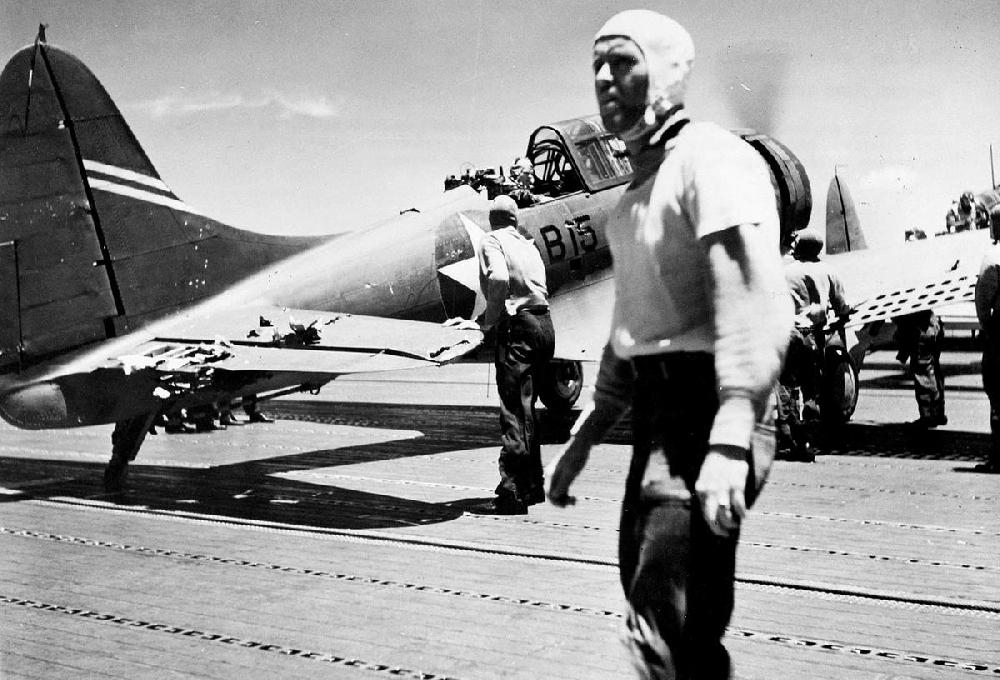
The Allied war effort was enormous assisted by code breakers. Both German and Japanese codes were broken, providing vital information to Allied military planners.Codebreaking was more important in World War II than any other war in history. This was because advances in radio meant that for the first time large numbers of messages were sent by radio and this meant that they could be intercepted and used by the enemy. Radio existed in World war I, but was too bulky to be effectively used by land forces. It was more a factor in naval war, but interception was primarily used by enemies for directional location. This had all changed by the time of World War II. The Germans and Japanese were the most exposed. The Germans developed the doctrine of Blitzkrieg War which placed an emphasis on command and control. This mean that German planes and tanks were equipped with radio. French tanks on the other hand did not have radios and neither did many French infntry units. The results showed when the Germans attacked (May 1940). But transmitting so many messages meant that the Germans were vulberable to electronic intelligence. To prevent this they built the Enigma Machine which they believed was impossible to crack. Cracking Enigma and the Ultra project is one of the great stories of World War II and provides the Allies important advantages as critical times. Ultra intelligence was especially important in the critical Battle of the Atlantic. Naval war involved extensive use of radio and this was especially important over the vast expanse of the Pacific War. American and British cracking of Japanese codes played a major part in the critical early phase of the Pacific War when the Japanese had a military advantage. The American victory at the decisive Battle of Midway was made possible by cracking the Imprial Navy's JN-25 code (figure 1). While there was no such obvious single victory attributed to Ultra in Europe, it played an important role in Allied victories from an ealy point in the Wae.
The major beligerant powers of World War II developed various encrytion systems. Those systems and the cracking of them played important roles in the War. Wireless radio communication was critical for directing military forces often spread at great distances and moving rapidly, spread all over the world. But radio messages were not secure and could be intercepted. Thus important messages had to be sent in code. All the major powers developed complex machines that could rapidly convert typed text into code and then on the other end back into code. Early histories of the War were written without benefit of information on these systems and code breaking efforts. The Germans thought that they had solved the problem and that theie Enigma Machine could not be cracked. They proved to be wrong. The British cracked it the Ultra program provided timely information on Wehrmacht activities. The most secure system proved to be the American SIGABA system. Information on the code systems for the most part has now been declassified and the details are available to historians. There were major impacts on the North Africa campaign, the Battle of the Atlantic, and the early stages of the Pacific War. The only aspect of World War II codes that is not available to historians are Soviet efforts at code breaking. The Soviets and now the Russians have been reluctant to open their archives to historians.
For years after World War II, the details of Allied cryptographic work was kept secret. It was the Allies that were primarily successful at code breaking, although the Germans had some succeses of their own. This may have been because the Allies at the beginning of the War had a greater need for information on Axis intentions and than gave code breaking a greater priority. This may have been a more important factor than actual capabilities. Histrorians did not know just how much the Allies were able to learn about Germany militaty activities by cracking the Wehrmacht Enigma Machine which the Germans were sure could not be cracked. As far as we know, the Japanese had no success at cracking American and British codes. The cracking of the Enigma Machine is perhaps the greatest feat of cryptology and began in Poland a decade before the outbreak of the war. [Bury] The British beginning in 1939 mobilized a substantial effort to crack the Enigma codes. Some of the most capable and creative mathematicians in Britain were assigned the enormously difficult task of penetrating German military communications. British cryptanalysts, led by Alan Turing, not only had an impact on the course of the War but in the pricess created the first true computer that would so change the modern world. The naval Enigma machines proved a particularly difficult challenge. Nor did we know just why American carriers showed up at just the right time and place in the Coral Sea or at Midway. Now the complete story of World War II code breaking is known. One area of World War II cryptology that remains a dark hole is Soviet code breaking efforts. The Soviets must have obtained Enima machines beginning with the Red Army offensive before Moscow (December 1941). And the Russians are renowned mathemiticians. They did not, however, unlike thre Americans and British did not have 'bombs' early computers. As far as I know, the Russians have never released information on their code breaking efforts.
Bury. Jan. "The Greatest Secret of World War II - The Enigma Code Breach".

Navigate the CIH World War II Section:
[Return to Main World War II intelligence page]
[Return to Main World War II page]
[Biographies]
[Campaigns]
[Children]
[Countries]
[Deciding factors]
[Diplomacy]
[Geo-political crisis]
[Economics]
[Home front]
[Intelligence]
[POWs]
[Resistance]
[Race]
[Refugees]
[Technology]
[Totalitarian powers]
[Bibliographies]
[Contributions]
[FAQs]
[Images]
[Links]
[Registration]
[Tools]
[Return to Main World War II page]
[Return to Main war essay page]
[Return to CIH Home page]