Our approach to World War II is both a chronological and topical survey. Approached this way the individual country experiences often are obscured. Thus we have created a series of national pages designed to focus on the experience of each country in the War. Some counties were central to the War. Others played more marginal roles, but the national experience of the War was still profound in those countries. Germany, Japan, and the Soviet Union were the key players in launching the War and making it a struggle of unbeliebale cruelty and leathality. Poland was the first country to stand up to the NAZIs and paid a terrible proce. Britain and France were reluctantly dragged into the War. While France fell in the first year of the War, dogged British resistance made victory possible. America in the end rescued Europe not only from Fascism, but after the War from Communism as well. Almost all of the independent countries of the world were involved in the War and even those who were not beligerants (Spain, Sweden, Switzerland, and Turkey) were affected by it or played not inconsequential roles.
After the fall of France (June 1940), colonial administrators declared loyalty to Marshal Petain's Vichy regime. The first colonies to defect to the Free French were the African central African colonies Chad, Cameroon, and Equatorial Africa) that surrounded Gabon (August 1940). Authorities in Gabon, however, maintained their loyalty to Vichy. The World War II Battle of Gabon pitted the Free French against Vichy forces (November 1940). General DeGualle oversaw the operation. He arrived in Douala (October 8). He orfered a Free French offensive to take French Equatorial Africa (modern Gabon) (October 12). The other colonies in the area had already joined the Free French. De Gaulle wanted a Fee French base in the colonies. He was interested in initisting an offensive north binto Libya where the Italins were thretening the British in Egypt dfending the Suez Canal. He thus headed north to have aersinal look at the the situation in Chad, the French colony bordering southern Libya. Free French forces crossed into French Equatorial Africa and took Mitzic (October 27). The Vichy garrison at Lambaréné capitulated (November 5). The main Free French forces under General Philippe Leclerc and Battalion Chief Marie Pierre Koenig departed from Douala, French Cameroon. Their objective was to take Libreville. There was a brief naval action. The Shoreham class sloop HMS Milford sank the Vichy submarine Poncelet (November 8). The Free French under Koenig's landed at Pointe La Mondah. H is forces included French Legionnaires (including the 13th Foreign Legion Demi-Brigade) as well as Senegalese and Cameroonian troops loyal to the Fee French. Lysander aircraft operating out of Douala bombed the Libreville airbase (November 9). The Free French subsequently captured the air base. The final Vichy forces capitulated at Port Gentil (Novembr 12). Vichy loyalist Governor Masson committed suicide. This was the first part of the French Empire that the Free French orgnized in London managed to seize control of from Vichy.
Gmbia was a West African British colony during World War II. Before the War thaere were only skeleton forces. The principal military force was the Gambia Company of the Royal West African Frontier Force (RWAFF). The Gambia Naval Volunteer Force, part of the Royal Naval Volunteer Reserve (RNVR), was raised (1935). At the eve of war it had six officers - five lieutenants, and Lieutenant Commander Alexander Skinner, the commanding officer (1938). Gambia was a rather uniqe colony, in that it was established around the Gambia River and was set in the middle of Senegal. Dakar was especially important as it was theadminisreative center of French West Africa with an imprtant naval base. .
Ghis did not make much of a difference until France fell to the Germans (June 1940). There was a risk of a Vichy invasion, especially after the British and Free French attacked Dakar (September 1940). The Vichy forces in Senegal outnumbred The British forces in Gambia. Vichy decided, however, not to respond, but authorties in Senegal would not swing over to the Allied side until after the Allied Torch invasion (November 1942). It was obvious a more substantial force was needed. The Gambia Local Defence Volunteers were founded during the war and renamed as the Gambia Home Guard.
A glance at the map shows that West Africa which bulges out into the Allantic was dominated by France meaning German-contolled Vichy. This was important because of the need to protect shipping and as the war progressed a need to establish an air corridor through Latin America (Brazil) to British forces in Egypt , East Africa, and India. Britain's only toe hold in West Africa was Gambia and Sierra Leone. Thus from an early pount it was important to build air bases in Gambia. RAF Bathurst was opened (March 1941). It initially included three bases of operation.
The Gambia Regiment was formed out of the Gambia Company of the Royal West African Frontier Force (RWAFF) in (1940), originally battalion strength. A second battalion was also raised (1941). The 1st Battalion served in the Burma Campaign from (1944-45). American President Franklin Roosevelt visited Gambia on his way to meet Churchill in Casablanca (January 1943). It was the first visit by a sitting President of the Sub-Sahara Africa. His C-47 touched down in and it was his first strong whiff of the 'stench of empire'. At the time, Roosevelt and Churchill differed so strongly on conlonisalism, that they avoided direct conversation on the issue. But as the tide of war changed and there discussions moved toward the post-War world, Roosevelt increasingly used intermediries to raise the issue with the British--pushing the concpt of United Nations trusteeships. Roosevelt on many occassuins raised the issue, although not directly with Churchill. And tiny Gambia because of the President's visit became along with the Philippines, India, and Indo-China a colony that the President would raise. A good example was remarks to a groiup of African-American journalists (Fenruary 1944). "Its the most horrible thing I have ever seen in my life .... The natives are five thousand years back of us .... The British have been there for two hundred year -- for every dollar that the Britis have pit into Gambia, they have taken out ten. It's just plain exploitation of those people." [Pollock, pp. 144-45.] We doubt if the President had any data to buttress his figures, but he did witness that the British has done next to nothing to improve the condition of the native population.
Georgia was at the center of one of the most decisive campaigns of World War II--Operation Blue. Hitler decided for the German summer 1942 campaign in the Soviet Union to focus on the resources of the south. After the huge losses as a result of the Soviet winter offensive, the Germans were nol longer capable of a front-ide offensive. So Hitler chose the resources of the Ukraine and the oil of the Caucauses--especially Baku on the Capsian sea. When some of his generals demmured, Hitler complained that thry did not undersyand the economics of warfare. The Germans completed the conquest of the Crimea and the destruction of Soviet armies in the Ukraine. While Soviet offensives were defeated, the German panzer armies failed to achieve the vast encirclements of Barbarossa. Then after taking Rostov, the Germans prepared to drive into the Caucauses to obtain the oil they so badly needed. At first Stalingrad did not feature prominately in the German plans. The principal goal was the Caucasus and the oil at several locations. The Germans drove toward the Caucasus from Rostov with two panzer armies and massive truck convoys--Operation Edelweiss (July 26, 1942). Gradually the German goal shifted to Stalingrad (late-August). They thus weakened the forses in the Caucasus and shifted them north to Stalingrad. As a result, the German drive in Caucasuses bogged down. The last German offensive occurred at Ordzhonikisze in a close fought battle by two bady depleted formations. The German 13th Panzer Division fought elements of the Soviet 37th Army which turned the Germans back (November 3-5). If the Germans had taken Ordzhonikisze, the Georgia Military Road led straihjt to Baku. But the focus of the campaign had for some time shifted north to Stalingrad. After the Soviet offensive at Stalingrad and failed German effort to releave Stalingrad (November-December), the Germans had to withdraw from the Caucasus altogether--narrowly avoiding another encirclement. There was a great deal of anti-Soviet felling in Georgia, but Stalin's launched an appeal for patriotic unity to fight the Germans, down playing Communism. Stalin resurected the Georgian Orthodox Church (1943). It is likely that had the Germans occupied Georgia, they could have recruited with some success. Instead about 0.5 million Georgians fought in the Red Army. Georgia supported the war effort by producing textiles and munitions.
|
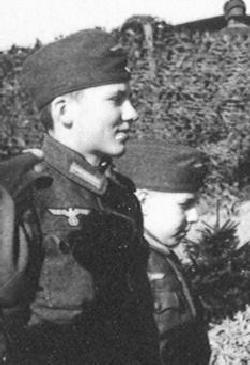
World War I had convinced most Europeands that there must never be another war. There was no desiire for another war, even in Germany. The War was the creation of one man--German Führer Adolf Hitler. His World war I service had been the high point of his sad life--which tells a great deal about the man. He thus viewed war differently than most people. In addition the achievement of his openly stated political goals necesitated war. Hitler launched World War II with invasion of Poland. The German Wehrmacht emplopying Blitzkrieg stunned the world. Hitler clearly set out to conquer the world. Remarably he came remarakably close to doing just that. The question of Germany and the Germans has thus to feature prominently in any discussion of World War II. Why didn't the German people resist Hitler and the NAZIs? Just how did it transpire that one of the most civilized of European countries, the land of Goethe and Schiller, Beethoven and Brahms, could have started two world wars--the second almost single handely. How could the Germans so passionately have followed the most evil of all historical monsters, Adolf Hitler and so eagerly embraced militarism and racism that would have returned Europe to a new Dark Age of unimagined barbarity? How could so many Germans have participated in the killing of so many innocent civilians, most of whom were non-combatant women and children. Even more unsettling is how the Germans could have embraced and idolized Adolf Hiter, the mastermind mind of such unspeakable horror so fervently. These are in fact central questions of the 20th century.
Gibraltar has been important in Spanish history since Roman times. It ws hear the Moors landed that conquered Spain (8th cenbtury). Spain had long possed Gibraltar which is connected to the mainland by a narrow peninsular. Britain seized Ginraltar from the Spanish during the War of the Spanish Secession (1703). Both Germany and Spain wanted Gibraltar. Gibraltar's naval dockyard and airfield were key to control of the Mediterranean. Gibraltar was one of the tenuous pillars upon which British control of the Mediterranean held. Without Gibraltar, Malta could not be held. And Malta was key to interdicting Italian convoys flowing to Malta. The Germans conceived of Operation Felix under which German units would have entered Spain and attacked Gibraltar from the land. This is what Hitler discussed with Franco at Hendaye (October 1940). Franco understood what German troops in Spain would mean and refused. Hitler at the tome ws master of Europe and defying him was dangerous. Franco only did it because Admiral Canaris informed him that Hitler having failed to take England was now focused on the Soviet Union and would not diveert troops for a major camoaign against Spain. This is a case almost unique in history when a country's spy master works against his own country, or at least leader. Canaris did this because of the barbarity that he witnessed during the Polish campaign (September 1939) against both Jews and Poles. Canaris wanted to raise the issue personally with Hitler, but Field Marshal Keitel at OKW advised him against it. The result was that Gibraltar was saved and with it control of the Mediterranrean.
Italinan dictator Benito Mussolini launched an invasion of Greece on October 28, 1940 from Albania. Mussolini had earlier invaded an occupied Albania in 1939. In
contarast to the close coordination that developed among the Allied countries, Mussolini not only did not coordinate his attack with the Germans, but did not even inform them of his plans until the attack was underway. Mussolini assumed that the Greeks woukd easily fall to his conquering army. Greek's small army of 150,000 men not only stopped the Italian thrust toward Salonika using rugged mountaneous terraine to their advantage, but with British assistance including RAF units, drove the Italians back into Albania. The Italain attack had been unwanted by Hitler who was preoccupied with the Battle of Braitan and forming a grand coalition of NAZI satellites, occupied countries, Fascist Spain, and Vichy France for an upcoming invasion of the Soviet Union. Mussolini's invasion had turned the sympathetic Metaxis Fascist Government in Greece into a British ally. This was of emense strategic significance because from bases in Greece, the British could threaten the Romanian oil fields--NAZI Germany's primary source of oil. The Greeks by November 1940 had seized Korçë, the principal Italian base in Albania. The lack of martial ardour of Italian soldies during the War is surprising given the pretentions of military greatness by Mussolini and the Fascists which had governed Italy since the 1920s. This was in sharp contrast to Hitler's success in ideoligically preparing the German soldier. The threat to the Balkans and Germny's souther flank forced Hitler to fivert his attention south away from Britain. Hitler forced the Balkan states to join the Axis: Hungary (November 20, 1940), Romania (November 23, 1940), Bulagaria (March 1, 1941), and Yugoslavia (March 25). Had Mussolini not invaded Greece, Hitler may have forced Metaxis into the Axis as well or at least he would have remained neutral and there would have been no British forces threatening the Balkans. The Wehrmacht in April 1941 invaded Greece, quickly defeating the Greek and British armies. While the Germans rapidly achieved their goals, the effort was a dissater fpr the German war effoty. The invasion of Yugoslavia and Greece forced the Wehrmacht to delay operation Barbarossa--the invasion of the Soviet Union. This lead to 4 years of hideous barbarism. The Greeks did not sibmit meekly to Axis (German, Italian, and Bulgarian) occupation and Ressistance groups soon fornmed. The German reactiin was brutal beyond description. The war and the experience of the occupation threw traditional family roles into question as women became breadwinners and children took up arms. NAZI reprisals were severe. The Greek children were especially affected by the German occupation. In addition, the NAZI program of plundering the occupied countries resulting in large quantities of food being shipped from Greece to Germany. This caused a mass famine in Greece. Thousands of children starved.
Fascism had some appeal to President Ubico and other dictators in Latin America. President Ubicio initially simply ignored World War II. Guatemala had one of Latin America's largest German immigrant population which was influential in government circles.
NAZI Germany's embassy in Guatemala City served as for Nazi propaganda and espionage in Central America. The Germany ethnic community was an imprtant support. NAZI propaganda focused on the superiority of German manufactured goods. NAZI propaganda also dealt on the claim that Germany was an important center for scientific research, climing that it had the 'world's most advanced educational system'. Guatemala had few Jews, but anti-Semitist thought was present in conservtive Catholic society. Beyond Jews, race was an important isue in Guatemala with its large Native American popultion. With the outbreak of the War, NAZI propaganda focused on German military victories and the superiority of its military equipment. The Salvadoran airline TACA was used for distrubting propagand as well as epionage. [Leonard. Honduras] Ulimately geography and America's predominant influence determined President Unicio's foreign policy. As in other Latin American countries, the economics of Fascism ultimately proved unfavorable. NAZI Germany chieved some sucesss in binational trade agreements. This helped increase the influence of the German ethnic community. Trade with Germany increased. With the outbreak of the War, however, the British Royal Navy cut off access to German ports (September 1939). As a result trade between Latin America and Germany essenbtially ceased. Guatemalsa and the rest of Latin Amerca had to turn t Brtain and more importantly the United state to replace the lost Germnan and lter Italian markets. [Leonard and Bratzel. Latin America] President Unicio, under increasing American pressure, delared a neutral status (September 1941). This was the first step in actng aganst NAZI influence which was pronounced among the German ethnic population. President Ubicio 5 days after declaring neutrality, prohibited NAZI propaganda. Shortly after, te Jpnes carier strike on Pearl Harbor brining America into the War, also chnge Gutaemala's status. Guatemal declred war on Japan (December 9, 1941). And then after Hitler declard war on America, Gautemala declared war on NAZI Germany and Fasicst Italy (December 12).
Guyana at the time of World War II was the Btitish colony of Guiana. It does not exactly spring to mind when one thinks of countries participating in World War II. Actually it palyed a major role in World War II. Britain focused much of its effort on the air war. The Riyal nabvy was course important, but the Royal Navy was not going to get to Germany. Until D-Day, the obly way was the Royal Air Force. And ffir this aluminum was needed to build aircraft. The major vsource iof buuxite at the start of the War was France, but wuth the fall of France was this was cut off. Britiah Giana became the major source of Nauxite. Additional quantities od aluminum was delivered by the Americans through Lend Lease. Britain and Amerucan ghelped expand mining =operatioins in Guiana.
Honduras in Central America had a similar World War II war record to many other Latin American countries. The country declared neutrality after Hitler and Stalin launched World War II. It then joined the Allied side immeditely after the Japanese attck on Pearl Hssrbor. Honduras declared war on Japan (December 8, 1941). YThen after NAZI Germany decklared war on America, Honduras declared war on Germany (December 13). It was a source of food and raw materials for the Allies. Hinduras committed small militsry force, some 150 men were killed. German U-boats sank three Honduran ships. ["Honduras participó ..."]
Hong Kong and Shanghai were along with Singpapre were the the three great Pacific ports on the Asian mainmland. After the fall of the China coast to Japan (1937-38), Hong Kong was the only major Chinese port that allowed strategic supplies to reach mainland China. As war approached, there was no naval defense of Hong Kong. The British Royal Navy did not evem have strength to defend Singapore, its primary bastion. Thus the Imperial Navy dominated the sea lanes. The Imperail Army had substantial forces in Canton faced thge British Crown Colony. The Japanese struck Hong Kong the same morning as their attack on the American Pacific Fleet at Pearl Harbor (December 8, 1941). The British battalions on Hong Kong Island reinforced by the Canadians were strong enough to prevent the Japanese from just marching in as they did in Shanghai. The Europeans in Hong Kong were immediated interned. Japanese occupiers terrorized the local population as well. The Japanese converted the hospitals and othe healthcare facilities to military hospitals meaning that the Chinese population had little access to medical care. Food was severely rationed and difficult to obtin. Much of the ciy residents were deported to China, cutting the populatiuo by more than a half--to about 0.6 million. the Japanese seized control of media and education. The internt was to Japanese the population. Hong Kong was of some strategi importance. There were imprtant port and repair facilities Japan used Hong Kong to establish firm control over the South China Sea, essentially a gateway to Southeast Asia. This was soon lost as a result of American naval victories beginning at Midway (June 1942). American submarines became increasingly effective (1943). This prevented the Japanese from using Hong Kong as a staging area for operations into East Asia. Reverses at sea and the inability to transpot oil and other resoirces by sea, prompted effots to establing land transport lines. This was part of the notivtiion for the Ichi-Go offensive (1944). Hong Kong was still occupied when the Emperor surrendered (August 15, 1945). A British battle squadron led by the aircraft carrier HMS Indomitable entered Hong Kong to reoccupy the territory (August 30). A priority was to rescue the British, Indian, Canadian, and Dutch POWs and internees who because of abuse and lavkof food were beginning to die in large numbers. If the Americans had not forces Japan to surrebder, few of these people would have survived. The Japanese formally surrendered (September 16). President Roosevelt had promised that Hong Kong would be returned to Chinese control, but Britain retained control as a Crown Colony.
German diplomacy during the 1930s sought to bring Hungary within the NAZI orbit. The NAZIs used financial enducements as well as the growing strength of Fascist elements in the country. Hungary also had territorial claims on neighboring countries which it hoped to avhieve through cooperation with the NAZIS. Hungary which had fought with Germany (as Austro-Hungary) in World War I, joined the Axis (November 20, 1940). Hitler rewarded the Hungarians with a substantial slice of Romania at the Vienna conference (November ? 1940). The Hungarians cooperated in the NAZI invasion of Yugoslavia (April 1941). Admiral ordered Hungarian military units to occupy territory claimed by Hungary in Yugoslavia. These areas had ethnic Hungarian populations. Hungary subsequently annexed a part of Vojvodina. German successes in the early phases of World War II convinced many in Europe that the NAZIs would prevail in the War. This strengthened the position of right-wing Fascist elements in the country. Admiral Horthy named right-wing politician Laszlo Bardossy to succeed Teleki as primeminister. Bardossy as a NAZI ally led Hungary into World War II. Hungary played a modest role in Basrbarossa (1941), but after the Soviet Winter ofensive (December 1941), the NAZI compelled Hungary to mobilize additional forces in the German Summer offensice (1942). The Soviets devestated the Hungarian Second Army as part of its Stalingrad offensive. Hungary subsequently withdrew its army rom the Eastern Front (April 1943). Hitler fearing that Hungary was preparing to sign a separate peace occupied the country (March 1944). When the Red Army arrived (September 1944), Hungary became an intense battlefield. Hitler rushed in reserves, but in doing so depleted the forces needed to defend Berlin.
Iceland in the medieval era became a dependency of Norway ans subsequently the Danish crown. The Danish monarchy granted Iceland a constitution (1874). Denmark through the Act of Union recognized Iceland as a separate state with unlimited sovereignty. The country, however, retained its ties to Denmark as it continued to be nominally under the Danish monarchy. Iceland like Denmark and many other countries wsanted to remain neutral as Europe moved toward war. NAZI Germany requested landing rights for Lufthansa trans-Atlantic flights (1939). The Icelanders denined the request.
After the War began, NAZI Germany invaded and occupied Denmark (April 1940). King ??? remained it Denmark and did what he could to support his people. The NAZI action shocked Icelanders. The Germans in World War I respected Danish neutrality. The British after the NAZI invasion of Denmark requested bases to ensure that the NAZIs would not also take over Iceland. The Icelandic Goverrnment was still determined to remain neutral and rejected the British request. The British hard-pressed in the North Atlantic proceeded to occupy Reykjavík (May 10, 1940). A German airbase in Iceland would have meant defeat for Britain in the Battle of the Atlantic. Most Icelanders were displeased, but understood the British action. Many were in a sence releaved that it was the British, unlke the NAZIs in Denmark.
The British wanted to ensure that the Germans would not be able to use the country as an air and naval base in the Battle of the Atlantic. Iceland in British hands played a key role in closing the air gap in which German U-boats could opperate. After the NAZI invasion of the Soviet Union (June 1941), some of the Arctic convoys ferrying supplied to that embatteled country were formed off Iceland. President Roosevelt ordered the American Marines (1st Marine Brigade) to replace the British (June 1941) even before America entered the War. The Brigade took responsibility for the defense of Iceland which released the British troops for duty elsewhere where the British were actively fighting the Germans. The Icelandic Government maintained an official neutral status during the War, but in fact cooperated closely with the Allies. A popular referendum voted for complete independence from Denmark which was confirmed by the Althing, the Icelandic parliament (June 17, 1944).
The independence movement led by Mahatma Ghandi and the Congress Party gained considerable strength during the 1920s and 30s. The British were having increasing difficulties governing India. The Congress Party while refusing to support the War efort, decided not to actively oppose it or to take advantage of British defeats in the early stages of the War. Some Indian POWs taken by the Japanese were recruited by anti-British nationalists and formed the Free Indian Army. Under Subhashchandra Bose, they fought alongside the Japanese in Burma. Overall, India played an important part in the Allied war effort. Indian units fought with other British Empire forces in both the Pacific and European theaters. About 2.5 million Indians (including modern Pakistan) were mobilized. Some Indian units played important roles in the early stages of the War before Britain had fully mobilized and American joined the War. The Fifth Indian Division ngaged the Italians in the Sudan ans subsequently the Germans in the western Desert. The Indians played a major role in quelling a pro-NAZI revolt in Iraq. A successful revolt would have cut the British off from the Iraqi oil fields whigh would have undermined the naval and land defenses of Egypt and the Suez Canal. the Division along with eight other Indian Divisions fought in Burma. After the Japanese surrender, the Indian forces then disarmed the Japanese forces in Malayia and Java. India provided important bases for the recinquest of Burma and delivering supplied to the Chinese. India also was a source of food and other supplies for British and Commonwealth forces as well as the British homefront.
|
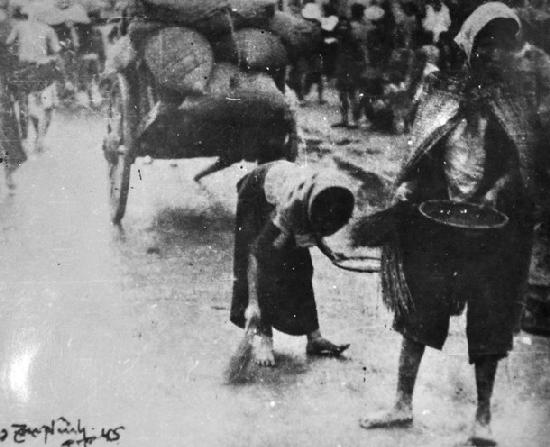
Indochina was the French colonly that included what is now Cambodia, Laos, and Vietnam. See those countries for a discussion of what happened in each colony. Southern Vietnam and Cambodia were the bread basket or more correctly the rice bowl of the region--an immensly rich agricultural area. France administered Vietnam as separate regional districts. Indochina featured hgeavily in the developing American policy, and embargoes against Japan which officias were able to follow indetail with the development of cracking the Japnese purple diplomstic code (Magic). The Japanese seized Indiochina in two separate steps after the fall of France (June 1940). This left the Burma Road as China's only lifeline to the West. At forst the Japanese only moved troops into northrrn Vietnam (June 1940). Then they moved troops into southern Vietnam (July 1940). This put Japnese troops with strikung distance of Malaya and oil rich Briotish Boneo and the Ditch Was Indies. The United States respmded with an oil embargo. The Japanese allowed the French colons which remained loyal to Vichy to continue runnning the local admnisitration as long the followed the orders of the Japanese Military Commission. After Pearl Harbor and invasion of Burma, Indochina disappeare with in the Japanese East Asia Coprosperity Sphere and except to supply food and textiles played little role in the War. As a result of Japanese imperial policy, a horific famine occurred in northern Vietnam (October 1944 - May 1945).
The Dutch East Indies (DEI) figured prominently in Japan's decession to launch the Pacific War. The Netherlands itself was invaded and occupied by the NAZIs (May 1940). The Dutch royal family and the Dutch government fled to London and established a government-in-exile. The Dutch DEI colonial administration in Batavia recognized the government-in-exile. The DEI figured prominently in Japan's decession to launch the Pacific War. The DEI was one of the principal colonies the Japanese wanted for their empire because of the petroleum resources, primarily located on Sumatra. Japan had virtually no petroleum and had been importing American oil which the United States embargoed after the Japanese moved into French Indo-China. The Japanese demanded that DEI officials export oil to them and DEI officials complied. Even so the Japanese after the dall of the British bastion at Singapore (Fenruary 1942) invaded the DEI (March 1942). Parchute landing seized the oil fields intact. The Japanese in fact benefitted little. The American submarine campaign by 1943 was making it difficult to ship raw material from the DEI and other occupied territories to the Japan Home Islands. The American destruction of the Imperial Fleet and reconquest of the Philippines (October 1944) made it virtually imposible. The Japanese in the DEI committed terrible attrocities. An estimated 4 million civilians perished during the Japanese occupation.
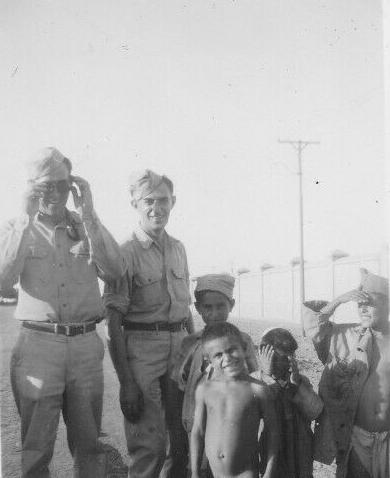
Iraq was a backwater of the War, but a very important backwater. The country was an imprtant in maintaining communication lines between India and the British position in Egypt protecting the Suez Canal. Even more importantly, Iraq was the principle source of oil for the Desert Army and the Royal Navy Eastern Mediterranean Squadron. Mesopotamia had been a Turkish Province for centuries until seized by the British during World War I. The British than created the country of Iraq as a monarchy. The Anglo-Iraqi Treaty of 1930 provided for a major British stake in Iraq. The British obtained an interest in the developing Mosul and Kirkuk oil fields and air bases near Baghdad in central Iraq and Basra in the south. To help protect the bases the British had a mixed force which included Iraqis recruited for this purpose. The British were also given transit rights. Britain with these guarantees granted independence to Iraq (1932). Nationalists criticized the treaty, but the Nuri es-Sa'id Governent was pro-British. The royal governent created a small army consisting of of five divisions, a navy consisting of river patrol craft, and a small airforce with obsolete aircraft. When war broke out in Europe (September 1939) Sa'id wanted to support Britain and declare war on Germany, but Iraqi nationalists oppsosed this. The Sa'id Government did break off relations. The Grand Mufti after failing in his effort to drive the British from Palistine sought reguge in Iraq and began to stir up anti-British nd anti-Jewish sentiment. A new Government with pro-Axis views led by Rashid Ali took power (March 1940). Ali was backed by the pro-Axis Golden Square. The fall of France (June 1940) dramatically changed the military ballance in the Mediterranean and thus the Middle East. Ali initiated various intrigues against Britain. British military successes in the Western Desert caused Ali to resign. The next primeminister acted to breakup the Golden Square. A military coup placed Ali back in power (April 3, 1941). At the same time, spectacular German successes in Yugoslavia, Greece, and Crete convinced the Iraqi nationalists that the Germans would quickly defeat the British. Ali tore up the 1930 Treaty and struck at the British air base at Habbaniya. The French Vichy authorities controlling Syria assisted Ali by allowing the Germans and Italians to deliver some assistance. General Wavell, the British Middle East commander was hard pressed at the time. He had to contend with Rommel in the Wester Dessert and the disaterous intervention in Greece. He was reluctant to commit forces to Iraq, but Churchill insisted. An Indian division struck from the south landing at Basara. The Habforce (a British brigade and the Arab Legion) struck west from Jordan. Ali's forces were quickly defeated and he escaped seeling refuge in NAZI Germany. He would soon be joined by the Mufti.
|
Iran was much more important. Reza Shah's Government declared Iran neutral with the outbreak of World War II in Europe. The British suspected that the Shah was sympathetic with the NAZIs who were active diplomatically in Iran. The Iranians rejected British demands to expel Axis agents. After the NAZI invasion of the Soviet Union it became vital to open supply lines to the Soviets. The British and Soviets thus launched a coordinated invasion (August 26, 1941). The Soviets invaded from the north. The British from Iraq where they had defeated a pro-Axis rebellion and by troops landed along te Persian Gulf. There was only limited resistance. Reza Shah abdicated (September 16). His son ascended the throne as Mohammad Reza Shah Pahlavi. At the time of the War, Iran had just begun to develop its petroleum industry. It did not play an important factor in the War. Britain fought the War largely with American oil, although the 8th Army fought the War in the Western Desert largely with Iraqi oil. Iran's importance in the War was largely as a conduit for American Lend Lease shipments to the Soviets. Iran in fact became the major conduit for American Lend Lease aid to the Soviets. Given the fact that the Wehrmacht was largely destroyed on the Eastern Front by the Red Army, these supplies delivered through Iran were very important indeed.
Ireland was neutral during World War II even after the true nature of the NAZI regime was revealed. It was still technically a member of the British Empire. The Irish Republican Army (IRA) fought a vicious guerilla war against the British (early 1920s). The campaign was led by Michael Collins who was later assinated when he negotiated a settlement with Britain. Eamon de Valera who opposed the settklement became president of the Irish Free State. At the time that war broke out, the Irish Free State was moving toward independemce. There was considerable bitterness about continued British control of Ulster--the primary reason for Collin's assasination. The IRA conducted a bombing campaign in London (Summer 1939). The Irish government denied responsibility for IRA actions. With the outbreak of war (September 1939), there was no desire to join with Britain to fight the NAZIs. There was great anti-British sentiment combined with the memories of losses during the last war. There was even some sentiment for the Germans, primarily a artifact of the anti-British feeling.
The Chamberlain Government considered offering Ireland Ulster and unification if Ireland joined the Allies. Ulster protestants were outraged. President Eamon de Valera at any rate rejected the offer.
The Roosevelt Administration wanted to use Irish ports to ship war material to Britain as a way around the Neutrality Acts. President de Valera refused. He was also upset that the United States was shipping large quantity of arms to Britain and not providing arms to Ireland. De Valera decided to support anti-Roosevelt isolationist opinion in the November 1940 presidential election. DeValera made a Christmas radio broadcast to the United States supporting isolationism. He then attempted to influence Roosevelt's special emissary, Wendell Willkie on a visit to Great Britain and Ireland (January 1941). De Valera continued efforts to obtain American arms, strangely by taking on President Roosevelt. He dispatched Frank Aiken, aenior IRA leader and Irish denense minister. The American ambassador in Ireland, David Gray, supported the idea, but advised de Valera against chooding Aiken. He also explained to de Valera that America was only likely to provide arms if they cooperated with efforts to support Britain in the War and advised working with the the British Purchasing Commission. Aiken left for America (March 1941). De Valera claimed in his annual St. Patrick's Day address that Ireland was under blockade from both sides and that neutrality protected Ireland from 'the hazards of imperial adventure', hardly likely to build bridges with Churchill and Roosevelt. Aiken's visit was a much larger diplomatic disaster. He dramatically displayed the anti-British views that dominated his and President de Valera's policies. He thoroughly alienated President Roosevelt and other administration figures who had been struggling with the Isolationits. He declined to use the letters of introduction to senior Democrats, including Mrs. Roosevelt that Ambassador Gray had given him. Aiken spent the last 7 weeks of his visit rather than meeting with Administration figures to discuss arms, but conducting an anti-Administration speaking tour. The result was that the President Roosevelt would have nothing to do with him or Ireland. Relations between Ireland and tghe United States became frosty indeed. With the pssage of Lend Lease (March 1941), vast quantities of arms were approved for Britain and eventually many other countries. The Irish Government submitted a note asking about the intentions of the United States regarding Northern Ireland (October 1941). The issue at stake was stationing of personnel there associated with Lend Lease. The U.S. State Department essentially slaped them in the face, suggesting that they inquire with the British government because Northern Ireland was a part of the United Kingdom. [Girvin, p. 287.] There would be no American arms for Ireland. The Irish government ignored reports of German attrocities. At the very end of the War de Valera even sent condolences to the Germany government upon Hitler's death. While the Irish Government remained, not all Irish citizens were neutral in the fight against Fascism. Approximately 10 percent of the Irish Army deserted to join up with the British to fight the Germans. They were with the British Army that entered the Reich and liberated the NAZI concentration camps. They were harshly treated by the Irish Government after the War when they returned home.
While little good can be said of the 12 years of NAZI rule in Germany, Italy is significantly different. Although it is not popular to say so, there were, along with the many negative aspects, possitive impacts of Missolini's Fascist movement. It is said that Mussolini made the trains run on time, but in fact
there was much more to Fascist rule in Italy. Fascism was in fact a factor for modernization, especially for southern Italy which in the 1920s was still almost feudal. The excesses of the NAZIs were in part limited by the fact that Mussolini was not the homicidal maniac that Hitler was and the that the Italian Fascists were not as committed to the same racist doctrine that the NAZIs persued. Programs like eugenics, Lensensorn, euthenasia, and Eindeutschung, were never persued by the Itlalian Fascists. Here the fact that Mussolini never dared confront the Church as Hitler did, prevented the excesses of the NAZIs. Mussolini was, however, dazzeled by the military success of the NAZIs and joined Hitler in 1940 with an invasion of France, only after France had been essentially destroyed by the Wehrmacht. The Italian people turned on Mussolini as the illconceived War turned against the Italians and their German allies. The Italian Fascit were certainly not the friends of Jews, but the Holocaust in Italy was forced on Italy only after the NAZIs occupied Italy in late 1943 and Mussolini became a pawn of the NAZIs in late 1943 of the NAZIs.
Girvin, Brian. The Emergency: Neutral Ireland 1939–45 (Macmillan: 2006)
"Honduras participó activamente en la Segunda Guerra Mundial," Diario La Tribuna (July 20, 2018).
Leonard, Thomas M. and John F. Bratzel. Latin America during World War II (Rowman & Littlefield: 2007).
Leonard, Thomas M. The History of Honduras. (ABC-CLIO: 2011).
Pollock, Fred. E. "In search of monsters to destroy: Roosevelt and colonialism," in Warren F. Kimball, The Juggler: Franklin Roosevelt as Wartime Statesman (Princeton University Press: Princeton, New Jersey, 1991), pp. 127-57. Pollock was the principal author, Kimball adopted it for inclussion in his book.

Navigate the CIH World WarII Pages:
[Return to Main World War II country pages ]
[About Us]
[Biographies]
[Campaigns]
[Children]
[Countries]
[Deciding factors]
[Diplomacy]
[Geo-political crisis]
[Economics]
[Home front]
[Intelligence]
[Resistance]
[Race]
[Refugees]
[Technology]
[Bibliographies]
[Contributions]
[FAQs]
[Images]
[Links]
[Registration]
[Tools]
[Return to the Main World War II page]