|
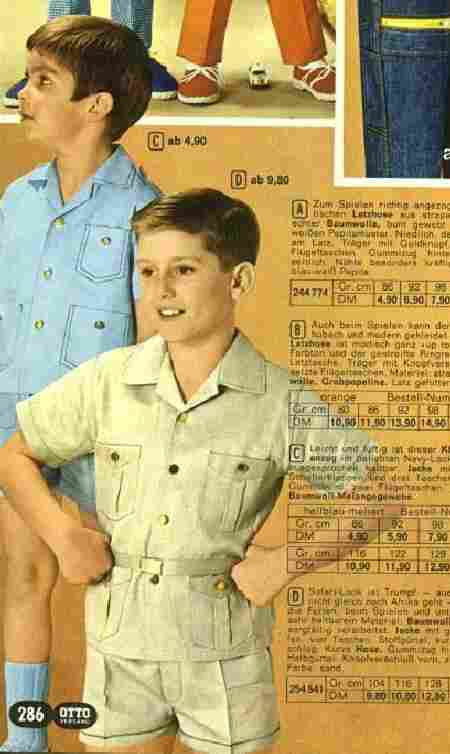
Companies in many different countries have issue mail order catalogs. I believe that the mail order catalog was an American invention, born out of the need to market clothes and a wide variety of goods over the imense distances of rural America. The custom was only later adopted in Europe. These catalogs are excellent sources of information for national clothing trends. They not only provide useful time-line information for different countries, but a lot of useful information in the captions about sizes, material, color, options, features, and much more. We are also including material such as newspaper and magazine advertisement and fadhion magazines and publications.
Newspaper and magazine for clothing advertising developed at about the same time around the world. The same is true of store catalogs. Mail order catalogs are different. The United States is a huge country with many people living in rural sreas, in some cases remote areas. Unlike Europe, Americanns did not tend to live in rural villages, but ruight on the farm. often miles from edven a general store, let along town stores with any bkind of selection. And during the 19th century most of the population lived in rural areas. This made it difficult to shop. The same was true of Canada, especially wesrtern Canada. Thus after the Civil war we begin to see mail order catalogs appearing to reach these consumers. The result was a commercial revolution. Sears and Wards were leaders, but several department stores followed with their own mail order catalogs. These catalogs provide an invaluable record of period fashion trends.
U.S. mail order catalogs like Montgomery Ward and Sears Roebuck were leaders in creating mail order stores. Scholars have called the Wards catalog one of the 100 most influential books ever publisged. These catalogs were a necesity in the far flung reaches of rural America. Both were founded in Chicago, the center of the railroad network that spread througout the American heartland. These compamies eventually founded retail stores and continued to be highly influential into the 1960s.
We have only limited information on Canadoan catalogs and advertisements at this time. What we have suggests some similarity with American fashions. One of the subjects we want to consider is to what extent English and French fashions affected the two different language communities.
We have some limited information on Japanese catalogs. So far we only have images from a few catalogs. We do not yet have any ad copy from these catalogs and some images we have are noy dated. Hopefully our Japanese readers will help us build this section.
We have very limited information from Korea. The country is one of the great success stories in Asia. Korean prosperity has created a consumer economy that has begun to approach Japanese levels of prosperity. We have been able to obtain very little informationon Korean caalogs and clothing advertisements. Some infrmation on the 2000s is available from on-line catalogs. Computer use is quite intebsive and Korean consumers do a great deal of on-line purchasing. Of course we are talking aout South Korea. I doubt if North Korea has any clothing catalogs or even clothing advertisements.
Mail order caralogs began as primrily an Americn phonemon because of the long distances people in rural areas livd from cities with large stores. This phomenon spread to Europe where store catalogs and newspaper advertising were already widespread. Interestingly. before World I, Europeans companies had huge markets. Nuch of the continent wa part of three empires (Austri-Hungary, Germany, and Russia). After World War I, mail order catlogs became more complicated because of all he borders, national languages, abd custom regimes. After World War II, the imposition of Communism in Etern Europe adversely affected commercial development. Many important mail order companies developed after World war II, especially with the advent of European integration. We begin to see the disappearnce of national clothing styles and the devlopment of pan-European styles, this even penetrated the Iron Curtain. he collapse of Communism meant that Eastern Europeans could enjoy the convenoence of mail order caralogs. There were some problems such as the insecurity of Italian mail deliveries. The appearnc of the Euro help to facilitate payment. The internet to a large degree has replaced large catalogs.
We note some Australian catalogs in the 1900s, but surely there were earlier ones. The fashions illustrated in the 1900s looked very similar to English clothing. After World war I we note boy's clothing becoming more casual, better atuned to Australian climatic conditions. After World War II we see a greater American influence. There are many sporty styles in the 1980s, including outfits for skate boarding. Sun Safe clothes appear in the 1990s. School uniforms are a perenial feature of Austrlian catalogs.

Navigate the Boys' Historical Clothing catalog/magazine pages:
[Return to the Main mail order page]
[Main photo/publishing page]
[Store catalogs]
[Fashion magazines]
Navigate the Boys' Historical Clothing Web Site:
[Introduction]
[Activities]
[Biographies]
[Chronology]
[Clothing styles]
[Countries]
[Bibliographies]
[Contributions]
[FAQs]
[Glossaries]
[Images]
[Links]
[Registration]
[Tools]
[Boys' Clothing Home]
Navigate the Boys' Historical Clothing Web Site:
[Sailor hats]
[Sailor suits]
[Sailor hats]
[Buster Brown suits]
[Eton suits]
[Rompers]
[Tunics]
[Smocks]
[Pinafores]