|
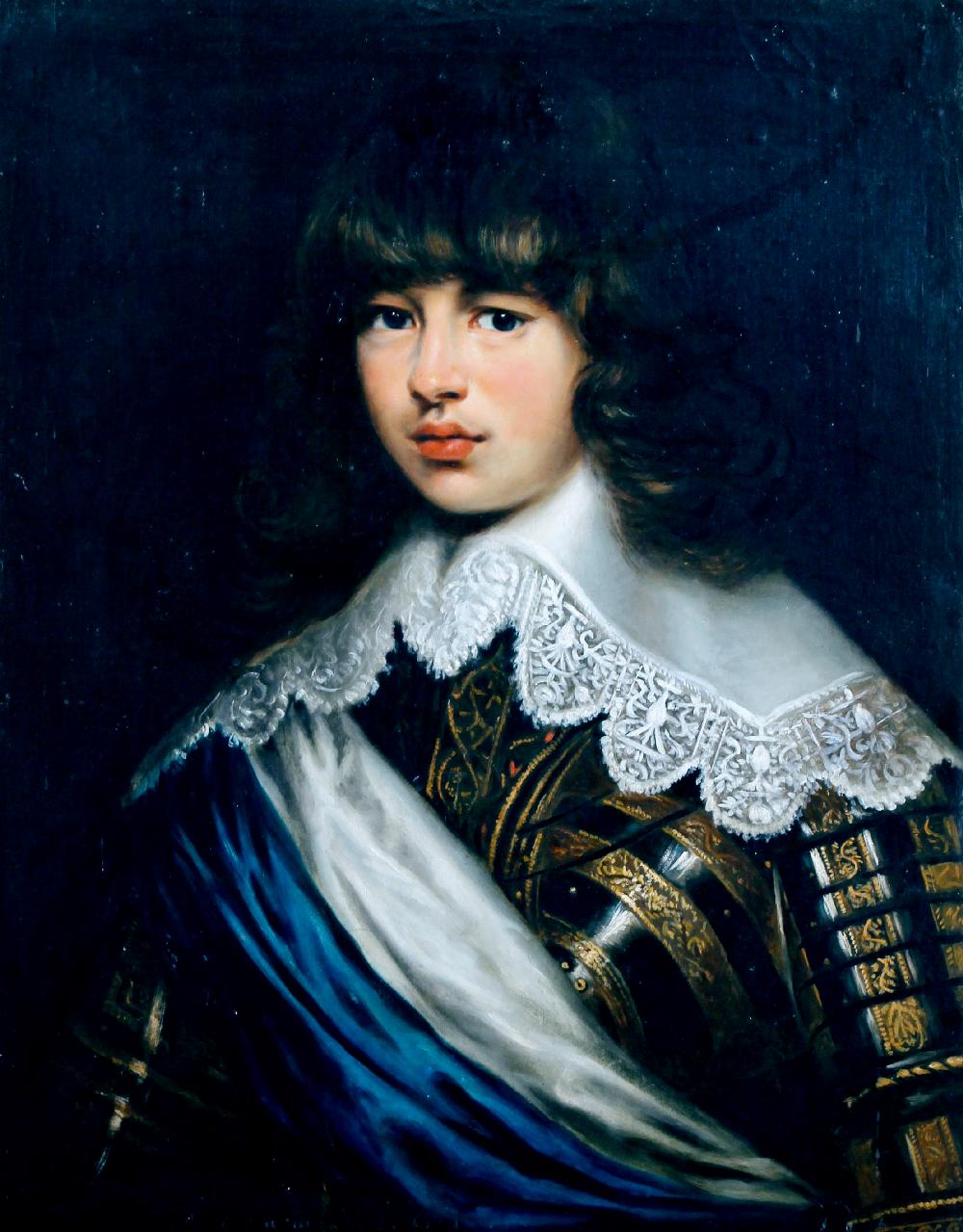
Count Valdemar Christian of Schleswig-Holstein (1622–56) was the son of king Christian IV and his second, morganatic wife Kirsten Munk. He and his siblings the title Count Countess of Schleswig-Holstein. Valdemar was the eldest surviving son of King Christian's second marriage.
Valdemar was one of twelve children born to the morganatic union. But they faced even more serious issues. There was an acrimonious separation of their parents (1629). This involved allegations of Kirsten's infidelity. The children, including Valdemar, were placed under the legal guardianship of their maternal grandmother--Ellen Marsvin. he was given responsibility for their upbringing, education, and financial management in conjunction with Christian. This mean that the children continued to enjoy noble privileges and court access Despite issus with their mother, Christian continued to provide for them even though there was opposition within the wider nobility. Few details exist, but Valdemar Christian, one of twelve children born to the morganatic union between King Christian IV of Denmark-Norway and Kirsten Munk, was granted the title Count of Schleswig-Holstein but excluded from the line of succession due to the non-dynastic nature of his parents' relationship. Following the acrimonious separation of his parents (1629). This was caused by allegations of Kirsten's infidelity. The children, including Valdemar, were placed under the legal guardianship of their maternal grandmother-Ellen Marsvin. She assumed responsibility for their upbringing, education, and financial management alongside Christian IV. This arrangement ensured the Munk offspring continued receiving noble privileges and court access without full royal status, reflecting the king's efforts to provide for them amid noble opposition to the morganatic match. Limited contemporary records detail Valdemar's personal youth, though his later military involvement suggests an upbringing emphasizing martial training and administrative preparation typical for highborn males of the era. Valdemar appears to have received some military training. This was standard for noble boys in an era of incessant warfare in Europe. A morganatic marriage was normally an unequal union, even though Kristen's mother skillfully negotiated a sweet-heart deal for her daughter. But it still barred the children from legitimate succession. But they received the noble title of Count of Schleswig-Holstein whicvh meant that Valdemar had some dynastic influence. There was even a betrothal to Tsarevna Irina Mikhailovna Romanova, sister of Tsar Michael I of Russia (1643). He he refused to convert to the Orthodoxy and as a result was kept as a prisoner (until 1645). His life included military service in the destructive Thirty Years' War. He desired to claim the Danish throne amid the instability of the Thirty Years War and finally Christian IV's death (1648). The Treaty of Westphalia settled most European issues, but not all. Vlademar had no real claim when measured by standard primogeniture lines. But the Danish Crown still involved an election. He contested his half-brother Prince Frederick' accession to the Danish home. After Fredrick's election he had to lived abroad. As a result, he lived abroad as he challenged the election. Valdemar's efforts ended when he was killed in the First Northern War -- an off shoot of the Thirty Years War. He was fighting against Danish forces (1656). He was an officer in Polish units. They were fighting as s Swedish ally. Sweden of course was Denmark's long time foe. Valdemar was 33 years old.

Navigate the Boys' Historical Clothing Web Site royal pages:
[Return to the Main Christian IV second family page]
[Return to the Main Christian IV page]
[Return to the Main Danish royal pages]
[Return to the Main royal pages]
[Austria]
[Belgium]
[France]
[Germany]
[Italy]
[Luxenburg]
[Monaco]
[Netherlands]
[Norway]
[Romania]
[Russia]
[Spain]
[United Kingdom]