|
The initial important naval battles were carrier battles. It was in the Solomon Islands that the U.S. Navy surface fleet first came to grips with the Imperial Navy. The Pacific Fleet with its battleships devestated at Pearl Harbor faced a far superior naval force. The Japanese after seizing the Dutch East Indies (Indonesia) took the Solomon Islands (mid-1942). Allied inteligence detected the construction of an airbase on Guadalcanal. This was a step of considerable importance as an airbase on Guadacanal would assist the Japanese in cutting off American troops and supplies fromn reaching Australia. Unlike the Americans, Japanese construction methods were slow, giving time for the Americans to prepare its first major offensive action of the Pacific War. The First Marine Division still training in New Zealand under Alexander Van der Grip dispatched in great secrecy. They reacged Guadalcnal undected by the Japanese. The Marines took Tulagi, a small island off Guadalcanal on Augut 7. They also landed on Guadalcanal and quickly seized the unfinished Japanese airfield, naning it Henderson Field after an aviator killed during the Battle of Midway. The surprised Japanese on Guadalcanal reorganized inland and counter attacked. The Japanese sent a force of seven cruisers and one destroyer from their base ar Rabal. The route traveled was "The Slot", a slot-like channel formed by the parallel configuration of the Solomons. In a night action off Savo Island they destroyed the Allied cruisers covering the landing (August 9). The Allied landing force was forced to withdraw without unloading all of the Marines' supplies and snuck into the waters. This left the Japanese with air and naval supperority over the Marines that had landed. The Japanese came down the Slot daily to bomb and shell the Marines. Their main target was the airstrip which the Marines rushed into operation. Despite the American victory at Midway, the Japanese still had superior carrier and naval forces. The Japanese did not at first appreciate the importance of the American action. Henderson Field thus played a major role in proecting the Marines from Japanese air strikes and naval bombardment. American fighters fought off Japaneseplanses and made it impossible for the Japanse Navy to direct intense naval bombardment. American bombers launched strikes on Japanese bases in the northern Solomons. The Marines were helped by friendly Melanisian natives which the Japanese had uickly alienated when they arrived. Continuing Japanese pressure began to ground down the Marines. Nimitz transferred overall command to Admiral Bull Halsey who pledged the Navy would intensify support. This was a dangerous commitment at a time when the Japanese still had superior carrier and naval forces. The Japanese launched a major force to destroy American naval forces supporting the Marines. The Battle of Santa Cruz occured when the Japoanese found Hornet which was badly damaged (October 26). Hornet was left dead in the water and had to be scuttled. Santa Cruz was a victory for the Japanese, but they did not press their victory. The Americans on Guadalcanal relieved the hard-pressed Marines with fresh Army units. The Japanese had managed to buildup a sizeable force on the island, but were unable to keep them supplied because of the American fighters on Henderson Field. Finally Guadalcanal was declared secure (February 9, 1943). The Americans had retaken the first island on the long road to Japan.
Virtually no Americans and few Australians had ever heard of the Solomon Islands, let alone Guadacanal. The Solomons at the time of World War II were British territory administered from Australia. No pre-War assessments by either the Japanese or the Americans had given any consideration to the islands. There were no important natural resources. The islands included some of the most formidable juggle in the South P{acifiv, infested with malarial swamps and leeches. The islands wee to become some of the fought over realestate during the War. What made the Solomons important was their location. They stood between Japanese and Allied positions. The Japanese had seized northern New Guinea and were building a powerful bastion at Rabaul. The Allies after the loss of the Dutch West Indies had withdrawn to Australia, holding out in New Guinea primarily at Port Moresby. This would turn the Solomon Islands into one of the important battlefields of the Pacific War. The J
For the Japanese in 1942 they seemed like more islands that could be easily seized from the Allies and that proved to be the case. They were stepping stones toward the complete domination of the South Pacific. Initially this meant Port Moesby the final piece of New Guinea, after which the conquest of Australia could be launched. This was complicated by the Battle of the Coral Sea in which a Japanese task force to seize Port Moresby was forced to turn back. Further major actions by the Japanese were postponed until the Imperial Fleet dealt once and for all with the remnants of the American Pacific Fleet at Midway. After Midway they could resume the offensive in the South Pacific The Japanese believed that both Lexington and Yorktown were sunk at the Coral Sea and the Americans were down to two carriers. Yorktown survived and after rush repairs was dispatched to Midway. The result was a disaster for the Japanese. They lost four of their large carriers and sinking only Yorktown. The Japanese still had the capability with their remaining carriers to initinate another major fleet action. Yamamoto decicded against it. It was the major Japanese strategic mistake of the War. The Japanese instead decided to renew their South Pacific offensive. The Imperial Navy without four of its carriers orderec the construction of an air base on the southnern Solomon Island of Guadacanal. This air base could assist in naval opperations to sever Australia sea lanes with America. The Japanese Army was focused on New Guinea. The the extent of the losses at Midway was a national secret--from theJapanese people. The Imperial Navy did not even inform the Army of the extent of the disaster. Thus the Army decided to complete the conquest of New Guinea with an overland attack over the forbidding Owen Stanley Mountains. Army planners believe that the Americans would not be in a position to launch an offensive in the South Pacific until the summer of 1943.
The initial important naval battles were carrier battles. It was in the Solomon Islands that the U.S. Navy surface fleet first came to grips with the Imperial Navy. The Pacific Fleet with its battleships devestated at Pearl Harbor faced a far superior naval force. The American public and even much of the U.S. Navy until Pearl Harbor were dimssive of the Japanese. The terrible Naval Battles which comprised the Solomons showed just how good the Japanese were. The Japanese fleet had modern, well-designed ships with comopetent leaership and superbly trained crews. It was not only the carriers, but the Japanese cruisers and destroyers were more than a match for their American and Australian counterparts. A major advantage the Japanese held was their long-lance torpedo. The Japanese were especially effective in night fighting. The Allies had two advantages. One was radar, but few commanders in 1942 knew how to effectively use it. Two after the Marines landed at Guadacanal was Henderson Field and the Cactus Air Force. The Navy was cautious about deploying it precious carriers to support the Solomonos operations, the result was some of the most ferocious ship to ship engagements of the Pacific War. The outcome was decided by the fact the Pacific fleet committed virtually its entire combat force while the Japanese did not. This along with the possession of Henderson field proved to be decisive. The campaign was notable for the fact that it would be last naval campaign of the Pacific War in which the Imperial Fleet would hold amaterial advantage--an advantage on which they failed to capitalize.
The Japanese after seizing the Dutch East Indies (Indonesia) proceeded to move south down the Solomon chain (mid-1942). The Japanese seized the Solomons with virtually no opposition (January-May 1942). Rabaul in the north was turned into a major base--the most powerful in the South Pacific. It was a marvelous natural anchorage abnd he Japanese surrounded it with airfields. It was to be the primary naval and air base to be used to support the conquest of New Guinea and ultimately Australia. The last rung down the Solomon chain was Guadacanal.
The Japanese after Midway had to reassess their stategy. The loss of four carriers meant that they were no longer the overwealingly dominant naval force. They knew that American forces were flowing into Australia by sea. They decided to build an air strip on a southern island in the Solomons--Guadacanal. Interestingly the Japanese never deployed their powerful submarine fleet to interdict the American convoys in a meaningful way. Allied inteligence soon detected the construction of an airbase on Guadalcanal. This was a step of considerable importance because an airbase on Guadacanal would assist the Japanese in cutting off American troops and supplies from reaching Australia. This could no longer be done with carriersbecause of the Midway losses. Guadacanal could, however, serve as an unsinkable carrier. Unlike the Americans, Japanese construction methods were slow.
The slow speed of Japanese construction on Guadacanal gave the Americans time to prepare their first major offensive action of the Pacific War. Allied resources were limited. The Japanese knew that and thus did not expect such a stroke. The Japannese did not believe that America would be prepared for offensive action until mid-1943. The American action would be an offensive on a shoe string.
The First Marine Division still training in New Zealand under Alexander Vandegrift was dispatched in great secrecy. The First Division were old school marines. They reached Guadalcanal undetected by the Japanese. The Marines landed and took Tulagi, a small island off Guadalcanal (August 7). Here they were oposed by a small force of Japanese marines. They also landed on Guadalcanal. Here they were virtually unopposed. The construction workers, many Korean conscript laborers, building the airfield fled into the jungle. The Marines quickly seized the unfinished Japanese airfield (August 8). They named it Henderson Field after Maj. Lofton Henderson, a pilot killed at Midway. The American invasion surprised the Japanese. But air attacks from Rabaul destroyed or drove off the supply ships leaving the Marines without much of their supplies and equipment.
The Japanese were stunned by the Guadacanal invasion. They initially assumed that the Marine force was small, probably a small raiding force that could not hold. And the Japanese did not believe the U.S. Pacific Fleet had the capability of supporting the Marines. The Imperial Navy had not informed the Army of dimensions of the Midway defeat. Thus they did not understand the shift in the balance of naval forces. The Army at the time was also focused on its offensive New Guinea and at first saw Guadacanal as an unwanted sideshow. Yamamoto and the Navy failed to appreciate the importance of Guadcanal and then made the serious tactical error of feeding the Imperial Navy units into battle piecemeal. The Battle of Midway had dramatically affected Yamamoto. The bold commander who planned the attack on Pearl Harbor and Midway, suddently became tenative. [Thomas, p. 85.] There would be no single decisive battle in the South Pacific. The Imperial Navy would have had a chance to win a major fleet action in 1942, but they would delay such a battle until 1944 when the balance of power had decisively shifted to the Americans. (That battle of couese was Leyte Gulf--the greatesr naval battle of all time.) Rather Yamamoto would feed elements of the Imperial Navy into battles piecemeal. The Japanese did not have a substantial garison on Guadacanal and the Marines had destroyed the force on Tulagi. The Japanese quickly landed ground forces and attack the Marines who had dug in to defend the airfield (August 21). The Japanese landed substantial forces on Guadacanal, but they like the Navy were committed piece-meal. The terraine also made it difficult for the Japanese to move artillery and other heavy guns forward. The Japanse were also unable to adequately supply the forces landed, bith because of the Cactus Air Force on Guadacanal and Allied naval opposition, odten in the face of superior Japanese naval forces. As a result the Marines were terribly mauled, but were able to hang on.
The Japanese did not fully understand the size of the American offensive on Guadcanl, but they respnded immediately with air strikes. The Imperial Navy also quickly responded. Two surface task forrces were dispatched. A Japanese cruiser force moved down the Slot and destroyed the Allied naval force covering the landings in a savage night action--the battle of Salvo Island.
A substantiak carrier force had been assigbed to cover the landings: USS Vincennes, USS Chicago, Canberra, Astoria, and USS Quincey.
The Japanese sent a force of seven cruisers and one destroyer from their base ar Rabal. The task force cleared theNew Georgia Sounded and headed for "The Slot". The route traveled was the slot-like channel formed by the parallel configuration of the different Solomon Islandss. The Japanese were highly skilled in night fighting and the Allies still had only limited radar and were not utilizing what they had to best affect.
The Japanese encountered the Allied cruiser force covering the landings (August 9). Eight Japanese ships managed to sink three U.S. heavy cruisers, an Australian cruiser, and one U.S. destroyer. This all occured in one disastrous hour. It was one of the wore defeat imposed on the Allies in ship-to-ship engagements. In addition, another U.S. cruiser and two destroyers were damaged (August 8-9). A total of 1,077 sailors were killed.
What remnained of the Allied naval forced limed out to sea leaving the Marines exposed. Even so, the Japanese did not press on to Guadcanal. It withdrew back up the Slot. They were apparently concerned about an American carrier strike when dawn broke. This would be one of several instances in te Solomon Campaign when the Japanee would not press own an attack which given their warrior tradition is not clearly understood.
The Allied landing force was forced to withdraw without unloading all of the Marines' suppliess. This left the Japanese with air and naval supperority over the Marines that had landed. This seriously impaired the Navy's ability to supply the Marines on Guadacanal. It turmed the Battle of Guadacanal into a srtuggle of ho could supply their men on the Island.
The Battle of Salvo Island shocked the U.S. Navy. Even at this stage of the War, many in the Navy did not understand how good the Japanese were or the quality of their ships. The devestating Japanese victry forced the Americans to reassess their assumptions. Pearl Harbor could be dismissed as asneak attack, but not Salvo Island.
The Japanese came down the Slot daily to bomb and shell the Marines. Their main target was the airstrip which the Marines rushed into operation. They also laubched fighter and bomber attacks on the Marines, concentrating on Henderson Field. The marines became accustomed to nightly raids by Washing Machine Charlie.
Despite the American victory at Midway, the Japanese still had superior carrier and naval forces. The Japanese did not at first appreciate the importance of the American action on Guadacanal. But what the American and Australian Navy primarily faced in the narrow waters of the Slor were the Japanese destoyers and cruisers.
The Japanese had superior naval forces in the South Pacific, especially after the Battle of Salvo Island. The one area in which they were relatively evenly matches, thanks to Midway, was in naval aviation. The Navy deployed Enterprise, Wasp, and Saratoga to support the Marines on Guadacanal.
The Imperial Navy assembled a massive task force including the heavy carriers Suikaku and Soikaku, and the light carrier Ryugo. The two heavy carriers were after Midway all that was left of powerful six heavy carriers with which they had begn the War. The Japanese task force was to deliver reinforceents and supplies to retake Guadacanal.
The Americans after extended patrols and no sign of the Japanese had released Wasp for needed refuleing. The U.S. And Japanese carriers fought the Battle of the Eastern Solomons (August 24). The battle brgan when PBY patrol craft spotted Ryugo and an escort cruiser, but not the heavy carriers 100 miles to the north. (9:45 AM). It was just what the Japanese had hoped. In carrier battles, the side to strike first had a chance to win the battle. An American strike on Ryugo, a carrier of lesser importance, would expose the American carriers to attack. Enterprise struck at Ryugo (12:39 pm). the attack force left it a flameing hulk. The ship and 70mplaes including many air crews were lost. About 100 miles behind, Soikaku and Zuikaku launched a strike on the Americn carriers. For some reason the American radar did not pick up the incoming strike. American radar had a range of about 75-85 miles, but still not fully reliable. The attavking force found Enterprise which not identify them until the Japanese were nearly over them. Fleet air cover downed 29 Japanese raiders and anti-aircraft fire from Enteprise, the USS North Carolina, and other escots downed another 15 Japanese planes. Battleships like North Carolina. had been seen as the backbone of the fleet. Now it was a floting gun platform used primarily to protect carriers. The first squadron of Val dive bombers reached Enterprise and scored at hit near the fantail (4:44 pm). A second squadron scored another hit near the first. These hits put Enterprise's stering out of action and the carrier began to list. A third and final hit pentrated the deck forward of the No. 2 elevator. The Japanese at the start of the War had better prepared carrier crews, better pilots, and more effective aircraft. The one area the Americans has a destinct advatage was damage control crews. These crews braving rageing fires managed to save Enterprise just as they saved Yorktown in the Coral Sea. Japanese carruiers hit like Enterprise did not survive. A second Japanese strike late in the afternoon failed to find the American carriers, in part because Enterprise's steering had been put out of action and thus its course had changed. Enterprise
limped off the Noumea and then to Pearl for repairs. There were 77 dead sailors. The Japanese suffered heavier losses including many air crews. While the Japanese may have prevailed because of the damage to Enterprise, again they did not press on the attack. The American actian not only turned them back, but inflicted substantial losses on the air compliment. The discouraged the Japanese from fully commiting their naval forces for the effort to retake Guadacanal. This was a terrible mistake because it was the last campaign in which the Imperial Navy would operate with superior forces. The strategic balance would be fundamentally altered when new ships began reaching the Pacific fleet in large numbers during 1943.
Henderson Field thus played a major role in protecting the Marines from Japanese air strikes and naval bombardment. The Navy was generally reluctant to deploy its few remaining carriers. Within days of seizing Guadancanal, the Marines even after losing their construction equipment, completed the air field. The Cactus Air Force was soon in operation. (Cactus was the American code designation for Guadacanal.) American fighters fought off Japanese planes. This was a major achievement because the Zero was a much more effective fighter than the Navy Wildcat or even more the Army P-40. Effective air combat tactics and the fact tha Zeros flying from Rabaul could only spebd a few minutes over Guadacanal made it impossible for the Japanese to achieve air superority. This made it impossible for the Japanse Navy to direct intense naval bombardment. It also shaped the nature of the Solomons naval battles. Henderson Field gave the Americans command of the watrrs southern Solomons during the day. At night the Japanese with their night capability controlled the sea. American bombers launched strikes on Japanese bases in the northern Solomons.
The Marines were unable to land all of their supplies before Japanese naval action vorced the supply ships to leave. They managed to hold out in part by using Japanese supplies. This was the first real test of Japanese and American soldiers. The Japanese had been tought that the Americans were soft. This is not what they found on Guadacanal. The bravery and endurance of the Marines on Guadacanal is legendary. The Marines were astonished by the suicidal Japanese tactics. The Japanese managed to land forces on the Island that could have defeated the Marines. Poor tactics, especially the willingness to squandor men in peace-mill suisidal tactics played a role in the Japanese defeat.
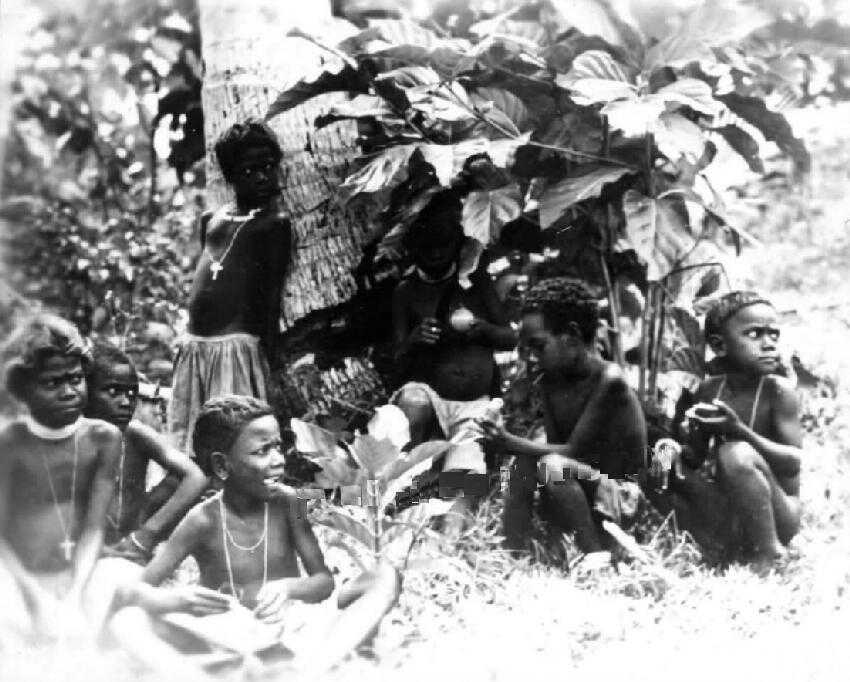
The Marines were helped by friendly Melanisian natives which the Japanese had uickly alienated when they arrived. Continuing Japanese pressure began to ground down the Marines. Military commanders report that troops lose their effectiveness if kept in combat beyond a relatively short period, The Marines on Guadanal were essentiaslly in combat for 6 months without rotation. It was an incredible feat of arms. No other American military unit in the War faced such an exended period of combat.
Many American officers looked derisively on the Japanese before Pearl Harbor. This changed with the Japanese successes in the early months of the War. Some authors have described a wave of defeatism. Even the victory at Midway (June 1942) did not totally change this at it had been an aerial battle. The Pacific Fleet's surface fleet had not yet come to grips with the Imperial Navy. This occurred in the Solomons and they faced a greatly superior Japanese force. [Generous] Nimitz transferred overall command to Admiral Bull Halsey who pledged the Navy would intensify support. This was a dangerous commitment at a time when the Japanese still had superior carrier and naval forces. Six terrible naval battles occurred in and around Guadacanal and the Solomons as the Japanese attempted to retake the island. The Japanese launched a major force to destroy American naval forces supporting the Marines.
The Imperial Japanese Navy had a very substantial submarine service. It was, however, poorly used and played only a minor role in the War. One campaign where it did play an important role was the South Pacific. The Japanese deployed submrines in the waters around Guadacanal between the Solomons and New Hebrides (modern Vanuatu). American sailors began calling the area south and east of Guadacanal Torpedo Alley. It was hear that the Pacific fleet deployed its carriers and a substantial part of its surface asssets to keep the supply lines open to the Marines on Guadcanal and to engage Japanese naval strikes at the Island. The American carrier groups were also resonsible for protecting the Allied bases at New Caledonia and Espiritu Santo. The Japanese for the most part until the Battle of Santa Cruz did not challenge the American carriers in force. It is not entirely clear why. It is clear that Yamamoto at first did not understand the importance of Guadacanal or the size of the American commitment. In addition, the American carrier strength (Enterprise, Hornet, Saratoga, and The Cactus Airforce at Henderson Field made it impossible for the Japanese to refinforce and supply their Guadcanal garrison dring the Day. As a result, they resorted to night time operations down theSlot. The Marines on Guadcanal began calling these runs "The Cactus Express". Ordinary cargo vessels were too slow to accomplish this at night. The Japanese began loading personnel and/or supplies onto fast warships, such as destroyers or other warships. The speed of these ships allowed the ships to travel down the Slot, deliver the men and supplies, and safely return all at night when the Cactus Air Force could not intercept them. The Japanese also sent ships down the Slot to shell the Marines defending Henderson Field. The Press on Guadacanal coined the term "Tokyo Express" in part to preserve signals security. The Japanese called the night-time resupply missions "Rat Transportation." The disadvantage for the Japanese was that the ships involved while fast were not very effective transport vessels. The Allies were, however, left with the daunting task of stopping the Tokyo Express with naval forces. The oproblem was that the Japanese were well drilled in night combat and had an effective torpedo which the Allies lacked. The result was a serious of some of the most intense naval battles of World War II and fought at a time when the Japanese still had an edge in naval forces and air forces.
Rear Admiral Norman Scott was assigned the task of screening Ironbottom Sound from Japanese bombarment forces sailing down the Slot from Rabaul. Rear Admiral Aritomo Goto commanded a task force with just this assignment. He had the more powerful squadron, crisers swith 8" guns. The two forces clased during the night of October 11, 1942.
Scott realised based on previous engagements around Guadcanal that the Japanese with their Longlance torpedos would probably prevail in a crusier to cruiser night action. Scott decided to deploy his force in a line-ahead formation. The destroyers were deoloyed to screen the cruisers and to illuminate angy Japanese targets sited. He would then engage the Japanese with gunfire from his cruisers. Scott's task force included two light cruisers, Boise and Helena. Both had fifteen 6" guns. Scott used the heavy cruiser San Francisco. Scott held a major advantage over the Japanese--radar. Scott and his staff had not, however, fully mastered the use of radar and his flagship did not have the most up to date radar equipment. The radar operator on Nimitz concluded that Admiral Gormely and his staff were infected with defeatism. He gave Halsey his orders to replace Gormely (October 18). It was one of the toughest assignments in the War. And he took the command just as the campaign reached a climax. America still did not have a commanding force. The Japanese naval forces were still stronger than what the U,S, Navy could muster and the Navy aircraft were still outclassed by the Japanese Zero. Nimitz did not like replacing Gormely. Not only had they been teamates on the Acdemy football team, but Halsey wanted a sea command. He met with General Vandergrift, the commander of the 1st Marine Division on Guadacanal (October 23). He askled him bluntly if he could hold Guadacanal. Vandergrift replied tersely, "I can hold, but I've got to have more active support than I have been getting." Halsey told him, "You go on back ther, Vandergrift. I promise you everything I've got." Halsey was true to his word.
Halsey and his staff determined that the Japanese were planning a major naval strike, largely from radio traffic analysis, meaning an analysis of the volume and direction of messages, and reconisance sightings.
Enterprise under repair at Pearl was huridy repaired for battle. She received the new Boffers 40mmanti-aircraft guns and new air groups (October 10). She was rushed south (October 16) and rendezvoused with Hornet, only 2 days before the battle (October 24). The two carriers became the core of Task Force 61.
Halsey was correct, hte Japanese were planning a major strike. They had at first underestimated the size of the American force on Guadacanal and the strength of the naval commitment. Thus the forces they sent against the Marines on the island and the Allied naval forces protecting the Marines failed. The force assembled this time was no half measure. And this is indicated by the Japanese name for the battle--the Battle of the South Pacific. At Truk they reinforced Shōkaku and Zuikaku with two additional fleet carriers, Hiyō and Junyō (early October). The Japanese sent south the most powerful naval task forces the Imperial Navy assembled since Miday. The Japanese had generally held their carriers away from the Solomon naval battles hopeing for a decisive strike against the Pacific fleet. This was to be their decisive stroke. An accident on Hiyō forced it to retire to Truk (October 22). Eronious reports from Guadacanal led the Japanese to think that the Army had taken Henderson Field. When a Japanese task force approached the island, Marine aviators at Henderson field sank mauled te Japanese force (October 25).
The main Japanese force proceeded south, intent on destroying the American carriers thy believed to be in the area. A major problem for the Japanese was they were never sure about just what carriers the Americans had and where they were located. They reported the sinking of the main carriers several times. Thus when they kept popping up in subsequent battles, they were unsure about what they had sunk. The Japanese force included included four carriers, three frst-line fleet carriers (Shōkaku and Zuikaku and the small carriers (Junyō). It was commanded by Admiral Nobutake Kondo. Admiral Nagumo commanded the main body carrier force. The American force was commanded by Admiral Thomas Kinkaid with what remained of the American carriers in the Pacific (Enterprise and Hornet--Task Force 61). The Battle of Santa Cruz occured when the Japanese and American carrier groups found each other. Halsey ordered Adm. Thomas Kinkaid to attack, hopeing that they might achieve another Midway. He cabeled Kinkaid, "ATTACK REPEAT ATTACK". Kinkaid launched a smll attack, but it failed to find the Japanese. The two navl forced jocked for position and finally found each other's carriers late in the afternoon. Both fleets launched major strikes. The Jpanese managed to gt their strike off first. At this stage of the War, it was still the better trained and disciplined Japanese carrier groups that had the edge on the Americans. American carrier operations were still not as discplined and were stioperating with inferior air craft types. This would, however, prove to be the last important successful Japanese carrier strike of the Pacific War. The Battle of Santa Cruz occured when the Japanese found Hornet. In firce, but confused fighting, the Japanese badly damaged Hornet (October 26) which was left dead in the water. The Japanese also badly damaged Enterprise, but as it had been obscured for a time by a rauin squall was not put out of action. Kinkaid left with the possibility of leaving the Pacific fleet without any operational carriers, withdrew Enterprise. American damage control equipment and crews were superior tothe Japanese crews and managed to get Hornet back to life. It was, however, ravaged by another Japanese air strike and had to be scuttled. The American strikes were not as coordinated as the Japanese, but American pilots did suceed in badly damaging two of the Japanese carriers (Zuihō and Shōkaku). The Japanese after finally sinking Hornet which had been reduced to a hulk, decided not to persue the Enterprise battle group. Santa Cruz was a victory for the Japanese, but yet again they did not press their victory. This is difficult to understand given the Japanese ferocity in hopeless causes later in the War. The Japanese turned back rather than launching a major attack on the Marines at Guadacanal. At the time Halsey was without carriers to oppose them. The damage to he two carriers and the terrible loss of air crews probably explain the Kondo's decesion to retire back to Truk. Admiral Richmond Kelly Turner who had predicted Pearl Harbor played a key role in keeping the marines supplied. [Spector] Not only did the Marines prevail on the Island, but the Allies sucessfully wore down the Imperial Navy. American shipyards were turning out ships at a phenomonal rate while the Japanese fleet was being steadily depleted. What could not be replaced were the superbly trained Japanese air crews. The Americans despite the furioys fighting and hits on the carriers lost only 26 aviators while the Japanese lost 148 aviators. [Lundstrom, pp. 454-56.] This in addition to Midway and the other Solomon battles would mean that the Japanese after 1943 would fight the War not only with increasingly obsolete air craft types, but with poorly trained air crews. If the Japanese were to win the War it had to be in 1942, yet they were unable to turn their still substantial naval advantage and even battle victories into victory in the campaign. In retrospect, Santa Cruise wold prove to be the last major Japanese naval victory of the Pacific War. Halsey after the Battle concluded Kinkaid hesitated. Kinkaid blamed poor communication. The break led to great animosity between the two that would resurface at Leyte Gulf. [Thomas, p. 70.] Halsey removed Kinkaid from carrier duty.
The Naval Battle of Guadacanal while not the last engaement, proved to be the decisive action of the campaign. It decided the fate of the Marines on the island. Despite their heroic resistance, unless the Navy prevailed in this action, the Japanese would have retaken the island. After Santa Cruz, the american prospecs were not good. Halsey after visiting the Marines on Guadacanal returned to his headquarters on Noumea. There he found evidence that the Japanese were preparing another major naval action, He pieced together what he had. The Enterprise had some how been patched up--again. It was at the time the only operational American carrier in the Pacific, but only barely operational. The damage sustained at Santa Cruz meant that it could not
rapidkly recover and rearm itssquadrons. He had two battleships (South Dakota and Washington) as well as crusiers and destroyers. He sent the force into the narrow waters of the Slot against ewhat coukld be a superior Japanese force. Both violated standard naval docrine. It was a risky decesion. Another Japanese victory and the Marines would have been cut off from resupply. The result was some of the most furious naval fighting of the War and the most important U.S. Navy victory since Midway. The American force sank two Japanese battleships, a heavy cruiser, and seven destoyers. The U.S. Navy lost two light crusiers and seven destoyers. The Americans also sank 10 Japanese troop transports. It was the turning point of the struggle for Guadacanal. Halsey cabeled Nimitz, "We got the bastards licked!" Nimitz cabeled "MAGNICENTLY DONE X TO THE GLORIOUS DEAD> HAIL HEROES, REST WITH GOD." The Japanese would continue the struggkle in the Slot, but never again commit such a powerful force. The key question of the battle was where were the Jappanese carriers. The Japanese after all had won the battle of Santa Cruz 2 weeks earlier. They had sunk Hornet and heavily damaged Enterprise, yet the Japanese task force had no air cover. Enterprise deployed some of its air groups to Henderson field. This proved decisive in the battle along with Washington's radar. Apparently Yamamoto concluded thar Enterprise had ben sunk are so badly damaged that it could not be deployed. While only a light Japanese carrier had ben sunk at Santa Cruz, a fleet carrier had been damaged and the air groups sustained heavy damage. Thus they were not redeployed. In fact the Japanese carriers would not be deployed again for an offensive action untill the 1944 Marianasa campaign.) It proved to be a terrible mistake. The loss of two battleships shocked the Imperial Navy. They would not again deploy capital ships to retake Guadacanal, which meabnt the island would reman in American hands. .
While the determination of the imperial Fleet had been broken in the Naval Battle of Guadacanal, the Imperial Army was still determined to retake the island. They demanded escorts and transports for the Tokyo Express. Rear Admiral Raizo Tanaka on a run of the Tokyo Express commanded a task force of eight Japanese destroyers (November 29). Six had been converted essentially to fast transports. They were assigned the task of delivering suplies to Tassafaronga on Guadalcanal at night to avoid Marine air patrols from Henderson Field. Tanaka also has the Naganami, his flagship, and Takanami for heavy gunfire. Rear Admiral Carleton H. Wright was assigned the task of interdicting the Tokyo Express. He commanded Task Force 67, a powerful combined cruiser/destroyer force. It was made up of heavy cruisers (Minneapolis, New Orleans, Pensacola, and Northampton, the light cruiser Honolulu, and four destroyers (Fletcher, Drayton, Maury, and Perkins. They sailed from Espiritu Santo. Two additional destroyers (Lamson and Lardner after an escort assignment to Guadalcanal joined Task Force 67,
Wright had a much more powerful force, but his failure to master the use of radar proved disastrous. The problem here was using radar in constricted waters, especially with a land backdrop. And American naval tactics even after several losing engagenents with the Japanese were unchanged.
Tanaka's force passed Tassafaronga point and the six fast transports (converted destroyers) prepared to deliver supplies. These supply runs were dangerous so to speed up unloading the Japanese adopted the practice of packing supplies in air-tight drums which were simmply thrown overboard along the coast where they could be retrieved by the forces on shore. As they were preparing to deliver the drums, one of the destroyers spotted the American destroyers.
About the same time, radar operators on Minneapolis, Wright's flagship< detected the Japanese. The radar operator on the Fletcher 10 minutes later also detected the Japanese 7,000 yards away. At slightly after 2300 hours, three US destroyers launched 20 torpedoes at the Japanese. The American cruisers opened fire at about the same time. The Japanese destroyer Takanami was raked by shellfire. The torpedo attack, however, failed. The Japanese launched a torpedo attack at the American gun flashes, loosing 20 tprpedos and then retiring back up the slot in the darkness. The attack proved devestating. The American cruisers did not take evasive action. Two torpedos slammed into Minneapolis blowing off the bow. Another torpedo hit New Orleans also cutting off the bow. Pensacola took a torpedo below the mainmast. The destroyer Oyashio put two torpedoes into Northampton which sank after the battle. The damaged U.S. heavy cruisers were able to put into Tulagi harbor for emergency repairs. The three U.S. cruisers were able to get back to the United States for repairs, but were out of the fight for the Solomons. The losses at Tassafaronga finally forced Pacific Fleet commanders to reassess naval tactics. The preminent naval historian described the outcome, "It is a painful truth that the Battle of Tassafaronga was a sharp defeat inflicted on an alert and superior cruiser force by a partially surprised and inferior destroyer force." [Morrison]
The results were closely studied. The conclusions included the following. First the Japanese superriority in night fighting was seen as resulting from both torpedos and night optics. The Navy saw the need to give greater attention training commanders and crews in the use of radar. Two the need for units to train together before being committed to night actions.
Tanaka made a second and third attempt to resupply Guadalcanal. These efforts proved very costly to the Japanese. American aircraft and PT torpedo-boat attacks proved increasingly effective. This significantly impeded the delivery of supplies to Lieutenant-General Haruki Hyakutake's 17th Army on Guadacanal. One assessment indicates that only about 300 supply drums got through to Guadacanal. The lack of supplies had a dreadful impact on the Japanese forces. As a result of being cut off from food and medical supplies, starvation and malaria took a serious toll. [Toland, p. 420-421.]
The Americans on Guadalcanal relieved the hard-pressed Marines with fresh Army units. The Japanese had managed to buildup a sizeable force on the island, but were unable to keep them supplied because of the American fighters on Henderson Field and naval patrols. The Emperor granted permission for the Japanese forces on Guadcanal to evacuate (December 31, 1942). Guadcanal was one of the few Pacific islands that the Japanese did not defend to the death. Kiska in the Alleutians was another island abandoned by the Japanese. Finally Guadalcanal was declared secure (February 9, 1943). The Americans had retaken the first island on the long road to Japan.
The Japanese based their defense of the Sollomons on the naval base at Rabaul on New Britain in the northern Solomons. They based their best pilots and planes there, even reassigning air crews from carriers. The Americans first considered a costly assault on Rabaul itself. Finally MaArthur and Nimitz decided to seize the islands around Rabaul--"Rings around Rabal" to cut off the base. Eventually this made it impossible for the Japanese to resupply it and subjected it to a whithering air assault. Allied troops on Los Negros in the Admiralty Islands played a major role in cutting off and neutralizing Rabaul (December 1943). The Japanese at Rabaul would not surrender until the end of the War, but after 1943 they were an isolated garrison playing no role in the Pacific.
Generous, William Thomas. Sweet Pea at War: A History of the U.S.S. Portland.
Lundstrom, John B. Guadalcanal Campaign.
Morison, Samuel Eliot.
Spector, Alan. The Eagle and the Rising Sun: The Japanese-American War 1941-1943 (Norton, 2003).
Thomas, Evan. Sea of Thunder: Four Commanders and the Last Great Naval Campaign, 1941-1945 (Simon & Schuster: New York, 2006), 414p.
Toland, John. The Rising Sun: The Decline and Fall of the Japanese Empire, 1936-1945 (Random House, 1970).

Navigate the Boys' Historical Clothing Web Site:
Tokyo Express
Cape Esperance (October 11)
Halsey Takes Command (October 18)
Santa Cruz (October 26)
Naval Battle of Guadacanal (November 12-15)
Tassafaronga (November 29-30)
Tassafaronga (December )
Final Stages
Rabaul
Sources
HBC
[Return to Main World War II naval campaign page]
[Return to Main World War II page]
[Introduction]
[Activities]
[Biographies]
[Chronology]
[Clothing styles]
[Countries]
[Bibliographies]
[Contributions]
[FAQs]
[Glossaries]
[Images]
[Links]
[Registration]
[Tools]
[Boys' Clothing Home]
Created: December 7, 2003
Last updated: 10:40 PM 3/21/2008