|
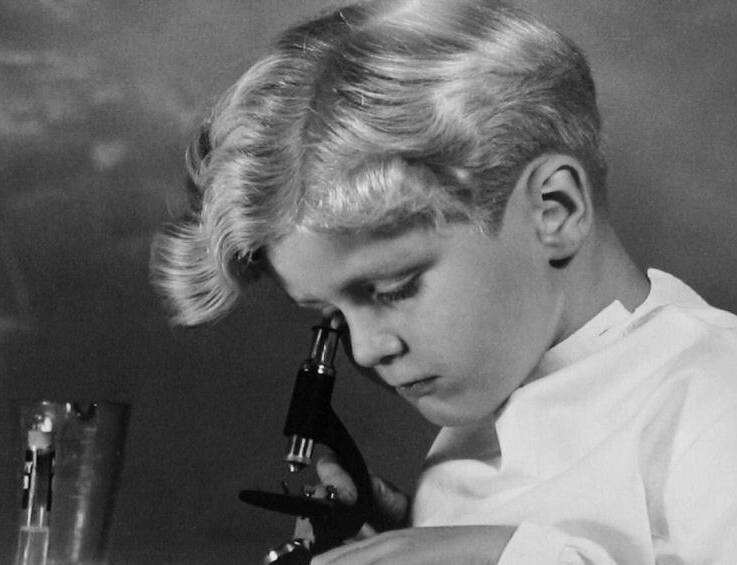
An important topic is modern science in the making the modern world. Quite a number of issues need
to be considered. Science has prevented and cured disease as well as revolutionized the world's
economy and productive capacity, allowing large numbers of people to lead comfortable lives for the
first time in history. This of course is obvious. Less obvious is the image of modern science. When I
began teaching school, I was surprised to find that science was among the least popular subjects with
American students. I was surprised at this because as a boy I found science fascinating. We are not
entirely sure why this was, but suspect teaching methods were a factor. Another observation is the
image of science among young people. Given the fact that scientists and inventors played a major role
in building modern industrial states, you would think scientists would have very positive images. But
this is often not the case. Here we suspect the popular media is a factor. To the extent that
scientists appear in cartoons, movies, and television--the "mad" scientist is a very common character.
Another factor is religion which sometimes see science as a threat.
Science is strongly associated with the Western world and for good reason. Other societies,
especially ancient Greece, medieval China, the Islamic Caliphate, and India have made vital
contributions that led to modern science. But none of these societies actually invented science,
meaning the scientific method--based on experimentation. Islamic investigators perhaps came the
closest, but never took the final step, putting all the pieces together. It was in the West and only
the West that the scientific method was developed and that the resulting science transformed society
and created the modern world. This process began in the classical era, especially in the ancient Greek
city states. One unanswered question is why China with all its riches and important discoveries did
not develop science, but this occurred in the relatively poor and backward West. It was the Italian
genius Galileo Galilei emerging out of the Renaissance who is commonly given the honor as the first
true scientist. From that point on, it was Europeans who made the fundamental advances that created
modern science as a result the modern world.
Some of the great concepts of science emerged in ancient Greece. The Greeks were very interested
in what we now call science. They were not the first people to be interested and in fact they built on
the observations of other ancient civilizations, especially the Babylonians who developed impressive
astrological capabilities. in astronomy. The unique Greek contribution was that they were obsessed with the idea of organizing their observations and creating a degree of order out of the chaos what they observed around them with the weather, oceans, heavens, and much more. As Greece emerged from their Dark Age. wealthy Greeks began to give more and more thought to the physical world and intensified their observations (around 600 BC). The Greeks were wrong about many scientific matters, but they largely began the process of thinking and many scientific and mathematics textbooks begin with Greek thinkers. But the Greeks were not scientists. Pythagoras invented the idea of a mathematical proof, an achievement of monumental proportions (about 400 BC). Greek doctors wrote important medical texts and tried to construct a scientific theory that explained diseases. They thought if you were sick you had too much or too little of four basic substances: blood, black bile, yellow bile, or phlegm. That of course was nonsense, but it was the beginning of a quest that mescal researchers still pursue. Socrates And Aristotle developed logical methods for deciding whether something was true or
not, but they were using philosophy not experimentation. The scientific method did not emerge from
ancient Greece.
Islamists claim that one of the most widely used tools to propagate Islam among non-Muslims is the
alleged harmony between its scriptures and modern science. In fact nothing can be further from the
truth. It is absolutely true that the Golden age of Islam during the Caliphate gave rise to important
scientific advances. And there were notable Islamic thinkers who advanced mathematics, medicine, and
science. Much of this, however, was based on access to classical works lost to the West. The
Caliphate translation project was an enormous collection of information. Perhaps the most important
achievement of Islamic scholarship was the invention of algebra. But it is certainly true that during
the Caliphate that the Muslim worked was more advanced than medieval Christendom. Tragically this
suddenly stopped (14th century) just as the West began the Renaissance. The reason was the increasing
hold of fundamentalist Islamic scholars on intellectual life. The problem with Islam is that many Islamic thinkers believe revealed knowledge in the Holy Koran is summit of the human intelectual life. And other Muslims believe they have a right to silence or even kill any one they believe violates Koranic teaching--witness the appearance of sword verses thriughout the Koran. This has acted to eviserate free thought and intelectul inquiry--including scientific investigation. What followed was nearly a millennium of intellectual stagnation. The Muslim world entered the 20th century as a scientific black hole. And even in the 21st century despite dizzying scientific advances in the West and oil riches in many countries, very little science of any importance occurs in the Muslim world.
One of the great questions of history is why central concepts like science, capitalism, and
democracy did not come out of China. China through much of history was richer and more technologically
advanced than the west. Even at the time of the Renaissance, the flow of technology was from China to
the West and not from the West to China. Given the level of technological advance in China, this is a
stunning fact. Marco Polo marveled as the riches and technology he observed in China (14th century).
It would seem almost inevitable that the richest and most technologically advanced society is where
science would be created as well as other aspects of modernity, but this was not the case. This is one
of the most important aspect of modern history. What would the world be like today if it was in China
when modernity emerged. But this is an issue which is rarely addressed by modern scholars. Even
scholars focusing on the rise of modernity do not tend to ask why the technological giant of the
medieval world was not where science emerged. Jared Diamond who has written important books on the
emergence of the modern world, basically just ignores China. [Diamond] In fact China would resist science and modernity even after it had been invented in the west.
India was another center of advanced human thought. Many of the same concepts that the Greeks were
known for emerged from India as well. But it is mathematics that ancient India made its most important
contribution. the Vedic texts used very large numbers. There seems to have been an ancient Hindu
fascination with numbers that we do not see elsewhere. This perhaps explains the monumental advances
that Indian scholars made with math. The all important concept of zero came from India along with the
associated advance of Arabic numbers. The term Arabic numbers of course was a result of the west
learning of the concept through the Arabs, not who conceived the concepts. More accurately they should
be called Indian numbers. The Indians were also masters of metallurgy.
Science is strongly associated with the Western world and for good reason. Other societies,
especially ancient Greece, medieval China, the Islamic Caliphate, and India have made vital
contributions that led to modern science. But none of these societies actually invented science,
meaning the scientific method--based on experimentation. Islamic investigators perhaps came the
closest, but never took the final step, putting all the pieces together. It was in the West and only
the West that the scientific method was developed and that the resulting science transformed society
and created the modern world. This process began in the classical era, especially in the ancient Greek
city states. One unanswered question is why China with all its riches and important discoveries did
not develop science, but this occurred in the relatively poor and backward West. And of course the equally important question, what was it about the West that promoted the development and pursuit of science. It was the Italian
genius Galileo Galilei (1564-1642) emerging out of the Renaissance who is commonly given the honor as
the world's first true scientist. From that point on, it was Europeans who made the fundamental
advances that created modern science as a result the modern world. The major intellectual movements
rocking the West (the Renaissance, the Reformation, and the Enlightenment), and only the west all played important roles in the development of science. None were primarily focused on science, but all helped create the intellectual environment in which science flourished. From Galileo along list of European intellectual giants fashioned modern science: Copernicus, Newton, Kepler, Boyle, Volta, Priestly, Faraday, Darwin, Kelvin, Curie, Freud, Tesla, Einstein, and many others.
Here we see two separate types of advances in science. The first was major advances that led to the development of modern sciene, namely the scientific method. The second was the advances once Galileo essentially invented the scientific method based on experimentation, freeing intelectul life from thinking based on noted experts and prior scholarship. Actually science is intrinsically linked to civilization itself, although the errly rate of change was glacial. Civilization was the result of the Agricultural Revolution. This required higly produvtive crops, all of which were based on selective breeding. Hunter gathers who began tomsettle down began to select seeds from the most profuctive plants, giving rise to theplant varities upon which agriculture and civilication was based. This occurred indeoently in mny different early civilzations. So man was usingbsciencevbefore any one hadcthe vagiest idea as to what science was. Andd this led to both math and writing. As crop surpluses developed, both math and writing wasneeded bytraders and beaurecrats. And science was not possible without math and writing. Next someone had to develp a way to develop both reasoming and knowledge. Here classical civilization (Greece and Rome) played an imprtant role. Mathamatics helped begin an unerstanding of an underlying order in nature. Gradually tenology became increasingly sophisticated even before the development of the scientific method. Much of medievl technology came from China. The universities fonded by the Church began renew the aspiration for knowledge began in the classical era. The universities began s religious institutions, but over time, secular knowledge became increasingly important. The medieval era lated about a millenium, and gradually technology became incresingly important and advanced. This was at firt most prounced in the Caliphate, China, and India, but gradually the locus of tecnology began to shift to the West. The idea of progress gradually emerged, especially in the West. Renaissance painting involved considerable techhnological principles. he final step needed to make the jump to science was printing. This occurred first in China, but it is in the West with Guttenverg (1450s) that printing began to prepare for the invention of science. Printing made posible the mass dessemintion of information. Soon after Galileo began ex[erimentung, inventing the scientific method. From that point the rate of scientific advances were exponential. Copernicus revived heliocenrism, critical for the development of physics. Advances in mathamatics (algebra, calculus, and probability) provided tools for scientific advances. The ideas of conservation and symmetry were important concepts. Another important step was the development of instruments enabling reserachers to combine inservations with meaurements and the use of increasingly sophisticated mathemtics. Researches began to assess time, change, and novelty. Important new conceps emerged in short order: atomic, cell, germ, and gene theories. New fields of knowledge appered and what was once immaterial becomes observble and real. Evolution as a scientific process becomes undestood. Statistical laws are developed and challenge determinism. Technology and science revolutionize first Europe nd grdually the rest of the world. Early advances wee the work of individuals. Europe develops institutions to conduct the increasingly challenging and costly research needed to advnce science. And at the dawn of the 20th century, quantum science and relativity bring us to our modern understaning of the world, redefining spce and time. Importance advances with understanding the universe came withthe Big Bang theory. Finally an entirely new instrument makes possible scientific advances never before possible--the computer.
Since the dawn of humanity, men have fought first for land/territory , water, other resources, and mates. Anthropologists debate the level of conflict involved. In a world with very small human populations it may hve been limitd. Then as civilization developed, differences over ideas as well: religion, politics, economics, and other issues and the level of violence rose. Theoretically science is a dispationate search for truth. But if fact there have been very hated ideas about what we now call science. This has been termed the 'science wars'. We are not sure just when this began, but they were certainly underway by the time of ancient Greece. And having the wrong ideas could get one burned at the stake as the scientific revolution called some Bobliocal teaching in question. The conflict was primarily over cosmology (17th century). Even in the 20th century science could get one killed. This was especially the case in NAZI Germany and Soviet Russia. Abd in the 19th and 20th century the debte over evolution became highly inflamed.
Any listing of important scientists leads one to a very clear observation, science was a European
invention. There were of course discoveries and observations in other regions, beginning in the ancient
world. But observations and discoveries are more philosophy. True science only began with the advent
of experimentation and the scientific method. And this appeared first in Europe and even to this day
continues only in Europe and its North American offshoot. This extended to Japan in the 20th century
and more recently Israel and the Asian Tigers, especially Taiwan and Korea. Most of the rest of the
world has no real science. One has to ask why was science invented by the West and why does the West
continue to dominate scientific inquiry. There are for example with few exceptions no notable Muslim
scientists, despite representing nearly a fourth of humanity. Muslim countries are dependent on the
West for modern technology. Which leads to a corollary question, what is it about Islam that inhibits
the development of science.
Nicolaus Copernicus was a Renaissance mathematician and astronomer who took the dangerous step in
violation of Church teachings by conceiving a model of the universe that placed the Sun rather than the
Earth at its center. Nicolaus Copernicus was born in the city of Toruń (Thorn) in the province of Royal
Prussia, in the Kingdom of Poland (1473). He and his family lived along the cultural divide of Poland
and Germany. Thus it id difficult to categorize him as either Polish or Germany, although he and his
family often supported the Polish Crown. His wealthy family enabled him to study , studied canon law,
mathematics, and medicine at Cracow, Bologna, Rome, Padua, and Ferrara. He practiced as a physician,
classics scholar, translator, governor, diplomat and economist. Almost lost because of his fame as an
astronomer his quantity theory of money, a key concept in the development of economics (1517). This
was followed by the formulation of what is now known as Gresham's law. It is his astronomical theory of heliocentrism for which he is best known. Because it was counter to church teachings and the
Reformation led to religious violence and the repressive Counter Reformation, Copernicus delayed
publication. Another factor was that the passions of the Reformation in Germany were less intense in
Poland. His eventual publication of solar system model in De revolutionibus orbium coelestium (On the
Revolutions of the Celestial Spheres) (1543) is considered a major step in the development of modern
science. Copernicus was not the first to conceive of heliocentrism which was first conceived of by
classical scholars. He is, however, the first to present it with a basis of sound mathematics. Only
near his death, however, did he dare publish his findings.
Galileo Galilei was an Italian Renaissance astronomer, physicist, engineer, philosopher, and
mathematician. He is commonly seen as the father of modern science. Before Galileo there were
important scientific discoveries that appear in the history books. The individuals involved, however,
were more philosophers than scientist because the scientific method had not been devised. It was
Galileo that placed experimentation and not just observation at the hear of scientific inquiry. And
Galileo combined experimentation with controls--essentially creating the scientific method. As a
result. Galileo played a central role in the scientific revolution that began during the Renaissance.
As a result, Galileo is a primary candidate for the greatest scientists of all time. Galileo made major contributions to the fields of physics, astronomy, cosmology, mathematics and philosophy. He improved on the telescope that enabled him to observe and describe the moons of Jupiter, the rings of Saturn, the phases of Venus, sunspots, and details on the rugged lunar surface. And like some modern
scientists, he had a flair for self-promotion. This earned him powerful friends and made dangerous
enemies. His promotion heliocentrism brought him before religious authorities in part because he
ridiculed Pope Urban VIII. He was eventually forced to recant and placed under house arrest, ending
his scientific carer, but not his ideas and the scientific method.
Antonie Philips van Leeuwenhoek was born in Delft (1632). His father was a brewer. Leeuwenhoek
spent most of his life in and around Delft. Virtually nothing is known about his childhood. We know
that he attended a school near Leyden. He went to live with his uncle in Benthuizen. He was
apprentice to a linen-draper’s shop at the age of 16 years. He was a Dutch merchant who because of his
earnings was able to pursue a passion for science. And his passion was with the new telescope and the
wondrous things that hat he was able to see. He is known as 'the Father of Microbiology'.
Leeuwenhoek developed a fascination with lens-making. His interest in microscopes, as well as his
knowledge of glass processing, resulted in important scientific advances. The ability of lenses to
magnify was discovered soon after the invention of glass. Lens were developed by the Romans with the
ability to magnify some six times. Dutch spectacle makers Zacharias Jansen and his father Hans started
experimenting with lenses, inventing the first compound micros ope (1595). It was basically a novelty
and nothing much came of it. While many people at the time were working with telescopes, Leeuwenhoek
took the early microscope and improved it, creating a scientific instrument. He was for decades
virtually the only person working with them. It was Leeuwenhoek who established that living organisms
were made up of cells.
Leeuwenhoek is believed to have made over 200 microscopes that had a rang of magnification
capabilities. He also made over 500 optical lenses. He used copper or silver to make frames for his
microscopes. He seems to have reached magnification of 275 times. As a result, he was the first human
to observe bacteria. Leeuwenhoek died in Delft (1723).
Descartes for a time dominated the world of physics, but made major errors. It was Issac Newton
that corrected those theories, making possible huge advances in physics that would change the modern
world. Sir Isaac Newton was born (1642). He was an English physicist and mathematician. He was
described in his day before the advent of the term science as a natural philosopher. What we now know
as science was still tied to philosophy. The French Enlightenment term was philosoph. Newton is
universally recognized as one of the world's greatest scientists. His master work, Philosophiæ
Naturalis Principia Mathematica ("Mathematical Principles of Natural Philosophy") laid the
foundations for classical mechanics (1687). He made many contributions to science, any one of which
would have established his reputation. He shares credit with Gottfried Leibniz for the development of
calculus. But it is in physics for which he is best known. Newton often employing mathematics made
seminal contributions to optics He is best know for his on gravity for which he is best known. Newton
in Principia formulated the laws of motion and universal gravitation, which dominated
scientists' view of the physical universe for 3 centuries as science developed -- until Einstein raised
questions which could not be explained by Newtonian physics. He employed Kepler's laws of planetary motion and applied his mathematical description of gravity. He then used the same principles to account for the trajectories of comets, the tides, the precession of the equinoxes, and other cosmological and terrestrial phenomena. Newton ended lingering doubts about the validity of the heliocentrism. Newton demonstrated that the same natural laws could explain the motion objects on Earth and in the cosmos. He prediction that Earth should be shaped as an oblate spheroid a
hypothesis that was later confirmed by others.
English naturalist Charles Darwin is one of the greatest scientists of all time. His fabled
voyage on the HMS Beagle and ensuing book Origin of the Species fundamentally changed not only science,
but philosophy as well as it so fundamentally altered man's outlook. Darwin's theory of evolution by
natural selection is now the unifying theory of the life sciences, for the first time explaining how
the the diversity of the natural world was a result of adapting to their varying environments. As a
result, Darwin along with Newton and Einstein must be regarded as the three greatest scientific minds
of all time. We note modern fundamentalists criticism that Darwin made mistakes. Actually given the
level of biological science, it is staggering how much Darwin got right. Charles' parents were Robert
Waring Darwin and Susannah Wedgwood. The Royal Navy for much of its history has been on the cutting
edge of military technology. As many areas of technology have both civilian and military ramifications,
the Royal Navy also made important contributions in many different areas. One of these areas was
natural science. Some Royal Navy ships carried Naturalists. Some of their worked carried back to
England can be seen today at Kew Gardens. One of those naturalists was the young Charles Darwin He was
essentially a gentleman companion to the 26-year-old captain, Robert Fitzroy. The Beagle was used for
science expedition. Darwin's journals are full of his observation on a range of topics, including
slavery in Brazil. He made a range of observations in South America. He found fossils in Argentina of
extinct animals that were very similar to modern species. In Chile he found marine fossils in the high
Andes. At the time geological processes were not yet understood. But it was his work on the Galapagos
off Ecuador that is best known. It was an extended voyage. Darwin returned to England after 5 years
(1836). Darwin devoted himself to years of cataloging and studying his notes and specimens. Gradually a
number of key conclusions emerged. First, evolution was how species developed. Two, this process was
gradual and occurred over long periods, even millions of years. Three, principal mechanism for
evolutionary change was a process he called natural selection; . Four, the diversity of modern species
developed from a single original life form through a branching process he called “speciation”. He spent
years working on these ideas. He was hesitant to publish understanding the public and religious
reaction to such a radical idea. Other naturalists were also reaching that conclusion. Darwin in the
end was the first to publish and developed the most complete exposition of natural selection. After
years of procrastination, fearing another naturalists was preparing to publish, Darwin finally published his great work--On the Origin of Species by Means of Natural Selection, or the Preservation of Favoured Races in the Struggle for Life (1859). The book is more commonly called The Origin of Species. It of course caused a storm of protest. He was lampooned in the press, often depicted as a kind of monkey man. Darwin followed up his great book with many other works on botany, geology, and zoology.
He died (1882) and is buried in Westminster Abbey.
Albert Einstein is widely regarded as the greatest physicist of modern times. The great theoretical
physicist and Nobel prize winner was slow to speak and not regarded as a particularly apt pupil as a
boy. He graduated as a teacher of mathematics and physics. His theory of relativity as a young
physicist revolutionized the science. He was awarded the Nobel Price for Physics in 1921. He was thus a
world renowned physicist when the NAZIs seized power in Germany during 1933. He was, as a Jew, among
the many authors who books were burned. He escaped the NAZIs and in 1935 was granted residency status
in America. His letter to President Roosevelt in 1939 played an important role in the American
decision to build an atomic bomb.
Danish Nobel laureate nuclear physicist Neils Bohr was born and lived his life in Copenhagen. He
grew up in a sophisticated and loving family. He studies physics at University of Copenhagen and worked
under J.J. Thomson, who had discovered the electron, in England. Bohr played a major role in
understanding the structure of the atom after it was conceptualized by Ernest Rutherford as a dense
miniature, nucleus surrounded by a cloud of virtually weightless electrons.
Science has prevented and cured disease as well as revolutionized the world's economy and
productive capacity, allowing large numbers of people to lead comfortable lives for the first time in
history. This of course is obvious. The work of scientists like Jenner, Salk, Sabin, Hilleman, and
others have cured many infectious diseases that would have cut countless lives short in childhood. Advances in biology, chemistry, physics, and their many sub-divisions have made modern life possible.
Less obvious is the image of modern science. Another observation is the image of science among
young people. Given the fact that scientists and inventors played a major role in building modern
industrial states, you would think scientists would have very positive images. But this is often not
the case. Here we suspect the popular media is a factor. To the extent that scientists appear in
cartoons, movies, and television--the "mad" scientist is a very common character. We are not sure why
this is the case. Perhaps readers may have some ideas. Some in the Green Movement have taken issue
with science. We suspect that the connections of science with industry have caused problems with the
increasingly strong socialist orientation in many Western countries. As this Green-Socialist alliance
appeals and the attack on the profit mechanism appeal to many in the media and academia. We welcome any thoughts that readers may have.
When I began teaching school, I was surprised to find that science was among the least popular
subjects with American students. I was surprised at this because as a boy I found science fascinating.
And science teachers can do fascinating demonstrations in their labs that teachers attempting to
explain about the subjective tense can never hope for. We are not entirely sure why such a negative
attitude toward science exists, but suspect teaching methods were a factor. Perhaps the difficulty of
the subject or the need for precession was a factor. Here we are just not sure.
Another factor is religion which sometimes see science as a threat. This was clearly the case
during the Renaissance when modern science first began to emerge from alchemy and philosophy. The
Christian Church became very hostile to science. The trial of Galileo was a turning point in science
and was a factor in southern Catholic Europe falling behind northern Protestant Europe. But that we
stress was the action of the Roman Church, not the impact of Christianity itself. In fact Christianity
was influenced by the classical traditions of Greece and Rome. And this is expressed on the importance
given to the individual. To the Greeks, man was the measure of all things. And Christianity stresses
the individual, perhaps Protestant Christianity more than Catholic Christianity, but the focus on the
individual pervades Christianity. And this focus provided the cultural environment from which modern
science grew. Of course the relationship between science and religion is an uneasy one and Christian
fundamentalists continue to reject modern science, especially evolution. They do not, however, reject
the modern world that science has made possible. Some religions are more hostile to science than
others. Islam appears to pursue the same path as fundamentalist Christians. The rejection of science
by Islam in large measure explain the decline of Muslim countries after the fall if the Caliphate.
Another question is why most of the world's important scientific work takes place in a small number
of countries. Curiously by far the major hotbed for technical advances until our modern era was China.
But China never made the step to actual science and modernity and use their many technical discoveries
to create science-based industrial societies. And modern science is today based primarily on work done
in America, England, France, Germany, Italy, Japan, and important contributions from several smaller
European countries, primarily Scandinavia and the Lowlands. National wealth and population are both
important factors, but not decisive ones. Virtually no science comes out of Saudi Arabia and other
oil-rich states. Very limited science comes from modern China, the world's most populace state, but that we suspect is about to change. Nor have major scientific achievements come from Russia despite the massive resources the Soviet Union poured into science. In fact Russia today has a third-world economy based on the export of raw materials--primarily energy. Here ironically, socialism which triumphed a scientific approach to human development, appears to have been the major impediment to science. Other countries have been impeded by cultural factors. Christianity has both impeded and promoted science. Islam today appears to be impeding the development of science in Muslim countries. Scientific leadership has changed. England was once the leading scientific nation. It was supplanted by Germany at the turn-of-the 20th century, but German science has never recovered from its war on the Jews and two world wars. America since World War II has been the leading nation in science.
The Soviet Union opened a brand new front of the Cold War with the launching of Sputnik (October 4,
1957). The launching of Sputnik was not just a technical achievement with military implications, it
also had ideological considerations. Often accounts of the Cold War focus on ideological differences
between East and West. Technology played a critical role in the Cold War which is often overlooked.
Marxists proclaimed Communism as a new, scientific approach to organizing human society. As a result,
science assumed an important ideological status in the Cold war. Obviously if Marxism was the optimal
organization of human society, the Soviet Union should be able to produce the best science. And Soviet
propaganda trumpeted Sputnik as a symbol of the superiority of Soviet science. In the long run,
superior Western technology played an important role in the West's victory. The West's superiority
was, however, not apparent in the 1950s. Communism was at the time an ideology embraced by millions
around the world. The Russian Revolution and spread of Communism to Eastern Europe and then China
seemed to show that Communism was the wave of the future. Soviet technological achievements like
Sputnik was further evidence that Communism, central planning, and atheism were the wave of the future.
An interesting topic is why it was that science and industry were first put together in the West
during the industrial revolution. And it was that combination that has revolutionized word economies
and production. There were considerable scientific advances made at other times and places that did
not lead to major industrial advances. The ancients (Greece and Rome) made notable scientific
advances. Ancient China was also a leader in many fields, in some cases centuries ahead of the west,
but often did not fully utilize those advances. Why did such an advanced country become so backward in
the 18th century. And Islamic society was technically and intellectually much more advanced than
medieval Europe. Why then did the industrial revolution take place in Europe and the Middle East
become such a technologically backward area of the world?
The most Visible demonstration of modern science and technology was the world fairs that began in
Victorian England and that subsequently were held throughout Europe and North America. The first was
the famed Great Exhibition held at London's Crystal Place.
It was masterminded by Prince Albert. And it was such a success that it was followed by a series of
such exhibitions. Prince Albert's exhibition put the technology of industrial Britain on display for
all to see. Subsequent exhibitions became more and more innovative about how to make technology
understandable to the average person. The Colombian Exposition in Chicago showcased electricity
(1893). It was also the beginning of the American postcard industry. The Chicago World's Fair was held in the middle of the Great Depression (1933-34). The New
York World's Fair show cased the World Of Tomorrow with exhibits about what the world of the future
would be like. Tragically it was held in the last fleeting months of peace before the outbreak of
World War II (1939).
Science has unlocked untold riches and enabled the average individual to live affluent, comfortable
lives that would have been unheard of a century ago. Science has also developed technologies that have
resulted in killing on an epic scale. The military potential of science has resulted in modern states
promoting their scientific establishments. Scientists have been of varied minds about their work.
Some like the scientists around Neils Bohr saw their field as pure and unsullied and sought to pursue
scientific truth which would not endanger mankind. [Segrè] In the end Bohr and his group were overrun
by the NAZIs and he had to flee his beloved country. Others have pursued their work in the interests
of their country. Here the American Manhattan
Project stands out, although some were worked out of a commitment to humanity more than American
national power. The cost of modern research has meant that scientists today almost have to work for
state-funded institutes or corporate entities. This has meant essentially a Faustian bargain. Werner
Von Braun whose dream was space travel had to make ballistic missiles for the NAZIs which mean using
slave labor in underground death traps. The nuclear weapons that the Manhattan Project scientists
developed to save the world from Hitler and the NAZIs now have the potential to destroy mankind.
Deason, G.B. "The Protestant Reformation and the rise of modern science," Scottish Journal of Theology Vol. 38, Issue 2 (May 1985), pp. 221-40. Deason provides a good summary of the debate over the Reformation and science. His conclusion is as he summarizes it is, "After brief discussion of each of these interpretations, I will argue that the strong interpretation is too strong and that the weak one can be strengthened. I will outline an indirect approach, which falls between the above extremes, and offers advantages not offered by either of them."
Diamond, Jared. Guns, Germs, and Steel: The Fates of Human Societies (W.W.Norton and Company: New York, 1997). Diamond explains persuaively why modernity did not emerge in Africa, the Americas, and Oceania, but not why it did not emerge in China, India, and the Middle East.
Segrè, Gino. Faust in Copenhagen: A Struggle for the Soul of Physics (Viking: 2007), 310p.

Navigate the Children in History Website:
[About Us]
[Introduction]
[Biographies]
[Chronology]
[Climatology]
[Clothing]
[Disease and Health]
[Economics]
[Geography]
[History]
[Human Nature]
[Law]
[Nationalism]
[Presidents]
[Religion]
[Royalty]
[]
[Social Class]
[Bibliographies]
[Contributions]
[FAQs]
[Glossaries]
[Images]
[Links]
[Registration]
[Tools]
[Children in History Home]