|
The Russo-Japanese War developed out of the competing designs of the Japanese and Russian Empires over Manchuria and Korea. Resource-poor Japan coveted the resources of Manchuria where local war lords limited the authority of the Chinese government. Russia's control over Siberia was tenous. Only the Trans-Siberia Railway connected the two. Resistance to Tsarist absolutism was growing in Russia. Minister of the Interior, V.K. Plehve, commented "In order to hold back the revolution, we need a small victorious war" (early 1904). Russia did sot see Japan as major threat and refused to negotiate spheres of influence which would allow both countries to persue their interests. Japan launched a suorise attack--never bothering to declare war. The Japanese Navu bottled up the Russian Pacific squadron at Port Arthur and then seized it by a land attack (1904). A Russian Army was defeated at Mukden. The Russians massed their Atlantic squadorn and made made an epic voyage to engage the Japanese Imperial fleet. The Japanese destroyed the Russian squadron at Tsushima (1905). Most Europeans were surprised that the Japanese had the capability to defeat a European naval force. American President Theodore Roosevelt was instrumental in negotiating the Treaty of Portsmouth ending the war. The War was a major factor in bringing about the Russian Revolution of 1905. It also marked the emergence of Japan as Asian powerhouse.
The Mongols imposed their control over what is now Russia (1240). The Golden Horde imposed tribute on Russian principalities. The Battle of Kulikovo is seen by historians as the single most important event in medieval Russian history. The Battle of Kulikovo was fought September 8, 1380. The Russians led by Dmitry Ivanovich, prince of Moscow and grand prince of Vladimir defeated the Golden Horde. It showed the developing military power of the Russians. After Kulikovo. Muscovy as a result of its military leadership rapidly emerged as the leading Russian principality. This was the beginning of the Russian state which grdually developed into the Russian Empire. Unlike the European tates to the west, Russia was not surrounded bu\y other competing states. Thus Russia was able to expand to the south and east, eventually to Siberia and the Pacific Ocean as well as the Ukraine and Black sea. This gave the Russians the population and resourcs to compete with the economically and technologcally more advanced, but smaller European states. Russia emerged on the European stage as a great power in the Great Northern War (early-18th centuy). Russia played a major war in the Napoleomic Wars. With its position in Siberia and China's power declining, Russia eventually came into conflict with Japan over Manchuria and Korea (late-19th century).
The Shogun finding foreigners to be a destabilizing to stabilize force, decided to isolate Jaoan. The United States forced Japan to open up to the outside world (1850s). This soon led to the Meiji Restoration (1870s). The Japanese began moderizing Japan economically and technologiclly, but not culturally. apan isolated itselfwith the Menji Restoration began to build a modern industrial economy. And along with a modern economy, Japan began building other important institutions like a public school system. Japan thus dnterec the 20th century as the only state in Asia wih a developng inustrial economy or an educated population. Along with a modern economy they created a modern army based in the Prussian Army and a navy based on the British Royal Navy. And with declining Chinese power because of a refusal to modernize, Japan began to build an empire. This began with the First Sino-Japanese War (1894-95). Japan acquired Formosa (Taiwan) and began to expand economically into Korea and Manchuria. Manchuriahad been part of the Chinese Empire and Korea and Chinese tributary state. Here the Japanese came into conflict with the Russians. The British concerned about Russian exopansion had fought a war with Russia in the Crimea to prevent the dismemberment of the Ottoman Empire (1850s). The Britih were also concerned anout Russian expansion into central Asia, threatening India. The British saw the Japanese as a potential ally against further Russian expansion and signed a naval treaty (1902). The British thus played a major role in helping Japan build a modern navy. And after acquiring Formosa, the resource-poor Japanese also began expanding economic and commercial interests in Korea and Japan.
China's experiece in the 20th century was the most turbulant of any great power. It began with the Boxer Rebellion (1900) which exposed the weakeness of decadent Manchu dynasty. China had viewed itself as the greatest world power and other countries of little importance. Growing European power by the 19th century had enforced many indignaties on China, begnning in particular with the Opium Wars. European countries enforced inequitable treties and carved out treaty ports. Japan even seized Formosa island (modern Taiwan) (1895). There were two major responses. One was a desire by progressive reformers to modernize China by adopting modern technology and institutions along the lines being persued in Japan. The other was a desire to drive out all foreign influence and maintain traditional culture. Dowager Empress Cixi suppressed the progressive reformers . Chinese opposition to European encroachments expoded with the Boxer Rebellion. It was put down by coalition of countries, including Russia and Japan. As part of the operations against the Boxers, Russian forces moved into Manchuria. After the Boxers were put down, the Russians refused to withdraw from Manchuria.
Manchuria was nomially part of China. The Russo-Japanese War developed out of the competing designs of the Japanese and Russian Empires over Manchuria and Korea. Resource-poor Japan coveted the resources of Manchuria where local war lords limited the authority of the Chinese government. Russia's control over Siberia was tenous. Only the Trans-Siberia Railway connected Siberia with Eutopean Russia. The Russias had forced the weak Chinese Imperial Government to grant a concession allowing it to build a railway system in Manchuria. This provided the infrastructure with which to exploit Mnchurian resources. The Russians also acquired the ice-free Port Arthur. Russia did not see Japan as major threat and refused to negotiate spheres of influence which would allow both countries to persue their interests. Resistance to Tsarist absolutism was growing in Russia. Minister of the Interior, V.K. Plehve, commented "In order to hold back the revolution, we need a small victorious war" (early 1904).
The Japanese made several initiatives to esablish a undrstanding with the Russians in Manchuria. The Japanese were interested in both raw materail and potential markets. Bordering Korea which the japanese were converting in to a colony, Manchuria was an obvious potential market for Japanese industrial output. The Russians did not reply seriously to the Japanese proposals. Tdsarust officials like other Europeans did not take the Japanese seriously. Their view was essentially tht Japan was another Asian country to be dictated to and not negotiate with. No Asian country had defeated the Europeans for centuries. The Japanese suddenly after receiving no satisfaction, attacked the Russian Pacific fleet without declaring war. The Japanese had defeated the Chinese (1894-95), but taking on the Europeans was a very different matter. This worked well for them, but set a tradition that would lead to disaster with the Americans. The Russians were starteled both with the attack and the effectiveness of the Japanese military. It was an audacious act. For the first time an Asian nation was taking on the Europeans with modern weapons. It became a matter of great natioaml pride for the Japanse. We see school children at railway stations seeing off the soldiers to fight the Russians. They sang war songs to the soldiers interspersed with 'Banzai !' chants.
The Russo-Jaapnese War involved three major engagements, two naval engagements and a land campaign. The Russians were astonished the Japanese military prowess. Russian milotary victoroes in Euroope were often gained by the size of the armies deployed. Overwhelming the Japanese by weight of numbers was not possible bcuse of th limtations of the Trans-Siberian Railway. The Japanese first executed a surprise attack on the Russian Pacific fleet. The ininitial engagement was inconclusive, but the Japanese largely destroyed the Russian Pacific fleet in subsequent engagements. The war than shifted to a land campaign. The Japanese than attacked Port Arthur overland The campaign was setteled at Mukden with a battle that has largely been ignored by historians. As a result of Mukden, Port Arthur was cut off and after a protracted seige finally fell to the Japanese. Having achieved their primary goal, the Japanese showed little interest in pressing on into Manchuria and Siberia. The War then began a basically naval war. The limited capacity of the Trans-Siberian Railway limited the Russian's ability to assemble and supply a major land army in East Asia. Rather they decided to resolve the issue at sea. The Russians assemeled a large naval force and sailed in round the world. The war was decided by a decisive naval enggement in the Sraits of Tsushima. This became ensrined in the Japanese naval tradituon, much like Trafalgar for the British. And the docrine of the decisive naval battle (Kantai-Kessen) became the centrer pierce of Japanese naval doctrine.
The Imperial Army's most revered figure was General Maresuke Nogi, the Emperor Meiji's principal military adviser. Over 58,000 Japanese soldieres were killed in the War--referred to as human bullets. The dead included Nogi's two sons. After the War, Nogi asked the Emperor for permission to commit suiide. The Emperor asked that he postpone this until he had passed away. Nogi did so, committing ritual suiside on the day of the Emperor's funeral (1912). Dressed in white robes, he dispatched his wife with a dagger to her neck and then disemboweled himself. He had helped teach Prince Hirohito who referred to him as "Schoolmaster". The Prince was 12 years old. He cried upon hearing the news. [Thomas, p. 14.]
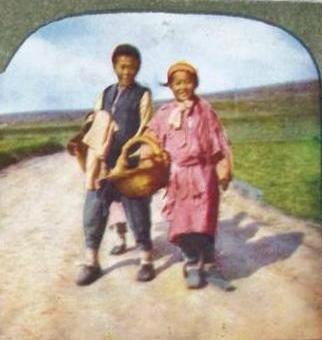
The land phase of the Russo-Japanese War was fought in Manchurian for control of that resource-rich Chinese province. Chinese civikians weree vaught in the crossfire between the two warring parties and sometimes the Chinese police. And this was not just the normal civilian casualties of war. Terible atricuties were carried out. Given the horrendius behavioir of Japabese triips dyring the Second Sino-Japanese War/World War II, it might be thoufgt that the Japanese were kargely resoinsible. It was, however, nit the case. The Japanese were not invilbed in humanirarian operations. Their troops behaved largely in acckird to what was within the bounds of normal military behavior at the time or at least somewhat akin to it. They could be harsh, esoecially with indivisualks suspcted of spying. There was, however, mone of the barbaeities conducted in Wirkd War II. It was the Russians who regularly abused Chinese civilians. Looring and raoingbwomen, often killing them. The Chinese in particularly feared the Cossocks.
The Russians were forced to sue for peace. American President Theodore Roosevelt was instrumental in negotiating the Treaty of Portsmouth ending the war (September 5, 1905). Roosevelt would win the Nobel Peace Prize for his efforts. The British also counseled the Japanese to make peace. Russian rebounced its claims to Port Arthur, southern Sakhalin (Karafuto) Island, and the Kuriles. The Japanese also gained rail rights in Manchuria, although both countries agreed that Manchuria should be considered an integral part of China. While Japan was the claer beneficairy, influential voices in Japan complained that the Russians should have made even more concessions. It was widely felt in Japan that this was another example of European powers intervening to deprive Japan of the full fruits of victory. This time the ill-feelings weere aimed at America.
One of the first foreign policy actions of Meiji Jaoan was to exoand its infkuencevin Korea. This was accomolished through the Japan–Korea Treaty (1876). Meiji government, military, and business officials initiated a process of integrating the Korean economyy and expanding political influence. This would bevo,rba a major issue leading to the First Sino-Japanese War (1894-95). Japan hads, as a result of the Sino-Soviet War (1894-95) largely ousted China from the Korean Peninsula and oproceeded to expand theor influence and position in Korea. They were fearful that Russia might intervenene in Korea. This was the prime reason for the Anglo-Japanese Naval Alliance (1901). Allied with Britsin, the Russians would have to give considerable thought to any military intervention in Korea. The Russo-Japanese War was fought over control of Manchurua to the north (1904-05). The Korean Empire wascreduced to a Japanese protectorate by the Japan–Korea Treaty (1905). Asca resukr, the country was indirectly ruled by the Japanese by the Japanese Resident-General. Japan formally annexed the Korean Empire (1910) by the Japan–Korea Treaty of thatbyear. This was done without the consent of Gojong, the regent of the Korean Emperor Sunjong. [Duus, pp. 18–24.] Korea becane a colony administered by the General Government based in Keijō (Gyeongseong) which governed with near-absolute power. Japanese rule began the Japanization of Korea ordering anong steps that Korean schools be taufgt in the Jaoanese kanguage. The Japnese hreatly accelerating industrialization efforts began by the Gwangmu Reform. Natural resources in thevnirth becamevthe basis for an industrial complex.
The Battle of Tsushimfa had a major impact on 20th century naval thinking. The Japanese signed a Naval Agreement with Britain (1902). They had been schooled by Royal Navy officers. Admiral Lord Nelson became a revered naval figure. A lock of Nelson's hair in fact was was enshrined at Eta-Jima, the Japanese naval academy. Individually wraped bricks had been brought from Britain to build Eta-Jima. The Battle of Trafalgur which established the Royal Navy's dominanve for a century was extensively studied. The Battle of Tsushima Straits cemented the Japanese commitment to a single descisive battle as as a basivc tennant in naval warfare Kantai Kessen. And as Japan would probably face a Western advisary as a weaker naval force, the idea od a surprise attack to redress any balance of forces became deeplu ingrained in Japanese naval thinking. A decisive fleet action was a tennant also widely held by Western naval strategists. That decisive fleet action would finally be fought by Japan and America in World War II--the Battle of Leyte Gulf (1944). It was the largest naval battle ever foiught and probably the last in a long series of epic naval battles begun at Salamis. The battle had another major impact. First Lord of the Admiralty Jackey Fisher recognized that the only ships that had any impact on the outcome of the battle were those with big guns. Battle ships at the time bristled with a large array of small guns. Tsushima showed that it was the big guns that would settle the issue in a major fleet action. Fisher proposed the first all big gun battleship. The first one built was HMS Dreadnought which helped to fuel the European naval race.
Admiral Togo returned the fleet to Tokyo on the anniversary of Nelson's victory at Trafalgar.
The Russo-Japanese War marked the emergence of Japan as Asian powerhouse. It was also the beginning of the emergemce of Asia from European colonialism. This was the first time since the onset of European colonialism in the 16th century that an Asian power had sucessfully resisted a European army or naval force. The Jpanese studies this, especially European operartions im hima. The Meiji Restoratiopn wsas primarily by a dsore yto build a strong modern nation that could resist European incursions.
The War with Japan was a major factor in bringing about the Russian Revolution of 1905. The War had a range of consequences. One was inflation whih led to increases in the price of food and other goods (1904). Poorly paid Russian workers were barely able to afford essebtials before inflation drove up prices. Inflation rose so rapidly that workers found their wages could no longer pay for the food need by their families. Workers led by the new Assembly of Russian Workers (SRW) demanded wage increases. Management at the Putilov Iron Works fired four ARW members. ARW leader Father Gapon began to organize industrial action. It was the first effective industrial strike in Russia. Over 110,000 workers in Petrograd (St. Petersburg) went out on strike. Father Gapon deciding it was pointless to work with management which refused to deal with him, made a personal appeal to Tsar Nicholas. He compsed a petition describing the workers' sufferings and listing their demands. Father Gapon called for a reduction in the working day to eight hours which was becoming standard in Europe. Gapon also wanted an increase in wages, improved working conditions, and an end to the War with Japan. The petition was carried by a peaceful procession of workers to the Winter Palace. There the workers were attacked by the police and the mounted Cossacks. The result was more than 100 workers killed and about 300 wounded. This became known as Bloody Sunday in Russian history. The violent response of the Tsarist establshment launched the Revolution of 1905. Workers in other industrial cities went out on strike. The Revolution was not limited to workers. University students also went out on strike to support the workers. The universities had to close down. Students complined of the lack of civil liberties. There was considerable sympathy for the workers among the middle class, including lawyers, doctors, engineers, and other middle-class workers. Middle class organizers established the Union of Unions and demanded that the Tsar establish a constituent assembly. The support of the middke class was an ominous development for the Tsar. Even more important was the beginning of a crack in the military which kept the Tsar in power, Discipline in the military was strict and conditioins for the ordinary soldier and sailor were harsh. Sailors on the Potemkin battleship at Petrograd protested about the serving of rotten meat (June 1905). The captain ordered men he identified as the ringleaders to be sumarily shot. The firing-squad , however, refused to carry out the order. The crew then threw the captain and his officers overboard. The Potemkin Mutiny began to spread to ther navy and army units. The industria strike continued to spread. The crucial railwaymen went on strike (October 1905). This brought the Russian industrial economy to a stop. Leon Trotsky and other Mensheviks (Socialists) established the Petrograd Soviet which would play a major role in Russian history. This set arecedent and more than 50 of these soviets were organized in the major cities throughout Russia. The Revolution shook the Tsarist Empire to the core. Tsar Nicholas had been forced to grant a constitution. This created a duma or parliament. The Tsar was back in control (1907). The Tsarist state was irevocably weakened.
Japan joined the Allies almost at the onset of the War (August 23, 1914). It seems surprising that Japan would have entered the War so quickly when the German Army was marching through Belgium and seemed likely to reach Paris. Japan had signed an Alliance with Britain (1902), but it was not aimed at Germany nor did it require Japan to join the Allies when war broke out in Europe. The British fearing that the German Far Eastern Squadron would disrupt trade, asked the Japanese for assistance. The Japanese Government for largely domestic reasons quickly agreed to the British request. Germany had acquired several colonial possessions, including concessions in China and Pacific islands. The Germans build a major naval base at Tsingtao. It was hear that the only major engagement in the Far East was fought. The Japanese supported by the British succeeded in seizing Tsingtao a very little cost in a conbined land sea operation (November 1914). More importantly for the future, the Japanese seized control of the formerly German owned Shantung Railway. Japan seized German Pacific islands without resistance, includung Palau and the Marshall, Caroline, and Marianas islands. This gave them the naval bases at Yap, Ponape, and Jaluit. Japanese naval surveyors subsequently discovered the potential fleet base of Truk, and after the war built a major naval base there. As agreed by the Allies, the Japanese seized German colonies north of the Equator while those to the south were seized by British and Dominion forces. A New Zealand force escorted by British, French and Australian warships seized German Samoa (August 28, 1914). A British ship seized the guano-mining island of Nauru. The Australian Navy seized the Bismarck Islands (September 1914). The German forces surrendered German New Guinea and the Bismarck, Admiralty, and Solomon Islands. After seizing the German bases, the Japanese Navy assisted the Allies in convoy protection from German raiders. There were small German military units in these colonies as well as civilians. We do not notice any attrocities by the Japanese during World War I like they committed during World War II. After the War, the Treaty of Versailles awarded Japan a mandate over the islands.
A nationalist revolution in Bejing ended the Chinese Empire (1911). And then during World War I the Russian Revolution began (1917). The Japanese played the Great Game in the Far East that the British played in Central Asia. The Japanese played on Moslem loyalties and pan-Asian feelings to gain allies against the European Russians. Gradually the Chinese began to see the Japanese as the greatest threat. The Japanse had seized Chinese territory in the First Sino-Japanese War (1894-95). And the gains that Japan achieved during the Russo-Japanese War were in Korea which China included within its area of influence ir in Manchuria which China considered to be part of China proper. Finally the Twenty-one Demands fundamentally changed Chinese attitudes toward Japan. The Twenty-one Demands were a document listing v21 demands that Japan presented to the Chinese Government during World War I (January 1915). Jaapan felt embolded by its role assisting the Allies in the War. The purpose was assure Japan's permanent regional superiority to China. The Japanese divided their 21 Demands into five major groups, but the purpose was essentially to turn China into a vast Japanese protectorate. .
The Japanrse organized the Kwantung Army after World War I (1919). The initial purpose was to garrison concessions in the Kwantung Peninsula and Manchuria that Japan had acquired after defeatingthe Russians in the Russo-Japanese War (1904-05). It gradually developed as a law into itself beyond civilian control. The growing influence of the military inJapan itself meant that the Japanese Government was aunable to restrain the highly nationalistic Kwantung Army command. The Kwantung Army engineering the Manchuria Incident (1931). This was the pretext for the subsequent invasion and annexation of Manchuria. Officers of Kwantung Army (Kanji Ishihara and Seishiro Itagaki) instigated what has become known as the Manchria Incident. They blew up a section of railroad track and blamed it on Chinese. Ishihara's idea was that Japan had to control the resources of Manchuria to prepare for a future war. The Incident was staged without informing the Tokyo government or even Imperal Army headquarters in Tokyo. Foreign minister Shidehara ordered Kantogun to refrain from further military action. Ishihara ignored the order. Chiang refused to commit KMT troops. The Jaaoabese quickly occupied all of Manchuria. This Japanese occupation os commonly seen as the first agression of World War II. It also demonstrated how the Japanese civilan Government could not control the country's military. The Kwantung Army administered Manchuria essentially as a military fiefdom. The goal was to urn Manchuria into a second Japanese homeland, the problem was to convince Japanese colonists to emigrate to Manchuria.
One interesting question is how ordinary Japanese people though about war and empire building. We know how the military thought, but the attitudes of ordinary Japanese people is less carefully documented. And for HBC we are especially interested in how children felt which of course wokld be a reflection of their parent's attitudes, meaning the fathers' attitudes, and what they were taught in school. One interesting piece of evidence is a 1904 stereoscope card produced by the Keystone Company. The stereoscope was a popular item found in parlors all across America. At the time, photographs were only beginning to be featured in newspapers and magazines. The caption was,"14061: The Mikado's loyal subjects--reading the war news." When the card was made, the War was still in progress. The children look too youung to be reading. We are not sure to what degree the photograph was staged. The back of the card has some fascinating information about popular attitudes. It should be remembered that this card was produced four decades before the Pacific War. It is especially interesting giving thec fact that many Japanese today believe that their country was 'tricked' into the Pacific War with America. The military of course by this time compoletely controlled the Government and stringly influences education. Yet we see very nationlist and militaritic attitudes, decades before the military seized control of the Government.
The Russo-Japanese War left a lastiung imprint on the Jaoanese millitary. The militarists believed that they coulld defeat a larger more powerful by launching a surporoise attack damaging an eneny's dleet and seizing strategic positions. And then winning a decisive naval battle. The idea of a decisive battle became cemented in naval minds and planning -- Kantai Kessen. Japanese admorals believed that the demoralized foe would not have the will to coninie the war for far-away teritories. Of course that will sound very fmiliar to Japan's strategy in the Pacific War. Only for the Pacific War they had a ally--NAZI Germany which hd conquered much of Europe and at the time of the Pearl Harbor attack was only few miles from Moscow. And they faced America which was still not armed for war. Japan carefully planned the war with Russia, but not how to end the War. America intervened to help negoite a peace settlement. Again in the Pacific ar, Japan caefully planned a surprise attack on the Pacifiv Fkeet nd a an extensive militry campaign. ht they did not plan out again was how to end the War. This tim not country wouid intervneto help ngotizte a settlemnent. And the American public, as a result of Pearl Harbor was not interested in a settlement. They wanted victoiry. And had the industrial capacity to win that victory. The Japese understoiod that the United Stats was an industrial power. What they did not believe weas that the Americans had the warriur spirit to fight a war. This was the final flaw in their war strategy.
Duus, Peter. The Abacus and the Sword (University of California Press, 1995).
Northrop, Henry Davenport. Flowery Kingdom and The Land of Mikado or China, Japan and Corea, (London, Ontario: McDermid & Logan, 1894).
Thomas, Evan. Sea of Thunder: Four Commanders and the Last Great Naval Campaign, 1941-1945 (Simon & Schuster: New York, 2006), 414p.

Navigate the Children in History Website:
[Return to Main 20th century war page]
[Return to Main Japanese Imperial Navy page]
[About Us]
[Introduction]
[Biographies]
[Chronology]
[Climatology]
[Clothing]
[Disease and Health]
[Economics]
[Freedom]
[Geography]
[History]
[Human Nature]
[Ideology]
[Law]
[Nationalism]
[Presidents]
[Religion]
[Royalty]
[Science]
[Social Class]
[Bibliographies]
[Contributions]
[FAQs]
[Glossaries]
[Images]
[Links]
[Registration]
[Tools]
[Children in History Home]