|
Czechoslovakia's neighbors took the opportunity to make their own demands. Czechoslovakia is a nation that had never before existed. It was created out of several different national groups. The Germans in the Sudetenland were just one of those groups. Besides the Czechs and Slovaks tkere were Hungarians, Poles,
and Ukranians. These other nationalities were useful to Hitler because they helped to provide some cover for the destruction of Czechoslovakia. This was needed because a German move on Czechoslovakia meant a violation of the Munich agreement. The Poles in October demanded Teschen. The Hungarians in November demanded a strip of territory with over 1 million people. Poland and Hungary seized much of the Czech territory they coveted. The Czechs also had to grant autonomy to Slovakia and Ruthenia, which was renamed "Carpatho-Ukraine". he NAZIs for a time promoted pan-Ukrainian agitation in Ruthenia, until the signinging of the NAZI-Soviet Non-Aggression Pact temporarily changed the direction of German foreign policy.
Czechoslovakia is a nation that had never before existed. It was created out of
several different national and ethnic groups after World War I. It had been part of the old Austro-Hungarian Empire. The Germans in the Sudetenland were just one of those groups. Besides the Czechs and Slovaks there were Hungarians, Poles, and Ukranians. The Czechs and the Slovaks were the majority, but the country was largely run by the Czechs. Czechoslovakia was the only country in Eastern Europe that approached democracy in the Western sence. Bur even in Czechoslovakia the Czechs cintrolled the government to the extent that there was considerable oposition among the ethnic minorities and not just the Germans.
These other nationalities were useful to Hitler because they helped to provide some cover for the destruction of Czechoslovakia. This was needed for propaganda purposes because a German move on Czechoslovakia meant a violation of the Munich agreement. The British even Chamberlain were not fooled. By seizing Czechoslovakia it became clear even to arch appeasers that Hitler's ambitions were not limited to uniting Germans,. He had embarked on a much more expansive war of conquest. Eve so the artifice was useful in Hitler's mind. He had convincd himself that the British and French would not opposed him as he began planning his next move--the conquest of Poland. And this time he meant to have his war. Foreign support was also useful in justifying the seizure of Czechislovakia to the the German people.
The eastern-most province of Czechoslovakia was Ruthenia. It had been claimed by Hungary. The post-World War I peace settlement had awarded most of Ruthenia to Hungary, but this northern area was awarded to Czechoslovakia. Yhis was formalized in the Treaty of Trianon (1920). The population included large numbers of ethnic Hungarians along with Ukranians. The Hungarians after thec Munich Conference renewed their own demands for the rest of Ruthenia (November 1938). They demanded demanded a strip of territory with over 1 million people and the remainder of Ruthenia, which was renamed "Carpatho-Ukraine". This all fit in with Hitler's plans to destroy the remainder of Czechodslovakia that was left after the seizure of the Sudetenland. Hitler offered the remainder of Rutenia to met with Admiral Miklós Horthy, the Regant of Hungary. A frontier incidentwas staged (March 15) and as German troops moved into Prague, Hungarian troops moved into Rutenia. There was no resistance from the Czechs, although some of the Ukranians resisted, trying to set up a sepsarte state. Problems developed, howver, when the Hungarians kept going into Slovakia. Hitler had to order the Hungarians to stop. After World War II, northern Ruthenia (Carpato-Ruthenia) was annexed by the Soiviet Union and assigned to the Ukrainian Soviet Socialist Republic. After the disolution of the Soviet Union , the Ukraine along with Carpato-Ruthenia became indeopendent (1991).
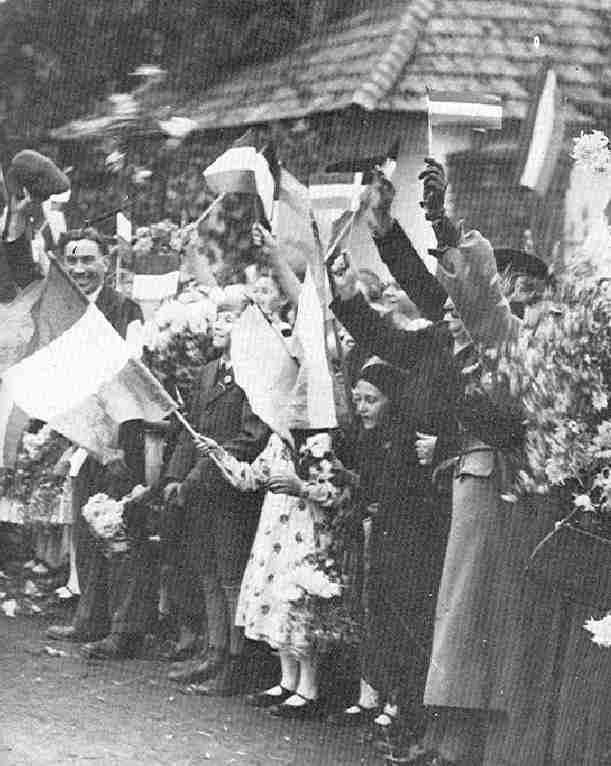
Zaolzie/Teschen was a smallm former Austro-Hungarian territory that had claimed after World War I. The Czechs had seized and defended it, but the Poles continued to claim it. The Polish Army occupied the Zaolzie/Teschen region of Czechoslovakia which had a Polish minority (October 1). The Polish forces were commanded by General Władysław Bortnowski. They annexed an area of 801.5 km² with a population of 227,399 people. Within the region which Hitler ha initially demanded was an important rail center -- Bohumín. The Poles regarded the city asimportantband dmanded it. Polish commander, Colonel Józef Beck acted quickly to prevent German occupation. The Poles presented an ultimatum to the Czech government (Septemberv 30). It demanded the immediate withdrawl of Czech troops and police. The Czechs totally absorbed with the withdrawl from the Sudentenland rekented. Hitler who was already thinking about Poland was willing to accept the Polish action. It help confuse the situation as did Hungarian pressure on eastern Czechoslovakia. Germany did not stand out quite as starkly as an agressor country. Now both Poland and Hungary were involved. The Polish Government insisted that the Poles in Zaolzie deserved the same treatment as the Germans in the Sudetenland. The Hungarians would use the ame argument in the east. The Polish population in Zaolzie enthusiastically welcomed the arrival of Polish troops, feeling that they had been liberated. Polish authorities appointed Poles (from Poland, few local Poles) to the positions formerly held by Czechs. The Poles institute a range of haesh regulations. Poliswas made the official language. Speaking Czech or German in public was prohibited. And authoritis began deportinh Czechs and Germans and a process of Polonization began. Czech organizations were outlawed. Czech language schools were closed. Some 35,000 Czechs emigrated to Czechoslovakia, some voluntarily and others forcibly.
Two political factions developed among the local Polish population. Socialists formed the core of the opposution. Rightists supported the Government. Open Socialist invididuals were fired from any Government jobs thaey might hold. Zaolzie would, howver, remain a part of Poland for only 11 months. h situation changed radically agained when Hitler invaded Poland (September 1939).
The Czechs had been forced to grant autonomy to Slovakia. The Czchoslovak Government's inability to protect the reduced border with Hungary had the affect of increasung both Slovak and ruthebnia national sentiment. Nationalit parties gained support. The Slovak National Unity Party won 97.5 percent of the Slovak vote (November 8, 1938). This was essentially a vote for independence. And it created a one-party state. The Czechosvak Parliament granted Slovak autonomy (November 19, 1938). Czechosvakia's name was changed to Czecho-Slovakia. With the Grman invasion (March 15), the Slovaks became a slaishly obedient NAZI protectoratev nominally independent. It became an enthusiastic participant in the Holocacaust in part to cury German favor.
The NAZIs for a time promoted pan-Ukrainian agitation in Ruthenia. Soviet supression of the Ukranians, especially the Ukranian Famine (1932-33) is one of the great attrocities oif the 20th century. There was as a result considerable anti-Soviet feeling among Ukranians, especislly in the western Ukrsine. The signing of the NAZI-Soviet Non-Aggression Pact temporarily changed the anti-Soviet direction of German foreign policy. The same was true of Soviet foreign policy, which shifted the anti-Fascist foreign polivy and saw to it that Communist partoies around the world did the same

Navigate the CIH World War II Section:
[Return to Main Munich page]
[Return to Main Sudeten history page]
[Biographies]
[Campaigns]
[Children]
[Countries]
[Deciding factors]
[Diplomacy]
[Geo-political crisis]
[Economics]
[Home front]
[Intelligence]
[POWs]
[Resistance]
[Race]
[Refugees]
[Technology]
[Totalitarian powers]
[Bibliographies]
[Contributions]
[FAQs]
[Images]
[Links]
[Registration]
[Tools]
[Return to Main World War II page]
[Return to Main war essay page]