|
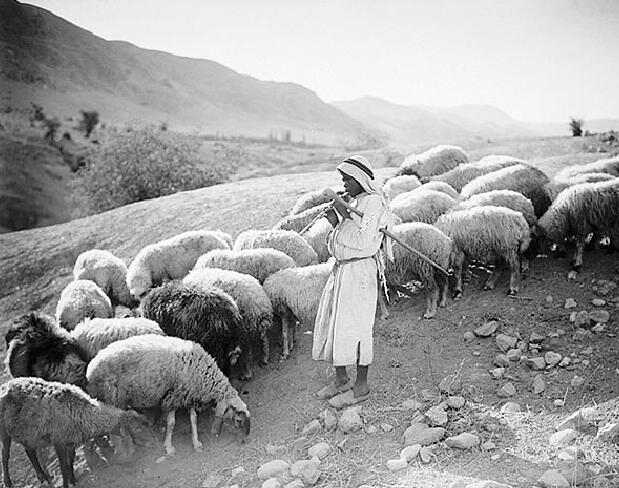
The Middle East was the cradel of civilization because of the existence of appropriate flora and fauna in conjuction with river vallies. The Middle East was also the source of three of the world's great religions (Christianity, Islam, and Judaism). Since Mohammed's inspiration, the region has been dominated by Islam. And other the Caliphate was a center of tolerance and leaning exceeding that of any European state. Eventually Islam turned away from science and learning toward an increasingly faith-based world outlook. This occurred at the same time that the Renaissance began to move Christian Europe in just the opposite direction. The result has been a long-term cultural and ecinomically decline. The only exception was the Ottomans, in lrge measure because there moderate and tolerant approach to Islam. This left the Middle East and North Africa among the poorest in the world. The Middle East became part of the Ottoman Empire. North Africa developed as pirate states living off slavery and pilaging the increasingly rich commerce of Europe. Most of the regions tends to be poor and unproductive, both in cultural (measured in terms of artistic, literary, medical, and scientific achievement) and economic (measured in terms of production and living standards) areas, as well as intolerant toward other religions, women, and minorities. The major exception in terms of living standards, but not cultural and economic productivity and tolerance, are the oil states. Despite the clear historical record, in the region are convinced that what is needed to improve their society is a return to a more puritanical Islam, esentoally returning to the Medieval era. Here are the national histories we have compiled on Middle-Eastern and North African countries. Generally we have organized these histories by continent, but the North African countries seem to have more in common with the Middle-East than Sub-Saharan Africa.
Most of the Middle Eastern countries are predominately Arab countries. There are other peoples in North africa and the Middle East (Jews, Kurds, Persians, Turks, and others). It is useful to consider the arabs as a group before launching knto the invidual ciuntry histories. Thus there is a certain continuity and connection between with the history of the Arab people since the Islamic outburst from Araboa (7th century). The resulting Caliphate was one of the jewels of human civilization, both in tolerance and creativity. As the power of the Caliphate wained, the Christians crusaders struck back after four centuries of Islamic expansion (11th century). And at about the same time what was left of the Caliphate began to hrden into a narrow Islamicism resticting the free flow and discussion of ideas. Since that time the arabs have not produced virtually no scientists, phu=yscicians, or mathemoticans of any importance. The Mongols devestated the Aran heartland (13th century). From that point on the Arabs became a subject people ruled by Persaians, Mamelukes and most importantly the Ottoman Turks. Finally the Europeans (19th century) seized control of most of North Africa (19th century) and than after World War I the Levant and Mesopotamia (1919). Thus in addition to the individual countries we are constructing, it is useful to construct a general history of the Arab countries. There is a Pan-Arab spirit although it hs not proven string enough to overcome the strength of nationality and in some case tribal affinities. There have been attempts at political union, epecially during the Nasser Arab Socialist era, but the attemps have proven fleeting and unsuccessful. The Pan Arab spirit continues with Islamicists with dream of recreating the Caliphate. The Arabs have undergone similar ideological waves, although the imporance of the different threds have varied over time and from country to country. Before World War II, many Arabs were impressed with Fascism and the NAZIs in part because the NAZIs challenged the British and French who were tge principal colonial powers. After the war The different threds have included Arab socialism, fundamentalist monarchies, rab socialism, military rule and autocracy, and now the Arab Spring. What the arabs have not yet tried is tolerant open societies with democracy and fee market capitalism.
Algerian history dates back to ancient times. The Phoenicians/Catheginians established coastal settlements. After the Punic Wars, Algeria became part of the Roman Empire. With the fall of Rome came a period of Vandal control followed by the Byzantines. The Arab military expansion of over ran Algeria and the rest of North Africa (8th century). The Arab introduced Islam. The native Berber tribes at first resisted, but were gradually Islamicized. Spain conquered Algiers and other North Africa cities (16th century), but was outsted by Barbarossa who expanded the Ottoman Empire. The distances between Constaninople and Algeria, however, meant that Ottoman control was weak. The expanding economies meant increasing commerce in the Mediterranean and lucrative targets for pirates based in Algeria and other North African ports, beginning the era of the Barbary pirates. The pirates benefitted from both the cargos and taking crews and passangers as slaves. Europeans paid tribute to protect their shipping. Finally the European powers (especially Brirain and France) and a newly independent America confronted the Barbary pirates militarily. After the Napoleonic Wars, France intervened militarily in Algeria, beginning a period of colonial rule. The French faced local resistance, comminly more Islamic than nationalistic based. France made Algeria a legal part of France (1848). World War II was the beginning of the end of French control. The fall of France to the Germans (1940) seemed to expose French weakness. Vichy was left in control of Algeria. The Allies seized Algeria as part of the Torch landings (1942). France after the War attemptec to maintain its control of Algeria. Algerian nationalists launched a guerilla campaign (1950s) which led to a particularly brutal colonial war. The Front de Liberation Nationale (FLN) finally suceeded in driving out the French and declaring independence (1962). About 1 million French colonists and Algerians who had cooperated with the French emigrated back to France. The FLN for a time developed close relations with the Soviets. The FLN adopted a range of Soviet uinspired economic policies which proved to be economic disasters. The bright hope of independence resulted in wide-spread poverty and economic decline. More recently a struggle has developed between fundamentalist Islamists and the military. Thousands of people have been killed as a result of this struggle. Elections were held with just one candidate, Abdelazziz Bouteflika (1999). The Bouteflika government reached an agreement with Islamic rebels (September 1999). Some Islamic groups did not participate in the peace agreement. A more open election reelected President Bouteflika (2004). His Government continues to make progress against Islamic insurgents as well as improving the human rights situation in the country.
Egypt and the Nile are one of the great cradels of civilization. Mesopotamia came first, but Egyptian civilization came soon afterwards and Egypt's history is the longest recorded history of any unified state, extending several millenis. The Pharaoh Menes united Upper and Lower Egypt, creating the first unified Egyptian state (3200-2270 BC). He signned the first Peace Treaty in recorded history with the Hitites. Akhnaton (1379-62 BC) attempted to introduce monotheism. Ramses (1279-12 BC) was one Egypt's great builders. Alexander the Great reched and intrduced Helenism (332 BC). He founded Alexandria, one of the great centers of the ancient workld and the location of the Great Library and Lighthouse. The last pgaroes were a Greek dynasty--the Ptolemies. The Roman era began with the arrival Caesar. Rome was attracted by Egypt's riches and agricultural bounty. Actual Roman rule began with the death of Anthony and Cleopatra (30 BC). It was during the Roman period when Christianity came to Egypt.
Egypt became an important Christian center. Alexandria was the site of the great Catechtical School from which emerged important Church figures. The Arabs conquered Egypt and introduced Islam (642 AD).
A series of Arab dynasties ruled Egypt ad at times dominated the Arab world. Gradually Egypt became a backwater of world events. The next group to rule Egypt was the Mamlukes (1250-1517). The Ottoman Sultan Selim conquered Egypt (1517). Napoleon arrived in Egypt (1798), iniating an interest in Europe for Egyptian antiquities and finding the Rosetta Stone which a French scholar translated, enbling Egyptian Hieroglyphics to be read again. An Ottomon officer, Mohamad Ali, moved Egypt toward independence. Egyptian hisorians see him as the father of modern Egypt. The British and French became interested in Egypt, building the Suez Canal which when it opened (1869). The British because of the importance of Suez landed troops in Alexandria (1882), creating what amounted to a protectorate (1882). The Britishsid not, however, strongly intervene in domestic affairs. The British during World War I protected Suez from an Ottoman offensive (1915) and launched an offensive of their own into Palestine (1917). The Britain after World War I unilaterally declared the end of the protectorate (1922). Eyypt promulgated a constitution and representative government began (1923). The British did not fully withdraw and the rize of NAZIism in Europe delayed that withdraw because of the strategic importance of the Canal. Egypt in the 20th century was very poor, illiteracy was high, and there was no modern industry. Many Egyotians blamed the British, although Britin had not intervened notably in domestic affairs. One of the most modern elements in the country was the Army and a group of young officers (the Free Officers Movement) were very impressed with the NAZIs and how they seemed to be carrying out a marvelous national revival (1930s). The Free Officers wanted that for Egypt and were prepared to greet the German Afrika Korps with open arms--only the British stopped them at El Alemaine (1942). After World War II, the Free Officer Movement led by Colonel Gamal Abd El-Nasser seized power (1952). Nasser with the NAZIs gone turned to another totalitarian country--the Soviet Union. Communism seemed to be anothe way to modernize Egypt. Nasser promoted Arab Socialism. Nasser carried out extensive agricultural and industrial development projects. Egypt remained, however, mired in poverty. Egyptian rejection of the British obscured the importance of democracy, free markets, and the rule of law. Nasser was also determined to destroy Israel militarily and huge resources were poured into this effort. Anwar El-Sadat after Nasser's death became president (1970). Another failed war against Israel followed (1973). Sadat subsequently announced his historic initiative to regonize Israel and persue peace (1979). A treaty was signed, but the fundamentalist Muslem Brotherhood which had tried to kill Nasser, suceeded uin killing Sadat (1981). Egypt remains a very poor country. Islamic fundamentlism is on the rise. Many young people are turning to an old messianic movement--fundamentalist Islam as a way of creating a prosperous new Egypt, much as earlier generations had turned to first the NAZIs and then the Communists.
The history of Iraq begins with the very dawn of civukization. Here in the valley of the Tigris and Euophrates, agricuklture developed for the first time. The early city states gradualy were the foundatiin for the great civilization of Babylonia. Babylon's Neberkanezer was one of the great law givers of history. Eventually Babylon became a province of many grat empires, including Assyria, Persia, Alexander and others. Bagdad was the center of the famed Arab Caliphate. The modern history of Iraq begins with the Ottomnan Conquest (1533). The British after World War I helped set up Emir Fisel as king of Iraq. He was the leader of the Arab Revolt against the Ottoman Empire during the War. He was a member of the Sunni Hashimite family from Mecca. He was the first king of the new state of Iraq. This was the first independent state in what is now Iraq since the Islamic Caliphate. Feisal manage to obtained the Iraqi throne in part because of his close association T. E. Lawrence, the famed British officer who helped organize the Arab Revolt. The British drive the Ottomans out of Iraq at the end of the War and were granted a mandate by the League of Nations. The Iraqi monarchy was legitimized by a plebiscite (1921). The British Mandate ended (1932). The Iraqi Army moved toward the NAZIs during World War II and the British reoccupied the country (1941). It was the major source of oil for the British Royal Navy and 8th Army in the Werstern Desert Fisel proved to be a moderate, moderizing ruler. Faisal II was overthrown and brutally murdered in a military coup, the first step in Saddam Husein's rise to power.
What became Persia was on the perifery of Tigris-Euphrates River which was the one of the great cradles of civilization--Mesopotamia. As agricultural technology advanced, civilization arose in Persia. The Achaemenid Empire (550-330 BC) was one of the great empires of all time. A ci\vilization of cultural brilliance. Part of its greatestness was its tolerance of ideas and religions. It was Cyrus the Great who freed the Jews from their Babylonian Captivity. He issued the first known Charter of Rights of Nations, The Persian Empire was smashed by Alexander the Great ushering n the Helinisic Era. Various empires rose and fell in Persia. Persian sucessorswar with the Roman Empire. The native Zoriatrian Religion and Christisanity was overwealmed by Islam (7th century AD) ending with the Mongol Conquest (13th centtury). After the Monol Conquest susequent Persian regimes were backwaters of world history. In the modern era Persia found itself caught between Russian and British Imperialism. The Iranian toyed with the NAZIs in the lead up to Wold War II. This prompted British and Soviet intervention and Iran became the major conduit for vital American Lend Lease aid to the resurgent Red Army. The development of Iran's oil resources provided the financing needed to modernizxe the country. The United saes supported the Shah during the Cold War. A reaction to the strains of modernization was the Islamic Revolution led by the Ayatola Kommenni. Iraqi dictator Saddam Hussein saw the brealk with America as the opportunity to deal with the Islamic Revolution, but it lead to the debilitating Iran-Iraq War (1980-88). Kimmenni and his followers constructed an Islamic theocracy which use force to suppress democratic critics. The Iranian mullahs seem intent in establishing Iran as the dominant power in the Middle East often looking back to the past glories of the Persian Empire. In sharp contrast there is no cultural brilliance and even with enormous oil resources the country is an economic failure.
The Isreali-Palestine conflict is virtually synonamous with the history of Israel. One of the most intractable conflicts of the 20th century is the conflict between Jews and Arabs over Palestine. The problem began in the 19th century, although the two groups trace their claims to the land back to Biblical times. Most Jews in the 19th century lived in Europe and accept for Russia after centuries of isolation and repression had schieved a high degree of integrtion in civil society. Most Jews had been emancified and were full citizens. Pogroms in Russia during the 19th century had driven many Jews to Western Europe and America. This resulted in rising anti-Semitism, but this was partially restrained by the force of law. Most Jews saw their future as Europeans. Zionism gained grown with the Russian Pogroms, but until the rise of the NAZIs in Germany Zionism was supported by only a small minority. The NAZI Holocaust shatered Jewish society throughout Europe. Many of the surviving Jews turned to Zionism and in 1948 managed to obtain United Nations recognition for a new Jewish state in Palestine. This basic outline is historical fact. Virtually everything else about the conflict is a manter of contention. An unusual aspect of the current Isreali-Palestinian conflict is that children (Arab and Jewish) are not only the victims of the conflict, but they are also participating in the violence. We have all seen the images of rock-throwing Palestinian boys, some as little as 6 years old. Palestinian youth have carried out suicide bombing attacks killing Isrealis of all ages.
The modern state of Jordan is one of many whose history has been significantly shaped by geography. It is located in an area with a history dating back not only millenia, but hundreds of thousabds of years. The country like Israel is located at the crossroads of the Middle East, connecting Asia, Africa and Europe. It is through this area that the first homoids passed out of Africa to populate Asia and Europe. It was here and in nearby areas that remnabts some of the earlist human settlements have been found. And traces of the early civilizations of Mesopotamia and Egypt have been found in Jordan. This is because over this narroiw bottleneck trade and communications, connected both east and west, and north and south. Many conquerors have passed through Jordan. Mesopotamian peoples (Sumerian, Akkadian, Babylonian, and Assyrians), Egypt, Persians, Greeks, and finally Romans have dominated the area. Nomadic Nabateans from southern Arabia built the first culture that might be described as Jordanian Remains of all these peoples can be found in Jordan. The Arabs seized Jordan and the rest of the Levant from the Byzantine Empire in the Islamic outburst (7th century). The modern population of Jordan is descended from Bedouin tribes who adopted the culture of their Edomite or Nabatean predecessors. This was in contrast to the more settled agricultural peolples further west in modern Israel. Jordan was part of thge Caliphate and like much of thge rest iof the Arab world was conquered by the Ottoman Empire (16th century). The Ottomans ruled Jordan as part of Palestine until World War I (1914-18). Lawrence of Arabia played a key role in the Arab Revolt. The British invaded from Egypt and dfeated thec Ottomons (1918). The Levant was divided between the British and French under League of Nations mandates after the War. Because of the relationship with Sharif Hussein ibn-'Ali, the Hashemite ruler of Mecca and the Hejaz, the British helped install Hussein's son Abdallah as the emir of semi-independent Transjordan (1923). This was the first partition of Palestine. A treaty was signed with the British which gave the British the right to garison troops (1928). After World War II, the British mandate ended and Abdullah declared an independent kingdom (1946). Jordan played a major role in the Firt Arab-Isreali War (1948). Jordan annexed the Palestinian West Bank. King Abdulah was assasinated by Palestinian disident. His son Hussein became king as a boy, but was able to charter to lead the country for more than 50 years. After entering the Six Days War (1966) agauinst Israel, Jordan lost the West Bank and most of its Palestinian population. The Palestinians attempted to overhrow the monarch and seize control in what became known as Black September (1970).
Kuwait is an Arab shiekdom at the head of the Persian Gulf, wedged between Iraq to the north and Saudi Arabia to the south. Kuwait is located south of Mesopotamia, the cradel of civilization. And the reasch of that early civilization extended into surrounding areas, including Kuwait. What is now Kuwait and southern Iraq provided the ports that connbected Mesopotamia with the rest of the world, including the Indus Valley civilkization as well as Africa and even Egypt. There is evidence of trafing with Mesopotamia (3rd mellinium BC). Archeological and historical traces for unknown reasons disappeared (1st millennium BC). Failka Island with fresh water offered an anchorage area for maritime traders connecting the ports lof the Persian Gulf and beyond, including Oman, India and East Africa. Modern Kuwait became known as Kadhima. Kadhima was an important trading station for caravans coming from Persia and Mesopotamia. It thus was a stratehic link in regional trade. For centurues it was the trade link with the Indian Ocean and beyond. It was part of the Arab outreach wich dominated the Indian Ocean until the Europeans rounded the Cape of Good Hope (1487). The European challenge to Arab sea power soon followed. The result was a decline in economies throughout the Middle East as the Arabs and Ottomans were cut out of world trde. The Anizah tribe of central Arabia founded Kuwait City (early 18th century). The ruling dynasty was founded Kuwait as an autonomus shiekdom (1756). 'Abd Rahim of the al-Sabah was the first Kuwait sheik. His descendants continue to be the Kuwaiti ruling family. Kuwait's autonomy was due to its location on the Arab fringe of the Ottoman Empire. Kuwait fearing that the Ottoman Empire was seeling to establish more direct control sought British protection (1896). Kuwait was for millenia a backward, very poor area, primarily because of the arid countryside. This changed after Workd war II when significant oil production began (1946). Britain ended the protectorate as part of a general decolonization effort (1961). Kuwait becamne independent, but continued a military relationship with Britain. Iraq upon independence immediately threatened occupy Kuwait, calling it the 16th Province. The British at Kuwait's request sent troops to defend the country. Soon after, the Arab League sent in troops to replace the British. Iraq dropped its claim when the Arab League recognized Kuwaiti independence (July 20, 1961). Since independence, Historically, Kuwait pursued a neutral policy and attempted to mediate disputes between its larger regional neighbors. Iraqi dictator Sadam Husein bankupted by war with Iran that he launched, demanded increased payments from Kuwait. When the Kuwaitis refused to pay, Sadam renewed Iraq's claim and invded Kuwait (1990). When Sadam ignored President Bush's demands that he withdraw, the President organized an international coalition which liberated Kuwait (1991).
Kurdistan is not a country. Kurish populated areas are found is several countries, principally Turkey, Iraq, and Iran and to a lesser extent Armenia and Azerbijan. Of course, not only countries have a history. The Kurds as a people, however, have a history.
There is evidence of human habitation in Lebanon dating back to the dawn of humanity (around 50,000 BC).
Lebanon is part of what came to be called the Levant. Americans and Europeans will be most familar with Biblical references to locations in what is modern Lebanon. Lebanese history is most motable for the diversity of people and religious groups which habe veen found there. Mountaneous Lebanon has proved to be a inaccessible refuge for a diverse group of people fleeing repression and persecution experienced in other areas of the Middle East. The principal groups in modern Lebanon are: the Maronites Christians (, Greek Orthodox Christians, Shia Muslims, , Sunni Nuslims, and the Druze The colonial powers with occupied Lebanon (the Ottoman Turks and the for a nuch shorter period the French) generally permitted a segree of religious liberty which left tese religious sects to themselves and permitted a substantial degree of self government.
The first know human settlements in Libya are Phoenician colonies established along the coast (about 1000 BC). Carthage conquered the Phoenician colonies along the coast of Libya (6th century BC). Carthage itself was founded as a Phoenician colony, but in large measure because of its location became the predominany naval power in the eastern Mediterranean. The Garamantian Empire appears in what is now Fezzan (5th century). Libya was a Roman province and an important source of grain. With the collapse of the Western Empire, the Vandals seize Libya (455 AD). Amr Ibnu l-As conqued northeastern Libya, known as Barka (643). The region became part of the new Muslim Empire. The Arabs conquer Tripolitania (647). Libya was briefly occupied by the Normans (1146). It eventually became an Ottoman vassal state. For several centuries wih the operation of the Barbary Pirates, the economy was based on piracy and slave trading. The Karamanli Dynasty seized control of Tripoli (1711). Libya was colonized by Libya (1911). The Italians were driven out by the British after the World War II battle of El Alemaine in Egypt (1942). After World War II a leader of the resistance to the Italians led the country to independence becoming King Idris. Colonel Mu'ammar Al-Qadhafi seized power from pro-western King Idris (1969). Qadhafi established the Socialist People's Libyan Arab Jamahiriya which he runs as a personal dictatorship. Qadafi runs Libya with an often incoherent mixture of Islamic, socialist, and pan-Arab ideas. Qadhafi rejects democracy and political parties and claims to have establish a "third way" superior to both capitalism and communism. His ideas are expressed in his "Green Book."
Morocco is often grouped with the four other Mediterranean North African Arab states. There are some factors making Morocco unique. Morocco had a thousand-year old recird of independence. Morocco was part of the Islamic Caliphate, but not a part of the Ottoman Empire. There was also a history of relations with Spain. This was most pronounced during the centuries of Islamic rule in Spain, but continued even after the Reconquista creating a unique relationship between the two countries. Geography also made Morocco different. It was the only North African country with an Atlantic coast. This affected the outlook of Moroccans. In addition the status of Tangiers as an international city provided contacts with Europeans that other North African countries did not have.
Oman was best known in the ancient world as the source as the source of frankincense. There is evidence of the frankincense trade in southern Oman (Dhofar) dating back milenia (5000 BC). This highly prized commodity was worth its weight in gold. It is produced from the aromatic sap of the frankincense tree which primarily grew in Dhofar whioch was watered by the annual monsoon rains. Sea faring traders from India brought spices. Caravan routes moved north to the wealthy lands of Mesoptamia and Egypt. No less than the Queen of Sheba delivered Dhofari frankincense to King Solomon.
Oman was also known as aource of copper, a key resource during the bronze age. Some ancient sources refer to Oman as �the Mountain of Copper� and there is considerable evidence that Omani copper was widely traded throughout the Persian Gulf. Historians have few accounts pre-fating the Islamic era. Amr ibn al-As, a disciple of the Prophet Mohammed, introducedc Islam to Oman which readily embraced it. Omani traders, because of their geographic location, played a major role in the Indian Ocean trade and spreading Islam. Oman was ruled by the Bani Nabhan dynasty for nearly 5 centuries (1154�1624). The slave trade was an important part of Arab trading. Omani trading and dominance of the Indian Ocean trade was fundamentally altered by the Europeans. Vasco de Gama reacded the Cape of Good Hope (1488). This led to the Battle of Diu which ended Arab dominance of the Indian Ocean (1509). To reestablish their African trade, the Omanis launched a major offensive against the Portuguese, attacking their bases.trading posts in East Africa (late-17th century). Their most important base became the secure island stringhold of Zanzibar which became the major center for the Indian Ocean slave trade.
This allowed the Omanis to become a major force in the Indian Ocean slave trade through Arab traders who developed a trading network throughout East Africa.
Palestine is located at the eastern end of the Mediterranean Sea in the southern area of the Levant bordering on the Arabian Peninsula. Its history, area, and population have varied greatly over tume. Palestine is a small sliver of the Middle East. The actual borders have varied overtime. Currently it is about 10,000 square miles and occupied by Israel and the Palestinian Arabs. It is substantially larger if Jordan is included. Jordan was part of the British Paestinian inherited from the Ottomans after World War and separated from the rest of Palestine after the First Partition (1924).
Palestine has been settled continuously for tens of thousands of year milenia before the ppearance of civilization. Fossil discoveries of Homo erectus, Neanderthal, and modern Homo sapines, as well as transitional types show that Palestine was on the migratory path of Homonoids out of Afria. Archeologists have also found hybrid Emmer wheat at Jericho dating from before 8,000 BC this was at the time of the Neolitic Revolution and the birth of human civilization. This is undoubtedly related to developments in Mesopotamia and one of the earliet sites of known agricultural activity yet found. Various people have lived in Palestine. Amorites, Canaanites, and other Semitic peoples related to the Phoenicians centered in Tyre along the coast entered the area (about 2000 BC). The Phoenicians were an important Mediterranean trading power and related to the Canaanites. What we now call Palestine thus became known as the Land of Canaan the term used in the Bible. Despite its small size and lack of important resources, Palestine has been one of the most fought-over areas of the world. This was in part because it was located in the borderlands of the world first two great civilizatuins, Mesoptamia and Egypt as well as subsequent civiizations which followed. Palestine was also located at the crossroads of trade between Asiam Arabia, Africa, and Europe. This may explaine the areas role in the evolution of the three great Abrahamic religions (Judaism, Christianity, and Islam). Small independent kingdoms developed in what is now Palestine. Two were the Jewish kingdoms of Judeh and Israel. Palestine is especially interesting to historians because the Bible has proven to include considerable historical information. Eventually those and the other kingdoms were conquered or came under the influence of the great empires surronding the Levant. As a result, what we now call Palestine became a buffer state or states between the major powers of the time and was often conquered are fought over by those empires. It was eventually conquered by Alexander and his successors and in time absorbed by the Roman Empire. What is now Palestine has been a province in a long series of empires. There were for brief periods small , including the empires of Egypt, Pheonecia, Assyria, Babylonia, Persia, Macedonia/Greece, Rome, Byzantium Arab, Ottoman Turks, and finally Britain. After World War II British rule was followed by the the United Nations partition. Israel declared its independence in the area alloted to Jewish rule (1948), The Palestinian Arabs rejected partition and launched a more intense phase of Arab-Isreali conflict began by the Grand Mufii in the 1920s. While Israel was created as an independent nation state for the Jews in Palestine, not country was established for the Panestinian Arabs. This was because the Palestinian Arabs did not accept the U,N. partition and the neighboeing Arab countries which invaded were more intent on seizing territory than establishing an independent Palistinian state. Palestinian Aran areas were seized by Jordan and Egypt.
Like other areas in the Middle Wast, there is evidence of humam habitation dating back millenia. The modern history of Qatar has been dominated by the Al Khalifa family of Bahrain. Pressed by Qatari nobles, the British helped negotiate the end at the request of Bahraini claim, although Qatar continued tp pay a tribute (1868). except for the payment of tribute. The Ottoman Empire only a few years later occupied Qatar and this put an end to the tribute (1872). The Ottomans withdrew from Qatar upon entering World war I (1914). The British recognized Sheikh Abdullah bin Jassim Al Thani as emir. The Al Thani family had roots in Qatar dating back two centuries. Sheikh Abdullah signed a treaty with the British (1916). The treaty was comparable to treaties negotiated by the British with other Gulf emirates establishing protectorates. The treaties primarily dealt with foreign policy and did not intrude ijnto domestic affairs. Sheikh Abdullah agreed not to make any territorial concessions except to the U.K. and not to negotiate treaties with other countries without British consent. The British committed to protect Qatar from foreign attack. The commitment was stronger in the case of naval attack. A subsequentb treaty granted a fuller British commitment (1934). The Qatari Government granted a 75-year oil concession was granted to the Qatar Petroleum Company (QPC) (1935). The QPC was a subsidiary of the Iraq Petroleum Company, which was owned by Anglo-Dutch, French, and U.S. interests. Important oil finds occurred just after the onset of World War II at Dukhan, along the western coast of the peninsula (1940). World War II deplayed development of this and subsequent finfs. Qatar after World War II began exporting oil (1949). At the time, Qatar was a poverty stricken back water. Oil would fundamentally change Qatar.
The Arabian Peninsula is the homeland of the Arab peoples. The Arabs were nomadic people known to the early civilzations of Mesopotamia and Egypt. The written history of the Arabs begins with Mohammed and the foundation of Islam. The two most important cities in Islam (Mecca and Medina) are located on the Arabian Peninsula. The written history of the Arabs begins with Mohammed's flight from Mecca--the hegira (622 AD). The outburtst of Arab warriors from the Arabuan Peninsula resulted in one of the most remarkable military campaigns in history and the creation of the Islamic Caliphate. A succession of empires struggled for control of the peninsula, but the topography and climate made it difficult for any group to remain effective contril. The Arabian Peninsula id extremely rugged and arid. It was not worth the effort in economic return for empires to exet the military effort required to control the Peninsula. The Ottomon Empire established nominal control over the Peninsula (1517). Effective Ottomon control was limited to the principl population centers. The Ottoman divided the Peninsula into principalitoies (18th century). The political divisions of the Peninsula largely relate to the Ottoman principalities. Muhammad ibn 'Abd al-Wahhab laynched a campaign to purifiy Islam (1745). His reforms involved a fundamentalist, strict interpretation of the Koran and the resulting Wahhabi movement had a major impact on the practice of Islam on the Peninsula, introducing a intolerant outlook toward no only onther religions, but other Islamic sects as well. Wahhabi leaders launched a jihad�a holy war�against other forms of Islam on the peninsula and suceeded in gaining control over much of it (1811). The Ottomans and their Egyptian allies drove the Wahhabis from power, but the Wahhabi influence continued to be important throughout the Peninsula. King Ibn Saud (1882�1953) who descended from important Wahhabis founded the Kingdom of Saubi Arabia. He he seized Riyadh (1901). He set about creating an Arab nationalist movement. He had established Wahhabi dominance in Nejd (1906). He sought independence from the Ottoman Empire, but did not have the military strength to do so. This changed when the Ottoman Empire joined the Central Powers in World War I (1914-18). The British provided military assistance including an idealistic academic who became known as Lawrence of Arabia. The irregular Arab Army drove the Ottomans out of most odf the Arabian Peninsula. A British Army with the Arab Army on the right drove the Ottomons out of Palestine and Syria. Saud after World War I conquered Hejaz (1924�25). Saud united the Hejaz and Nejd into the modern kingdom of Saudi Arabia (1932). It was established as an absolute monarchy ruled by sharia law. King Saud then added Asir (1933). Saudi Arabiawas united, but very poor. Oil was discovered in the country (1936). Actual commercial extraction began during World War II. After the War, Saudi Arabia became the world's largest oil producer. The oil wealth allowed the Saudis to convert one of the world's poorest countries into one of the richest. The Government assesses no takes and provides free health care and education to all Saudi citizens. Saudi Arabia joined the Arab League (1945). It took part in the First Arab-Isreaki War (1948�49). When Ibn Sauds died (1953), his eldest son, Saud, replaced him. A split in the Arab world developed between the Saudis and the Arab Socialism propiunded Egypt's Gamal Abdel Nasser. An increasingly incapacitated King Saud was deposed by the prime minister, Crown Prince Faisal (1964). Faisal remained hostile to Israel, but did not participate in Egyptian led Six Days War (1967). Faisal was assainated by a deranged member of the royal family (1975). He was suceeded by his brother, Prince Khalid. King Khalid supported Egypt during the negotiations with Israel over the Sinai. King Khalid suffered a heart attack (1982). He was succeeded by his half-brother, Prince Fahd bin 'Abdulaziz, who had been the real power in the kingdom for many years. King Fahd selected his half-brother Abdullah as crown prince.
The modern Sudan or the area beyond the first Nile cataract. was known as Kush. Sudan through much of its history has been closely associated with Egypt. This began with Kush and pharonnic Egypt. It was conquered by the more advanced Egyptians who gradually advanced up the Bile. Some of the great mounments of ancient Egypt were built in Kush. A Cudshite dynasty conquered Egypt becoming the 25th Dynasty. They were conquered by the Assyriand (7th century BC). The Kushites withdrew up the Nile beyond the reach of the Assyrians and here survived for centuries. The Romans knew themn as Nubians. They became Chritisanized and survived the Arab invasions for a millenium. Sudan is an abreviation for the Arabic bilad as-sudan--"land of the blacks". The Nubians.Sudanese sdurvived in part by paying a tribute in slaves. Geography through the Nile River made Sudan a natual conduit from Equitorial Africa to the Mediterraneam and slaves were one of the primary item involved in this trade. The Koran condoned slacery, especially the enslaving of non-Muslims. The slave trade became am imporant part of the Sudanese econmmy. his brought them into conflict with both the Egyptians and British in the late-19th century. The British launched a major effort both to end the slace trade and to expand the Empire. One result was the Mhadist revoly (1880s). With indepencence, the Aran-dominated Sudanese goverment has no only turned a vlinf eye to slavery, but used it as a tool afainst Africans in the civil war. The Arab government has also been implicated with genocide in Darfur.
Syria is a modern state dating from the post-World War II era, but there isa long historical tradition. The Syrians trace their state back to the Assyrians. Pompey the Great annexed Selucid Syria for Rome (64 AD). The Romans added the Nabatean kingdom to its Syrian province (106). This meant Antioch, one of the great cities of the Middle East. When the Roman Empire was split, Syria became a province of the Eastern Empire which evolved into the Byzantine Emoire (395 AD). Islamic Arab armies seized Syria from Byzantium becoming part of the new Islamic Caliphate (636). The Ottoman Turks conquered Syria (1516). At this time the Ottomans established their control over much of the Arab world. The Ottomans controlled Syria for the following four centuries. At first Ottoman rule was progressive and resulted in economic progress. The Ottomons pemitted a degree of autonomy which varied over time. Gradually conditions in Syria and other Arab areas deteriorated, becoming backward and poor in comparison to Europe. Egypt under Mohammed Ali after the Napoleonic Wars began to exet its independence from Ottoman rule. Egypt conquers Syria (1831). The Great Powers (Britain and Austria) force the Egyptians tobwithdraw from Syria (1840). Islamic mobs massacre Christians in Damascus (1860). The French and British open the Suez Canal (1869). This largely replaces overland trade routes and thus adversely affected Syria economically. As a result of World War I, Syria came under French control, but achieved independence after World War II. The country's independent history has been dominated by the conflict with Israel. The country had dabled with Arab socialism and union with Egypt. The Ba'ath Party gradually gained influence and estanlished one-party rule in the country under Hafez al-Assad, the defense minister (1970). Assad has established asystem of state corruption which has left the country economically destitute and a backwater of the world economy. Upon his death he was replaced by his son, Bashar al-Assad (2000). After a brief experiment with political liberalization, Bashar has essentially continued with his father's policy of authoritarian rule and sate corruption.
Tunisian history is a succession of invasions by a colorful series of rulers. Tunisian history begins with settlement of coastal areas by Phoenician traders (10th century BC). Carthage was the principal Phoenician colony and began to emerge as a major Mediterranean power, in part because of its strategic location (6th century BC). The Punic Wars (264 BC-146 BC) between Carthage and Rome were one of the epic struggles of history. Rome destroyed Carthage and Tunisia was absorbed by the Romans (2nd century BC). The area of modern Tunisia along with the rest of North Africa became the principal Roman granaries. After the fall of Rome, the Vandals seized Tunisia (5th century AD). The Byzantines gained control (6th century). The Arabs conquered Tunisia and founded Al Qayrawan (7th century). The area was called Ifriqiya. The Arabs converted the Berber population to Islam. Successive Muslim dynasties ruled Ifriqiya, but they were confronted with periodic Berber rebellions. The reigns of the Aghlabids (9th century was followed by the Zirids (972- ). Berber followers of the Fatimids achieved considerable prosperity. The Zirids angered the Fatimids in Cairo (1050) resulting in punishing attacks. Tunisia was affected by the Viking expansion. The Normans who seized Sicily also seized the neigboring coast of Tunisia (12th century). The Almohad caliphs of Morocco seized Tunisia (1159). Next came the Berber Hafsids under whom Tunisia prospered (about 1230�1574), under whom Tunisia prospered. Tunisia became part of the Ottoman Empire, but was largely autnomous. Tunis became a major port of the Barbary Pirates. Then the French made it a protectorate (1881). Nationalist sentiment geww under French rule. Tunisia was a major World War II battlefield. The Tunisians obtained independence (1955-56). Tunisian leaders influenced by socialist idelogy created aone-party state and attempted to control the econonomy and wasted resource in state comanies and collectivized agriculture resulting in economic failure. Suibsequently the country has turned to free market reforms and become one of the most successful ecomies in Africa and the Middle Wast. Less propgress has been made in moving toward political democracy.
Anatolia is a relatively small area in global terms, anout the size of Texas. Anatolia is a Greek term. The Romans called it Asia Minor. Even so, few araeas have proved to be such an imprtant cross roads of history. There are evidence of human habitation in Anatolia during pre-history. The migration of humans out of Africa, however, does not appear to have followed a route through Anatolia, but rather into Central Asia and then West into Europe. Anatolia on the perifery of the rise of civilization in Mesopotamia has played an important role from the beginning of written history. Neolithic hunter-gathers soon after civilization began to become estanlished in Mesopotamia began a transition toward a pastoral and agricultural life style (about 7000 BC). Anatolia was the center of the Hittite civilization which vied with Egypt for supremecy. The Hittites like the Egyptian fielded chariot-based armies. While the Eguptians fought the Hittites tonadeaw, the Hittites conquered large areas of Mesopotamia, including Babylonian Empire. From an early point, eastern Anatolia became an imprtant part of the Greek cultural world. The Trojan War was fought there. Achaeam merchantb princes and adventurers clashed with the remnants of the Hittite Empire. Important Greek thinkers (Anaximander, Heraclitus, and Thales) lived and wrote in easern Anatolia. The Persian Empire gained control over Anatolia. The revolt of the Ioania Greeks led to the Persian Wars and eventually Alexander's campigns. Alexander's great victories were largely fought in Anatolia. This led to destruction of the Persian Empire and the Helinistic Era. Anatolia was an important part of the Roman Empire and Byzantine Empire that followed. The Byzantines even when significantly reduced saved classical literary works and shielded Europe from mounted nomadic invaders. With the transformation of the Steppe tribes from Ibdo-European groups to more Asiatic peoples, the Turkic tribes moved wet and seized Anatolia from the Bysantines, beginning the Turkic and Islamic era of Anatolian history. With the decline of the Caliphate, Turkey, first under the Seljuks and then the Ottomans became the center of the Islamic world. The Ottoman Empire was for centuries a major power dominating not only Anatolia, but the Christian Balkans and the Muslim Arab lands. The Turks were a minority in their Empire. The modern Turkish Republic rose our of the Turkish heartland of the Empire following World War I. The non-Turkic people were destroyed by the Young Turks in the Armenian Genocide.
Arabs tend to view history with the rise of Islam which soon after Mohammed seized Mecca reached region (630 AD). The location of the Arabian Peninsula between Europe and the Far East conveyed great strategic importance. Goods coveted by the Ruropeans from China, the spice Island and India until the European maitime outburst passed throufg Arabia. This gave the Arans a huge trading advantage. With the decline of the Caliphate, the Turks exerted increasing influence, evenbtially seizing the Arab Lands. At the same time, the Europeans rounded the cape of Good Hope and defeated arab sea power in the Indian Oceanb (16th century). The Bedouin remained in control od the sabdy desert interior, but the chabge in trade flows made the Arab lands a cultural and economic backwater. The bdouin seized control og Abu Dhabi and Dubai, but without trade flows they were poor centers compared to the days when trade fom the East flowed through them. The British in an effort to stop the Indian Ocean slave trade and to safegard the Suez Canal signed treties with the various emirates. The area became known as 'The Trucial States'. The emorates agreed to end the slave trade and not to dispose of any territory except to the British. They also agreed not to negotite any agreement with any foreign government other than the Britain without its consent. The British in return promised to protect the emirates from forein attack. The emirates were some of the poorest communities in the world. Technology was virtually iunchanged from medieval times. The pearling industry was a rare secomic success, but hurt by the Great Depression (1930s) and the Japanese developmnt of a culture pearl industry. The population was semi-nomadic, pearling in the summer and gardening in the winter. Tge economic situation began to chanbge when Western oil companies initiated geological surveys. Crude oil exports began (1962).
Yemeni history has been dominated by two firces, geography and religion. The country is located in the mounbtsnious region at the southern tip of the Arabian Peninsula where it almost touches Africa. The Straits of Bab al Mandeb lead from the Arabian Sea to the Red Sea and Suez Canal. Thus Yemen has traditionally been an important trading center between the Middle East and Africa, important for a country with few natural resources. . Important commoditities included iviry, gold, and slaves. Yemen was an important link in the African slave trade. The second major force in Yemeni history has been religion. Many scholars separate Yemeni history into a pre- and post-Islamic period. The country became involved into a vicious civil war competing conservative factions allied with Saudi Arabia with Arab Socilist factions backed by Egypt. The country is today one of the poorest most backward Arab countries with little modern infrastructure. A basic question which must be addressed in Yemeni history is why the country is backward and poorly developed.
Navigate the Children in History Web Site:Morocco
Oman
Palestine
Qatar
Saudi Arabia
Sudan
Syria
Tunisia
Turkey
United Arab Emirates (UAE)
Yemen
CIH

[Return to the Main national history page]
[Return to the Main history page]
[Introduction]
[Biographies]
[Chronology]
[Climatology]
[Clothing]
[Disease and Health]
[Economics]
[Geography]
[History]
[Human Nature]
[Law]
[Nationalism]
[Presidents]
[Religion]
[Royalty]
[Science]
[Social Class]
[Royalty]
[Bibliographies]
[Contributions]
[FAQs]
[Glossaries]
[Images]
[Links]
[Registration]
[Tools]
[Boys' Clothing Home]
Created: 11:55 PM 10/7/2007
Last updated: 3:37 AM 8/2/2012