|
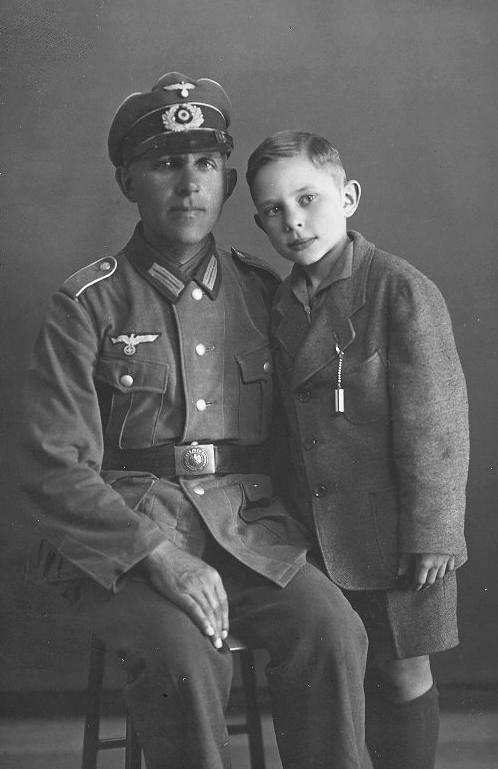
The Wehrmacht was in the mind of many military historians the finest military force in modern history. It was also a vast criminal enterprise. Since the end of World War II there has been an effort to paint the Wehrmacht a a professional, not political force that was the victim of Hitler and the NAZIs. Nothing could be further from the truth. The German Army (tHe Reichwehr) became highly politicized following World War I. Conspiracy theiries florished in the minds of officers and men who could not bring themselves to accept defeat. The leadership of the Reichwehr was never committed to German democracy and the Weimar Re;public. It should be rememvered that its was President Hindenberg, a Prussian Junker to the core, who brought Hitler to power. The Reichwehr, faced with the threat of the NAZI SA, agreed to swear a personal oath of loyalty to Adolf Hitler. The Wehrmacht cooperated closely with the NAZIs to rearm Germany far beyonf that needed for defensive puroses. It is true that there was resistance with the Wehrmacht to Hitler's early aggressions, especially the seizure of the Sudetenland, but this was more out of fear that it would bring a disatrous war than the objection to the goal of seizing the German populated area. Hitler turned the Wehrmacht into his instrument of aggression, the invasion of neighboring countries and the seizure of their resources to support the German war mmachine. It was also the occupying military force establish the German conmtrol needed to conduct the Holacaust, a process that was to be continued with the Slavs in the East. It is true that the Holcaust itself was conducted by the SS and there were Wehrmacht officers who were horrified at NAZI atrocities. It is also true that the Wehrmacht was deeply implicated in the Holocaust itself. And as the NAZI regime grew in strength, so did support for the NAZIs grow within the Wehrmacht. Only the impending defeat of Germany brought about an attempted, but failed coup (July 1944). The bulk of the Wehrmacht remained loyal to Hitler. The Wehrmacht's early success came because the German economy was converted to the production of a new generation of modern weapons effectively used in the concept of Blitzkrieg adopted by the Wehrmacht. The NAZI Party and Hitler Youth also effectively prepared young Germans for war. The Wehrmacht high-command did not resist the NAZIfication process. Many commanders subscribed to the stabbed-in-the-back" conspiracy theories. They saw NAZI indocrination as stiffening the backbone of the German soldier. The Wehrmacht's basic military concept was designed to use its superior equipment, supported by the Luftwaffe, and tactical doctrine to defeat opponents before they could adequately prepare. The NAZIs unfortunately for the Wehrmacht took the victories for a confirmation of the racial superority of the German people. Failure in the skies over Britain (1940) and before Moscow (1941) meant that two dangeous opponents were not defeated in quick lighting strokes. When Hitler inexplicably added America to German enemies, the fate of the Wehrmacht was sealed. Germany faced enemies who used the tactical doctrines Germany developed and backed them with far greater human and material resources.
The Wehrmacht was in the mind of many military historians the finest military force in modern history. It was also a vast criminal enterprise. Since the end of World War II there has been an effort to paint the Wehrmacht a a professional, not political force that was the victim of Hitler and the NAZIs. Nothing could be further from the truth. The Wehrmacht was an active partipant in the Hitler's crimes. It benefitted greatly fron its support of Hitler until his leadership led them to ruin.
Perhaps the most starteling fact about the Wwhrmacht is its mercurial rise and fall. Surely never has a major military force undergone such a dramatic and compressed rapid rise and fall as the Deutsche Wehrmacht. [McNab] Over a mere 12 years it rose from a powerless shell of the Imperial German Army into the world's most powerful military establishment. They were able to do this through develop Blitzkrieg essentially modern warfare), effective weaponry, and ideological formation. And just as rapidly as the the Wehrmacht rose, it fell. Here Hitler's leadeship and the limitations of Germamn industry and resources caused the collapse. And Blitzkrieg could not be kept a secret. Germany's enemies were quite capable of conducting Blitzkrieg and with far greater resources than were available to the Germans. The Wehrmacht to win the War with Germany's limited resources would have to win a series of ligthening victories. The Luftwaffefailure over Britain and the Heer;'s failure before Moscow meant hat Germany could not win the War. The marriage of Soviet manpower and Americam industrial might meant that the Wehrmacht woukd be smashed into oblivion.
Germany as the Western Front buckled under the weight of the anglo-American offensive, was forced to ask for an accept an Armistace (November 11, 1918). The resulting Treaty of Versailles (1919) placed severe restrictions on Germany's armed forces. The Treaty limited the Army to 100,000 men and the navy to 15,000 men. The German fleet was to be limited to six battleships, six cruisers, and twelve destroyers. Germany was prohibited from a general conscription program. The Army was prohibited from having tanks or heavy artillery. Germany was prohibited from having an air force.
The new German Republic created the Reichswehr after World War I (March 23, 1921). The officer corp of the Army became highly politicized after the War. Conspiracy theories florished in the minds of officers and men who could not bring themselves to accept defeat, especially the idea that the German Army could have been defeated. Blaming the politicans was much more acceptable to the army officers, especially the Socialist who sugned tge Versailles Treaty abd dominated Weimar. The leadership maintained official political neutrality. There were a range of political views held by the officer corps. By all accounts the strongest element was monarchists, understandable because they had all grown up in the old German Empire. There were also many officers sympathetic to right wing parties, of which the NAZIs were just one. The leadership of the Reichwehr was never committed to German democracy, socialism, and the Weimar Republic. And they were particularly opposed to the Communists. The Reichwehr was not, however, prepared to change the Goverment. A major factor here was that they feared Allied intervention if they moved against the Republic. It should be remembered that it was President Hindenberg, a Prussian Junker to the core, who brought Hitler to power--albeit with some reluctance. The Reichwehr was limited to 100,000 men, a fraction of the pre-War Army. There were also many limitations on weapons. There wereimportant evsions if the restrictions. This occurred in the 1920s before the NAZIs took power. They were conducted by the General Stff, although the civilian govrment was partilly aware of wht was happening. One thong that the Versailles Treaty did not limit was military planning and education. A major concern of the Reichwehr was understanding why Germany failed in 1914 and how German arms could succeed in any future war. The Reichwehr had neither the men and equioment for such aar, but that did not stop innovative thinkers from devising innovative new tactical doctrines, men like Manstein, Guderian, and Rommel. Theese concepts began to emerge in the 1920s and early-30s, befire the NAZI rearmament program made them possible. Here the Rapollo Treaty (1922) with the Soviets gave them the ability to work wity banned weapns like tanks. Books would be published during the NAZI-era, but the ideas emerged during the 1920s and early-30s.
The German armed force services s during World War II was the Wehrmacht, literally 'make war'. The heart and soul of the Wehrmacht was the Heer, the German army. The Heer was the senior service and so dominated the Wehrmact that the two terms are often used interchangaeably. The Heer from the birth of Prussia was strongly associated with the state. The erly German successes were ground campaigns fought and won primarily by the Heer. The other two services were the Luftwaffee (air force) and Kriegsmarine (navy). The Luftwaffe was a creature of the Heer. As it was only formed in 1935, its leadership was drawn from the Heer and it was created as a tactical air force to provide close ground support. The only independent campaign conducted by the Luftwaffe was the Battle of Britain in which it failed. The Kreigsmarine fought a largely independent war. Only in Norway did the Kreigsmarine fight a campaign in close association with the Heer and Luftwaffe. The Kriegsmarine primary effort was the Battle of the Atlantic to cut Britain off from America and the Dominions. The German war effort was conducted by the Wehrmacht High Command (Oberkommando der Wehrmacht--OKW) with which as the war progressed, Hitler increasingly interfered. OKW controled qll German military forces with the exception of the Waffen-SS. OKW had tactical control, but not actual command of the Waffen-SS which Hitler and Himmler personally commanded. At the very end of the War, Hitler's feekling of betrayal by the Heer was reflected in his choice of Admiral Dönitz to replace him.
The high command of the Army (Heer) made a pact with Adolf Hitler (1934). Hitler agreed to eliminate the SA as a threat to the Heer and ordered the execultion of Röhm and other close associates. The Wehrmact swore a loyalty oath to Hitler--not to the German nation but to Hitler. In return for their loyalyty they were the beneficiaries of a huge rearmament ptogram in contravention of the Versailles Treaty. The dimensions of the rearmament program far outweiged any level of armament needed for defense. It was patently clear to the Heer general staff that Hitler mean to wage aggressive war. This essentially made the Wehrmacht a criminal enterprise committed to waging aggressive war. In addition, there is a tendency in Germany today to draw a destinct line between the Wehrmacht and the SD-SS which carried out the most horrendous attrocities. In the field, especially in the East, this line was much less well defined. Heer units were involved in major attrocities and carried out orders from the high command concerning the execution of Jews and Communist Party members. The Heer was also involved in many reprisal actions against civilians. The ordinary German soldiers were not all or even mostly war criminals. The Wehrmact was a conscript army. And with any conscript army had the same level and range of behavior as the population in general. That said, many of the conscript soldiers had been members of the Hitler Youth and NAZI education system which prepared the ground work for jusifying horendous acts against whole classes of people,
The Germans during World War I created an air arm during World War I (1914-18). The airplane was first used in any significant way in World war I. It played a useful, but marginal role. The Allies were able to outproduce the Germans, but both side made important technological strides. The German air ace the Red Baron (von Rictoff) was the most famous pilot of the War. When he was killed, Herman Goering took over command of the the Flying Circus. The German air forces were dissolved after the War, as required by the Treaty of Versailles. Even so the German military continued to develop technology through secret arrangements with foreign countries. German companies built planes in other countries, especially the Netherlands. Glider clubs throughout Germany provided training for future pilots. The operations were expanded when the NAZIs seized control (1933). Soviets and Japanese. Adolt Hiter ordered Göring to formally establish the Luftwaffe (February 26, 1935). The Versailles Treatu was still in force.
Military forces are designed to project a country's power. Ironically, some powerful military forces can ultimately prove to actually reduce a country's security. The best example here is Kaiser Wilhelm's highseas fleet. Germany in the mid-19th century was seen by Briton's as an ally and France as a security threat. Rhe British royal family was of German origins. Prince Albert himself was German. This view was altered by Kaiser Wilhelm II's aggressive foreign policy and boisterous, eratic behavior. This revised view was confirmed by the Kaiser's decession to build a highseas fleet. The major impact of the fleet was to seek alliances with Russia and France, Germany's historic enenies. The Kaiser's surface fleet played a very minor role in the War. The u-boat became Germany's primary naval weapon, yet the primary achievement of the uboat fleet was to draw Americ into the War, thus ensuring Germany's defeat. The Kregsmarine again played a minor role in World War II. The German surface fleet was a major disappointment to Hitler. The U-boat proved again to be Germany's primary naval threat.
German rearmament is generally conceived as a program initiated by the NAZIs after Hitler seized power (1933). Many Germans and not just NAZIs viewed the Versailles Treaty as unfair and affornt to national honor. The Germany military even in Weimar Republic was violating the terms of the Versailles Peace Treaty. The Reichwehr almost from the onset attempt to circumvent the restrictive provisions of the Versailles Treaty. There were a range of programs devrloped by the German Army to expand the military beyond the limits agreed to under the Versailles Agreement. German companies set up operations in other countries like the Netherlands where airplanes were built. German companies wirked on submarines in Japan. The Army conducted many of the programs in secret. It is unclear to what extent the German Government was informed.
Hitler hoped to seize power by winning the presidential election (1932). Although Hindenburg won the election, the NAZIs remained a potent political force. With both the NAZIs and the Communists working to bring down the Government, Germany was becoming ungovrnable. Street vilolence was a daily occurance in the major cities. Presuident Hindenburg's advisors including his son convinced him that the best way to address growing political disorder was to appoint Hitler chancelloe. They believed that they could control Hitker as the Reifhwehr would bck the President. And they believed that power would force him to moderate his policies. He did so (January 1933). The Reichwhr was striongly monarchial, but there was support for the NAZIs. And Hitler's commitment to remilitrize bought even more support.
The true nature of Hitler and his associates was demonstrated on the Night of the Long Knives (a phrase from a popular Nazi song). The Reichwehr in 1934 was the only German institution capable of resiting Hitler and the NAZIs. The Reichwehr, faced with the threat of the NAZI Sturm Abteilung (SA), agreed to a deal with Hitler. Hitler agreed to disarm the SA and to deal with the SA leadership. He had Rohem and his associates arrested and killed (June 29-30, 1934). Rohem was in fact one of Htler's longest and closest associates. Hitler hestitated but Herman Goering and Heinrich Himmler with his assistant Reynard Heydrich played key roles in convincing him. There was no concern within the military of the extra-judicial executions of the SA leadership. The NAZIs used the occassions to settle some old scores with anti-NAZIs as well. In exchange the Reichwehr, waiting until President Hindenburg died, swore a personal oath of loyalty to Adolf Hitler (August 2). The oath was not to the German nation, but was a personal oath to Hitler himself. Although the German military had earlier swore a similar oath to the Republic, the oath to Hitler took place with no difficulty. Major elements of the military had never been committed to the Republic. There was strong monarchist sentiment within the military. Some NAZI policies, especially the ultra-nationlism and criticism of the Versailles Treaty were shared by much of the military. Offers of rearmament and expabded military spending appealed to many in the military. When President Hindenburg died (August 2), Hitler was the absolute dictator of Germany. Hitler had visited Hindenburg on his deathbed. Hindenburg had become senile. The dieing president thought he was meeting with Kaiser Wilhelm II, and referred to Hitler as "Your Majesty". Hitler declared the office of President to be permanently vacant and essentially merging it with the office of Chancellor, tking the title of Leader and Chancellor (Führer und Reichskanzler). Hitler ordered a plebiscite which took place on August 11, 1934. The NAZI's announced a 90 percent favorable vote. Noone knows the actul vote tally.
Hitler and the NAZIs planned from the beginning for a massive rearmament program--Aufrüstung. NAZI propaganda promoted the idea that Germany must rearm. The NAZI objectives could in fact only be achieved by war. The NAZIs did not, however, begin a massive rearmament program immediately upon seizing power in 1933. Hitler's first objective was to secure control of Germany and he did not want to precipitate foreign intervention before he was ready. The German military itself has already sponsored secret armament programs during the Weimar era in violation of the Versailles Treaty. The NAZIs thus had a solid foundation upon which to base a revived military. The NAZIs sharply expand weapon research. The German military expanded in secret during 1933-34. Hitler by March 1935, felt sufficiently secure to publicize his military. The NAZIs announced that they expansion - which broke the terms of the Versailles Treaty. Europe learned that the Nazis had a modern 2,500 plane Luftwaffe and a Wehrmacht with 300,000 men. Hitler publicly announced that he was instituting a compulsory military conscription and planned to expand the Wehrmacht to 550,000 men. Actual armaments production began in earnest in 1936. The NAZIs in 1936 doubled armaments spending over 1935 levels. It was in 1936 that NAZI arms spending first exceeded the combined total for transportation and construction spending. The nature of arms spending also increased. NAZI arms spending initially focused on research, development, and capital investment. The NAZIs in 1936 began concentrating on producing actual military equipment. This is one of the least economically beneficial types of government spending.
The 1935 conscription law first used the name Wehrmacht. Thus some historians date this as the date ofcreation for the Wehrmacht. NAZI control over the Wehrmacht can be dated from this point or the earlier loyalty oath (1934). There was still a core element in the high command that was not under NAZI control. Gradually the leadership came more an more under NAZI control. The insignia of the Wehrmacht was changed to a stylised version of the Iron Cross known as the Balkenkreuz. This had earlier been used on tanks and planes during World War I.
It is true that there was resistance with the Wehrmacht to Hitler's early aggressions, especially the seizure of the Sudetenland, but this was more out of fear that it would bring a disatrous war than the objection to the goal of seizing the German populated area.
It is clear that Hitler planned war long before he became Reich Chancellor. It is less clear when he shared his plans with his intimates, although we do know when he first informed the military. Hitler called his military chiefs to the Reich Chancellery (November 5, 1937). At the meeting were Field Marshall Wener Blomberg (Reichwehrminister), General Werner von Fritsch (Heer commander), Admiral Erich Raeder (Kriegsmarine commander), and Reich Marshall Herman Göring (Luftwaffe commander). Along with the military chiefs, Hitler summoned Foreign Minister Baron Konstantin von Neurath. His adjutant Col. Friedrich Hossbach took notes. Hitler began by explaining that the matter to be discussed ws too important to be discussed before the Reich Cabinet. Hitler then layed out what he planned. We assume that he had briefed Göring in advance, but we do not know that for sure. He began with a history lesson, although the men there were better educated than he was. He told them that history showed how the Roman and British Empires expanded by 'breaking down resistance and taking resistance'. Then came the kicker. Germany would have to take these risks, meaning short wars with Britain and France. And the wars would have to be before 1943-45. Hitler called this the 'turning pont of the regime'. Here Hitler thought by this time, The world would be expecting our attack and would be increasing its counter-measures from year to year. It would be while the world was still preparing its defenses that we would be obliged to take the offensive." He explained that the immediate task would be to eliminate Austria and Czechoslovakia with 'lighting speed' in an Angriffskrieg (Offensive War). He was convincedcthat thevBritish would not spport either Austria or Czechoslovakia and that the French would not act without the British. [Domarus, p. 604-14.] Here he was absolutely correct. Then with Germany'rear secure, he planed to focus on France and Britain. He was essentially laying out to his military his plan for launching World War II. What he did not address was how the Soviet Union would react and how he planned to deal with the Soviets. This meeting is notable not only for what Hitler revealed, but the fact that only Göring was a NAZI loyalist. And swith a few months all but Göring and Raeder would be gone.
Hitler turned the Wehrmacht into his instrument of aggression, the invasion of neighboring countries and the seizure of their resources to support the German war machine. The Night of the Long Knives (1934) was a major step in gaining control of Germany. By sacrificing the SA and Röem (who Hitler himself was having trouble with), the military allowed Hitler to take full control of the German state. But that does not mean he controlled the military, especially the Army (Heer). This occurred soon after the fateful meeting in the Reich Chancellory (November 1937). The military at the time was controlled by Field Marshall Werner Eduard Fritz von Blomberg (Reichwehrminister). His powerful position translates as War Minister, although historians usually use the term Defense Minister. He was the first Field Marshall appointed by Hitler. He was, however, not a NAZI. He was largely apolitical, loyal to the military as an institution. There were growing numbers of pro-NAZi officers in the military, but there were also many anti-NAZIs and apolitical officers with a great deal of institutional loyalty. Both Blomberg and Heer Commander-in-chief, General Werner Thomas Ludwig Freiherr von Fritsch were very concerned about Hitler's decesion to go to war, especially against Britain and France. They had enough infouence within the Heer that they could have possibly stopped Hitler, but an almost unbelieveable twist of fate removed them from office at this critical time. Hitler and Göring had both stood as witnessed for Blomberg's wedding to a beautiful young wife, 35-years his junior, Margarethe Gruhn (January 12, 1938). There wedding took place at the War Ministry. Within days a huge scandal occurred. Porographic pictures of his new wife surfaced that had been taken in 1931. Then it was learned that the photographs were taken by a Czech Jew with whom she was living at the time. Blomberg was forced to resign. Within days, Fritz also was forced to resign. Here the chrge was possible exposure to blackmale by a male prostitute--Otto Schmidt. This charge was false, a matter of mistaken identity. SS Commandr Himm;er appears to have framed him. Some resistance to his osture existed, but NAZI loyalist General Wilhelm Keitel defused the situation. Hitler does not seem to have been envolved in either event, but the circumstances behind both are murky. Hitler acted swiftly to take advantage of the opportunity presented him. He did not replace Blomberg which meant that he was in effect Reichwehrminister. And he replaced Dritz with Keitel, generally described as a sycophant and officer of limited intellect. And Keitel would explain at the Nuremberg Trials, he simply signed the orders presented to him. [Goldensohn, p. 158.] This was something Bloomberg would have never allowed. The result if these incredible turn of events was that Hitler now personally controlled the Heer. And he moved swiftly to cemrnt his cointrol. A masive reorganization of the top commanders in the military followed. Generals ere dismissed and NAZI loyalists promoted. [Kershaw, p. 58.] From this point on, the Wehrmacht would be the obedient tool of Hitler and his plan to launch the wae needed go achieve the goals he spelled at in Mein Kampf.
The Obercommando der WehrmachtOKW was established (February 4, 1938). This followed on the heels od the Blomberg-Fritsch Affair. Generalfeldmarschall (and Reich War Minister) Werner von Blomberg was dismissed. The Reichskriegsministerium (Reich War Ministry) was dissolved. OKW essentially replaced the War Ministry. It is unclear to what extent the SD/Gestapo were involved in the Blomberg-Fritsch Affair, but it was a convenient turn of events for Hitler. He used the reorganization and the resulting appointments to significantly strengthen his control of the military as Führer and Reich Chancellor (Führer und Reichskanzler) and to weaken the professional military leadership of the Wehrmacht.
German Führer Adolf Hitler launched World War II with the most profesional, competent military officer corps in the world. The NAZIs embarkened on a program to train boys to be warriors beginning with the Hitler Youth (HJ). This would take some time. The HJ was not at first compulsory. Thus when Hitler launched the War, many of the young recruits had some HJ experiences, but the officer corps of the German military had been trained in the military schools of Imperial Germany and the Weimar Republic. It was still hevily influenced by the the Prussian military tradition. And since the creation of the Prussian state, here was a warrior tradition that remained remarkably consistent over four centuries. The founder of that martial state was the Great Elector--Friderich-Wilhelm I (1640-88). He inherited a minor, rather poor and discontinguous principality in northern Germany--Brandenburg-Prussia. He turned his realm into a state with one purpose, to fund and support his army. The army he created was not a large one. His realm could not support a massive army on the level of the great powers like Austria, France, Russia, and Sweden. His solution to this problem was to create a small, but well-drilled and equipped standing army which could defeat a larger opponent before they could marshal their forces. [Citino, pp. xiii-xiv.] This was the only way a small power could defeat a larger power. And this was the policy that the Great Elector and his Hohenzollern's descendants followed and used sucessfully to turn Prussia into a major power. This was the tradition with which Hitler's Wehrmacht launched World War II. And Hitler had turned Germany into a state with a single purpose--to support a modern military machine that could expand the Reich. The Wehrmact had many strengths. Great attention was given to speed and mobility. These were capabilities that the Great Elector himself had emphasized. Blitzkrieg was in fact a modern version of the Great Elector's tactics with industrial weaponry. The Wehrmacht also had some major weakenesses. The industrial base of its targets, significantly increased that of Germany. Essentially the same sitation faced by the Great Elector and his descendants. German military strengths brough great victories at the beginning of World War II as they had at the start of World War I. A major strength was the support of the Luftwaffe in the early years. Perhaps the most serious Geman military weakness was the lack of attention to logistics. This was an area of lesser importance to an army designed to win a war in a brief period, but was of vital importance in a protacted war. [Citino, p. xiv.] Another weakness was military intelligence. [Citino, pp. xiv-xv.] This is less easy to understand, but may lie a tendency to underestimate their importance and an over confidence in their military superiority. These weakenes proved disastrous in World War II as they had in World War I. A great weakness was the lack of adequate naval power.
World War II would have never occurred without the Wehrmacht. There were other countries (Itly, Jaopan, and he Soiviet Union) that wanted to overturn the international system. None of ghem had the military power to do so. The German Wehrmacht did. The Wehrmacht's early success came because the German economy was converted to the production of a new generation of modern weapons effectively used in the concept of Blitzkrieg adopted by the Wehrmacht. The Wehrmacht's basic military concept was designed to use its superior equipment, supported by the Luftwaffe, and tactical doctrine to defeat opponents before they could adequately prepare. Blitzkrieg proved enormously successful on he battlefield and enabled the Wehrmacht to dominate most of Europe. It was not suffcent, however, to over come the strategic blunders of the NAZI leadership. Ten months of almost total triumph stoked Hitler and his generals for further conquest leading them to the central target--the Soviet Union. [McNab] Hitler in Mein Kampf had made it clear that his goal was the East. And to seize the East the Whrmacht woukd had to defeat the Red Army. Stakin's strategic errors and tactical blunders made this possible. In the end Hitler's meglomania abd over reliance on his own abilities would lead the Wehrmacht down to defeat. The War would last nearly 6 years, but would be decided in the space of 1 week with the Japanese attack on Pearl Harbor and the Red Army counter offensive before Moscow. The Japanese brought Amnericaith its vast resources and industrial might into the War. And the Red Army counter offendive, while not destroying the Wehrmacht, so damaged it that it was no longer capable of winning the War.
The Wehrmact largely invented modern warfare. Blitzkrieg tactics proved highly effective, especially small countries or in the case of France, unprepasred countries which could be quickly defeated. Britain, the Soviet Union, and America proved to be a very different matter. The NAZIs unfortunately for the Wehrmacht took the victories for a confirmation of the racial superority of the German people. Failure in the skies over Britain (1940) and before Moscow (1941) meant that two dangeous opponents were not defeated in quick lighting strokes. It took the British some time to learn the lessons of Blitzkrieg. The Russiand also took some time to erfect the Blitzkrieg tactics, in part because Stalin had killed a substantial part of the professional core of the Red Army. America learned faster. When Hitler inexplicably added America to German enemies, the fate of the Wehrmacht was sealed. Germany faced enemies who used thesame tactical doctrines Germany developed and backed them with far greater human and material resources.
The Wehrmact operated with some of the best equipment of any military force during the War. This was certainly the case when the War began. And this advantage was magnified by the superior German tactical doctrine. German Panzers outclassed the tanks of the Western Allies, although the Soviet T-34 shicked the Germans. The German 88s were probably the most effective artillery piece of the War, used both as a tank killer and anti-aircrat gun. German machine guns, especially the screaming minney, and assault riffles were extremely effective. Yet there were many weaknesses in German weaponry. The Wehrmacht procurement system was run poorly, squabsering resources in uneeded or competing weapon systems and constantly changing requirements. One of sthe strengths of the German weapon system was actually a najor weakeness. German weapons tended to be beautifully engineered, almost mechanical pieces of art. They also tended to be complicated. This meant that they were costly to mass produce and difficult to repair in the field. Hitler involved Germany in a war with opponents with vastly superior scientific and industrial resources. The Wehrmacht after failing to defeat the Red Army in Barbarossa would be hard pressed to compete with the weapons programs of the Allies. Inefficencies in the Wehrmacht's procurement system meant that Germany's limited industrial capacity was poorly used. And the Wehrmacht noted as first employing modern warfare was not a fully mechamized force when the War began, still relying upon horse power to move equipment and artillery. Germany used captured trucks and other equipment in Barbarossa and used French-built tricks throughout the War. Germany made full use of the Skoda works in Czechoslovakia, but never fully mobilized the infustrial capacity of other occupied countries. The Allied air strategic air campaign, especially the assault on Germany's petroleum infrastructure, meant that by the end of the War, the Wehrmacht was no longer a mobile force.
National pride complicates the assessment of effectiveness. Stephen Ambrose writes eloquenly about the soldiers of democracy when describing the U.S. Army. Unfirtuntely the facts clarly suggest that the German Wehrmcht, especially the Heer was the most effective armed force in World War II. Given the brutality and criminal nature of the Wehrmacht, this is a bitter pill to swallow, but the facts lead to no other conclusion. In The openinh cmpaigns the Germans were able to prevail without numerical superiority. In the all important Western campaign, the Germans had numerical superiority at the point of contact, but this was only because of Allied incompetence. The Germand and Allied (Polish, Dutch, Belgin, French, and British) were comparable, but the failure to develop an effective Allied strategy led to German victory. Beginning with Barbarossa, the Germans never faced a comparable force. The Soviets had a much larger army an once American entered the war ,the Germans faced forces tht were better supplies with superior air support. In the East the Germans could prevail if they faced comparable forces or eevn forces twice as large, fortunatly for humanity, they commonlyfced forces three time or ben larger. And as Anerican Lend Lease arrived in quntity, a Red Army with greater mobility. In the West they faced an emeny with resources that the German war economy could not bagin to match. German divisions requited only a fraction of the supplies an American division required. But the Western Allies so outnumbered the Germans that the fight proved hopeless. Ground down in the ast, the Germams in the West could do little more than bottle up the allies in Normabdy for a few weeks. What is not fully understood is how the Wehrmact could fight as long and effectively as they did for so long, even as the War was clealy lost. The Japnese soldier was alo effective, fantically committed, bur unlike the Germans, the Japanese Army leadership was lrgely incompetent nd the soldiers were poorly armed.
The German field kitchen (Gulaschkanone) was like everything associated with the Wehrmacht carfully stududied and thought out. The objective was to ensure that every German soldier got at least one hot meal every day. The German Gulaschkanone or field kitchen was an efficient means of providing large quantities of nourishing hot meals using the the minimum of resources. Meal menus regularly included both potato soup and pea and ham soup as well as all sorts of stews. Meals were accompanied by a bread or biscuit ration. The Germans set up a food system that when the campaigns were going right ensured that the soldiers were well fed. The daily ration for each German soldier was determined by OKW,taking into account the soldier's assignment and theater of operations. The Whermacht had a different approach than the American Army. The Whermacht had an offensive ethos and thus with planned to cquire supplies in the countries occupied. It confiscated supplies or in some cases purchased them for both men an animals. (The Whermacht stiill relied on draft animals. These confiscated foodstuffs to supplement or as far as possible replace military rations. Confiscating food stuffs from the Belgians in World war I caused enormous suffering among civilians and was part of the reason that the German Army acquired a reputation for brutality that it never lost and fully lived up to in World War II. The standard operation was for units to maintain a 10-day reserve for every soldier on its established strength. The daily ration (Portionsatz) consisted of three meals, breakfast (1/6 daily callories ), lunch (1/2), and evening meal (1/3). A small issue of wine was added during the summer. There wee several different categories: Type 1, Type II, Type III, Type IV, Iron Rations, Combat and Close Combat Ration Packs, March Ration, and Animal Rations.
Meals when possible were cooked centrally. There were horse-drawn wood-burning field kitchens or Gulaschkanone in non-mechanized units and comparable field cooking ranges mounted on trucks for Panzer and Panzergrenadier units. Field kitchens were categorized either as large (catering for 125-225 men) or small (catering for 50-125 men), with other types of field cooking equipment issued to units of less than 60 men. [Thompson] When the War began going against the Germans, the system began breaking diwn, especially dilivering hot meals without air cover. And we niotice the Germans setting up Gulaschknone to feed refugees and civilians after air raids. Serious problems developed as the Erhrmscht retreated ihto the Reich and could no longer seize food from occupied countries.
The Wehrmact bcame a criminal organization which played a major role in some of the greatest crimes in history.
After the War German officers claimed that they were either just following orders or they did not know about the NAZI crimes. They tried to portray themselves as patriotic, honest Germans forced to work for a crininal regime. And that the crimes were the work of the SS, the SA, and other NAZI Party organizations. The truth is very different. There were many fervent NAZIs within the Wehrmacht, the actual number is not understood with any certainty. And of course this changed with the swings in German military success. What is fully substantiated by the historical record is the level of criminality of the Wehrmacht. It was the Wehrmascht before most of the killing, turned the German state over to Hitler and the NAZIs as part of the Night of the Long Knives deal. With the outbreak of the War, we do not say that all German soldiers were criminals. They were not. Many were honorably serving their country. Many were also involved in crimes. This breakdown is difficult to assess. What is not difficult to assess is the degree to which the leadership and much of the officer corps committed the organization to criminal activity. This includes both commission of terrible crimes as well as an all important support role facilitating the terrible crimes of NAZI Party and its organizations. And these include the basic standing orders issued by OKW as well as the most horific of the NAZI crimes, like Generalplan Ost, the Hunger Plan, the Holocaust, and occupation atrocities. There were also military war crimes such as terror bombing, murder of POWs, murder of civilian hostages, and retaliation against civilians.
The NAZI Party and Hitler Youth also effectively prepared young Germans for war. The Hitler Youth not only provided military training, but the emotional and physical preparation for war in addition to ideological indoctrination was, after the NAZIs seized power, the primary purpose of the organization. The NAZIs did not tell the boys and their parents that they weere being prepared for War, but in reviewing the program that conclusion was obvious. The Hitler Youth was carefully organized to feed older boys directly into military service. Younger boys were exposed to military personnel and given weapons demonstrations. Older boys were given actual instructions in handling weapons and participated in actual military exercizes. They were then channled into the military services are in some cases the SS.
The Wehrmacht high-command did not resist the NAZIfication process. Many commanders subscribed to the stabbed-in-the-back" conspiracy theories. They saw NAZI indocrination as stiffening the backbone of the German soldier.
The organization of the Wehrmacht and the German military in general is a very complicated topic. The Wehrmact was created by the NAZIs out of the Reichwehr of the Weimar Republic. The Wehrmacht was by far the largest of the German military formations, the other two were the Kreigsmarine and the Luftwaffe. When the NAZIs seized power there were two Party para-military organizations, the SA and SS. The Army viewd the large SA as a challenge to its institutional position as the principal armed group of the German state. And with good reason. SA commander Rhoem was a close associate of Hitler and dreamed of forming the new NAZI army around his SA. The Army after the NAZIs seized power was the only force capable of challenging Hitler's control of Germany. This impasse was settled by a bargain between Hitler and the Luftwaffe resulting in the Night of the Long Knives. Hitler used the SS to destroy the leadership of the SA and in return the officers and men of the Wehrmacht swore a personal oath of loya;ty to Adolf Hitler as Führer of the German Reich. Ironically after the War began, it was the SS that began to challenge the Wehrmacht insitutionally. The Waffen SS became increasingly important. The Wehrmacht itself had a variety of specialized units. Some of the best known were infantry, panzer (armoured), artillery, paratroop, police, ski, and other units. At the end of the War the NAZIs created the Volksstrum. Field organizations varied grearly over the course of the War. The three principal formations in the East were Army Groups North, Central, and South. The primary German formation in the west was Army Group B and especilly its 7th Army in France that had the primary respnsibility for stopping the Allied liberation of France. There were many smaller field formations. One of the most famous of these was the Afrika Korps in North Africa.
The German Army in both World War I and World War II was the most disciplined army involved in both conflicts. In both cases it was fough by an officer corps trained by the institution of Imperial Germany which were essentially continued during the Weimar Republic, both overtly and covertly. Hitler began effort to NAZIify the officer corps and by the end of the War had made considerable progress. There was one huge difference in the two wars and that was death sentences hannded down to soldiers. The Imperial German Army issued 48 death sentences for desetion or other similar infractions. The Wehrmacht in contrast sentenced 32,000 of its men to death and carried out 22,000 of those sentences. [Messerschmidt] These were virtually all military crimes like desertion rather than assaults on civilians. A substantial part of the total were executed in the last year of the War. We are not yet sure about this major difference in the two World Wars. Surely 9 million casualties on the Eastern Front must have been a factor. And the NAZIfication of the officer corps was another factor. The number of death sentences issued by the Wehrmact was unlike any other Western army involved in the War. The Americans executed one soldier for repeated instances of desertion. There were other executions, but for crimes like rape of civilians. The British executed four men. I am not sure about the French, but this is complicated by the surrender to the Germand (June 1940) and the conflict between Vichy and the Free French. The situation with the Soviet Red Army was different. The Red Army routinely shot shirkers and deserters or sentenced them to punishment units which were used in suisidal attacks and thus amounted to a death sentence. We have seen estimates that the Wehrmacht executed 0.2 million of its own men. We are not yet sure how creditable this estimate is, but the number would be very substantial.
The Whermacht at the time of the NAZI seizure of power was largely unpoliticized. The prevaling attitude was largely monarchist. There was realtively little support for the Weimar Republic. There was support for right-wing grouops like the NAZIs. And after the NAZIs seized power, that support grew, boith because the NAZIs supported rearmament and greatly expanded budgets, but also promotions were aided by political conndctions. A new unit was created, the Nationalsozialististicher Fuhurungstab des Heeres (National Socialist Guidance Staff of the Army--NFH) was directed by General Armed Forces Office of the Supreme Command of the Armed Forces (OKW). Its mission was to ensure that the still largely unpoliticized military leadership was subjected to a uniform political indoctrination. The Allegemeines Wehrmachtsamt (AWA) was the principal administrative agency within OKW. Hitler ordered the creation of Nationalsozialistischer Führungsoffizier (National Socialist guidance officers--NSFOs) (December 22, 1943). This was at the same time that the Stalin disaster was becoming apparent. The National Socialist operations staff was set up to support the NSFOs. The purpose was to promote NAZI ideology in the Wehrmacht as the War incrrasingly turned against Germany. The German NSFOs were similar to Red Army political commisars, but there were dfferences. Red Army political commisars were more numerous and had far greater authority. The NSFO staff was headed by General Hermann Reinecke. The NSFOs through lectures and discussions were to promote NAZI ideology among German soldiers. As Allied power grew, the idea was that a purely professional military was not adequate, and that political commitment could strengthen the resolve of the German soldier. The NSFOs were recruited from the officer corps, but final approval was given to the Party chancellery head, Martin Borman. Wilhelm Rudder oversaw the background investigatioins. Eventually some 47,000 NSFO officers were selected to serve in addition to their regular duyies. Some 1,100 full-time NSFO officers participated in central training and training courses.
From the onset there was tension between the professional office corps and the NSFO. The NSFO worked closely cooperated with the NAZI Party Chancellery. The SFO Nationalsozialistischer were given the title of Führungsoffizier (National Socialist Guidance Officer).
The NSFO supported Hitler after the Bomb Plot (July 1944). By that time it had become an irritant to the professional officers in OKW. After the Bomb Plot the NSFO increasigky undermined OKW and the chain of command. [Stone]
Hitler cotrrectly judged that after his appointment as Chancellor, that the Reichwehr was the only force in Germany that could prevent him from seizing tital power. The Whermacht was also in 1944 the only force capable of taking control of Germany from the NAZIs. Wehrmacht officers had perpetrated terrible attrocities. Some were apauled with what the SS abd other security forces were doing. Others were bothered about the Wehrmacht's conduct. Only the impending defeat of Germany, however, brought about an attempted (July 1944). An idealistic young Catholic aristocrat, Colonel Claus von Staufenberg, placed a bomb in the Wolf's Lair. After Hitler was dead, the Hpme Army would seize cintrol of Berlin and then Germany. The idea was to then negotiate a separate peace with the Western Allies. That by 1944 was unrealistic. In the end, the failure to kill Hitler and the extensive NAZi penetration of the Wehrmact led to the coup's failure. The bulk of the Wehrmacht remained loyal to Hitler and the NAZIs. The real loser was the German people. The great bulk of German civilian casualties took place after the failed coup. To form the Honor Court trying the conspirators, Hitler appointed Field Narshal Gerd Von Rundstedt--a Prussian aristocrat who despised Hitler personally.
The Wehrmacht was badly battered in the East, first before Moscow (Winter 1941-42) and then at Stalingrad (1942-43). The lst major offensive in the East was at Kursk (July 1943). In this huge battle, the Soviets essemtiall destroyed the Wehrmacht's armored formations. The Wehrmact still controlled large areas in the East which could have been defended using geographic barriers like rivers and mountains. Here Hitler's insistance on hollding ground resulted in the Wehrmacht's failure to make use of the geographic barriers, as Keslering did so effectively in Italy. And American Lend Lease began reaching the Sovits in quanity during 1943. This included large numbers of trunks. These tricks gave the Red Army a mobility that they never had before and the Germans did not have. The Wehrmact at the beginning of 1944 was a battered, but still formidable military force. The Soviers in a series of five massibe offensives essentialy destroyed the Wehrmacht in the East. This was complimented on a smllr scale in the West after the Allied bread out from Nrmandy. The last Wehrmacht reserves were expended in the Battle of the Buldge (December 1944). There were regular Wehrmacht formations within the Reich, such as Model's Army Group B in the Ruhr. But without air cover and fuel, they were immobile. And even among the officer corps, the will to resist had been broken.
Rather than defy the Führer, Field Marshal Model dissolved his Army Group and shot himself. The primary interest of the Wehrmacht in the closing phase of the War was to move as many men as possible west so they could surrender to the Western Allies rather than the Soviets.
The NAZIs as the Soviet and Allies approached the borders of the Reich, formed the Volksstrumn with boys nd old men. The age for the Volkssturm was officially 16 years, but we note much younger boys in Wehrmacht uniforms. We are not sure why that was, but we suspect Htler Youth and lacal NAZI leaders were responsible.
were hastily trained, ill-equipped and not terribly well led were the major recruits for the Volkssturm in the closing months of the year. The HJ boys, however, went into battle with a fervor even beyond that of the Waffen SS. Many accounts exist of battle hardeneded Wehrmacht and and SS troops who met these boy soldiers on the way to battle. Their advise was almost often "Its over. Go home!" The boys, however, armed with a few anti-tank weapons like Panzerfauts and perhaps a machinegun if one could be found, these Hitler Youth schoolboys went into battle. Often they performed amazingly well, even when given hopeless assignments. The Volkssturm played a major role in the defense of Berlin. In the West they were more willing to surrendr to the Allies.
Throughout the War the Germans arogantly considered their military prowess unmatched. It is true that the Wehrmacht was a highly professional militarty force. They developmened an implemented what amounts to the princioles of modern warfare. Their officers were well trained and highly competent and the motivation and morale of the ordinary soldier unexcelled. Here the Hitler Youth played a major role in preparing German Youth psycologically and ideologically for military service. They also had some of the fimest engineered weapons of the War. As the War continued, the Germans blamed their reverses on the fact that they were outnumbered both in manpower and industrial capacity. This is certainly a najor factor, but only partly true. NAZI arrogance caused the Wehrmacht to constantly underestimate the Soviets which was a major factor in the filure before Moscow and at Stalingrad. NAZI mismanagement did not fully utilize the potential of German industry until Speer took command of the economy and by then it was too late. After the War historians added Hitler's interference in military command and NAZI racist policies which made it impossible to cpitalize on anti-Soviet feeling in the Ukraine and other areas of the Soviet Union. But there were weakenesses in the Wehrmacht itself. Wehrmacht procurement demanded a very high grade of weapons enguneering. This produced some of the finest weapons of the War. It also meant weapons that were difficult to mass produce and often were hard to maintain in the field. Another major fault was military inteligence. German military intelligence constantly failed before the major battles of the War. While German professional soldiers looked derisively at the Red Army and the U.S. Army it was these forces that defeated the Wehrmacht not just with brute force, but with artful deception campaigns and superior military intelligence. D-Day and Bagration are but two examples of this. There are several more.
The Wehrmacht offuicee corps is a special matter to comider. It should be understood, that there was bno difference between the German Wehrmacht officer corps amd the young men who did their fighting. Both fought to the bitter end way beyond which there was any hope of nit just a German victory, but any hope of avoiding a devestating defeat. And it should be understood that most of the damage to Germany was done in the final year of the War. It was also the nost deadly 12 months of the war for German soldiers and civilians. And this was at a time that there no real hope of victory. Even a child can read a mapm klet alone competent miklitary professionals. For the young men that made up the bulk of the combat soldiers contunuing to fight for theReich this can be largely understood as the result of NAZI controlled schools and the Hitler Youth. But what about the officer corps, especilly the senior leadership? They were educated before the rise of the NAZIs and mamy were well read and not particularl impressed with Hitler. This varied of course but many saw the disaster where Hitler's leadershio was headed. Why did they continue to fight, knowing it was hopeless and seeing Germany being destroyed before their eyes. this is a issue that has caught the attention of World War II historians and which they continue to wrestle vith. We can offer a range of possivke factors. As to how imprtant they are will probably continue to be a never ending discusion, probably impossible to answer with any real surity. Some of the factors were the same that influenced the general public, others were especially important to the Wehrmacht officer corps.
Feldgrau.com is a non political German military history research site. Our focus is on the German armed forces during the most tumultuous period of the 20th century, the time between 1918 and 1945. We've been online since February of 1996 and have had over one million visitors! Our main focus is on the operational histories of the units and organizations that made up the German army, navy, airforce and all associated auxiliary formations, both during the Weimar period and the NSDAP era. Feldgrau is a massive work in progress; our motto is "information kept secret is lost". There are many sections here that aren't yet complete but we strive to add new information all the time!
Citino, Robert M. The German Way of War: From the Thirty Year's War to the Third Reich (University Press of Kansas: Lawrence, 2005), 428p.
Domarus, Max. Essential Hitler Speeches and Commentary (2007).
Goldensohn, Leon, The Nuremberg Interviews (2006). Keitel admitted at the Nuremberg trials that Blomberg would have never have unquestionally just signed orders poresented to him.
Kershaw, Ian. Hitler: 1936-1945: Nemesis (2000).
McNab, Chrus. Hitler's Armies.
Messerschmidt, Manfred. "Das Bild der Wehemacht in Deutschland seit 1945," Revue d'Allemagne 30, no. 2 (April-June 1998), pp. 117-125.
Neitzel, Sönke. Ed. Tapping Hitler's Generals: Transcripts of Secret Conversations, 1942-45 (2008).
Stone, David. Shattered Genius: The Decline and Fallof the Germabn General Staff in World war II (2011), 424p.
Thompson, Scott L. Gulaschkanoe: The German Field Kitchen in World war II and Modern Reenactment (Schiffer Military History, 2001). 146p.

Navigate the CIH World War II Pages :
[Return to Main military force page]
[Return to Main German military force page]
[Return to Main military style page]
[Biographies]
[Campaigns]
[Children]
[Countries]
[Deciding factors]
[Diplomacy]
[Geo-political crisis]
[Economics]
[Home front]
[Intelligence]
[POWs]
[Resistance]
[Race]
[Refugees]
[Technology]
[Totalitarian powers]
[Bibliographies]
[Contributions]
[FAQs]
[Images]
[Links]
[Registration]
[Tools]
[Return to Main World War II page]
[Return to Main war essay page]
[Return to CIH Home page]